

Low-glycemic foods are everyday foods that digest slowly and raise your blood sugar gradually instead of all at once. The best examples include vegetables, beans, lentils, whole grains, most fruits, nuts, seeds, and dairy.
Managing blood sugar isn’t something that just diabetic people have to worry about. It affects your energy, your mood, your hunger, and even how well you think and focus throughout the day.
This guide breaks down the ultimate low-glycemic foods list and provides practical tips to help you eat smart and keep your blood sugar balanced.
To make your next grocery trip completely stress-free, we have also included a downloadable low-glycemic index foods list PDF at the end of this post. Let’s dive in and learn how to eat for better energy and better health!
Table of Contents
What Is the Glycemic Index?
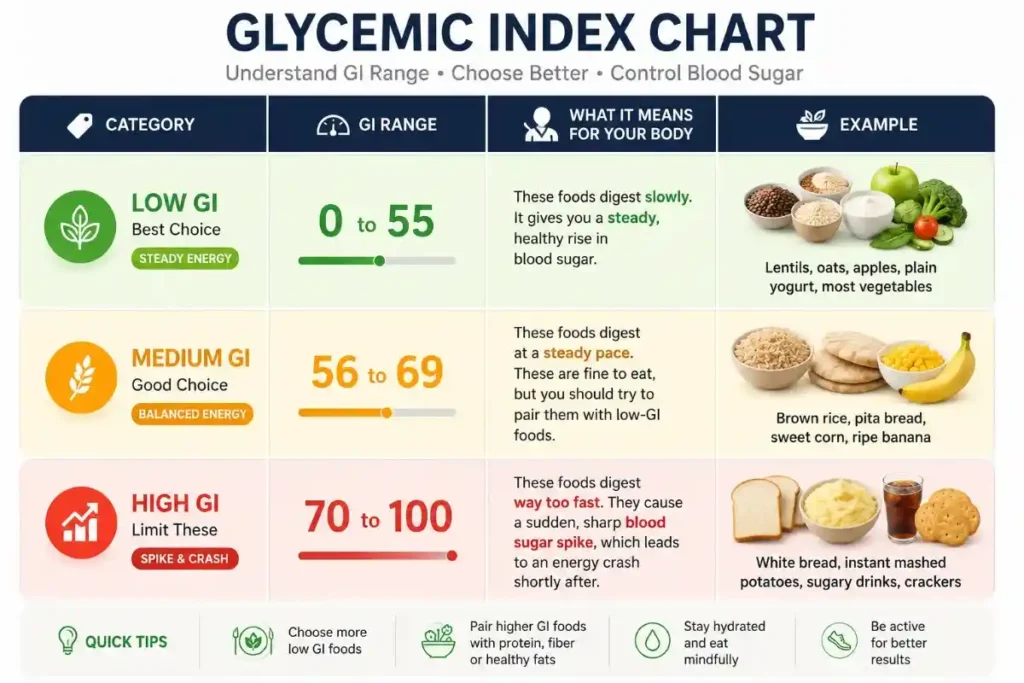
The glycemic index is simply a scale that shows you how fast a food raises your blood sugar after you eat it. It runs on scores from 0 to 100. Pure glucose, basically straight sugar, is considered the baseline at the very top, at 100. Every other food gets compared to that.
According to the National Institutes of Health (NIH), foods fall into three easy-to-remember categories:
Why Low-Glycemic Foods Matter So Much
Low glycemic foods stop the blood sugar cycle that’s quietly draining your energy, clouding your thinking, and driving those 3 PM cravings you can’t explain.
Those sudden cravings even after eating a while ago are known as a blood sugar crash. High-GI foods digest fast and spike your blood sugar, and when it drops back down, your energy goes with it.
Low-glycemic foods work the opposite way.
According to the CDC, fiber-rich foods like legumes, whole grains, and vegetables digest slowly because your body handles fiber differently than it handles simple carbs. Your blood sugar rises gently, stays balanced for hours, and comes down without a crash on the other side.
In your actual day-to-day life, that difference is something you genuinely feel:
- Energy that holds all day
- A clearer, sharper mind
- Fewer cravings
- Staying actually full
But the benefits of eating low-GI foods aren’t limited to preventing energy crashes. According to the CDC, keeping blood sugar balanced lowers your risk of serious health issues like heart disease, type 2 diabetes, and stroke.
The Complete Low-Glycemic-Index Foods List
Here is your perfect, easy-to-use low glycemic index food list. These aren’t some miracle foods, but just your everyday foods that you can find in any grocery shop.
Non-Starchy Vegetables
Non-starchy vegetables are the single best food group for helping in blood sugar management. You can eat them freely in every meal. They are full of fiber, vitamins, and minerals and don’t affect your blood sugar levels even in the slightest.
Best choices
- Broccoli
- Spinach and kale
- Green beans
- Tomatoes
- Mushrooms
- Cabbage and cauliflower
- Bell peppers
- Eggplant (aubergine)
- Cucumber
- Zucchini
- Lettuce and leafy greens
Quick Tip: Fill at least half your plate with these at every meal. It’s one of the best and simplest changes you can make today.
Beans, Lentils, and Legumes
This food group is one of the most underrated for better blood sugar control. They provide complex carbohydrates, plant-based protein, and soluble fiber all in one package. It’s like a combination food that slows glucose absorption significantly.
Best choices
- Lentils
- Chickpeas
- Black beans
- Kidney beans
- Pinto beans
- Soybeans
- Split peas
Tip: Add them to soups, salads, curries, or wraps. They’re incredibly versatile and genuinely filling.
Whole Grains and High-Fiber Starches
Not all grains are equally good. While whole grains are complex carbohydrates that slow down your sugar absorption, refined grains (like white flour) digest quickly and cause blood sugar spikes.
Best choices
- Rolled oats or steel-cut oats
- Quinoa
- Bulgur wheat
- Brown rice
- Basmati rice
- Whole wheat pasta
- Rye bread
- Sourdough bread
Note: How you cook food can change its GI. According to the NHS, while a baked potato is medium GI, instant mashed potato is high GI. That’s why your cooking method is important.
Whole Fruits
Many people think fruits can increase your blood sugar as candy does, but it’s not true. Whole fruits contain fiber, which significantly slows down sugar absorption. The CDC notes that eating a whole food is better and different from drinking fruit juice. The process of making juice removes teh fiber, which makes it cause blood sugar spikes.
Best choices
- Cherries
- Grapefruit
- Apples
- Pears
- Strawberries
- Raspberries
- Peaches
- Plums
- Oranges
- Fresh apricots
Tip: Watch your portions because, according to the NHS, even low-glycemic fruits like grapes and bananas can increase blood sugar even in large amounts.
Dairy and Unsweetened Alternatives
Most of the natural dairy products are low in GI because lactose (milk’s natural sugar) digests slowly, and teh protein and fat slow down the absorption even further. This prevents sudden blood sugar spikes.
Best choices
- Plain Greek yogurt
- Plain yogurt with no added sugar
- Cow’s milk
- Unsweetened soy milk
- Unsweetened almond milk
Tip: Always check for added sugar before eating. Flavored yogurts and sweetened milk alternatives can turn a low-GI food into a high-GI food easily.
Nuts and Seeds
Nuts and seeds are mostly made up of protein, fiber, and healthy fats, which makes them barely cause any fluctuation in your blood sugar. They are one of the best snacks for maintaining energy between meals.
Best choices
- Walnuts
- Almonds
- Flaxseeds
- Pumpkin seeds
- Sunflower seeds
- Hummus
- Cashews
- Peanuts
- Chia seeds
Note: These are great for snacks or adding to meals, especially when you need a little extra staying power without raising your blood sugar.
High Glycemic Foods to Limit
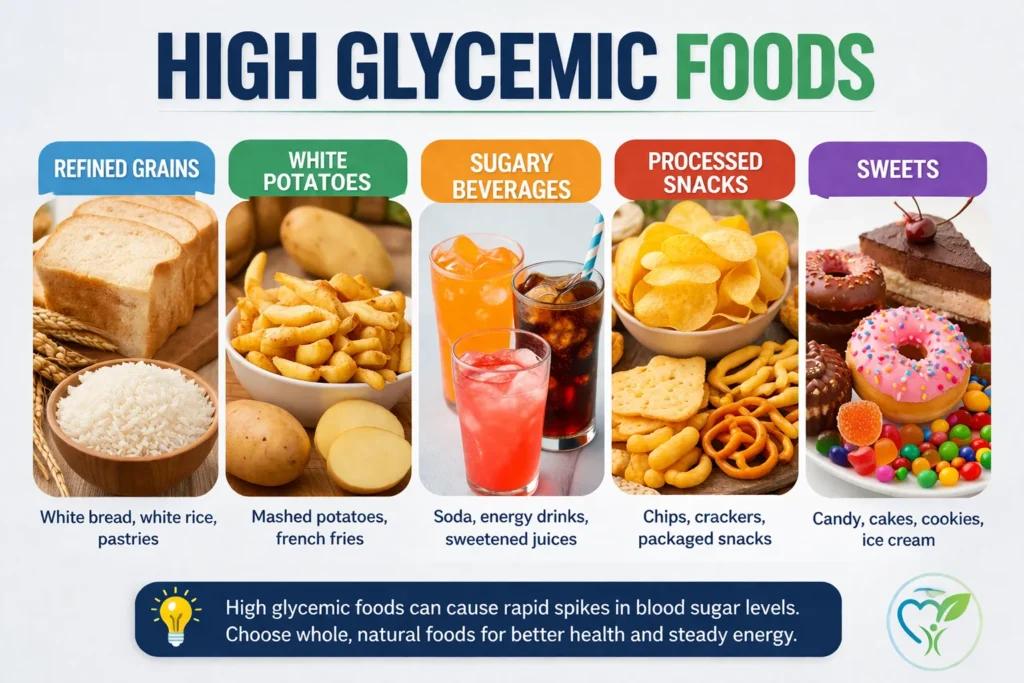
Knowing what to eat to keep blood sugar balanced is just as important as knowing what causes it to rise. But the good news is that you don’t need to ban these foods completely from your life.
The important thing is to eat these foods in moderation. And when you eat these high-GI foods, eat them with a source of protein, healthy fats, and fiber for balancing them out. This keeps your blood sugar in balance.
Here are the main high-GI foods you should try to reduce:
- Refined Grains
White bread, bagels, white rice, standard pasta, and flour tortillas.
- Sugary Drinks
Soda, energy drinks, and sweetened fruit juices. These act like liquid sugar that hits your
bloodstream instantly.
- Processed Snacks
Rice cakes, pretzels, and standard corn chips.
- White Potatoes
Instant mashed potatoes and standard French fries are major culprits.
- Sweets and Treats
Candy, cookies, cakes, pastries, and most ice cream.
- Sweeteners
Table sugar, high-fructose corn syrup, honey, and maple syrup. Even the “natural” syrups will cause a sharp blood sugar spike.
5 Easy Swaps to Start For Better Blood Sugar Management
You don’t have to change your whole diet in a night. The important thing for better blood sugar control is making small changes that you can actually follow for a long time. Start your journey to better health with just one of these easy and everyday swaps for teh next week:
- The Dinner Swap: Replace white rice with quinoa, brown rice, or cauliflower rice.
- The Breakfast Swap: Replace sugary boxed cereal with a warm bowl of steel-cut oats, topped with fresh berries and a handful of walnuts.
- The Snack Swap: Replace processed crackers or potato chips with fresh apple slices and natural peanut butter.
- The Drink Swap: Replace soda, sweet fruit juices, or sugary coffee drinks with sparkling water or unsweetened iced tea.
- The Meal Booster: Add a scoop of beans or lentils to at least one soup, salad, or dinner bowl every day. This adds a massive dose of fiber that heavily slows down sugar absorption.
The Simple Plate Method for Low-GI Meals to Support Lower Blood Sugar
If you’re looking for one of the easiest ways to build lower blood sugar food meals without following a complicated diet, the simple plate method is a great place to start. By combining low glycemic foods with lean protein, healthy fats, and fiber-rich vegetables, you can create balanced meals that help support healthy blood sugar levels.
Follow these simple steps:
🥦 Fill half of your plate with non-starchy vegetables
Choose foods like broccoli, spinach, cauliflower, zucchini, bell peppers, or leafy greens. These are excellent lower blood sugar foods because they’re naturally low in carbohydrates and rich in fiber.
🍗 Fill one-quarter of your plate with lean protein
Add chicken breast, fish, turkey, tofu, eggs, or legumes. Protein helps keep you full and may slow the absorption of carbohydrates.
🌾 Fill the remaining one-quarter with low-GI carbohydrates
Choose healthy options such as oats, quinoa, lentils, barley, or brown rice. These low glycemic foods release glucose more slowly than refined carbohydrates.
🥑 Add a small serving of healthy fats
Include avocado, olive oil, nuts, or seeds. Healthy fats improve meal satisfaction and complement a balanced diet for better blood sugar management.
Using the simple plate method makes it easier to choose lower blood sugar foods at every meal. Combined with regular physical activity and healthy lifestyle habits, this approach can help support more stable blood sugar levels over time.
Don’t Forget to Exercise and Hydrate Yourself
While diet is important, it’s just one part of the solution. You also need regular exercise for better blood sugar management because this is your body’s natural way to balance blood sugar.
You do not need an intense gym session. Taking a brisk 15-minute walk right after eating makes a massive, measurable difference. When you walk, your leg muscles actively pull glucose out of your bloodstream to use as energy, which naturally lowers your blood sugar levels.
And also make sure you are drinking plenty of water throughout the day. Staying fully hydrated helps your kidneys work efficiently to flush any excess sugar out of your system.
Final Thoughts
Eating low-glycemic foods isn’t about being perfect. It’s about giving your body a steadier, more reliable source of fuel—instead of constantly fluctuating your blood sugar throughout the day.
You don’t have to change everything at once. Start with just one thing this week. Take a 10-minute walk after dinner. And keep progressing with consistency.
These small choices don’t feel like much while you’re making them. But they stack up. A week of swapped foods becomes a month of better energy. A month becomes a habit you don’t have to think about anymore. And before long, steady energy and a clearer head just become your normal.
Download your free low-glycemic foods list PDF below and start your journey to improve your blood sugar management.
Frequently Asked Questions
What are the best low-glycemic gluten-free foods?
Vegetables, beans, lentils, chickpeas, quinoa, brown rice, certified gluten-free oats, most fruits, nuts, seeds, and plain dairy are the best low-glycemic index gluten-free foods. All of these are naturally low-GI and naturally gluten-free.
Is popcorn a low glycemic food?
Yes, and it’s actually one of the better snack swaps out there. Keep it simple and plain, or the GI can increase significantly.
Are low-glycemic foods good for weight loss as well?
Yes, they are. They digest slowly, which helps you stay full for a longer time. This results in less snacking and fewer cravings between meals. Over time, it helps you manage your weight in an effective way.
Is peanut butter a low glycemic food?
Yes. Natural peanut butter has a GI of just 13–14. The reason it scores so well is that it’s mostly protein, healthy fat, and fiber, which helps slow down digestion.
Do I need to give up all high-glycemic foods completely?
No. You don’t have to stay away from your favorite foods forever. Just make sure you eat them in moderation and supplement with protein, fiber, and healthy fats. Doing this slows digestion down so your blood sugar doesn’t spike like it normally would.
Why am I so tired after eating high-GI foods?
When you eat these foods, your blood sugar jumps and then crashes back down. It’s like being on a rollercoaster, and that quick drop is what leaves you feeling completely tired and sleepy.
References & Sources

Daniel Brooks
Men's Health & Blood Sugar Writer
Better Health Focus
Expertise
Men's Health • Blood Sugar Management • Type 2 Diabetes Education • Prediabetes • Healthy Lifestyle • Nutrition • Metabolic Health • Preventive Wellness • Evidence-Based Health Content
About Daniel Brooks
Daniel Brooks is a Men's Health & Blood Sugar Writer at Better Health Focus, where he develops evidence-based educational content focused on men's wellness, blood sugar management, diabetes prevention, metabolic health, and healthy lifestyle habits.
With more than five years of experience writing health content, Daniel specializes in transforming complex medical research into practical, reader-friendly articles that help people better understand chronic disease prevention and long-term wellness. His work emphasizes realistic lifestyle changes, balanced nutrition, physical activity, and sustainable habits rather than quick fixes or unsupported health claims.
Daniel has completed professional education in Lifestyle Medicine through the American College of Lifestyle Medicine (ACLM) and has undertaken extensive independent study of evidence-based guidance, clinical recommendations, and educational resources published by the American Diabetes Association (ADA). His writing reflects current research and established best practices related to blood sugar management, diabetes prevention, cardiovascular health, and men's health.
Before publishing an article, Daniel reviews reputable medical literature and guidance from organizations including the National Institutes of Health (NIH), PubMed, the American Diabetes Association (ADA), the American Heart Association (AHA), the Centers for Disease Control and Prevention (CDC), and peer-reviewed scientific journals whenever applicable.
His goal is to help readers understand the science behind healthy living while making evidence-based information clear, practical, and accessible.
Education & Professional Development
- Professional education in Lifestyle Medicine through the American College of Lifestyle Medicine (ACLM)
- Ongoing study of evidence-based resources and clinical guidance published by the American Diabetes Association (ADA)
- Continuing education in nutrition science, metabolic health, and preventive medicine
- Regular review of peer-reviewed medical research and public health guidance
Areas of Focus
- Men's Health
- Blood Sugar Management
- Prediabetes Education
- Type 2 Diabetes Prevention
- Metabolic Health
- Heart Health
- Healthy Weight Management
- Nutrition & Healthy Eating
- Exercise & Lifestyle Medicine
- Preventive Health
Editorial Approach
Every article written by Daniel Brooks follows the editorial standards of Better Health Focus and is based on current scientific evidence from reputable medical organizations and peer-reviewed research whenever available.
His content is guided by the principles of:
- Evidence-based health education
- Scientific accuracy and transparency
- Balanced discussion of benefits, risks, and research limitations
- Clear and practical language for everyday readers
- Responsible reporting without exaggerated health claims
- Alignment with Google E-E-A-T principles for health content
Daniel believes that trustworthy health information should empower readers to make informed decisions in partnership with qualified healthcare professionals.
Research Sources
Daniel regularly consults information from:
- National Institutes of Health (NIH)
- PubMed
- American Diabetes Association (ADA)
- American College of Lifestyle Medicine (ACLM)
- Centers for Disease Control and Prevention (CDC)
- American Heart Association (AHA)
- U.S. Department of Agriculture (USDA)
- Office of Dietary Supplements (ODS)
- Peer-reviewed scientific journals
Editorial Disclaimer
The information published by Daniel Brooks on Better Health Focus is intended for educational and informational purposes only. It is not a substitute for professional medical advice, diagnosis, or treatment. Readers should consult a qualified healthcare professional before making decisions regarding medications, diabetes care, supplements, diet, or lifestyle changes.