

Introduction
Have you ever looked in the mirror and wondered, “Why are my nipples puffy?” You’re not alone. Puffy nipples are a common concern among teenage boys and adult men, yet many hesitate to talk about them. While they can affect confidence and body image, they aren’t always a sign of a serious medical problem.
The causes of puffy nipples range from normal hormonal changes during puberty to excess body fat, certain medications, or medical conditions such as gynecomastia. Understanding the underlying cause is the first step toward choosing the right treatment—or knowing when no treatment is necessary.
In this guide, you’ll learn the most common puffy nipples causes, how to tell the difference between fat and enlarged breast tissue, when to see a doctor, and what treatment options may help.
Table of Contents
Quick Answer
Puffy nipples in men are most commonly caused by hormonal changes, gynecomastia (enlarged male breast gland tissue), excess chest fat, puberty, certain medications, or underlying medical conditions. While many cases are harmless and temporary, persistent, painful, or one-sided puffy nipples should be evaluated by a healthcare professional to identify the underlying cause.
What Are causes of Puffy Nipples ?
Puffy nipples describe a condition in which the nipple or the darker area around it (the areola) appears swollen, raised, or protrudes more than usual. In some men, only the nipple looks enlarged, while in others the entire chest may appear fuller.
It’s important to understand that male puffy nipples are a symptom rather than a diagnosis. The appearance can result from normal body changes, fat accumulation, hormonal fluctuations, or enlargement of the glandular breast tissue.
Many people assume puffy nipples always mean gynecomastia, but that’s not always true. Some men simply have more fatty tissue around the chest, while others experience temporary hormonal changes that resolve without treatment.
Why Are My Nipples Puffy?
If you’ve been asking yourself, “Why are my nipples puffy?”, there isn’t a single answer. Several different conditions can lead to this appearance.
The most common puffy nipples causes include:
- Hormonal imbalance
- Puberty
- Gynecomastia
- Excess chest fat (pseudogynecomastia)
- Weight gain
- Certain medications
- Anabolic steroid use
- Aging
- Liver, kidney, or thyroid disorders
Identifying which of these applies to you often requires looking at your age, medical history, symptoms, and sometimes blood tests or imaging.
1. Hormonal Imbalance
One of the leading causes of puffy nipples is a hormonal imbalance.
Men naturally produce both testosterone and estrogen. Normally, testosterone levels are much higher than estrogen. However, when estrogen becomes relatively higher—or testosterone decreases—the breast tissue can respond by enlarging.
This imbalance may happen because of:
- Puberty
- Aging
- Obesity
- Certain medications
- Chronic illnesses
Unlike simple fat accumulation, hormone-related enlargement often affects the glandular tissue directly.
Personal Example
A 16-year-old boy may notice one nipple becoming puffy during puberty. Because hormone levels fluctuate rapidly during adolescence, this is usually temporary and often improves within one to three years without treatment.
2. Gynecomastia
Gynecomastia is one of the most common medical explanations for male puffy nipples.
Gynecomastia occurs when glandular breast tissue grows due to hormonal changes. It may affect one side or both sides of the chest.
Common symptoms include:
- Puffy or swollen nipples
- A firm lump beneath the nipple
- Tenderness
- Chest sensitivity
- Enlarged areola
Gynecomastia differs from ordinary chest fat because the enlargement comes from breast gland tissue rather than fat alone.
Left untreated, some cases remain stable while others gradually improve, depending on the underlying cause.
3. Excess Chest Fat (Pseudogynecomastia)
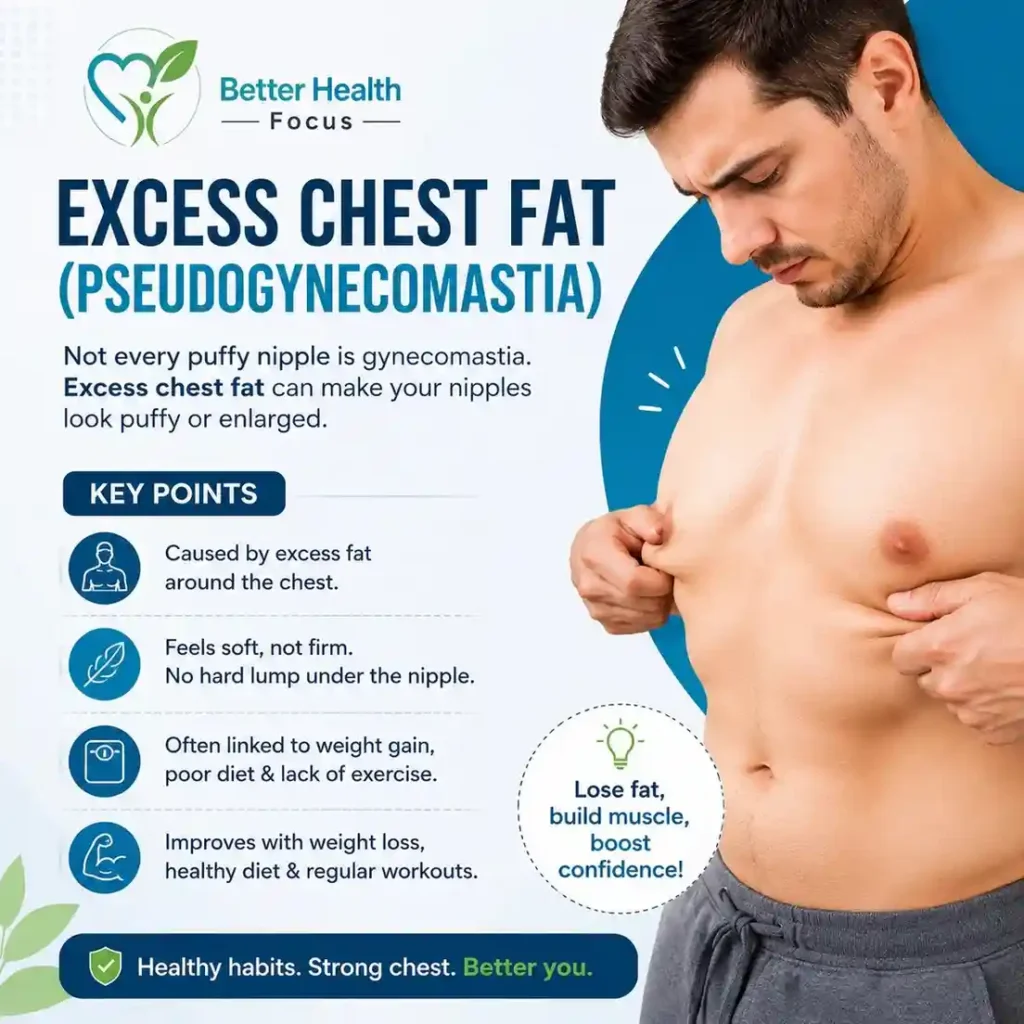
Not every man with enlarged nipples has gynecomastia.
Many overweight individuals develop excess fat around the chest, a condition known as pseudogynecomastia.
Unlike gynecomastia:
- The chest feels soft rather than firm.
- There is no hard gland beneath the nipple.
- Weight loss often improves the appearance.
If someone gains significant weight, the nipples may appear puffy simply because the surrounding chest becomes larger.
4. Puberty
Puberty is one of the most common causes of puffy nipples in teenage boys. During adolescence, hormone levels fluctuate rapidly, and the balance between testosterone and estrogen can temporarily shift. As a result, the breast tissue beneath the nipple may enlarge slightly.
This condition is known as pubertal gynecomastia, and it’s usually harmless.
Common signs include:
- Puffy nipples or enlarged areolas
- Mild tenderness around the nipple
- One side becoming enlarged before the other
- Temporary swelling that gradually improves
In most teenagers, the condition resolves naturally within one to three years as hormone levels stabilize. Surgery or medication is rarely needed unless the enlargement persists or causes significant physical or emotional distress.
5. Excess Body Fat and Obesity
If you’ve recently gained weight and noticed changes in your chest, body fat may be contributing to male puffy nipples.
When body fat increases, fat can accumulate around the chest, making the nipples appear more prominent. In addition, obesity may increase the body’s conversion of testosterone into estrogen, which can further contribute to breast tissue enlargement.
This creates two possible problems:
- Extra fat around the chest (pseudogynecomastia)
- Hormonal changes that may contribute to true gynecomastia
Example
A man who gains 20–30 pounds over several years may notice his chest becoming fuller. After gradually losing weight through improved nutrition and strength training, the fatty tissue may decrease. However, if glandular breast tissue has developed, some fullness may remain.
6. Certain Medications
Some prescription and recreational drugs are known to cause puffy nipples because they can affect hormone levels or stimulate breast tissue growth.
Examples include:
- Some anti-androgen medications
- Certain antidepressants
- Some blood pressure medications
- Medications used to treat prostate conditions
- Some anti-ulcer medications
- Certain HIV medications
Never stop taking a prescribed medication without speaking to your healthcare provider. If you suspect a medicine is contributing to puffy nipples, your doctor can review your treatment options.
7. Anabolic Steroid Use
Anabolic steroids are another well-recognized cause of puffy nipples in men.
These synthetic hormones can interfere with the body’s natural testosterone production. As steroid hormones are broken down, some may convert into estrogen, increasing the risk of breast tissue enlargement.
Other signs may include:
- Acne
- Mood changes
- Testicular shrinkage
- Reduced natural testosterone production
The longer steroids are used, the greater the risk of developing gynecomastia that may not fully resolve on its own.
8. Aging and Natural Hormonal Changes
As men age, testosterone levels naturally decline. This gradual decrease may change the balance between testosterone and estrogen.
Combined with reduced muscle mass and increased body fat, aging can contribute to puffy nipples later in life.
Not every older man develops this condition, but the likelihood increases after middle age.
9. Medical Conditions
Although less common, certain medical conditions can contribute to enlarged breast tissue or male puffy nipples.
These include:
Liver Disease
The liver helps regulate hormone metabolism. Chronic liver disease may alter hormone balance and increase estrogen activity.
Kidney Disease
Advanced kidney disease can disrupt hormone production and increase the risk of gynecomastia.
Thyroid Disorders
An overactive thyroid (hyperthyroidism) may increase hormone activity associated with breast tissue growth.
Testicular Conditions
Problems affecting the testicles can reduce testosterone production, altering the hormone balance that keeps breast tissue in check.
Although these conditions are less common than puberty or weight gain, they should be considered if puffy nipples develop suddenly or are accompanied by other symptoms.
My experience: While researching men’s health topics, I’ve noticed many readers assume puffy nipples always mean gynecomastia. In reality, the cause can range from temporary hormonal changes during puberty to excess chest fat or medication side effects. That’s why it’s important not to self-diagnose based on appearance alone.
How Do Doctors Identify the Cause?
If you’re wondering “Why are my nipples puffy?”, your doctor will first determine whether the enlargement is caused by fat, glandular tissue, hormones, or another medical condition.
A typical evaluation may include:
Medical History
Your doctor may ask about:
- When the enlargement started
- Current medications
- Recent weight changes
- Family history
- Steroid or supplement use
Physical Examination
The chest is examined to determine whether the tissue feels soft (fat) or firm (glandular tissue).
Blood Tests
Hormone tests may include:
- Testosterone
- Estrogen
- Thyroid hormones
- Liver function
- Kidney function
Imaging
In some cases, ultrasound or mammography may be recommended if another condition needs to be ruled out.
When Should You See a Doctor?
Many cases of puffy nipples are harmless, especially during puberty. However, medical evaluation is recommended if you notice:
- Rapid breast enlargement
- Severe pain
- Bloody nipple discharge
- A hard lump that doesn’t move
- Enlargement on only one side
- Fever or signs of infection
- Swollen lymph nodes
These symptoms don’t necessarily indicate a serious condition, but they deserve prompt medical assessment.
How Are Puffy Nipples Treated?
The right treatment depends entirely on the underlying cause. Since male puffy nipples can result from excess body fat, hormonal changes, gynecomastia, medications, or certain medical conditions, there isn’t a one-size-fits-all solution.
For some men, simple lifestyle changes are enough to improve the appearance of the chest. Others may need medical evaluation and treatment if the enlargement is caused by persistent gynecomastia or another health condition.
1. Maintain a Healthy Weight
If excess chest fat is contributing to the problem, losing weight may reduce the appearance of puffy nipples. A combination of regular exercise and a balanced diet can help decrease overall body fat.
Keep in mind that while weight loss can reduce fatty tissue, it may not eliminate enlarged glandular breast tissue caused by gynecomastia.
2. Build Chest Muscles
Strength training won’t remove glandular tissue, but it can improve the appearance of the chest by developing the pectoral muscles.
Exercises that target the chest include:
- Push-ups
- Bench press
- Incline dumbbell press
- Chest flys
- Cable crossovers
Combining resistance training with full-body exercise often provides better overall results than focusing only on chest workouts.
3. Review Your Medications
If puffy nipples developed after starting a new medication, talk with your healthcare provider. In some cases, adjusting or changing the medication may help.
Never stop taking prescription medication without professional medical advice.
4. Treat Underlying Medical Conditions
When hormonal disorders, thyroid disease, liver disease, or kidney disease are responsible, treating the underlying condition may improve breast enlargement over time.
5. Surgery
For men with long-standing gynecomastia that doesn’t improve with lifestyle changes or medical treatment, surgery may be considered.
Procedures typically involve removing glandular tissue, excess fat, or both. Surgery is usually reserved for persistent cases after a proper medical evaluation.
Can Puffy Nipples Be Prevented?
Not every case can be prevented, especially those related to puberty or genetics. However, some healthy habits may reduce the risk of developing puffy nipples related to lifestyle or hormone imbalance.
Helpful prevention tips include:
- Maintain a healthy body weight.
- Exercise regularly with both cardio and strength training.
- Eat a balanced, nutrient-rich diet.
- Avoid anabolic steroids unless medically prescribed.
- Limit excessive alcohol consumption.
- Discuss medication side effects with your healthcare provider.
- Manage chronic health conditions such as thyroid or liver disease.
These habits also support overall men’s health beyond breast tissue concerns.
Frequently Asked Questions
Why are my nipples puffy but I’m skinny?
Even lean men can develop puffy nipples. Hormonal changes, puberty, or true gynecomastia may enlarge the glandular breast tissue even when body fat is low. A medical evaluation can help determine the exact cause.
Are puffy nipples permanent?
Not always. Puffy nipples caused by puberty often improve naturally within a few years. Cases related to excess body fat may improve with weight loss. However, persistent gynecomastia caused by enlarged glandular tissue may not disappear without medical treatment.
Can exercise get rid of puffy nipples?
Exercise can reduce overall body fat and improve chest muscle definition, which may make the chest appear flatter. However, if enlarged glandular breast tissue is the cause, exercise alone may not completely eliminate puffy nipples.
Is gynecomastia the same as chest fat?
No. Gynecomastia is the enlargement of male breast gland tissue, usually caused by hormonal changes. Chest fat, also called pseudogynecomastia, results from excess fat deposits without enlargement of the glandular tissue.
Should I worry about one puffy nipple?
A single puffy nipple isn’t always a sign of a serious problem, particularly during puberty. However, if one side enlarges suddenly, becomes painful, develops a hard lump, or is associated with nipple discharge, you should seek medical evaluation promptly.
Final Thoughts
The causes of puffy nipples vary from harmless hormonal changes during puberty to gynecomastia, excess body fat, medications, and certain medical conditions. Understanding why your nipples are puffy is the first step toward choosing the most appropriate management strategy.
Many cases improve with time, healthy lifestyle changes, or treatment of the underlying cause. However, persistent enlargement, pain, rapid growth, or symptoms affecting only one side should not be ignored. Consulting a qualified healthcare professional can help determine whether your male puffy nipples are a normal variation, related to lifestyle factors, or a condition requiring further evaluation.
References & Sources

Daniel Brooks
Men's Health & Blood Sugar Writer
Better Health Focus
Expertise
Men's Health • Blood Sugar Management • Type 2 Diabetes Education • Prediabetes • Healthy Lifestyle • Nutrition • Metabolic Health • Preventive Wellness • Evidence-Based Health Content
About Daniel Brooks
Daniel Brooks is a Men's Health & Blood Sugar Writer at Better Health Focus, where he develops evidence-based educational content focused on men's wellness, blood sugar management, diabetes prevention, metabolic health, and healthy lifestyle habits.
With more than five years of experience writing health content, Daniel specializes in transforming complex medical research into practical, reader-friendly articles that help people better understand chronic disease prevention and long-term wellness. His work emphasizes realistic lifestyle changes, balanced nutrition, physical activity, and sustainable habits rather than quick fixes or unsupported health claims.
Daniel has completed professional education in Lifestyle Medicine through the American College of Lifestyle Medicine (ACLM) and has undertaken extensive independent study of evidence-based guidance, clinical recommendations, and educational resources published by the American Diabetes Association (ADA). His writing reflects current research and established best practices related to blood sugar management, diabetes prevention, cardiovascular health, and men's health.
Before publishing an article, Daniel reviews reputable medical literature and guidance from organizations including the National Institutes of Health (NIH), PubMed, the American Diabetes Association (ADA), the American Heart Association (AHA), the Centers for Disease Control and Prevention (CDC), and peer-reviewed scientific journals whenever applicable.
His goal is to help readers understand the science behind healthy living while making evidence-based information clear, practical, and accessible.
Education & Professional Development
- Professional education in Lifestyle Medicine through the American College of Lifestyle Medicine (ACLM)
- Ongoing study of evidence-based resources and clinical guidance published by the American Diabetes Association (ADA)
- Continuing education in nutrition science, metabolic health, and preventive medicine
- Regular review of peer-reviewed medical research and public health guidance
Areas of Focus
- Men's Health
- Blood Sugar Management
- Prediabetes Education
- Type 2 Diabetes Prevention
- Metabolic Health
- Heart Health
- Healthy Weight Management
- Nutrition & Healthy Eating
- Exercise & Lifestyle Medicine
- Preventive Health
Editorial Approach
Every article written by Daniel Brooks follows the editorial standards of Better Health Focus and is based on current scientific evidence from reputable medical organizations and peer-reviewed research whenever available.
His content is guided by the principles of:
- Evidence-based health education
- Scientific accuracy and transparency
- Balanced discussion of benefits, risks, and research limitations
- Clear and practical language for everyday readers
- Responsible reporting without exaggerated health claims
- Alignment with Google E-E-A-T principles for health content
Daniel believes that trustworthy health information should empower readers to make informed decisions in partnership with qualified healthcare professionals.
Research Sources
Daniel regularly consults information from:
- National Institutes of Health (NIH)
- PubMed
- American Diabetes Association (ADA)
- American College of Lifestyle Medicine (ACLM)
- Centers for Disease Control and Prevention (CDC)
- American Heart Association (AHA)
- U.S. Department of Agriculture (USDA)
- Office of Dietary Supplements (ODS)
- Peer-reviewed scientific journals
Editorial Disclaimer
The information published by Daniel Brooks on Better Health Focus is intended for educational and informational purposes only. It is not a substitute for professional medical advice, diagnosis, or treatment. Readers should consult a qualified healthcare professional before making decisions regarding medications, diabetes care, supplements, diet, or lifestyle changes.