

Most people think about keeping their weight, muscles, and heart healthy when they picture being healthy. However, one crucial part of your body often goes unnoticed: your bones. You don’t notice them in younger days, but if not taken care of properly, they can affect your daily life in later years.
Bones are not just rigid, dead parts that hold your body up. They are living tissues that fix themselves over time. But as we get older, our bones may lose density, which can slow down this process. It makes your bones weak and easy to break, even from a small fall or hit.
The good news is that if you take proper actions, you can improve your bone density without any complicated process.
In this blog, we will go through easy ways to increase your bone density naturally and keep it strong for a long time.
Table of Contents
What Exactly Is Bone Density and How Does It Work
Bones are living tissues. They break down unnecessary and damaged parts and build new ones every day in a balance called remodeling. The special cells that build bones are called osteoblasts, and the ones that remove them are called osteoclasts. When the creation of new ones is greater than the removal, your density is high.
The bone density is measured with a quick scan called DEXA (dual-energy X-ray absorption). It gives a T-score: normal is 0 or higher. A low score is -1 to -2.5, which is called “osteopenia.” A bone density below -2.5 is called “osteoporosis.” You might not notice bone thinning until your bone breaks from a small fall.
There are many things that affect bone density. Genetics is one of them. While some have naturally high-density bones, others don’t. But hormones like estrogen and testosterone help build them. Lack of certain nutrients can also cause a decrease in density. Increasing age, family history, small body frame, and smoking are some factors that can accelerate this process.
When women hit post-menopause, they end up losing about 2% per year. Asian and white women have a higher risk, while Black women have a lower risk but still need proper care. Men over 50 also lose consistently. Prevention can be done when you are in your 20s. But it’s never too late to help yourself.
How Nutrition Helps Build Stronger Bones
What you eat every day has a direct effect on your bones’ health. Food is like fuel for your bones to work, repair, rebuild, and stay strong. Without the right kind of nutrition, your bones slowly become weaker without you noticing anything.
Calcium is the most important nutrient in this process. It gives your bones their strength and structure. If your body is not getting enough calcium from the food you eat, it starts taking it from your bones, weakening them over time. That is why it is important to have calcium-rich foods like milk, yogurt, cheese, leafy greens, or fortified foods in your daily meals.
Other than calcium, vitamin D is also essential for your bones. Without vitamin D, a heavy amount of the calcium you eat goes to waste. Sunlight, fatty fish, eggs, and fortified foods can help you meet your need for vitamin D.
There are other nutrients, too, that play a quiet but important role in your bone health. Protein helps build the structure of your bones, and minerals like magnesium and potassium support bone strength. That’s why health experts suggest eating balanced meals with a mix of whole foods to get all of these easily.
A Simple Diet To Increase Bone Density
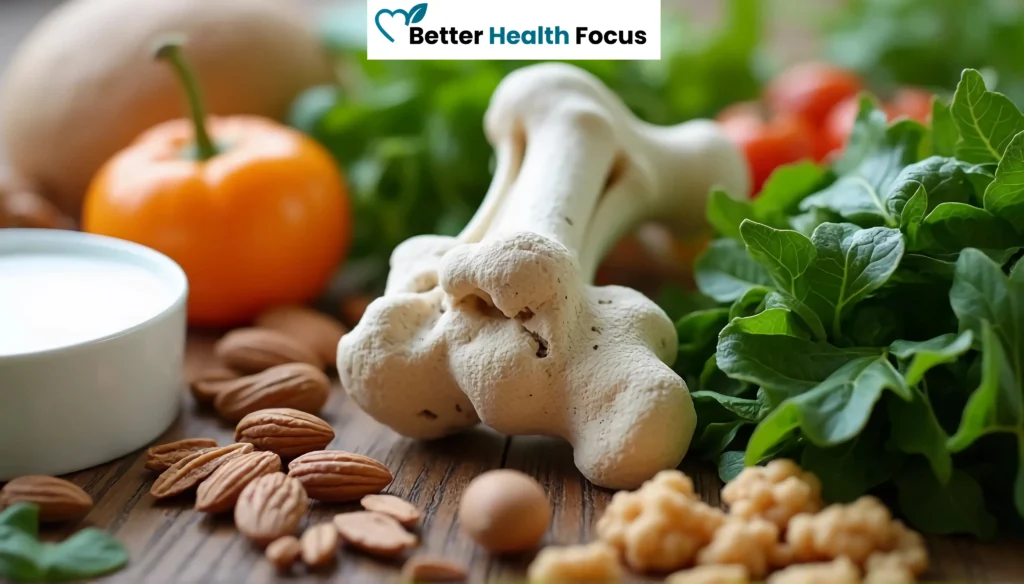
You don’t need a fancy or strict diet to support your bone health. Small, realistic changes in your eating can also make a big difference. Here is a simple diet that can help increase and support your bone density.
- Breakfast
A bowl of plain yogurt with a handful of almonds and a sliced banana. This gives you calcium, protein, magnesium, and potassium.
- Mid‑morning snack
A small glass of fortified milk or a cheese stick with an apple.
- Lunch
A leafy salad with grilled chicken or tofu, plus a side of lentils or beans. Dress the salad with olive oil and lemon for extra flavor and a bit of vitamin K.
- Afternoon snack
A banana or a small orange with a handful of walnuts.
- Dinner
Baked salmon or another fish with a side of quinoa or brown rice and a serving of steamed broccoli or other green vegetables.
If you don’t eat non-veg and want to follow a plant-based diet, you can still protect and support your bones. You can use fortified milk, plant-based yogurts, tofu, tempeh, beans, nuts, and leafy greens. Reading labels on plant-based milk and cereal can help you find products rich in calcium and vitamin D.
Drinking plenty of water is also important. Dehydration can affect nutrient supply and overall health.
How Exercise Increases Bone Density Naturally
Besides food, exercise is another effective tool for increasing or maintaining bone density. When you put pressure on your bones through exercise, your body reinforces them. This process is the same as how muscles increase and become stronger when you lift weights. Here are some of the best types of exercises for improving your bone health.
Weight‑Bearing Exercises
These weight-bearing exercises are activities in which you move your body while staying on your feet. Some of them are:
- Walking
- Jogging or running
- Hiking
- Dancing
- Climbing stairs
- Low‑impact aerobics
- Sports like tennis, basketball, or badminton
These activities work especially well for your hip, spine, and leg bones. For an average adult, doing at least 150 minutes of moderate aerobic activities per week is recommended. A simple walk can also aid in making your bones stronger.
Resistance Training
Resistance training engages and works your muscles and bones with bands, weights, and even with bodyweight. Some of them are:
- Lifting dumbbells or resistance bands
- Using weight machines at a gym
- Doing body‑weight exercises like squats, lunges, push‑ups, and planks
These exercises are not for muscle strengthening. They also put healthy pressure on your bones. Studies indicate that resistance training can help maintain or even increase the density of bone in certain areas.
Doing resistance training for two or more days per week helps improve your overall health. To start, you can use lighter weights or resistance bands and slowly increase the pace and weight as you get stronger. However, if you have any health concerns or existing issues, you should speak with your doctor first.
Balance and Flexibility Exercises
When you get older, your balance and flexibility become weaker. Doing exercises to improve both of these can reduce the risk of losing balance, falling, and breaking bones. Some helpful exercises include:
- Yoga
- Tai chi
- Gentle stretching routines
These exercises help with muscle control, posture, and coordination. Even just doing these for 10 to 20 minutes a few times a week can help you feel more sure of yourself and your daily tasks.
Lifestyle Habits That Can Increase Bone Density
While your diet and exercises have a significant effect on your bones’ health, your daily habits also play quite an important role behind the scenes. Some of the habits that can help protect your bones and increase their density.
1. Maintain a Healthy Body Weight
Being at a healthy weight helps protect your bones. Underweight people, or those who are very thin naturally, have smaller bones and are more prone to bone loss and fractures. As they grow older, they have less bone mass to spare. Low weight also affects your hormones, which can accelerate bone loss.
But on the other hand, if you are overweight, it’s not favorable either. While some used to believe that extra weight protects bones, recent research indicates that obesity can actually decrease bone health and increase the risk of fractures.
That’s why your goal should be to maintain a healthy weight according to your body through healthy eating and exercise.
2. Quit Smoking
Everyone knows how harmful smoking can be to health. But did you know that it is also very harmful for bones?
According to the CDC, smoking cigarettes causes osteoporosis. Toxins in cigarettes affect the blood supply to your bones. It also affects your ability to absorb calcium from food and kills bone-building cells (osteoblasts) in your body. In women’s case, they experience menopause earlier, which leads to earlier and faster bone loss.
Quitting smoking is one of the best things you can do for your health and bone density.
3. Limit Alcohol Intake
Drinking alcohol once in a while might be fine, but heavy drinking affects your bone health. It affects the balance of calcium and the production of hormones that protect your bones.
However, if you still want to drink, at least drink after consulting your doctor and only the recommended amount.
4. Watch Your Salt and Caffeine
- Sodium (Salt)
Eating too much salt (sodium) can cause you significant calcium loss. Calcium is important for your bone health. Try to limit or avoid processed foods, which are usually high in salt.
- Caffeine
Too much coffee, tea, or soda can affect your calcium absorption. Try to limit your caffeine intake, or your bones might face problems.
5. Better Sleep
Not only for your bones but also for your overall health, sleep is essential. Your body releases growth hormones while you sleep, which are essential for repairing and building muscle and bone. Not getting enough sleep can lead to bone breakdown over time. Try to get at least 7–9 hours of sleep regularly.
Who Needs Extra Care for Bone Health
Some people are naturally extra prone to loss of bone density. They need to pay extra care to their bone health. Some of them include:
- Women after menopause
- Older adults
- People with low body weight or eating disorders
- People on certain medicines
- Those with a family history
If you are in any of these, you should pay extra attention to your bone health. Talk to a doctor or dietitian for better advice.
When to See a Doctor About Bone Density
There is no need to wait until you are fractured to start caring for your bone health. If the information below sounds familiar, you should get immediate help from a doctor.
- Back pain that doesn’t go away
- Noticeable loss of height over time
- Hunched or curved posture
- A broken bone from a minor fall or from everyday activities
If you are women above 65 and men above 70, you should get routine checkups for your bone health. This can help detect any risk earlier and fight it better.
A Simple Daily Plan to Support Bone Health
Here is a short and simple daily plan you can follow to increase your bone density.
- Morning
A bowl of plain yogurt with a handful of nuts and a fruit, such as a banana or orange. This gives you calcium, protein, healthy fats, and vitamin C.
- Mid‑morning
A glass of fortified milk or a small serving of cheese.
- Lunch
A salad with beans or lentils, plus a side of vegetables such as broccoli or carrots.
- Afternoon
A piece of fruit with a few almonds or walnuts.
- Dinner
Grilled fish or chicken with brown rice or quinoa and a serving of dark green vegetables.
- Workout
30 minutes of brisk walking, plus a few sets of body‑weight squats or leg lifts.
- Other habits
Avoid smoking, limit alcohol, and get some time in the sun when possible.
You can change this plan according to your needs and start at your own pace. As these habits become normal, you can slowly increase and build a healthy lifestyle to support your bone health.
Final Thoughts
Your everyday choices directly affect how strong your bones are. No single food, exercise, or trick will instantly make our bones denser. Eating healthy foods high in calcium and vitamin D, working out regularly, living a healthy lifestyle, and staying away from things that can hurt your bones are all things you can do to increase your bone density naturally.
Whether you are in your 20s or later years of your life, it’s never too late to start. Every small contribution counts. Healthy and stronger bones help you with your everyday activities and make you confident and independent.
Frequently Asked Questions
1. Can bone density really become better naturally?
Yes. Many people are able to improve or at least protect bone density with the right plan and lifestyle. Eating healthy, meeting calcium and vitamin D requirements, staying physically active, and avoiding smoking and alcohol consumption can support and improve your bone health over time.
2. What foods help build stronger bones?
Milk, yogurt, cheese, leafy greens, salmon and sardines, and fortified foods are some of the best foods to make your bones stronger. These provide you with essential nutrients and minerals your bones need.
3. How much calcium do I need each day?
Usually, an average adult needs about 1,000 mg of calcium per day. Women over 50 and men over 70 should take 1,200 mg of calcium every day.
4. Why is vitamin D essential for bones?
Vitamin D strengthens your body’s absorption and usage of calcium, which is important for bones. Vitamin D deficiency can make your bones thin and weaker over time. An adult needs 600 IU of vitamin D per day, whereas older adults need around 800 IU of vitamin D.
5. Do supplements help with bone density?
Yes. They can help you meet your requirements for calcium and vitamin D. However, they are not a replacement for getting them naturally through diet and exercise. Before using any supplement, you should speak with your doctor.
6. What habits can weaken bones over time?
Excessive smoking and drinking alcohol can make you more likely to get osteoporosis and break bones over time. That’s why taking care of your bones isn’t just about eating well and working out.

Olivia Reed
Women's Health & Skincare Writer
Better Health Focus
Expertise
Women's Health • Skincare • Hormonal Health • Beauty & Skin Science • Preventive Wellness • Healthy Aging • Nutrition for Skin Health • Lifestyle Medicine • Evidence-Based Health Education
About Olivia Reed
Olivia Reed is a Women's Health & Skincare Writer at Better Health Focus, where she creates evidence-based educational content focused on helping readers better understand women's wellness, hormonal health, skincare, healthy aging, and preventive self-care.
Her writing combines scientific research with practical lifestyle guidance, making complex health and skincare topics easy to understand without relying on misleading beauty trends or unrealistic health claims. Olivia Reed believes that informed readers make better health decisions, and she strives to present balanced information that reflects current scientific evidence.
Before publishing an article, Olivia Reed reviews guidance and research from respected organizations, including the National Institutes of Health (NIH), PubMed, the World Health Organization (WHO), the American Academy of Dermatology (AAD), the American College of Obstetricians and Gynecologists (ACOG), the Office on Women's Health (OWH), and peer-reviewed medical journals whenever applicable.
Her work regularly explores women's hormonal changes throughout different life stages, skincare science, acne, eczema, pigmentation, menopause, nutrition for healthy skin, reproductive wellness, hair health, and evidence-based approaches to beauty and preventive healthcare.
Olivia Reed is committed to separating scientific evidence from social media trends and marketing claims, helping readers understand what current research supports—and where evidence is still emerging.
Education
Bachelor of Arts (B.A.) in Health Communication
Professional Development
- Continuing education in Women's Health and Skin Science
- Ongoing study of dermatology research and preventive healthcare
- Regular review of peer-reviewed publications related to dermatology, endocrinology, nutrition, women's health, and public health
- Continuous monitoring of clinical guidance from leading medical organizations
Areas of Focus
- Women's Health
- Hormonal Health
- Menstrual & Reproductive Wellness
- Pregnancy & Postpartum Education
- Menopause & Healthy Aging
- Skincare & Dermatology Education
- Acne, Eczema & Sensitive Skin
- Hair & Scalp Health
- Nutrition for Healthy Skin
- Preventive Health & Lifestyle Medicine
Editorial Standards
Every article written by Olivia Reed Ward follows the editorial standards of Better Health Focus and is developed using reputable medical references and current scientific literature whenever available.
Her editorial approach emphasizes:
- Evidence-based health education
- Scientific accuracy
- Balanced discussion of benefits, risks, and research limitations
- Clear, accessible language for everyday readers
- Responsible reporting without exaggerated claims
- Alignment with Google E-E-A-T principles for health content
Rather than promoting miracle treatments or viral beauty trends, Olivia Reed focuses on practical, research-informed guidance that supports informed decision-making and long-term wellness.
Research Sources
Articles may reference information from organizations and databases such as:
- National Institutes of Health (NIH)
- PubMed
- World Health Organization (WHO)
- American Academy of Dermatology (AAD)
- American College of Obstetricians and Gynecologists (ACOG)
- Office on Women's Health (OWH)
- American Academy of Pediatrics (AAP)
- U.S. Food & Drug Administration (FDA)
- Peer-reviewed scientific journals
Editorial Disclaimer
The information published by Olivia Reed Ward on Better Health Focus is intended for educational and informational purposes only. It should not replace professional medical advice, diagnosis, or treatment. Readers should consult a qualified healthcare professional or dermatologist regarding personal medical concerns, medications, skincare treatments, or significant health decisions.