

Jaw pain on one side of the face is not always serious, but it can be incredibly frustrating. Suddenly, it starts to hurt when eating, talking, or even while smiling. Is it a hidden cavity, nighttime teeth grinding, or something else? All these thoughts start running through your mind when your jaw keeps hurting.
Let’s learn more about common causes for one-sided jaw pain, easy relief remedies, and understand when you should go to the dentist for proper medical checkups.
Table of Contents
How Does My Jaw Work, And Why Does It Hurt?
Jaw pain is not the same for everyone. For some people, it might be a dull, annoying ache near the ear. For others, it’s a sharp pain that occurs even while chewing, talking, or smiling. You might even notice popping sounds.
Why does it happen? Your jaw isn’t just a basic hinge. It depends on a very active joint called the TMJ, located right in front of your ears. Every time you talk, chew, swallow, or even yawn, this joint plays a role in that.
It is the joint between the lower jaw and skull. It has a small cartilage disc that acts as a shock absorber. When everything is perfect, your jaw works smoothly. But a muscle gets strained, a nerve gets irritated, or that little disc gets displaced, and you feel pain. Both sides of your jaw can work independently, so it’s totally normal to feel that pain on one side of the face.
The Most Common Causes of Jaw Pain on One Side
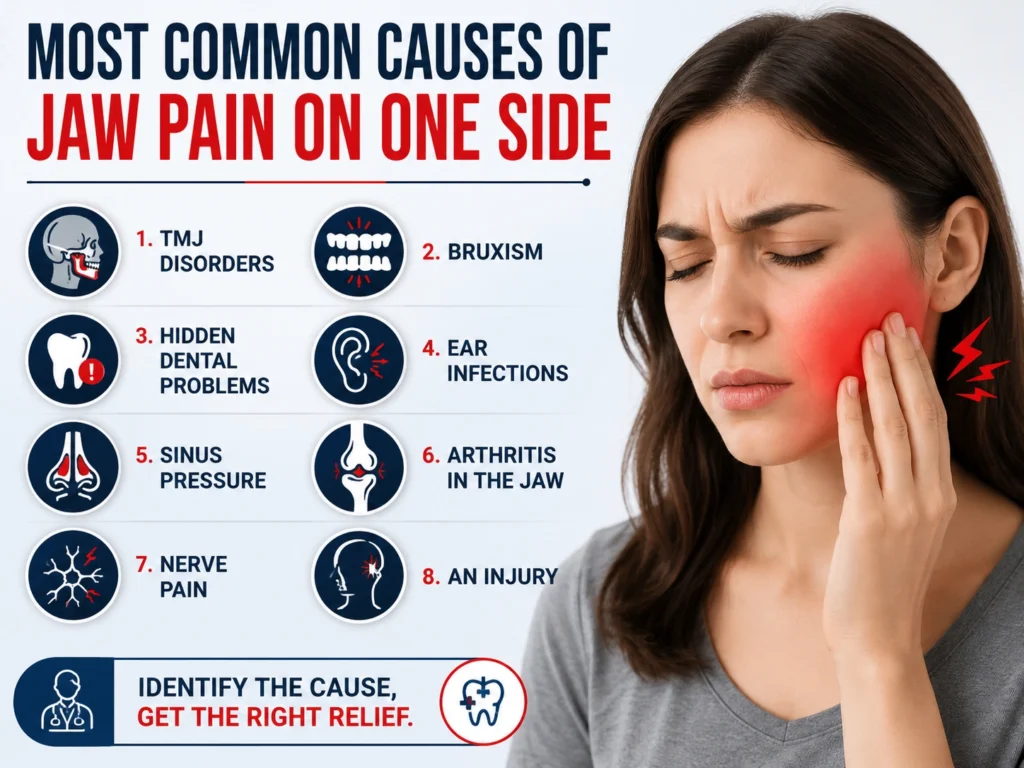
Because your face is packed conjoinedly with nerves, muscles, bones, and teeth, a problem in one of them can easily affect another spot. It is called “referred pain,” and it’s the reason why finding the root cause of your jaw pain can be like a guessing game.
Let’s discuss the most common causes of that frustrating jaw pain on one side of the face.
TMJ Disorders
One of the most common causes of one-sided jaw pain is inflammation in your temporomandibular joint (TMJ). Remember that sliding hinge in front of your ear? When it gets strained, inflamed, or pushed out of alignment, it can cause you jaw pain.
But why does it hurt on one side? Usually, it’s because of our habits. If you consistently chew your food on the right side of your mouth, or if you always sleep on the left side, you are putting uneven pressure on one side of your joints. This leads to jaw pain on one side near ear, even if your other side feels completely fine.
You should watch out for:
- Sudden locked or stuck jaw.
- Pain while eating food.
- Popping or clicking sound when you chew.
Bruxism
Teeth grinding, also known as bruxism, is a common habit in which people clench or grind their teeth, particularly while asleep. Because you might naturally clench one side of your teeth harder than the other while sleeping, you might wake up with a sore jaw on one side and ear pain.
You should watch out for:
- A dull morning headache.
- Teeth that feel sensitive to hot or cold drinks.
- A partner telling you that you make grinding noises in your sleep.
Hidden Dental Problems
Sometimes, your jaw joint is perfectly healthy and fine, but a grumpy tooth is sending out distress signals. A deep cavity, a cracked tooth, or an infected gum can cause severe pain that can have an impact on your entire jawline.
Wisdom teeth infections are another common cause. If they don’t have enough room to grow, they push against your other teeth and bone, causing a deep, throbbing ache.
You should watch out for:
- Your gums or cheek look puffy.
- The pain makes it hard to sleep.
- You get a sudden high temperature or a bad taste in your mouth.
Ear Infections
Your ear canal and your jaw joint are practically neighbors. Because they are so incredibly close together, pain that is caused by the ear can affect your jaw, too.
If you have a sore jaw on one side and ear pain at the same time, chances are very high that the real problem is inside your ear and not in your mouth.
You should watch out for:
- Ringing in your ears.
- A blocked feeling in the ear.
- Changes in your hearing or fluid draining from the ear.
Sinus Pressure
Your maxillary sinuses are small empty spaces behind your cheeks and above your upper teeth. Allergies, a cold, or a sinus infection can make them swollen and fill up with mucus or fluid. It puts a lot of pressure directly on your upper jaw, which can cause jaw pain on one side of face.
You should watch out for:
- Pain around your eyes and cheekbones.
- A stuffy or runny nose.
- Pain that suddenly gets worse when you bend forward to tie your shoes.
Arthritis in the Jaw
We usually think of arthritis as stiff knees or achy fingers, but it can affect your jaw joints, too. Over time, the protective cartilage inside the TMJ can simply wear down (osteoarthritis), or your body’s immune system can mistakenly attack the joints (rheumatoid arthritis).
You should watch out for:
- A grinding or grating sound when opening your mouth.
- Stiffness that is worse in the morning but loosens up as the day goes on.
Trigeminal Neuralgia (Nerve Pain)
The trigeminal nerve is a big nerve that transmits signals of sensation and pain from your face to your brain. Trigeminal neuralgia is a type of nerve pain that is not your typical nerve pain. If nearby blood vessels or nerves push or irritate this nerve, it can cause sudden jaw pain on one side of face.
You should watch out for:
- Sudden, intense, electric-shock-like pain on one side of the face.
- Pain that comes in brief attacks (lasting a few seconds to a few minutes).
- Pain triggered by barely touching your face, like when applying makeup or feeling a light breeze.
An Injury
It’s not only sportspersons who get their jaws injured. A minor car fender-bender, a trip and fall, a sports bump, or even biting down entirely too hard on a piece of hard candy can stretch a ligament or bruise the joint.
You should watch out for:
- Visible bruising or outside swelling.
- Pain that started immediately following a specific physical event.
Stress and Muscle Tension
Your mind and your jaw are deeply connected with each other. When your mind is overworked due to emotional stress, work pressure, or dealing with a busy lifestyle, your body keeps that stress physically.
Many people subconsciously tighten their facial muscles and clench their jaws while watching TV or just waiting for a green light in traffic. Over time, this pressure on muscles results in overworking your jaw, leaving it sore and in pain.
Rare But Serious Causes to Keep in Mind
While most jaw pain on one side of the face is easily treatable, you should know that there are rare but serious medical conditions that can also be causes.
Heart Attacks
It might be surprising, but jaw pain can also be a warning sign of a heart attack, especially in women. If you suddenly start feeling pain only on the left side of your jaw, along with pressure on your chest, shortness of breath, dizziness, or sweating, call emergency services immediately.
Oral Cancers
While cancer can be the cause of jaw pain, it is a very rare situation. Cancer almost never comes as an invisible pain. It typically brings visible warning signs, like a noticeable lump, a persistent mouth soreness, unexplained numbness in the face, or trouble in swallowing food. If you notice any of these specific signs, you should quickly go to a doctor for proper medical treatment.
Read more Informative Gum Disease Blogs
How to Get Fast Relief at Home
Usually, if you don’t have severe swelling or fever, moderate jaw pain on one side of the face can be treated easily at home. If your muscles are strained or your TMJ is simply irritated, here are some easy-to-follow and effective home relief methods you can try.
1. Try Hot or Cold Therapy
Hot and cold therapy is a great natural way to soothe pain in the muscles. But remember to use the right one according to your pain.
- If you have sharp pain or little swelling, you should use cold therapy. Wrap an ice pack or a bag of frozen peas in a towel and gently put it where you are feeling pain for 10-15 minutes. It naturally soothes the irritated nerves.
- You should use Hot therapy if your jaw feels dull, stiff, and tight (especially when waking up). A heating pad placed against the area of pain can help to relax those overworked jaw muscles and improve blood flow.
2. Switch to a “Soft” Diet
If you are feeling jaw pain every time you eat something hard, give your jaw time to relax. Stop eating hard food for a while. It will help it get relaxed and heal from overworking.
- Avoid chewing gums, tough snacks, tough meats, thick sandwiches, raw carrots, or chewing ice.
- Prefer more smoothies, yogurt, mashed potatoes, well-cooked pasta, soups, and scrambled eggs.
- Cut all your food into small pieces so you don’t have to overwork your jaw.
3. Don’t Open Too Wide
While this might sound simple and ineffective, you need to give rest to the joints to heal slowly. Try to avoid things like stretching your mouth open too wide. Stop yourself before you take a massive yawn, take a break from talking loudly, and try to keep your jaw relaxed as much as possible.
4. Give Yourself a Gentle Massage
Massaging your facial muscles gently can also help you with jaw pain. Find the thick, bulky muscle at the bottom of your jaw (right below your ear). Use your first two fingers and push gently, and rub the area slowly in small circular motions to assist the muscles in releasing tension.
5. Relax Your Mind to Stop Clenching
Since daily stress is a massive cause of teeth grinding and clenching your jaw, simply calming your nervous system can provide many great benefits you might not even expect. You can try taking a few deep breaths, doing some gentle stretching, or listening to relaxing music before going to bed so you don’t sleep with a clenched jaw.
6. Use Basic Pain Relievers Carefully
If the pain is really distracting from your day, over-the-counter medicines like ibuprofen or acetaminophen can help calm the physical inflammation and take the edge off. Just remember always to follow the package directions. These are great for short-term relief, but if you need them every single day, it is time to call a professional!
When Is It Time to Call a Doctor?
While home remedies are great help in moderate jaw pain, you should never ignore pain when it’s not going away after trying various home relief methods. Now, it’s time for you to go to a doctor and get proper medical treatment.
- Your pain lasts more than a few days without improving.
- Your jaw gets stuck, or you can’t open it fully.
- You develop a fever or noticeable facial swelling (clear signs of an infection).
- The pain feels like a sudden electric shock.
- Your teeth are chipping, cracking, or feeling loose.
If you are feeling any of these things, just go to the doctor and get properly checked. It can help you recover before it gets worse.
Final Thoughts
Dealing with jaw pain on one side of the face is very frustrating. It can easily ruin your day. While it’s easy to take a painkiller and hope it goes away, more than that, you need to give proper care and time to help your jaw recover.
You can follow simple home relief methods like eating soft food and using hot and cold therapy. However, even after days, if you are waking up with jaw pain on one side and struggling to eat, talk, or sleep, you should go to the doctor for proper medical help. Going to the doctor in time can prevent it from getting worse.
jaw pain Related Frequently Asked Questions
Can stress cause jaw pain on one side?
Yes, you get stressed, and sometimes your body naturally tightens your muscles or clenches your teeth. Over time, it can cause jaw pain on one side of face. Relaxing exercises can do you a lot of good.
Is One-Sided Jaw a Sign of a Tumor?
Usually, not. It is in extremely rare cases that jaw pain can be a sign of a tumor or cancer. Most jaw pain on one side of the face is due to grinding your teeth, a pulled muscle, or a TMJ issue. If it is stressing you out, the best thing to do is just visit a doctor for a quick checkup.
How do I know if my jaw pain is actually an ear infection?
Your jaw joint and ear canal are just next to each other. If you are experiencing ear and jaw pain on one side along with blocked hearing or a stuffy feeling, there is a high chance it’s an ear infection.
Why does my jaw hurt on one side when I chew?
It’s possible that chewing tough food strained your jaw, which is why you’re experiencing pain on one side near your ear.
References & Sources

Olivia Reed
Women's Health & Skincare Writer
Better Health Focus
Expertise
Women's Health • Skincare • Hormonal Health • Beauty & Skin Science • Preventive Wellness • Healthy Aging • Nutrition for Skin Health • Lifestyle Medicine • Evidence-Based Health Education
About Olivia Reed
Olivia Reed is a Women's Health & Skincare Writer at Better Health Focus, where she creates evidence-based educational content focused on helping readers better understand women's wellness, hormonal health, skincare, healthy aging, and preventive self-care.
Her writing combines scientific research with practical lifestyle guidance, making complex health and skincare topics easy to understand without relying on misleading beauty trends or unrealistic health claims. Olivia Reed believes that informed readers make better health decisions, and she strives to present balanced information that reflects current scientific evidence.
Before publishing an article, Olivia Reed reviews guidance and research from respected organizations, including the National Institutes of Health (NIH), PubMed, the World Health Organization (WHO), the American Academy of Dermatology (AAD), the American College of Obstetricians and Gynecologists (ACOG), the Office on Women's Health (OWH), and peer-reviewed medical journals whenever applicable.
Her work regularly explores women's hormonal changes throughout different life stages, skincare science, acne, eczema, pigmentation, menopause, nutrition for healthy skin, reproductive wellness, hair health, and evidence-based approaches to beauty and preventive healthcare.
Olivia Reed is committed to separating scientific evidence from social media trends and marketing claims, helping readers understand what current research supports—and where evidence is still emerging.
Education
Bachelor of Arts (B.A.) in Health Communication
Professional Development
- Continuing education in Women's Health and Skin Science
- Ongoing study of dermatology research and preventive healthcare
- Regular review of peer-reviewed publications related to dermatology, endocrinology, nutrition, women's health, and public health
- Continuous monitoring of clinical guidance from leading medical organizations
Areas of Focus
- Women's Health
- Hormonal Health
- Menstrual & Reproductive Wellness
- Pregnancy & Postpartum Education
- Menopause & Healthy Aging
- Skincare & Dermatology Education
- Acne, Eczema & Sensitive Skin
- Hair & Scalp Health
- Nutrition for Healthy Skin
- Preventive Health & Lifestyle Medicine
Editorial Standards
Every article written by Olivia Reed Ward follows the editorial standards of Better Health Focus and is developed using reputable medical references and current scientific literature whenever available.
Her editorial approach emphasizes:
- Evidence-based health education
- Scientific accuracy
- Balanced discussion of benefits, risks, and research limitations
- Clear, accessible language for everyday readers
- Responsible reporting without exaggerated claims
- Alignment with Google E-E-A-T principles for health content
Rather than promoting miracle treatments or viral beauty trends, Olivia Reed focuses on practical, research-informed guidance that supports informed decision-making and long-term wellness.
Research Sources
Articles may reference information from organizations and databases such as:
- National Institutes of Health (NIH)
- PubMed
- World Health Organization (WHO)
- American Academy of Dermatology (AAD)
- American College of Obstetricians and Gynecologists (ACOG)
- Office on Women's Health (OWH)
- American Academy of Pediatrics (AAP)
- U.S. Food & Drug Administration (FDA)
- Peer-reviewed scientific journals
Editorial Disclaimer
The information published by Olivia Reed Ward on Better Health Focus is intended for educational and informational purposes only. It should not replace professional medical advice, diagnosis, or treatment. Readers should consult a qualified healthcare professional or dermatologist regarding personal medical concerns, medications, skincare treatments, or significant health decisions.