

If you are waking up with stiff, painful joints every day, it can make your easy tasks feel very hard. Millions of people go through painful joints. While medication helps significantly, what you eat and what you don’t eat also have a significant impact.
An anti-inflammatory diet for joint pain is not some complicated routine of rules and restrictions. Its main goal is to make you eat more whole, colorful foods that calm your body and reduce the amount of processed food consumed, which causes inflammation. Ready to get relief from joint pain? Let’s explore this amazing diet plan for joint pain in this blog.
Table of Contents
Understanding Inflammation: The Root of the Problem
To know why an anti-inflammatory diet is important for joint pain, we first need to understand the root problem, “inflammation.” Normally, inflammation is a good thing. When your body detects viruses or a splinter, your immune system takes action to protect you. You might not know, but redness, swelling, pain, or heat are signs that your body is fighting against them.
However, sometimes, the system gets confused, and even after eliminating the threat, the immune system stays on for months or even years. This condition is known as chronic, systemic inflammation. Over time, this can seriously damage your joints, heart, and other vital organs. It is even connected with major health issues like diabetes, heart disease, and Alzheimer’s.
In joint pain, this remaining inflammation is the root cause of the issue. In conditions like osteoarthritis, extra weight adds pressure to your joints, which causes low-grade inflammation. In rheumatoid arthritis, your immune system actively attacks the joints, causing painful swelling.
While things like stress, age, and old viruses play a part, what you eat is a large part that you can actually control to improve health joint.
How Are Diet and Joint Pain Connected?
The connection between your joints and what you eat is based on your body weight and inflammation.
First, the extra body weight increases pressure on your joints like hips and knees. Losing even a small amount of weight can significantly help you relieve that pressure and improve your mobility. That is why a healthy diet for joint pain is focused on more natural foods that help you manage your weight better without keeping you starving for long hours.
Second, what you eat directly affects the inflammation or the swelling inside your body. Heavy processed foods, unhealthy fats, and sugary snacks can cause your immune system to overreact, which can lead to inflammation. That’s why eating an anti-inflammatory diet for joint pain helps you calm down inflammation.
There is no need to make strict rules and restrictions. Even experts recommend diets like the Mediterranean or DASH diet, which are full of fruits, vegetables, whole grains, and healthy fats. Changing to these simple healthy habits can help you feel less joint pain, reduce inflammation and swelling.
What Exactly Is an Anti-Inflammatory Diet?
The main idea of an anti-inflammatory diet is simple. You have to fill your plate with foods that calm your immune system and reduce foods that trigger inflammation or swelling. While there is no perfect diet, health experts often suggest options like the Mediterranean or DASH diets.
Simple habits to keep in mind for this diet plan:
- Eat the rainbow:
Fill your plate with colorful fruits and vegetables. They are full of natural antioxidants that help reduce swelling.
- Pick whole grains:
Replace heavily processed white bread with higher-fiber options. Oats and brown rice are examples of foods that give your body what it needs.
- Focus on healthy fats:
Eat a lot of good fats and omega-3s in your meals. Fatty fish, nuts, seeds, and olive oil are all good sources of these.
- Avoid junk food:
Try to stay away from snacks that come in a lot of packaging. The quickest way to calm down inflammation is to cut back on added sugars and bad fats.
This anti-inflammatory diet doesn’t just help with joint pain. It also helps you keep your weight in check, which takes some of the pressure off of your knees and hips. In short, it helps you make a fun lifestyle that will last a long time.
6 Food to Eat in an Anti-Inflammatory Diet
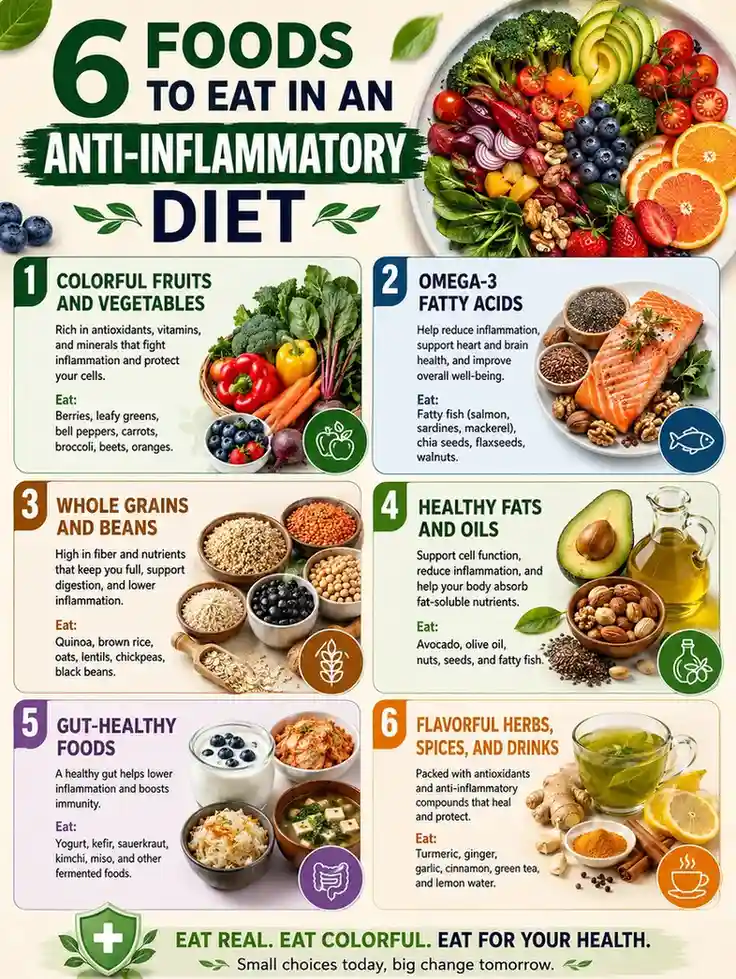
For a healthy diet for joint pain, you should focus more on whole, less processed foods with no added sugar. A thing you should remember while buying food is that if you can find something in nature, chances are that it is a whole food. Here I have listed some best foods you should include in your anti-inflammatory diet plan:
1. Colorful Fruits and Vegetables
Eating colorful fruits and vegetables provides your body with the antioxidants and vitamin C it needs to protect cells from everyday stress. Some of the best options are:
- Strawberries, blueberries, and cherries are packed with protective plant compounds.
- Leafy greens vegetables like spinach, kale, and collard greens are excellent daily choices.
- Tomatoes, carrots, squash, broccoli, and bell peppers.
2. Omega-3 Fatty Acids
Omega-3 fatty acids can reduce inflammatory mediators and are known to help in rheumatoid arthritis, including fewer tender and swollen joints and less stiffness. Some of the best options include:
- Fatty fish: Salmon, tuna, sardines, mackerel, and herring are top sources.
- Plant-based options: If you prefer plants, grab walnuts, flaxseeds, and pumpkin seeds.
3. Whole Grains and Beans
Instead of refined grains, choose whole grains and foods high in fiber. Foods high in fiber help you control your weight and keep your gut healthy, both of which are important for controlling inflammation. Some of the best options include:
- Whole grains: Choose oats, brown rice, wild rice, and barley.
- Legumes: Stock up on dried beans, peas, and lentils.
4. Healthy Fats and Oils
Instead of heavy, saturated fats, choosing more unsaturated, plant-based fats and healthy oils like olive oil can be helpful significantly. Some of the best options include:
- Extra virgin olive oil (EVOO) and avocado oil
- Almonds and pecans contain healthy fats and make perfect crunchy snacks.
5. Gut-Healthy Foods
A healthy population of beneficial bacteria in your stomach helps keep inflammation under control. That’s why eating more fermented and gut-friendly foods can be beneficial. Some of the best options include:
- Probiotics: Look for yogurt and cottage cheese that have “live active cultures” listed on the label.
- Prebiotics: Foods like bananas, asparagus, and onions help keep your beneficial flora plentiful.
6. Flavorful Herbs, Spices, and Drinks
You don’t need heavy sauce or spices to make your food taste good. There are plenty of natural spices that are anti-inflammatory and make your food tasty. Some of the best options include:
- Turmeric
- Ginger
- Cinnamon
- cayenne pepper
6 Food to Avoid in an Anti-Inflammatory Diet
In your anti-inflammatory diet for joint pain, what not to eat is just as important as what to eat. There are many foods that increase swelling and stiffness. To give your joints the best chance to improve and feel better, try to avoid or limit foods listed below:
- Added Sugars and Sweet Drinks:
These are one of the major causes of joint pain. Soda, sweet tea, sports drinks, energy drinks, and normal cold drinks are usually loaded with sugar. You should also be aware of hidden sugar in your everyday foods you might not even expect, like salad dressing, pasta sauces, and flavored yogurts. Try to avoid or limit consumption of these to reduce the risk of triggering inflammation.
- Ultra-Processed Snacks:
If something you bought has a long list of ingredients that you don’t even know, you should try to avoid eating it. These microwave dinners, packaged cookies, and salty chips offer almost no nutrition but are packed with inflammation-causing fats and sodium.
- Refined Grains:
White bread, white rice, pastries, and regular white pasta have been stripped of their healthy fiber in the refining process. These refined carbs break down quickly in your body, which can lead to inflammation. Always try to look for “100% whole grain” instead of processed ones.
- Fried Foods and Trans Fats:
Deep-fried favorites like French fries, fried chicken, and donuts are very harsh on your joints. Also, try to look for “partially hydrogenated oils” on food labels. It’s a term that is used to hide trans fats, which are found in margarine, shortening, and some commercial baked goods.
- Processed and Red Meats:
Lean meat is good for you, but you should try to eat less fatty steaks, burgers, hot dogs, bacon, sausage, and deli meats. They have a lot of saturated fats, which raise cholesterol and inflammation.
- Excess Salt:
If you eat too much salt, your body may hold onto extra fluid, which can make your already swollen joints feel worse and more painful. Try using herbs, spices, or a little lemon instead of salt to flavor your food instead of fast food and canned soups.
You do not have to stop consuming these things completely, but cutting back on these heavy, highly processed foods will go a long way in helping your body heal so you can move with less pain.
A Simple One-Day Meal Plan for Joint Pain
You don’t have to make this hard. This simple example of an anti-inflammatory diet for joint pain can help you make your own diet plan:
- Breakfast: A warm bowl of oatmeal made with low-fat or plant-based milk. Top it with fresh blueberries, a sliced banana, and a small handful of walnuts. Pair it with a cup of unsweetened green or black tea. This simple meal gives you a fantastic morning boost of whole grains, fiber, antioxidants, and healthy omega-3 fats.
- Lunch: A big, colorful salad. Toss together mixed leafy greens, cherry tomatoes, cucumbers, carrots, and chickpeas or beans. Add a piece of grilled salmon or chicken on top. Skip the heavy store-bought dressings and use a simple mix of olive oil and lemon juice instead. You can even enjoy a slice of 100% whole-grain bread on the side.
- Snack: When that afternoon hunger hits, grab a cup of plain yogurt (make sure the label says it has live cultures) and a piece of fruit, like a crisp apple. A small handful of nuts works great, too.
- Dinner: You can cook some skinless chicken or extra-firm tofu with lots of fresh veggies—like broccoli, bell peppers, and snap peas. Flavor it with fresh garlic and ginger instead of salty, heavy sauces. Serve it all over brown rice or quinoa, and sprinkle some sesame seeds on top. Another easy, comforting option is baked fish served with roasted vegetables and brown rice.
Final Thoughts
You don’t have to live with your painful joints. With an anti-inflammatory diet for joint pain, you can improve your joint health and reduce inflammation. This diet plan is a simple, steady way of eating colorful veggies, fruits, whole grains, and fish, while avoiding and limiting processed foods and sugary drinks.
You won’t get results overnight, but gradually you will start to see results as you follow this healthy diet for joint pain. While this diet is not a cure for joint issues, it gives your body exactly what it needs to heal.
Frequently Asked Questions
What is the best diet for joint pain?
There is no single diet plan to cure joint pain, but the best option is an anti-inflammatory diet, which focuses on whole foods and limiting sugary and processed foods. It also includes eating plenty of fruits, different colors of vegetables, fatty fish, and whole grains, which help soothe your joints.
What is the easiest way to start?
You can simply start with the plate method. In this, you have to fill your 1/2 plate with veggies, 1/4 with lean protein, and 1/4 with healthy fats. This method makes it easy to build meals and follow them in the long term.
Does the carnivore diet for joint pain work?
While there are claims that the carnivore diet is beneficial for joint pain because it removes processed carbs, it doesn’t have enough essential fiber. This diet plan focuses on animal-based nutrients, and missing plant-based nutrients can actually harm your gut health and increase inflammation over time, which makes it a little risky choice for joint health.
What should I avoid in a healthy diet for joint pain?
In an anti-inflammatory diet for joint pain, you should avoid or at least reduce consumption of sugary drinks, refined white carbs, and fried or heavily processed foods. You should also limit too much red meat and too many salty snacks because they can trigger inflammation in your body.
References & Sources
National Library of Medicine (NID)

Olivia Reed
Women's Health & Skincare Writer
Better Health Focus
Expertise
Women's Health • Skincare • Hormonal Health • Beauty & Skin Science • Preventive Wellness • Healthy Aging • Nutrition for Skin Health • Lifestyle Medicine • Evidence-Based Health Education
About Olivia Reed
Olivia Reed is a Women's Health & Skincare Writer at Better Health Focus, where she creates evidence-based educational content focused on helping readers better understand women's wellness, hormonal health, skincare, healthy aging, and preventive self-care.
Her writing combines scientific research with practical lifestyle guidance, making complex health and skincare topics easy to understand without relying on misleading beauty trends or unrealistic health claims. Olivia Reed believes that informed readers make better health decisions, and she strives to present balanced information that reflects current scientific evidence.
Before publishing an article, Olivia Reed reviews guidance and research from respected organizations, including the National Institutes of Health (NIH), PubMed, the World Health Organization (WHO), the American Academy of Dermatology (AAD), the American College of Obstetricians and Gynecologists (ACOG), the Office on Women's Health (OWH), and peer-reviewed medical journals whenever applicable.
Her work regularly explores women's hormonal changes throughout different life stages, skincare science, acne, eczema, pigmentation, menopause, nutrition for healthy skin, reproductive wellness, hair health, and evidence-based approaches to beauty and preventive healthcare.
Olivia Reed is committed to separating scientific evidence from social media trends and marketing claims, helping readers understand what current research supports—and where evidence is still emerging.
Education
Bachelor of Arts (B.A.) in Health Communication
Professional Development
- Continuing education in Women's Health and Skin Science
- Ongoing study of dermatology research and preventive healthcare
- Regular review of peer-reviewed publications related to dermatology, endocrinology, nutrition, women's health, and public health
- Continuous monitoring of clinical guidance from leading medical organizations
Areas of Focus
- Women's Health
- Hormonal Health
- Menstrual & Reproductive Wellness
- Pregnancy & Postpartum Education
- Menopause & Healthy Aging
- Skincare & Dermatology Education
- Acne, Eczema & Sensitive Skin
- Hair & Scalp Health
- Nutrition for Healthy Skin
- Preventive Health & Lifestyle Medicine
Editorial Standards
Every article written by Olivia Reed Ward follows the editorial standards of Better Health Focus and is developed using reputable medical references and current scientific literature whenever available.
Her editorial approach emphasizes:
- Evidence-based health education
- Scientific accuracy
- Balanced discussion of benefits, risks, and research limitations
- Clear, accessible language for everyday readers
- Responsible reporting without exaggerated claims
- Alignment with Google E-E-A-T principles for health content
Rather than promoting miracle treatments or viral beauty trends, Olivia Reed focuses on practical, research-informed guidance that supports informed decision-making and long-term wellness.
Research Sources
Articles may reference information from organizations and databases such as:
- National Institutes of Health (NIH)
- PubMed
- World Health Organization (WHO)
- American Academy of Dermatology (AAD)
- American College of Obstetricians and Gynecologists (ACOG)
- Office on Women's Health (OWH)
- American Academy of Pediatrics (AAP)
- U.S. Food & Drug Administration (FDA)
- Peer-reviewed scientific journals
Editorial Disclaimer
The information published by Olivia Reed Ward on Better Health Focus is intended for educational and informational purposes only. It should not replace professional medical advice, diagnosis, or treatment. Readers should consult a qualified healthcare professional or dermatologist regarding personal medical concerns, medications, skincare treatments, or significant health decisions.