

Low libido is a common problem in women and men. It can affect self-confidence, intimate relationships, and overall quality of life. In women, hormonal changes are one of the common risk factors of low libido. Hormones such as estrogen, progesterone, testosterone, thyroid, and even stress hormones can all affect your sexual desire.
This guide will help you understand how these hormones can lead to low libido and how you can protect yourself.
Table of Contents
Why Low Libido in Women Matters
Low libido or low sex drive is more common than you might think. Around 6% to 26% of women experience it at some point in their lives. While many women during menopause often notice less sexual desire because of low estrogen, which can cause dryness and discomfort, younger women can also feel its effects. Stress, thyroid issues, and other health problems can affect your hormonal balance, which can affect your sexual desires even in your 20s and 30s.
Understanding your hormonal changes can help you manage your health more effectively. Many of the hormonal causes of low libido in women are treatable with healthy lifestyle changes, talking to a counselor, or with proper medication with the help of a doctor. In the USA, there are two FDA-approved medications—flibanserin(Addyi) and bremelanotide(Vyleesi)—to help with low libido in women. We will discuss these later, but first, let’s discuss what hormones affect your sexual desire.
Key Hormones That Cause Low Libido In Women
Below are the main hormones that affect libido in women and how each one affects your body.
1. Estrogen
Estrogen is the most important female sex hormone. It keeps the vaginal lining thick, lubricated, and elastic. When estrogen levels drop, you might experience:
- Vaginal dryness and thinning: Sex may become painful or less pleasurable (dyspareunia).
- Decreased blood flow: Less natural lubrication and sensation.
- Mood and energy changes: Estrogen influences brain chemicals (serotonin, dopamine), so low estrogen can affect mood and interest.
These changes often happen during menopause. In fact, around 1.5 million women in the US between 45 and 55 hit menopause each year. During this time, their estrogen levels drop too much, which can cause low libido. According to the experts, symptoms of menopause include feeling tired, low sexual desire, dyspareunia, and atrophic vaginitis.
Common signs of low estrogen:
- Difficulty with arousal or lubrication
- Vaginal dryness or soreness
- Mood swings
- Loss of pleasure during sex.
Treatment:
- Vaginal estrogen therapy
- Hormone therapy
- Making healthy lifestyle changes
2. Testosterone
You might have heard of testosterone as a male hormone, but this hormone is important for women, too. Women produce testosterone in their ovaries and adrenals. Certain levels are necessary for better sexual desire, arousal, and satisfaction. Research shows that a low testosterone level can affect sex drive in women.
Common causes of low testosterone in women are aging and certain medical conditions like pituitary or adrenal issues. Even healthy women can experience a drop in testosterone in midlife.
On the other hand, women who have a high level of testosterone usually have opposite issues, like increased sexual drive, unless the high androgen level comes with other issues. For example, PCOS causes very high testosterone in women. Common symptoms of PCOS include irregular periods, unusual weight gain, acne, and sudden mood changes. These symptoms can change how you feel about your body and your mood, which can lower your libido.
Common signs of low testosterone in women:
- Low motivation for sex
- Reduced arousal or orgasm
- Overall low energy
- Depressed mood
Treatment:
- The FDA does not approve testosterone therapy for women in the US, but some doctors do give it to women in carefully controlled doses.
- Treatments for PCOS that lower excess androgens can make you feel better overall, which may also increase your sexual desire.
3. Progesterone
Progesterone is another important sex hormone in women, which is especially high after ovulation in each cycle and during pregnancy. It has mixed effects on libido:
- High progesterone:
It’s often known for having calming and sedative effects. Just before the menstruation cycle, progesterone is at its peak, and some women feel more fatigued or have a low libido.
- Low progesterone:
If progesterone levels are too low, the balance between estrogen and progesterone is affected, which can lead to irregular menstruation and may affect mood and sexual desire. In some cases, it can cause PMS symptoms that could lead to low libido.
Common signs of progesterone effects:
- Changes in mood and energy
- Fatigue or increased sleepiness
- Reduced libido in some women
- Changes in the menstrual cycle
Treatment:
- If birth control is the issue, a non-hormonal method (or one with different hormones) might be worth trying.
- For menopausal women who need hormones, adding progesterone to estrogen (in HRT) is done for uterine protection, but it may also counteract estrogen’s positive effect on libido.
- Vaginal estrogen (with minimal progesterone) can help with dryness without significantly raising progesterone levels.
4. Thyroid Hormones
Your thyroid gland releases hormones (T3/T4) that control metabolism, energy, and mood. When the thyroid is underactive (hypothyroidism), almost every body system slows down. It causes vaginal dryness, irregular periods, and reduced sexual desire.
The lack of thyroid hormone means you experience low energy and often low production of sex hormones, affecting your libido. On the other hand, overactive thyroid (hyperthyroidism) is less likely to be linked with libido, while some might feel nervous and less interested in sex. Women are at more risk of having hyperthyroidism.
Common signs of a thyroid issue:
- Heavier or more frequent periods
- Low sexual desire
- Weight gain
- Cold intolerance
- Fatigue
- Depression
Treatment:
- Use Levothyroxine for hypothyroidism (first-line treatment)
- Use Methimazole for hyperthyroidism management
- Beta-blockers for symptom relief (heart rate, anxiety)
- Radioactive iodine therapy for an overactive thyroid
- Thyroid surgery (thyroidectomy) in severe cases
5. Stress and Cortisol
Stress is how your brain and body respond to a challenge or demanding situation. When you are stressed, your body releases stress hormones (cortisol), which makes you alert and ready to tackle situations. However, if your cortisol levels stay high for a long period of time, it affects your mood, energy, and sexual desires. Women often notice low libido during heavy work pressure, family pressure, and emotional stress.
Common signs of stress-related effects on libido:
- Less interest in sex than usual
- Low energy
- Trouble sleeping
- Feeling tense or overwhelmed
- Irritability or anxiety
- Loss of interest in enjoyable activities
Treatment:
- Practice deep breathing or relaxation exercises
- Do exercise regularly to feel calm
- Keep a steady routine to lower the stress
- Limit alcohol, smoking, and drug use
- Talk to a doctor or therapist if it’s too hard to manage
Causes of Low Libido in Women’s 20s
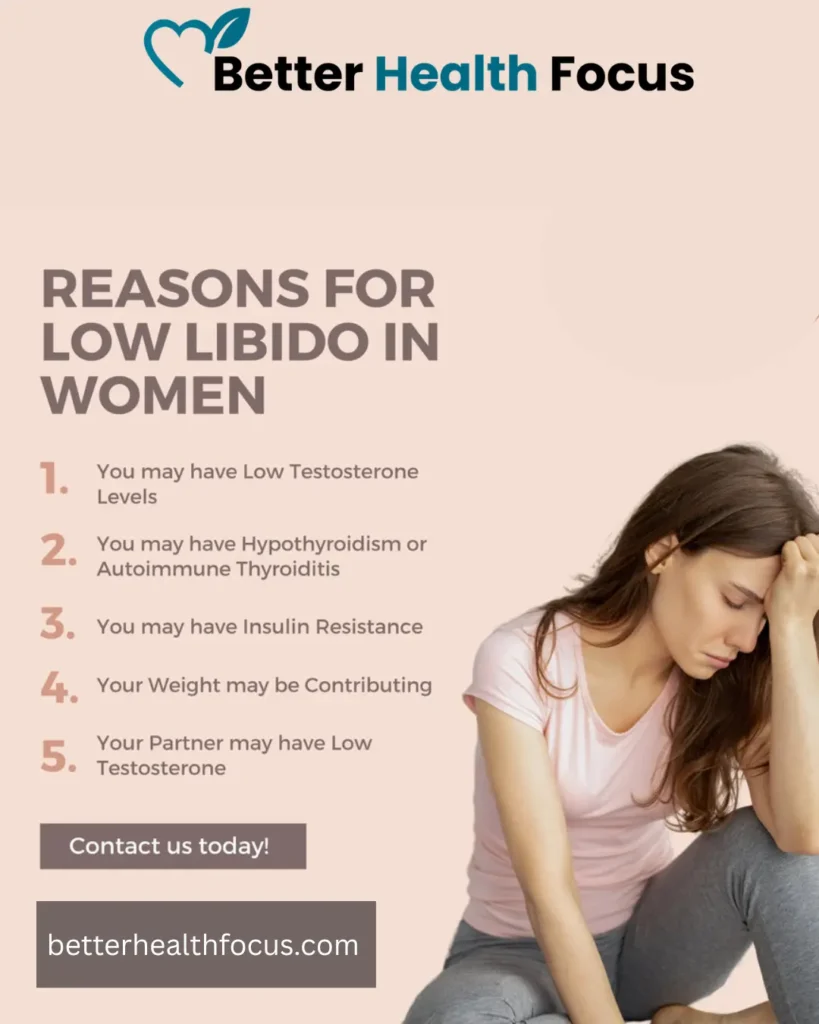
While many people think that low sexual desire happens to women going through menopause or older stages, that’s not 100% true. Many young women also experience low libido in their 20s. There are many reasons for this, and below I have listed the most common ones.
1. Hormonal Birth Control
Hormonal birth control is among the most common reasons young women experience reduced sexual desire. Methods like pills, patches, and rings focus on preventing pregnancy by stopping ovulation. However, according to the NHS, by suppressing ovulation, these methods also prevent the natural mid-cycle surge of testosterone that typically boosts your libido.
Additionally, oral contraceptives increase a protein in your liver called sex hormone-binding globulin (SHBG). It soaks up all the free testosterone in your blood, which affects your libido.
2. The Postpartum Phase and Breastfeeding
A lot of women have kids in their 20s. The period after giving birth, women’s estrogen and progesterone levels drop too much. If you choose to breastfeed, your body produces the prolactin hormone to make milk. This hormone naturally lowers estrogen and testosterone, which you can think of as nature’s way to prevent you from getting pregnant again too soon. This phase also reduces your sexual desire, which exists until you stop nursing or your cycle returns to normal.
3. Chronic Stress (Cortisol)
Women’s 20s are a time for massive life changes, such as graduating, starting a career, managing finances, and managing relationships. It’s normal to be stressed sometimes during these stages, but if you are stressed too often, then it can affect your libido.
Your body stays on high alert, and to respond to danger, it stops nonessential functions, which include reproduction and sexual desires, to deal with the issue. It leads to low libido in women’s 20s.
FDA-Approved Medications for Low Libido in Women
There are only two FDA-approved medications for low libido in women. Both are meant to help women whose sexual desires affect their lives and relationships. Before going for either, you should consult your doctor because they can cause side effects.
- Flibanserin (Addyi):
It is a daily bedtime pill for women with hypoactive sexual desire disorder (HSDD). It works on brain chemicals that influence your desires, not the blood flow. It causes very low blood pressure, dizziness, or fainting, especially if you consume alcohol. That’s why consulting a doctor is important.
- Bremelanotide (Vyleesi):
It’s an injection for premenopausal women with HSDD. You have to take it at least 45 minutes before sexual activity and no more than once in a period of 24 hours or eight times a month. Some common side effects are headache, flushing, nausea, and temporary blood pressure changes.
Lifestyle Changes to Boost Libido
Lifestyle changes can improve sexual desire and overall health. Some of the best are:
1. Manage Your Stress (Lower Cortisol)
As we know, cortisol can affect your libido. However, you can’t eliminate stress from your life completely, but you can lower it or at least manage it more effectively. According to the NIH, doing relaxing and calming activities can help you reduce cortisol levels.
2. Get Regular Physical Activity
Exercising is incredibly helpful for your overall health. It improves blood flow and boosts testosterone and endorphins while lowering cortisol levels, which might improve your libido. You don’t need extreme workout sessions. Just doing simple activities like walking is enough.
According to the CDC, an adult should do at least 150 minutes of moderate physical activity or 75 minutes of high-intensity physical activity each week. Plus 2 or more days of muscle-strengthening activities a week. It helps you maintain better overall health.
3. Prioritize Quality Sleep
Getting enough sleep is an important part of a healthy life. If you don’t sleep enough and properly, your body produces less testosterone and more cortisol, which will lead to low libido due to an imbalance of estrogen and progesterone. You should try to sleep at least 7-9 hours each night without waking up between.
4. Eat a Hormone-Balancing Diet
What you eat affects your whole body, which includes hormones, too. Eating healthy fats helps your body in the production of sex hormones. You should also avoid consuming too much sugar because, indirectly, by increasing testosterone production, it can lead to low libido. Focus more on whole foods, lean proteins, vegetables, and fruits.
When Should You See a Doctor?
You should schedule an appointment with your gynecologist or trusted doctor if:
- Your lack of sexual desire causes you personal distress or is hurting your relationship.
- You are experiencing pain or extreme dryness during intercourse.
- You have other symptoms of hormonal imbalance, such as sudden weight gain, hair loss, severe fatigue, or irregular periods.
- Your low libido started immediately after beginning a new medication (like birth control or an antidepressant).
Final Thoughts
A low libido is very common and highly treatable—it does not mean there is something broken within you or your relationship. For many women, a simple hormonal change is the main reason for this issue. You can boost your libido by making natural changes to your lifestyle and balancing your body.
If those natural methods aren’t giving you the results you need, do not hesitate to talk to a doctor for proper medical treatment. It takes a little time, but you can and will start to feel confident, energized, and like yourself again.
FAQs
Which hormone causes low libido in women most often?
There is not just one hormone that causes low libido in women. However, estrogen and testosterone are the two most common hormones that reduce sexual desire in women. Even stress (high cortisol levels) can affect sexual desire.
Can women in their 20s have low libido because of hormones?
Yes, there can be low libido even in women’s 20s. Some common reasons include birth control pills, stress, postpartum, and thyroid issues.
Are there FDA-approved medications for low libido in women?
Yes, there are two FDA-approved medications for low libido. One is flibanserin (Addyi), and the other is bremelanotide (Vyleesi). Both of these restore your sexual desires.
When should I see a doctor for low libido?
You should see a doctor if your low libido has lasted a long time, especially if you have pain during sex, are very tired, or have periods that are not regular.
References & Sources

Olivia Reed
Women's Health & Skincare Writer
Better Health Focus
Expertise
Women's Health • Skincare • Hormonal Health • Beauty & Skin Science • Preventive Wellness • Healthy Aging • Nutrition for Skin Health • Lifestyle Medicine • Evidence-Based Health Education
About Olivia Reed
Olivia Reed is a Women's Health & Skincare Writer at Better Health Focus, where she creates evidence-based educational content focused on helping readers better understand women's wellness, hormonal health, skincare, healthy aging, and preventive self-care.
Her writing combines scientific research with practical lifestyle guidance, making complex health and skincare topics easy to understand without relying on misleading beauty trends or unrealistic health claims. Olivia Reed believes that informed readers make better health decisions, and she strives to present balanced information that reflects current scientific evidence.
Before publishing an article, Olivia Reed reviews guidance and research from respected organizations, including the National Institutes of Health (NIH), PubMed, the World Health Organization (WHO), the American Academy of Dermatology (AAD), the American College of Obstetricians and Gynecologists (ACOG), the Office on Women's Health (OWH), and peer-reviewed medical journals whenever applicable.
Her work regularly explores women's hormonal changes throughout different life stages, skincare science, acne, eczema, pigmentation, menopause, nutrition for healthy skin, reproductive wellness, hair health, and evidence-based approaches to beauty and preventive healthcare.
Olivia Reed is committed to separating scientific evidence from social media trends and marketing claims, helping readers understand what current research supports—and where evidence is still emerging.
Education
Bachelor of Arts (B.A.) in Health Communication
Professional Development
- Continuing education in Women's Health and Skin Science
- Ongoing study of dermatology research and preventive healthcare
- Regular review of peer-reviewed publications related to dermatology, endocrinology, nutrition, women's health, and public health
- Continuous monitoring of clinical guidance from leading medical organizations
Areas of Focus
- Women's Health
- Hormonal Health
- Menstrual & Reproductive Wellness
- Pregnancy & Postpartum Education
- Menopause & Healthy Aging
- Skincare & Dermatology Education
- Acne, Eczema & Sensitive Skin
- Hair & Scalp Health
- Nutrition for Healthy Skin
- Preventive Health & Lifestyle Medicine
Editorial Standards
Every article written by Olivia Reed Ward follows the editorial standards of Better Health Focus and is developed using reputable medical references and current scientific literature whenever available.
Her editorial approach emphasizes:
- Evidence-based health education
- Scientific accuracy
- Balanced discussion of benefits, risks, and research limitations
- Clear, accessible language for everyday readers
- Responsible reporting without exaggerated claims
- Alignment with Google E-E-A-T principles for health content
Rather than promoting miracle treatments or viral beauty trends, Olivia Reed focuses on practical, research-informed guidance that supports informed decision-making and long-term wellness.
Research Sources
Articles may reference information from organizations and databases such as:
- National Institutes of Health (NIH)
- PubMed
- World Health Organization (WHO)
- American Academy of Dermatology (AAD)
- American College of Obstetricians and Gynecologists (ACOG)
- Office on Women's Health (OWH)
- American Academy of Pediatrics (AAP)
- U.S. Food & Drug Administration (FDA)
- Peer-reviewed scientific journals
Editorial Disclaimer
The information published by Olivia Reed Ward on Better Health Focus is intended for educational and informational purposes only. It should not replace professional medical advice, diagnosis, or treatment. Readers should consult a qualified healthcare professional or dermatologist regarding personal medical concerns, medications, skincare treatments, or significant health decisions.