
Have you been eating healthy, sleeping enough, and working out regularly, only to watch your weight go up? It is very frustrating to do everything right, in a perfect manner, yet gain weight. If you have been dealing with this, the cause might not be your plan or efforts but your gut. Specifically, a condition called SIBO (Small Intestinal Bacterial Overgrowth).
While gut health is often linked to Weight Loss, modern science shows that an unbalanced gut can actually cause weight gain. If you don’t know SIBO and are wondering, “Can SIBO cause weight gain?” then you are in the right place. We are going to break it all down so you can finally fix it.
Table of Contents
What exactly is SIBO?
SIBO (Small Intestinal Bacterial Overgrowth) occurs when bacteria populate your small intestine. Typically, the small intestine is relatively clean and bacteria-free, as the body uses gastric acid and consistent motility to flush organisms toward the colon.
However, in SIBO, these bacteria become trapped and begin to multiply in the small intestine. Because they are not supposed to be there in such large numbers, they start eating and fermenting your food in the wrong place.
According to the Cleveland Clinic, SIBO occurs when bacteria that normally live in your large intestine migrate upward into your small intestine. It can lead to discomfort in your stomach.
The Surprising Truth About SIBO and Weight Gain
When people think of stomach problems, they usually picture weight loss. And it is true that some gut issues, including certain types of SIBO, can make you lose weight, as noted by the Mayo Clinic.
However, according to recent medical studies, SIBO causes weight gain too. So, if you are looking for answers and asking, “Can SIBO cause you to gain weight?” the medical community now answers with a big, resounding yes.
How Does SIBO Cause Weight Gain?
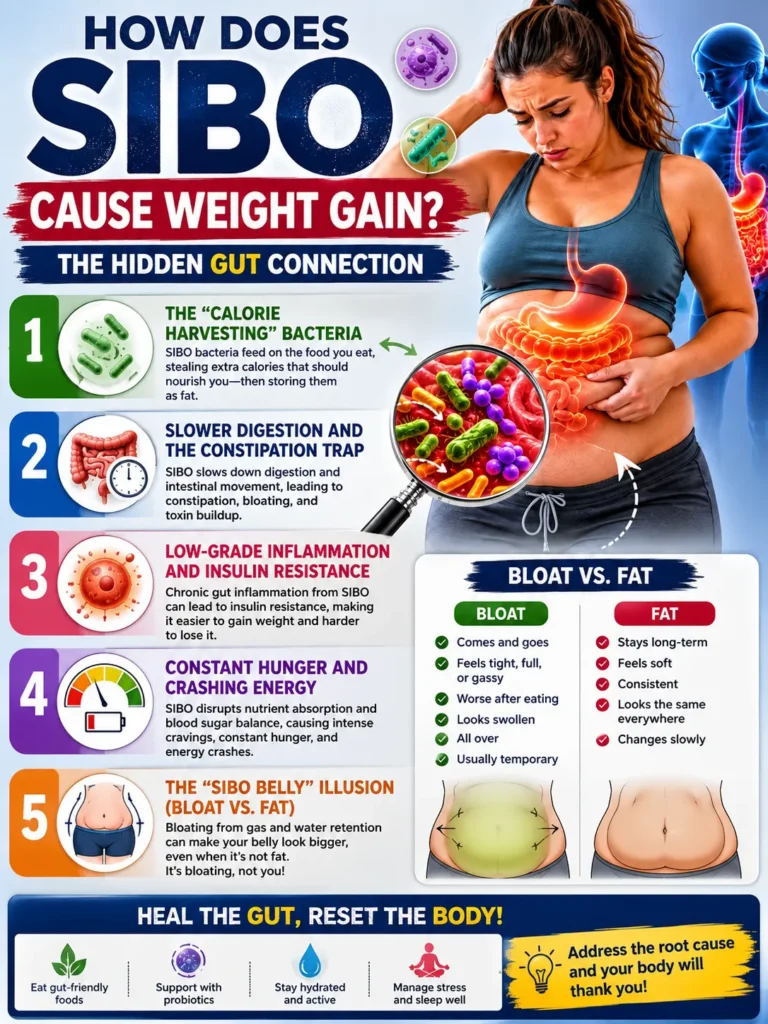
In the condition of SIBO, an overgrowth of bacteria in your small intestine extracts extra calories from what you eat, slows down digestion, causes inflammation, and messes up the hunger hormones, which keeps you unsatisfied.
Let’s understand how SIBO causes weight gain:
1. The “Calorie Harvesting” Bacteria
This is perhaps the biggest reason behind weight gain caused by SIBO. Normally, when you eat plant fibers like broccoli or whole grains, your body can’t digest them completely. They pass through your digestive system without adding any calories.
In some cases, bacteria in persons with SIBO may ferment undigested carbs and fibers into short-chain fatty acids (SCFAs), which the body can absorb to use for energy (calories). These extra calories might be the cause of weight gain in many people.
2. Slower Digestion and the Constipation Trap
Methane gas can significantly slow down digestion and the movement of food through your intestines. Medically known as motility. This is why so many people with this type of SIBO suffer from chronic constipation.
When your digestion slows down, your food sits in your gut for way too long. This extra time gives those calorie-stealing bacteria the perfect chance to absorb extra hidden calories, which leads straight to weight gain over time.
3. Low-Grade Inflammation and Insulin Resistance
Having a large number of bacteria in the wrong place in your gut can damage the intestinal lining. Over time, this irritation leads to chronic inflammation throughout your entire body.
This inflammation tells your body to hold onto fat. It also increases your stress hormones and insulin resistance. When your cells become resistant to insulin, your blood sugar increases, prompting your pancreas to produce more insulin to balance it. Insulin is often called the primary fat-storage hormone, and its high levels slow down fat burning. Instead, calories are stored as fat, especially around your belly.
4. Constant Hunger and Crashing Energy
Hormones like GLP-1 and PYY are produced in your gut that control your appetite. These hormones signal your brain, “I’m full,” and stop eating. But SIBO disrupted these hormones. This makes you always feel hungry, even when you are actually full.
Furthermore, these bacteria also steal your vital nutrients, specifically vitamin B12 and iron. When your body doesn’t get these nutrients, your metabolism slows to conserve energy, and you feel constantly tired. When you feel exhausted, you are naturally less physically active, which means you burn fewer calories. Both feeling hungry and burning fewer calories lead to weight gain.
5. The “SIBO Belly” Illusion (Bloat vs. Fat)
Finally, it is really important to distinguish between actual fat and extreme bloating. SIBO creates a massive amount of gas, which causes your stomach to push outward. Many people with SIBO experience such abdominal distention.
While SIBO causes weight gain in the form of real fat, a large part of the weight you see in the mirror may be due to gas and abdominal distension. If your stomach is flat when you wake up but feels bigger after eating, that is called “SIBO Belly.” Treating bacterial overgrowth will quickly make this bloating disappear, even before actual fat loss occurs.
Common Symptoms of SIBO
While it’s true SIBO causes weight gain, it never comes alone. If these bacteria have overgrown in your small intestine, you are likely to experience these common symptoms:
- Constant bloating, especially after eating carbs or sugary foods
- Excess gas, burping, and stomach pressure
- Stomach pain or cramps after small meals
- Acid reflux or heartburn
- Diarrhea, constipation, or changes in bowel habits
- Trouble digesting foods like dairy, bread, onions, or garlic
- Brain fog, fatigue, and difficulty focusing
- Mood swings, joint pain, or skin problems like acne and eczema
- Feeling unusually full after eating
- Unhealthy weight changes or nutrient deficiencies in severe cases
What Are the Causes of SIBO?
Bacteria don’t just appear in the small intestine out of nowhere. Usually, it happens because your body’s natural cleaning system breaks down. When things stop moving correctly, bugs can take hold.
Here are the most common root causes:
Low Stomach Acid
Stomach acid is your very first line of defense—it kills the bad bacteria hidden in your food. If your stomach acid is too low (which often happens from aging, extreme stress, or taking daily heartburn pills), those bugs survive and travel straight down into your small intestine.
Food Poisoning
A severe bout of food poisoning can actually damage the delicate nerves in your gut. This nerve damage stops your digestive tract from naturally sweeping away bacteria, allowing them to stick around and multiply.
A Slow “Migrating Motor Complex” (MMC)
Your gut has a built-in cleaning system called the Migrating Motor Complex (MMC). Think of it as your internal janitor. When you aren’t eating, a wave travels through your intestines, sweeping leftover food and bugs into the colon. If this janitor goes on strike (often due to chronic stress or thyroid issues), the bacteria sit still and grow.
Structural Issues
Sometimes the issue is purely structural. Scar tissue from past belly surgeries (like a C-section or appendix removal), endometriosis, or a faulty gut valve can act like a physical roadblock, trapping bacteria exactly where they don’t belong.
How to Treat SIBO Naturally
The good news is that SIBO is treatable, and you don’t have to live with it forever. By clearing out the overgrown bacteria and healing the gut, your metabolism will naturally get better. Here are the best ways to treat SIBO and lose weight:
1. Get a Simple Breath Test
Don’t guess; run a proper test. The best way to find out if you have SIBO is a simple, non-invasive breath test. You drink a sweet liquid and breathe out into a tube. This helps your doctor figure out which type of gas those bacteria are producing so you can treat it.
2. Try the Low FODMAP Diet
To stop bacteria from producing gas, you need to starve them temporarily. The easiest way is to eat low-FODMAP foods. You should:
- Do not eat: Apples, garlic, onions, wheat, and beans. These act like an all-you-can-eat buffet for the bacteria.
- Eat More: Meat, eggs, rice, potatoes, spinach, and berries.
Remember, this is a short-term method to calm down your gut, not a permanent one.
3. Stop Snacking All The Time
Remember your gut’s natural cleaner? It only works when you are fasting. If you keep eating all day, MMC will not clean your intestines. That’s why you should aim for 4-5 hours between meals and avoid eating before bed.
4. Clear the Bacteria By Meds or Herbs
The main method is to eliminate the bacteria’s overgrowth. Doctors often prescribe specific antibiotics to help eliminate bacteria in your small intestine. If you want a natural way, according to studies from the NIH, herbal treatments like allicin, berberine, and oregano oil can be effective against bacteria just like medicines.
NOTE: All-natural doesn’t always mean safe. That’s why you should always talk with your doctor before using any remedies you find online.
5. Take a Prokinetic
Eliminating the bacteria from your small intestine is only half the treatment. Keeping them away from overgrowing again is the real goal. A prokinetic is a simple supplement, such as ginger root or artichoke extract, that gently stimulates your gut muscles. It prevents food from getting trapped again in the small intestine.
6. Lower Your Stress
You might not know, but your gut and brain are connected deeply. When you are under long-term stress, your digestion can be affected. You can’t improve your gut health if you’re constantly stressed. That’s why you should try to manage stress in a better way. Do relaxing activities and sleep 7-9 hours daily. It is as important as changing your diet.
Final Thoughts
The link between SIBO and weight gain is two-way. While we know that SIBO causes weight gain by slowing digestion and allowing hidden calories to be absorbed, the opposite can also be true. Sometimes, being overweight already slows digestion, creating an optimal environment for these bacteria to grow.
Whether SIBO caused weight gain or weight caused the SIBO, the result is the same: a stubborn, slow metabolism. If you suspect that these bacteria are holding you back, then definitely get checked with a simple breath test. With simple habits and medical help, you can remove the bacteria and improve your health.
Frequently Asked Questions (FAQs)
Will treating SIBO help me lose weight?
Yes! Once the overgrown bacteria are removed from your small intestine, they will no longer be able to extract extra calories from your food. Furthermore, treating the overgrowth reduces overall inflammation and helps reverse insulin resistance. As your digestion speeds up and your gut heals, most patients find that their stubborn weight naturally begins to fall off without the need for extreme dieting.
Is my “belly” fat or just severe bloat?
It is usually a combination of both. SIBO does cause actual fat storage due to insulin resistance and calorie harvesting. However, the extreme, tight distension you feel (especially after meals) is pure gas produced by bacterial fermentation. As you treat the SIBO, the bloating will disappear rapidly, often making your stomach look significantly flatter in just a matter of weeks, well before actual fat loss occurs.
Which foods in SIBO cause weight gain?
Foods that are highly fermentable feed the bacteria, worsening the overgrowth (and the resulting weight gain). This includes high-FODMAP foods like garlic, onions, apples, pears, beans, wheat, and dairy (if you are lactose intolerant). Sugars, refined carbohydrates, and artificial sweeteners are also major culprits that cause massive gas production and bloating.
How long does it take to cure SIBO?
Healing SIBO is a long-term battle. A round of antibiotics or herbal antimicrobials typically takes 2 to 4 weeks. However, because SIBO often involves repairing a damaged gut lining, addressing motility issues, and resolving nutritional deficiencies, it may take 3 to 6 months. Staying consistent with your diet and prokinetics is the key to getting better faster.
References & Sources

Noah Ross
Health & Wellness Writer
Better Health Focus
Expertise
Weight Management • Gut Health • Nutrition • Metabolic Health • Healthy Lifestyle • Mental Wellness • Preventive Health • Dietary Supplement Research • Evidence-Based Health Education
About Noah Ross
Noah Ross is a Health & Wellness Writer at Better Health Focus, where he creates evidence-based educational content focused on helping readers make informed decisions about their health. His work covers weight management, gut health, nutrition, metabolism, preventive wellness, and healthy lifestyle strategies.
With a background in health communication, Noah specializes in translating complex medical research into clear, practical, and easy-to-understand articles. He believes reliable health information should be accessible to everyone without relying on sensational claims or misleading marketing.
Before publishing an article, Noah reviews scientific literature and guidance from respected health organizations, including the National Institutes of Health (NIH), PubMed, the World Health Organization (WHO), the Centers for Disease Control and Prevention (CDC), the Office of Dietary Supplements (ODS), and other peer-reviewed medical journals. His writing emphasizes transparency by distinguishing well-established scientific evidence from preliminary findings and promotional claims.
At Better Health Focus, Noah regularly researches topics related to digestive wellness, metabolism, healthy eating, blood sugar management, dietary supplements, weight loss strategies, healthy aging, and preventive healthcare. His content is designed to help readers understand both the potential benefits and limitations of current scientific evidence while encouraging realistic expectations and sustainable lifestyle habits.
Education
Bachelor of Arts (B.A.) in Communications
Professional Development
- Continuing education in Nutrition Science and Public Health
- Ongoing study of evidence-based medicine and clinical research
- Regular review of peer-reviewed research related to nutrition, metabolism, obesity, digestive health, and preventive medicine
- Continuous monitoring of updates from major public health organizations and medical research databases
Areas of Focus
- Weight Loss & Healthy Weight Management
- Gut Microbiome & Digestive Wellness
- Nutrition & Healthy Eating
- Blood Sugar & Metabolic Health
- Mental Wellness & Lifestyle Habits
- Preventive Health Education
- Dietary Supplement Reviews
- Evidence-Based Wellness Research
Editorial Standards
Every article written by Noah Ross follows the editorial standards of Better Health Focus. Content is developed using current scientific evidence, reputable medical references, and trusted public health resources whenever applicable.
Each article is written with a commitment to:
- Accuracy and factual reporting
- Evidence-based health education
- Transparent discussion of scientific findings
- Balanced coverage of benefits, risks, and research limitations
- Clear, reader-friendly language
- Compliance with Google E-E-A-T principles for health content
Noah avoids unsupported health claims, miracle cures, and exaggerated promises. When evidence is limited or still emerging, that uncertainty is clearly communicated so readers can make informed decisions based on the best available research.
Research Sources
Articles may reference information from organizations and databases such as:
- National Institutes of Health (NIH)
- PubMed
- World Health Organization (WHO)
- Centers for Disease Control and Prevention (CDC)
- Office of Dietary Supplements (ODS)
- U.S. Department of Agriculture (USDA)
- American Heart Association (AHA)
- Peer-reviewed scientific journals
Editorial Disclaimer
The information published by Noah Ross on Better Health Focus is intended for educational and informational purposes only. It should not be considered medical advice and is not a substitute for consultation with a qualified physician or other licensed healthcare professional. Readers should seek professional medical guidance before making decisions regarding diagnosis, treatment, medications, supplements, or significant lifestyle changes.