
Trying to lose weight? Then you might have already heard about high-protein diet plans. These diets help you lose weight without starving you, and the best part is that they’re not about cutting food. They’re about adding high-protein food.
Eating more protein naturally blocks hunger hormones, which makes you feel full and satisfied after meals. However, if you are thinking of trying a high-protein diet, consult with your doctor first. High protein intake for the long term is not for everyone.
In this blog, let’s explore how protein helps in weight loss, what the best sources of protein are, and a super-simple high-protein diet meal plan.
Table of Contents
What Is a High-Protein Diet Plan?
A high-protein diet plan is a simple way of eating in which your meals are focused on protein-rich foods while keeping carbs and calories according to your needs.
Protein is essential for your body’s basic survival, from repairing tissues, producing enzymes, and fighting against illness to making your muscles stronger. If you try to lose weight without enough protein intake, you can lose your muscles along with the fat.
Why does it matter? Your muscles help to burn calories. By protecting your muscles, a high-protein diet plan helps to keep your metabolism active and makes your body feel strong. That’s why experts recommend taking enough protein even during weight loss.
How Protein Can Help With Weight Loss
Protein can be very helpful in your weight loss journey. It helps you keep feeling full for a longer period of time. When your meal has enough protein, you don’t feel hungry right afterward. This naturally makes it easy to manage your calorie intake throughout the day.
It makes your body work harder to break down protein. During digestion, your body uses more energy compared to fats or carbs. Because of these factors, extra calories are burned while your body digests protein.
Protein also protects your muscles as you try to lose weight. Protecting your muscles promotes a healthy metabolism, which allows your body to burn energy more efficiently.
Best High-Protein Foods for Weight Loss
Getting enough protein isn’t just about hitting a daily number; it’s about picking the right foods that actually taste good, fit your budget, and keep you full. Here are the best high-protein sources you can use in your meal plan.
Animal-Based Protein
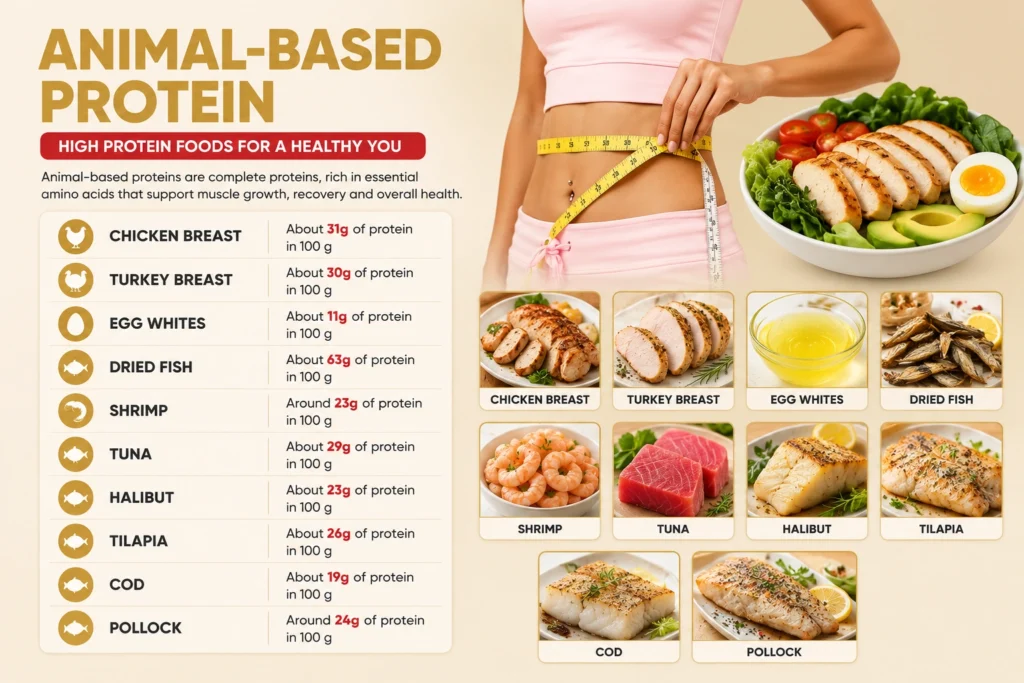
Animal proteins are fantastic because they are “complete” proteins—meaning they contain all the essential amino acids your body can’t make on its own. They are also incredibly easy to build a meal around. Some of the best lean options include:
- Chicken breast (about 31g of protein in 100 g)
- Turkey breast (about 30g protein in 100 g)
- Egg whites (about 11g protein in 100g)
- Dried fish (63g of protein in 100g)
- Shrimp (around 23g protein in 100g)
- Tuna (about 29g of protein in 100g)
- Halibut (about 23g of protein in 100g)
- Tilapia (26g protein in 100g)
- Cod (19g of protein in 100g)
- Pollock (around 24 g of protein in 100 g)
Plant-Based Protein
It’s not necessary to eat meat every day to hit your protein intake. Plant-based options are also incredible because they bring a ton of dietary fiber to the table, which is a secret weapon for staying full and keeping your digestion on track. Some of the best choices include:
- Lentils (about 18g of protein)
- Chickpeas (about 15g of protein)
- Kidney Beans (15g of protein per cup)
- Tofu (about 10g of protein per 100g)
- Tempeh (around 19g of protein per 100g)
- Greek yogurt (about 10g per serving)
- Quinoa (8g of protein per cup)
- Chia Seeds (around 5g of protein per 2 tablespoons)
- Hemp Seeds (10g of protein per 3 tablespoons)
- Pumpkin Seeds (7g of protein per 2 tablespoons)
- Almonds (6g of protein per handful)
- Peanuts (9g of protein per 30g serving)
A Simple High-Protein Diet Meal Plan
Building a high-protein meal plan is not a complicated task. You just need to add healthy protein sources to every meal. When you plan those protein options throughout the day, they keep your energy balanced and full for a longer period of time and reduce those sudden cravings.
Here is a simple full-week high-protein diet meal plan you can follow:
Day 1
Breakfast: Greek yogurt with fresh fruit, chia seeds, and almonds
Lunch: Grilled chicken breast served over a fresh green salad
Dinner: Baked tilapia with quinoa and green beans
Day 2
Breakfast: Scrambled egg whites with spinach and whole-grain toast
Lunch: A warm bowl of lentil soup
Dinner: Quick tofu stir-fry with mixed vegetables
Day 3
Breakfast: Quinoa porridge with milk, hemp seeds, and peanuts
Lunch: Tuna salad made with Greek yogurt and whole-grain crackers
Dinner: Roasted turkey breast with sweet potatoes
Day 4
Breakfast: Scrambled egg whites with tomatoes and onions
Lunch: Chickpea salad with a light vinaigrette
Dinner: Pan-seared shrimp with broccoli and brown rice
Day 5
Breakfast: Greek yogurt with berries and pumpkin seeds
Lunch: Kidney bean chili
Dinner: Baked cod or halibut with roasted asparagus
Day 6
Breakfast: Smoothie with milk, Greek yogurt, spinach, and chia seeds
Lunch: Leftover kidney bean chili
Dinner: Pan-fried tempeh with mixed vegetables
Day 7
Breakfast: Avocado toast with hard-boiled egg whites
Lunch: Leafy salad with baked pollock or a small portion of dried fish
Dinner: Grilled chicken breast with roasted vegetables
Quick & Easy Daily Snacks
- Almonds or peanuts
- Crunchy roasted chickpeas
- Pumpkin seeds or hemp seeds
- Plain Greek yogurt
The Benefits of a High-Protein Diet Meal Plan for Weight Loss
If you are wondering why everyone is suggesting a high-protein diet plan, it is because it actually helps in weight loss. Here is exactly how eating more protein-rich food helps you:
Reduces Your Cravings
Ever eat a big meal and feel starving just an hour later? That usually happens when you don’t get enough protein. Protein makes your body feel completely satisfied after a meal. When you aren’t dealing with cravings all day, cutting back on mindless snacking gets easier.
It Protects Your Muscles
When you cut calories to drop a few pounds, your body often burns through muscle right along with the fat. You definitely don’t want that! Eating plenty of protein acts like a shield for your lean muscle. This is incredibly important because muscle is what keeps your metabolism running hot and keeps you feeling strong as the weight comes off.
Boots Your metabolism Naturally
Here is a really cool trick your body does: it actually burns calories just to digest the food you eat. Because protein is much harder for your body to break down than carbs or fat, it takes way more energy to process. Simply put, you are burning extra fat and calories just by eating a piece of fish or a bowl of lentils.
Reduces Afternoon Sugar Crash
When you eat carbs on their own, your blood sugar spikes and then crashes, leaving you exhausted and reaching for a candy bar. Protein slows down how fast your body absorbs those carbs. This keeps your blood sugar nice and steady all day long. When your blood sugar is stable, your energy is balanced, and those intense cravings for sugary, highly processed junk food completely disappear.
How Much Protein Do You Actually Need?
The right amount of protein for you depends entirely on your current weight, how active you are, and what you are hoping to achieve.
The minimum protein needed for an average person is about 0.36 grams per pound of body weight. But if you want to lose fat while keeping muscles and keeping your metabolism fast, you need more than this.
According to the experts, you should try to take 0.7 to 1 gram of protein per pound of your body weight to lose weight without losing muscle.
However, you don’t have to stress over doing calculations every day. The easiest way is just to split your food evenly and add a solid, palm-sized portion to your plate at every meal.
Common Mistakes to Avoid with a High-Protein Diet Plan
Too Much Processed Protein:
While grabbing a protein bar is certainly easy, those packaged snacks frequently hide extra sugars and salt. Try to complete your protein intake with natural sources.
Skipping Vegetables and Fiber:
Don’t ignore vegetables to get more protein. You definitely need fiber to keep your digestion moving along well.
Not drinking enough water:
Your kidneys have to work a little harder to process extra protein, and water helps in that process. That’s why you should keep a water bottle near you to stay hydrated.
Is a High-Protein Diet Safe for Everyone?
For most people, completing their protein intake by eating everyday foods like chicken, beans, eggs, and yogurt is completely safe. In fact, it is one of the easiest changes you can make to finally hit your weight loss goals without feeling hungry.
However, if you have bad kidneys or any other serious medical issues, you should always talk to your doctor before starting a new diet plan because protein takes more of a toll compared to carbs.
Most importantly, remember that protein is just one part of your whole diet. For better weight loss results, you still need to make your meals with different veggies, healthy fats, and drink plenty of water.
Final Thoughts
Losing weight doesn’t mean starving yourself. This high-protein diet plan keeps you full while improving your weight loss progress. It protects your muscles and reduces your sudden craving between meals.
Start small. You don’t need to change your complete diet overnight. Just try adding a hard-boiled egg to your breakfast or swapping your afternoon snack for a cup of plain Greek yogurt.
Over time, you will see better weight loss results without losing your hard-earned muscles. Healthy weight loss is all about making simple choices you can actually stick with long-term. You’ve got this!
Frequently Asked Questions
How much protein should I eat while losing weight?
The bare minimum is 0.36 grams per pound of body weight. For weight loss, experts suggest aiming for 0.7 to 1 gram per pound. Building a solid high-protein diet plan with these numbers keeps you full and protects your muscles.
Can a high-protein diet help burn belly fat?
You can’t spot-reduce fat from just your belly. However, sticking to a balanced, high-protein diet meal plan helps you lose body fat all over. It keeps your metabolism running hot, which eventually shrinks belly fat as you slim down overall.
Are protein shakes actually necessary?
Not at all! Real food should always come first. Shakes are just convenient when you’re busy. For example, if you don’t have time to cook a high-protein, low-carb diet breakfast like eggs, a quick shake is a great backup.
Does a high-protein diet cause constipation?
It can if you forget your fiber! People often ask, “Does a high-protein diet cause constipation?” It usually happens when you eat only meat and skip vegetables. To keep digestion moving smoothly, drink plenty of water and eat lots of leafy greens.
Can vegetarians follow a high-protein diet?
Yes. You can totally hit your protein goals without eating meat. Plant-based proteins are just as effective as animal ones. You can build a high-protein diet for weight loss using options like lentils, chickpeas, tofu, nuts, and tons of other great foods.
Is eating too much protein unhealthy?
Eating extreme amounts can overwork your kidneys over time. Plus, if you rely on processed meats, you might eat way too much sodium. A low-salt, high-protein diet focused on fresh, whole foods like chicken and beans is the safest approach.
References & Sources

Noah Ross
Health & Wellness Writer
Better Health Focus
Expertise
Weight Management • Gut Health • Nutrition • Metabolic Health • Healthy Lifestyle • Mental Wellness • Preventive Health • Dietary Supplement Research • Evidence-Based Health Education
About Noah Ross
Noah Ross is a Health & Wellness Writer at Better Health Focus, where he creates evidence-based educational content focused on helping readers make informed decisions about their health. His work covers weight management, gut health, nutrition, metabolism, preventive wellness, and healthy lifestyle strategies.
With a background in health communication, Noah specializes in translating complex medical research into clear, practical, and easy-to-understand articles. He believes reliable health information should be accessible to everyone without relying on sensational claims or misleading marketing.
Before publishing an article, Noah reviews scientific literature and guidance from respected health organizations, including the National Institutes of Health (NIH), PubMed, the World Health Organization (WHO), the Centers for Disease Control and Prevention (CDC), the Office of Dietary Supplements (ODS), and other peer-reviewed medical journals. His writing emphasizes transparency by distinguishing well-established scientific evidence from preliminary findings and promotional claims.
At Better Health Focus, Noah regularly researches topics related to digestive wellness, metabolism, healthy eating, blood sugar management, dietary supplements, weight loss strategies, healthy aging, and preventive healthcare. His content is designed to help readers understand both the potential benefits and limitations of current scientific evidence while encouraging realistic expectations and sustainable lifestyle habits.
Education
Bachelor of Arts (B.A.) in Communications
Professional Development
- Continuing education in Nutrition Science and Public Health
- Ongoing study of evidence-based medicine and clinical research
- Regular review of peer-reviewed research related to nutrition, metabolism, obesity, digestive health, and preventive medicine
- Continuous monitoring of updates from major public health organizations and medical research databases
Areas of Focus
- Weight Loss & Healthy Weight Management
- Gut Microbiome & Digestive Wellness
- Nutrition & Healthy Eating
- Blood Sugar & Metabolic Health
- Mental Wellness & Lifestyle Habits
- Preventive Health Education
- Dietary Supplement Reviews
- Evidence-Based Wellness Research
Editorial Standards
Every article written by Noah Ross follows the editorial standards of Better Health Focus. Content is developed using current scientific evidence, reputable medical references, and trusted public health resources whenever applicable.
Each article is written with a commitment to:
- Accuracy and factual reporting
- Evidence-based health education
- Transparent discussion of scientific findings
- Balanced coverage of benefits, risks, and research limitations
- Clear, reader-friendly language
- Compliance with Google E-E-A-T principles for health content
Noah avoids unsupported health claims, miracle cures, and exaggerated promises. When evidence is limited or still emerging, that uncertainty is clearly communicated so readers can make informed decisions based on the best available research.
Research Sources
Articles may reference information from organizations and databases such as:
- National Institutes of Health (NIH)
- PubMed
- World Health Organization (WHO)
- Centers for Disease Control and Prevention (CDC)
- Office of Dietary Supplements (ODS)
- U.S. Department of Agriculture (USDA)
- American Heart Association (AHA)
- Peer-reviewed scientific journals
Editorial Disclaimer
The information published by Noah Ross on Better Health Focus is intended for educational and informational purposes only. It should not be considered medical advice and is not a substitute for consultation with a qualified physician or other licensed healthcare professional. Readers should seek professional medical guidance before making decisions regarding diagnosis, treatment, medications, supplements, or significant lifestyle changes.