

A wisdom tooth infection—also known as pericoronitis—happens when food and bacteria get trapped beneath the gums of an impacted tooth. It is one of the most common dental problems for adults in their 20s. This kind of infection loves to sneak up on you. What starts as just a minor, dull ache in the back of your jaw can quickly turn into a serious problem if ignored. The good news? When caught early, an infected wisdom tooth is highly treatable.
This guide breaks down everything you actually need to know: the symptoms, what causes an infected wisdom tooth, your real treatment options, and the clear signs it’s time to call your dentist.
Table of Contents
What Is a Wisdom Tooth Infection?
Your wisdom teeth—also called third molars—are the last four teeth to show up, usually somewhere between ages 17 and 25. By then, most people’s jaws don’t have enough room for them anymore. Those wisdom teeth still try to push through, often with nowhere to go.
Without enough room, they grow at unexpected angles, get stuck under the gum line, or only partially break the surface. And this is where the problems begin.
When a wisdom tooth only halfway erupts, a small flap of gum tissue overlaps the crown, which is called an operculum. Every time you eat, food and bacteria get trapped underneath it. Because it’s so far back in your mouth, your toothbrush and floss can’t easily reach it. Bacteria pile up and start multiplying, and before long, you’ve got an infection.
In medical terms, it is known as pericoronitis: inflammation and infection of the gum tissue around a partially erupted wisdom tooth. According to the Cleveland Clinic, it most commonly affects the lower wisdom teeth and can be either short-term (acute) or long-term (chronic).
Early-Stage Wisdom Tooth Infection
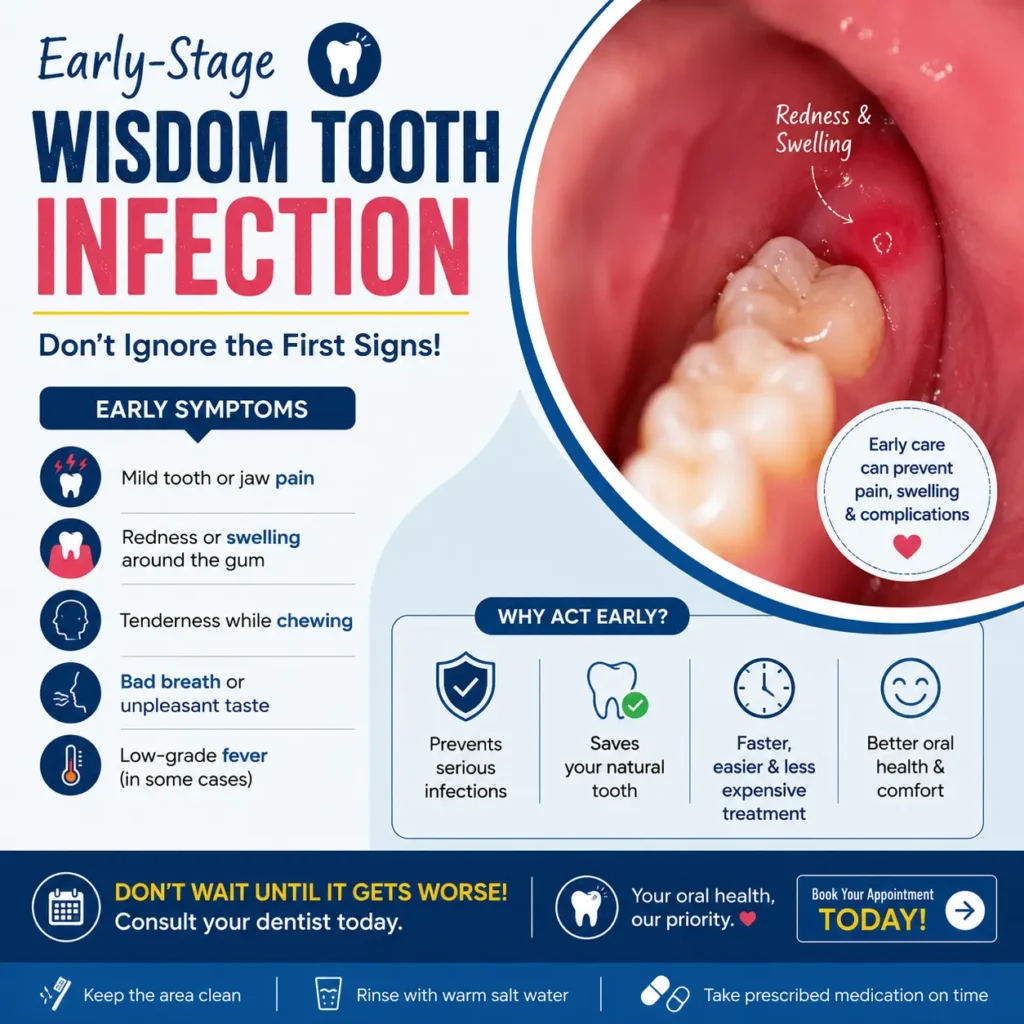
The tricky thing about early-stage wisdom tooth infections is that they can feel like normal teething discomfort. But there are differences:
- Normal teething: mild soreness that comes and goes, no fever, no visible pus
- Early-stage infection: persistent aching, redness that doesn’t fade, gum tissue that looks inflamed for more than a couple of days, a bad taste even after brushing
Research cited in the British Journal of General Practice shows that approximately 81% of people in their 20s experience pericoronitis at some point. That’s a huge number—and most of those cases start exactly this way, with what feels like “just a little irritation.”
The key warning signs to catch it early include:
- Redness or swelling of gum tissue around a back molar
- A dull, persistent ache in the back of the jaw
- Gums that feel sensitive or bleed when touched
- A slight bad taste or odor, even with good oral hygiene
- Mild difficulty in fully opening your mouth
These are the signs that a wisdom tooth infection is developing. If you catch them early, treatment is simpler and faster.
Infected Wisdom Tooth Symptoms: What Does It Actually Feel Like?
Here is the honest answer to how to know if your wisdom tooth is infected: the symptoms don’t stay quiet. They start mild—easy to brush off—and then they build. Once a real infection sets in, your body sends some very clear signals. Here is what to watch for:
1. Persistent, Throbbing Pain at the Back of Your Mouth
This is the most common and early symptom of wisdom tooth infection. It is different from a regular dental issue, which comes and goes. Pain caused by an infected wisdom tooth is persistent and gets worse with time. It can affect the back of your jaw all the way to your ear or neck. If the pain is not getting better after a few days, that’s your sign to confirm it.
2. Swollen, Red, or Bleeding Gums
If you have pain, for more confirmation, take a look in the mirror at the back of your mouth. If the gum tissue around your molar tooth looks swollen or red or is bleeding, it’s a sign of inflammation. The tissue may feel warm. This is your body’s immune system fighting back, trying to eliminate bacteria under the teeth.
3. Swelling in Your Cheek or Jaw
The swelling may spread to your cheek and jawline as the infection worsens. If one side of your face looks noticeably puffier or swollen than the other, it’s a sign of a wisdom tooth infection. It is a sign that the infection is getting worse and needs proper medical attention.
4. Bad Breath or a Foul Taste
Having a strange metallic, salty, or sour taste in your mouth is a sign that bacteria are actively feeding on food trapped under your gums. You might also notice a small amount of pus around your gum opening. This is one of the obvious symptoms of an infected wisdom tooth.
5. Difficulty Opening Your Mouth (Trismus)
People get caught off guard because it doesn’t seem to be connected to a tooth issue at first. But according to Columbia University College of Dental Medicine, jaw stiffness and difficulty opening your mouth are recognized as symptoms of pericoronitis. When the infection spreads too much, it can tighten up muscles, making it difficult and painful to open your mouth wide enough to eat or speak comfortably. It is called trismus, and when it shows up, the infection has already gotten worse.
6. Pain When Chewing or Swallowing
Even a little force on an infected wisdom tooth can feel like pressing on a bruise. Even soft foods can become uncomfortable. In severe infections, swallowing becomes painful, which indicates that something is wrong, and you need medical attention.
7. Fever and Swollen Lymph Nodes
If you have a fever along with the other symptoms, it means that your body has declared all-out war against infection. If your temperature is above 100 degrees along with tooth pain, the infection has spread too much. If you notice tender, swollen lumps, those are your lymph nodes working too much. Fever, along with swollen lymph nodes, is a clear sign that the infection needs proper treatment.
What Causes a Wisdom Tooth Infection?
A number of issues can lead to a wisdom tooth infection, but these are the most common causes you should be aware of:
Partial Impaction
This is the biggest culprit. When a wisdom tooth only pokes halfway through, it creates a hidden pocket. The Cleveland Clinic notes that bacteria easily get trapped under this loose gum flap (the operculum), triggering rapid inflammation and infection.
Poor Oral Hygiene
Wisdom teeth are way in the back—hard to reach with a toothbrush or floss. Food debris and plaque can accumulate more easily, especially around a partially erupted tooth.
Cavities in Wisdom Teeth
Decay that’s left untreated in a wisdom tooth can eventually spread to the inner pulp, leading to a different type of infection called a tooth abscess.
Weakened Immune System
People with conditions like diabetes or those going through high stress are more susceptible to oral infections, including pericoronitis.
Chronic Irritation from the Opposite Tooth
Sometimes the upper wisdom tooth bites down on the gum flap covering the lower wisdom tooth, repeatedly irritating it and making infection more likely.
Wisdom Tooth Infection Treatment
Here are some treatments your dentist may recommend:
Non-Surgical Treatment
- Antibiotics
Another option is antibiotics. In case of swelling or fever, your dentist might prescribe oral antibiotics for some days. According to the American Association of Oral Maxillofacial Surgeons (AAOMS), antibiotics are a primary treatment option for oral infection.
But keep in mind that antibiotics clear the infection temporarily. If the tooth stays in, the infection often comes back.
- Professional Cleaning
Your dentist will gently lift the gum flap and flush the pocket underneath with a professional antibacterial rinse—typically chlorhexidine—to wash out trapped bacteria, food debris, and pus. This is usually the first hands-on step.
- Over-the-Counter Pain Relief
Some common over-the-counter pain relief medicines like ibuprofen or acetaminophen can help you reduce pain and inflammation during extremely painful times. Strictly follow the recommended dose.
Surgical Treatment
- Operculectomy
If your wisdom tooth is growing straight but the gum flap keeps trapping bacteria, your dentist might recommend removing that flap completely. This treatment is done under local anesthesia. This eliminates the pocket where bacteria build up.
Note: The gum flap can sometimes grow back.
- Wisdom Tooth Extraction
When your tooth is affected, repeatedly gets infected, or is positioned abnormally, infected wisdom tooth extraction is the most effective long-term solution. Tooth extraction eliminates the source of infection and prevents future recurrence.
- At Home Remedies
- Warm saltwater rinses (½ teaspoon salt in warm water) 3–4 times daily
- Cold compress on your cheek for about 15 minutes on, 15 minutes off
A quick safety note: Some people turn to natural remedies like clove oil or soursop leaves for temporary relief. These may ease discomfort briefly but cannot treat a bacterial infection. Soursop leaves in particular are not suitable for everyone—please speak with your doctor before using them, especially if you are pregnant, nursing, or on medication.
When to See a Dentist: Don’t Wait on These Signs
Some dental discomfort can wait a few days. A wisdom tooth infection often cannot. Here’s when you should contact a dentist right away:
- Pain that has lasted more than 3–4 days without improvement
- A fever above 101°F (38.3°C) alongside tooth or jaw pain
- Visible facial swelling—especially if it’s spreading toward your neck
- Difficulty swallowing or breathing—this is a dental emergency; go to the ER
- Pus or discharge coming from the area around the tooth
- Trouble opening your mouth more than halfway
- Swollen, tender lymph nodes under your chin or jaw
Medical News Today notes that when pain and swelling persist for more than a few days, a visit to a dentist is essential. Not treating it can allow the infection to spread to the jaw, neck, or even the bloodstream.
What Happens If You Ignore a Wisdom Tooth Infection?
Ignoring the wisdom tooth infection and thinking it will get better on its own is never the right call. Your mouth sits dangerously close to your airway and brain, and even bacteria don’t stay put.
According to the Mayo Clinic, ignoring a wisdom tooth infection can lead to:
- Abscess: a painful, pus-filled pocket requiring immediate drainage
- Cellulitis: infection spreading into the cheek, jaw, or neck tissue
- Ludwig’s Angina: a rare but life-threatening swelling that can block your airway
- Sepsis: bacteria entering your bloodstream, becoming a medical emergency
- Bone and tooth damage: the infection is eating away at the jaw and nearby teeth
Crest’s oral health resource confirms that severe cases of wisdom tooth infection may require hospitalization and IV antibiotics.
Remember, pain relievers can buy you time, but they don’t fix the problem.
Prevention: How to Lower Your Risk
You can’t stop a wisdom tooth from coming 100%, but you can reduce the chances of getting an infection. Here are some of the best ways:
- Always brush all the way to your back teeth for at least 2 minutes. Use a soft-bristled toothbrush and angle it to reach those rear molars.
- Try to floss or use a water flosser regularly. Cleaning between teeth and the gumline at the back of your mouth makes a real difference.
- Use an antibacterial mouthwash. Daily rinsing reduces overall bacterial count.
- See your dentist every 6 months. Regular checkups let your dentist monitor your wisdom teeth and catch problems before they become infections.
- Get dental X-rays as recommended. X-rays can help to show how your wisdom teeth are positioned and whether future problems are likely to occur or not.
The Bottom Line
A wisdom tooth infection is a common dental issue, but it’s not something that you should ignore.
Your body starts to give you early warning signs like persistent pain, puffy gums, and bad breath that won’t go away. Pay attention to them because the gap between the need for simple antibiotics and an emergency room visit is always just time.
Modern medical advancement has made treating an infected wisdom tooth safer and easier than you might expect it to be. The treatment isn’t nearly as scary as the complication that can happen from waiting.
If anything in this blog seems relatable, book your appointment with the dentist today. Your future self will thank you.
Frequently Asked Questions
Can a wisdom tooth infection go away on its own?
No. Once bacteria have developed an infection under the gum flap, it will not heal without proper treatment. While symptoms may temporarily ease up, the infection will often come back worse. You need professional dental care to treat an infected wisdom tooth.
How to know if a wisdom tooth is infected?
The most common signs include a persistent, throbbing pain in the back of your jaw, bright red or swollen gums, and a foul taste or bad breath that won’t go away. You might also notice pus near the tooth or find it stiff and painful to open your mouth, even for something simple like eating.
What antibiotics are used for an infected wisdom tooth?
Your dentist will prescribe standard antibiotics specifically designed to fight oral bacteria. However, never take antibiotics without a dentist’s prescription. Taking the wrong medicine or using leftover pills can cause negative side effects and actually make your infection much worse.
How to treat wisdom tooth infection at home?
You cannot treat it at home. You need a dentist’s help to eliminate the bacteria or remove the tooth entirely in some cases. But for temporary relief, you can gently rinse with warm salt water and take pain relievers.
References & Sources
https://www.medicalnewstoday.com/articles/wisdom-tooth-infection
https://www.livwelldentistry.com/blog/wisdom-tooth-pain-growing-in-or-infected
https://batradental.com/blog/wisdom-tooth-infection-symptoms-complications-and-treatment.php
https://www.colgate.com/en-us/oral-health/wisdom-teeth/perocoronitis-infection-near-wisdom-tooth
https://www.healthline.com/health/wisdom-teeth-infection
https://crest.com/en-us/oral-care-tips/wisdom-teeth/wisdom-tooth-infection-signs-symptoms-treatments
https://www.medicalnewstoday.com/articles/wisdom-tooth-infection
https://www.mayoclinic.org/diseases-conditions/wisdom-teeth/symptoms-causes/syc-20373808

Olivia Reed
Women's Health & Skincare Writer
Better Health Focus
Expertise
Women's Health • Skincare • Hormonal Health • Beauty & Skin Science • Preventive Wellness • Healthy Aging • Nutrition for Skin Health • Lifestyle Medicine • Evidence-Based Health Education
About Olivia Reed
Olivia Reed is a Women's Health & Skincare Writer at Better Health Focus, where she creates evidence-based educational content focused on helping readers better understand women's wellness, hormonal health, skincare, healthy aging, and preventive self-care.
Her writing combines scientific research with practical lifestyle guidance, making complex health and skincare topics easy to understand without relying on misleading beauty trends or unrealistic health claims. Olivia Reed believes that informed readers make better health decisions, and she strives to present balanced information that reflects current scientific evidence.
Before publishing an article, Olivia Reed reviews guidance and research from respected organizations, including the National Institutes of Health (NIH), PubMed, the World Health Organization (WHO), the American Academy of Dermatology (AAD), the American College of Obstetricians and Gynecologists (ACOG), the Office on Women's Health (OWH), and peer-reviewed medical journals whenever applicable.
Her work regularly explores women's hormonal changes throughout different life stages, skincare science, acne, eczema, pigmentation, menopause, nutrition for healthy skin, reproductive wellness, hair health, and evidence-based approaches to beauty and preventive healthcare.
Olivia Reed is committed to separating scientific evidence from social media trends and marketing claims, helping readers understand what current research supports—and where evidence is still emerging.
Education
Bachelor of Arts (B.A.) in Health Communication
Professional Development
- Continuing education in Women's Health and Skin Science
- Ongoing study of dermatology research and preventive healthcare
- Regular review of peer-reviewed publications related to dermatology, endocrinology, nutrition, women's health, and public health
- Continuous monitoring of clinical guidance from leading medical organizations
Areas of Focus
- Women's Health
- Hormonal Health
- Menstrual & Reproductive Wellness
- Pregnancy & Postpartum Education
- Menopause & Healthy Aging
- Skincare & Dermatology Education
- Acne, Eczema & Sensitive Skin
- Hair & Scalp Health
- Nutrition for Healthy Skin
- Preventive Health & Lifestyle Medicine
Editorial Standards
Every article written by Olivia Reed Ward follows the editorial standards of Better Health Focus and is developed using reputable medical references and current scientific literature whenever available.
Her editorial approach emphasizes:
- Evidence-based health education
- Scientific accuracy
- Balanced discussion of benefits, risks, and research limitations
- Clear, accessible language for everyday readers
- Responsible reporting without exaggerated claims
- Alignment with Google E-E-A-T principles for health content
Rather than promoting miracle treatments or viral beauty trends, Olivia Reed focuses on practical, research-informed guidance that supports informed decision-making and long-term wellness.
Research Sources
Articles may reference information from organizations and databases such as:
- National Institutes of Health (NIH)
- PubMed
- World Health Organization (WHO)
- American Academy of Dermatology (AAD)
- American College of Obstetricians and Gynecologists (ACOG)
- Office on Women's Health (OWH)
- American Academy of Pediatrics (AAP)
- U.S. Food & Drug Administration (FDA)
- Peer-reviewed scientific journals
Editorial Disclaimer
The information published by Olivia Reed Ward on Better Health Focus is intended for educational and informational purposes only. It should not replace professional medical advice, diagnosis, or treatment. Readers should consult a qualified healthcare professional or dermatologist regarding personal medical concerns, medications, skincare treatments, or significant health decisions.