

The most effective way for men to lower high blood pressure is by combining a healthy diet, regular exercise, better sleep, and stress management.
Hypertension (high blood pressure) is often called a silent killer. It’s because there are rarely any warning symptoms. If you walk in a room full of men, almost half of them are likely to have high blood pressure without even knowing that they have it. But if not taken care of, it quietly damages your heart, brain, and kidneys over time.
With the help of this guide, let’s explore causes and how to lower your blood pressure naturally.
Table of Contents
Why Blood Pressure Management Matters for Men
Men have a higher risk of developing high blood pressure during middle age compared to women. According to the National Institutes of Health (NIH), blood vessels naturally stiffen over time. This means a man with a healthy number in his early 30s can still develop hypertension later if he doesn’t follow a good diet and manage weight and stress levels.
High blood pressure isn’t just higher numbers. If not treated and balanced, it can significantly increase your risks of:
- Heart attacks
- Strokes
- Heart failure
- Kidney disease
The link between high blood pressure and vision loss is also very real, as the extra strain damages the tiny blood vessels in your eyes. Fortunately, the American Heart Association (AHA) says that lowering your numbers even a little bit can reduce the health risk significantly.
How to Read Your Blood Pressure Numbers
When you get your blood pressure checked, you always see two numbers—like 120/80. The first number (systolic) measures the pressure in the arteries the exact moment your heart beats. The second number (diastolic) measures the pressure when your heart is resting between those beats. And it is totally normal for these numbers to fluctuate throughout the day depending on your sleep, activity labels, and stress.
According to the CDC, here is what your numbers actually mean:
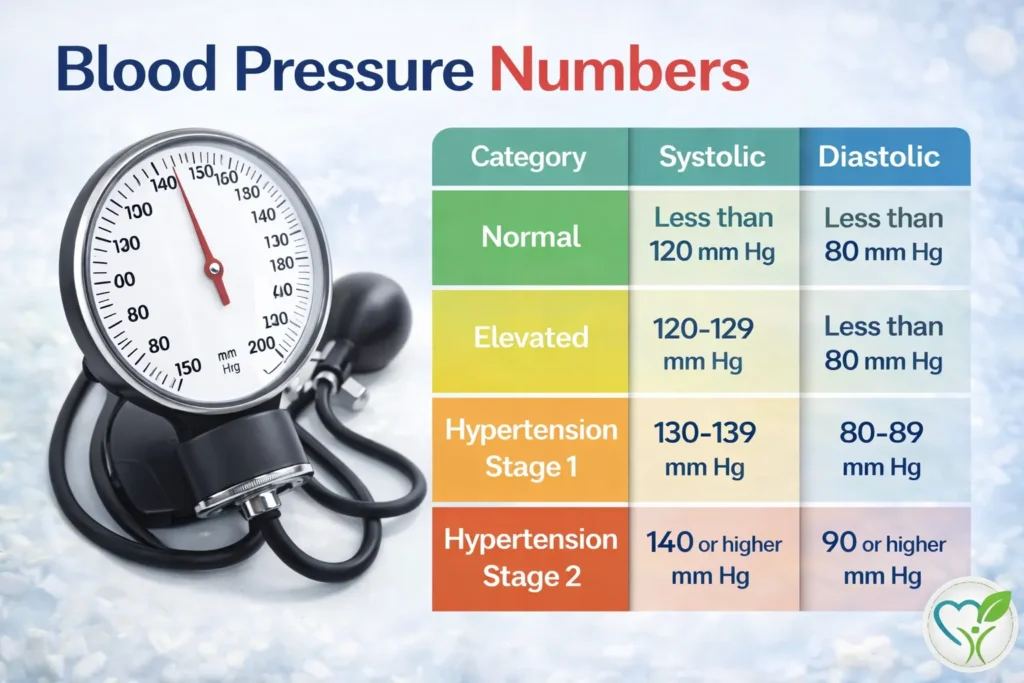
| Category | Top Number (Systolic) | Bottom Number (Diastolic) |
| Normal | Less than 120 | Less than 80 |
| Elevated | 120 – 129 | Less than 80 |
| High (Hypertension) | 130 or higher | 80 or higher |
Think of your blood vessels like water pipes. When water pressure stays consistently high, your heart has to work extra hard to force blood through the pipes. Over time, that extra hard strain damages the whole system. That’s why doctors look for consistently high levels, not just one time.
Why So Many Men Don’t Realize They Have High Blood Pressure
High blood pressure is infamous for being a “silent” condition because it rarely shows any warning signs. You could spend years without having a clue about it. According to the CDC, the only way to know your numbers is actually to get checked.
That silence and no warning is the real danger. A guy can feel completely fine and work a full day while his blood pressure quietly damages his heart and kidneys. By the time symptoms finally start to appear, the damage caused is already severe.
That’s why routine checkups are so important, even if you are feeling perfectly healthy.
(Note: A reading over 180/120 is a hypertensive crisis requiring immediate emergency medical care.)
What Causes High Blood Pressure in Men?
When it comes to causes of high blood pressure, they generally fall into two categories. First, things you can’t change, and second, daily habits you can control.
Things You Can’t Change
According to the NHLBI, some risk factors are simply from birth. These include your age, family history, genetics, and race. As men get older, the risk of high blood pressure naturally increases.
Everyday Habits You Can Control
According to the CDC, your daily choices heavily affect your blood pressure numbers. For men, the most common causes you can control are the following:
- Extra body weight
- Diet and Alcohol
- Smoking
- High Stress
One hidden cause that you might never think about is poor sleep. Not sleeping enough and insomnia are directly related to high blood pressure. If you snore heavily or gasp for air during the night, you might have sleep apnea. This condition severely spikes your blood pressure and needs proper medical care.
How to Lower Blood Pressure Naturally
The good news is that high blood pressure can be managed with healthy lifestyle changes. You don’t necessarily need to change everything at once. Small, consistent daily habits can make a significant difference.
Here are the most effective ways for men to lower blood pressure and manage it naturally:
1. Upgrade Your Diet (The DASH Method)
You don’t have to change your whole diet plan and use expensive supplements with strict rules. The DASH diet (Dietary Approaches to Stop Hypertension) plan is proven to work most in lowering blood pressure. It simply focuses on eating more fruits, vegetables, and whole grains while reducing the consumption of processed foods.
The biggest cause to watch out for is sodium (Blue Salt). Try to keep your sodium intake under 2,300 mg a day (about a teaspoon of salt). If you limit consumption under 1500 mg, it is even better for your health.
- Easy swap: Flavor your food with herbs, garlic, and lemon instead of salt, and cut back on notoriously salty staple foods like pizza, cold cuts, and canned soups.
2. Get Moving (You Don’t Need a Gym)
Exercising regularly is one of the best things you can do. But you don’t have to do hours of intense workouts to see results. The goal is to do the minimum recommended average physical activity (150 minutes) per week.
- The easy breakdown: You can just divide it into 30 minutes a day, five days a week. Brisk walking, cycling, or just parking further away from the store all count. The important thing to remember is to be consistent.
3. Drop Just a Little Weight
Carrying extra weight, especially around your belly, makes your heart work a little bit harder. That’s why even losing just 3% to 8% of your bodyweight is more than enough to improve your blood pressure management. Drinking water instead of sugary drinks and eating in small portions is often considered a good start to losing weight.
4. Limit Alcohol and Ditch the Cigarettes
- Alcohol
Alcohol is very harmful for your blood pressure as well as overall health. For men, two drinks per day is the limit. More than this can actively increase your blood pressure.
- Smoking
Every time you smoke, the nicotine immediately causes a spike in your blood pressure and damages your blood vessels. Quitting smoking is one of the fastest and effective ways to give your heart rest.
5. Prioritize Sleep and Manage Stress
If you are constantly not getting enough sleep and stay stressed, your blood pressure is likely to be higher. Stress and poor sleep keep your body in a constant “fight or flight” mode. That’s why you should try to sleep for 6-9 hours each night and practice calming activities to lower stress levels. It can be anything from reading children’s books to just walking with a friend.
When Natural Habits Aren’t Enough
Even if you eat healthy, stop smoking and drinking alcohol, manage stress, and exercise regularly, sometimes you still don’t get results. If you are experiencing this, you should definitely go to a doctor for proper medical help. In many cases, it becomes essential to get a doctor’s help.
According to the NHLBI, the most common medications include:
- Diuretics
- ACE Inhibitors & ARBs
- Calcium channel blockers
The Golden Rule of Blood Pressure Meds
Never quit taking your medication. Suddenly stopping can cause a dangerous rebound spike in your blood pressure. If you are experiencing anything strange, just consult your doctor. They can change your dose or medication.
When to Seek Immediate Medical Help
You should not wait until your symptoms get severe because high blood pressure is a silent condition. If you are feeling symptoms, it often means you are in a danger zone.
The AHA and CDC warn that you should call 911 immediately if you experience:
- Sudden, severe chest pain (especially if it spreads to your arm, neck, jaw, or back)
- Sudden shortness of breath
- Severe headaches accompanied by blurred vision
- Unexplained nausea, sweating, or lightheadedness
Also, if you check your blood pressure at home and get a reading above 180/120, don’t ignore it and go to a doctor. That is a hypertensive crisis and requires immediate emergency medical attention. Even if you feel healthy and completely fine, every adult over 40 years should perform regular routine checks at least once a year.
A Realistic Game Plan for Lowering Blood Pressure
Better blood pressure management isn’t about being perfect; it is about being consistent. According to the NHLBI, making one small change at a time rather than trying to change everything overnight.
Here is a simple, everyday plan you should follow:
- Track it: If your doctor asked to monitor blood pressure at home, check it at the same time each day. Always take two readings after a few minutes for better accuracy.
- Move daily: Do any physical activities every day, even if it’s just for 20-30 minutes.
- Watch the salt: Eat highly processed, salty foods only on some occasions. Don’t make them your daily meal.
- Mind the drinks and smoking: Don’t drink more than two drinks or fewer per day. Quit smoking (if possible) or at least limit it.
- Protect your sleep: Try to sleep for 7-9 hours each night and around the same time. This lets your body recover and adjust according to that timing.
Frequently Asked Questions
Can I have high blood pressure and feel completely fine?
Absolutely. High blood pressure is often called a silent killer. You can live years without noticing that you have a high blood pressure issue while it quietly damages your health. That’s why regular routine checkups are important.
Can high blood pressure cause flashing lights in eyes?
Yes, a sudden spike in your blood pressure can damage small sensitive blood vessels connecting to your retina. This strain can cause disturbance in your eyes, like flashing lights or floating spots. If you experience these symptoms, immediately go to a doctor.
Can high blood pressure cause nosebleeds?
While high blood pressure can’t cause nosebleeds, it can make them worse and harder to stop.
Does infection cause high blood pressure?
A regular infection won’t cause high-pressure issues, but symptoms of infection might cause a short-term blood pressure spike. Some medication can also increase numbers, so keep it in mind.
How often should I get my blood pressure checked?
If your numbers are generally normal and you are under 40, a yearly checkup is usually enough. But if you are over 40, have a family history, or your numbers are at the danger line, your doctor might ask you to monitor it at home a few times a week.
Can I lower high blood pressure without medication?
Yes, you can lower blood pressure with teh help of a healthy diet, regular exercise, proper sleep, and a balanced weight. However, there are some factors you can’t do anything about. That’s when you need help from a doctor to lower your blood pressure.
References & Sources
National Institutes of Health (NIH)
National Heart, Lung, and Blood Institute (NHLBI) – NIH
CDC: Centers for Disease Control and Prevention

Daniel Brooks
Men's Health & Blood Sugar Writer
Better Health Focus
Expertise
Men's Health • Blood Sugar Management • Type 2 Diabetes Education • Prediabetes • Healthy Lifestyle • Nutrition • Metabolic Health • Preventive Wellness • Evidence-Based Health Content
About Daniel Brooks
Daniel Brooks is a Men's Health & Blood Sugar Writer at Better Health Focus, where he develops evidence-based educational content focused on men's wellness, blood sugar management, diabetes prevention, metabolic health, and healthy lifestyle habits.
With more than five years of experience writing health content, Daniel specializes in transforming complex medical research into practical, reader-friendly articles that help people better understand chronic disease prevention and long-term wellness. His work emphasizes realistic lifestyle changes, balanced nutrition, physical activity, and sustainable habits rather than quick fixes or unsupported health claims.
Daniel has completed professional education in Lifestyle Medicine through the American College of Lifestyle Medicine (ACLM) and has undertaken extensive independent study of evidence-based guidance, clinical recommendations, and educational resources published by the American Diabetes Association (ADA). His writing reflects current research and established best practices related to blood sugar management, diabetes prevention, cardiovascular health, and men's health.
Before publishing an article, Daniel reviews reputable medical literature and guidance from organizations including the National Institutes of Health (NIH), PubMed, the American Diabetes Association (ADA), the American Heart Association (AHA), the Centers for Disease Control and Prevention (CDC), and peer-reviewed scientific journals whenever applicable.
His goal is to help readers understand the science behind healthy living while making evidence-based information clear, practical, and accessible.
Education & Professional Development
- Professional education in Lifestyle Medicine through the American College of Lifestyle Medicine (ACLM)
- Ongoing study of evidence-based resources and clinical guidance published by the American Diabetes Association (ADA)
- Continuing education in nutrition science, metabolic health, and preventive medicine
- Regular review of peer-reviewed medical research and public health guidance
Areas of Focus
- Men's Health
- Blood Sugar Management
- Prediabetes Education
- Type 2 Diabetes Prevention
- Metabolic Health
- Heart Health
- Healthy Weight Management
- Nutrition & Healthy Eating
- Exercise & Lifestyle Medicine
- Preventive Health
Editorial Approach
Every article written by Daniel Brooks follows the editorial standards of Better Health Focus and is based on current scientific evidence from reputable medical organizations and peer-reviewed research whenever available.
His content is guided by the principles of:
- Evidence-based health education
- Scientific accuracy and transparency
- Balanced discussion of benefits, risks, and research limitations
- Clear and practical language for everyday readers
- Responsible reporting without exaggerated health claims
- Alignment with Google E-E-A-T principles for health content
Daniel believes that trustworthy health information should empower readers to make informed decisions in partnership with qualified healthcare professionals.
Research Sources
Daniel regularly consults information from:
- National Institutes of Health (NIH)
- PubMed
- American Diabetes Association (ADA)
- American College of Lifestyle Medicine (ACLM)
- Centers for Disease Control and Prevention (CDC)
- American Heart Association (AHA)
- U.S. Department of Agriculture (USDA)
- Office of Dietary Supplements (ODS)
- Peer-reviewed scientific journals
Editorial Disclaimer
The information published by Daniel Brooks on Better Health Focus is intended for educational and informational purposes only. It is not a substitute for professional medical advice, diagnosis, or treatment. Readers should consult a qualified healthcare professional before making decisions regarding medications, diabetes care, supplements, diet, or lifestyle changes.