

A rash from a rash guard is more common than most people realize. These tight-fitting shirts are built to protect your skin from sunburn, sand abrasion, and saltwater, and they do a great job at it.
But when conditions aren’t right, the same protector that’s supposed to help your skin can start working against it. Too much heat, trapped sweat, a fabric your skin doesn’t agree with, or simply wearing it too long can turn your rash guard into the problem instead of the solution.
Table of Contents
What Is a Rash Guard?
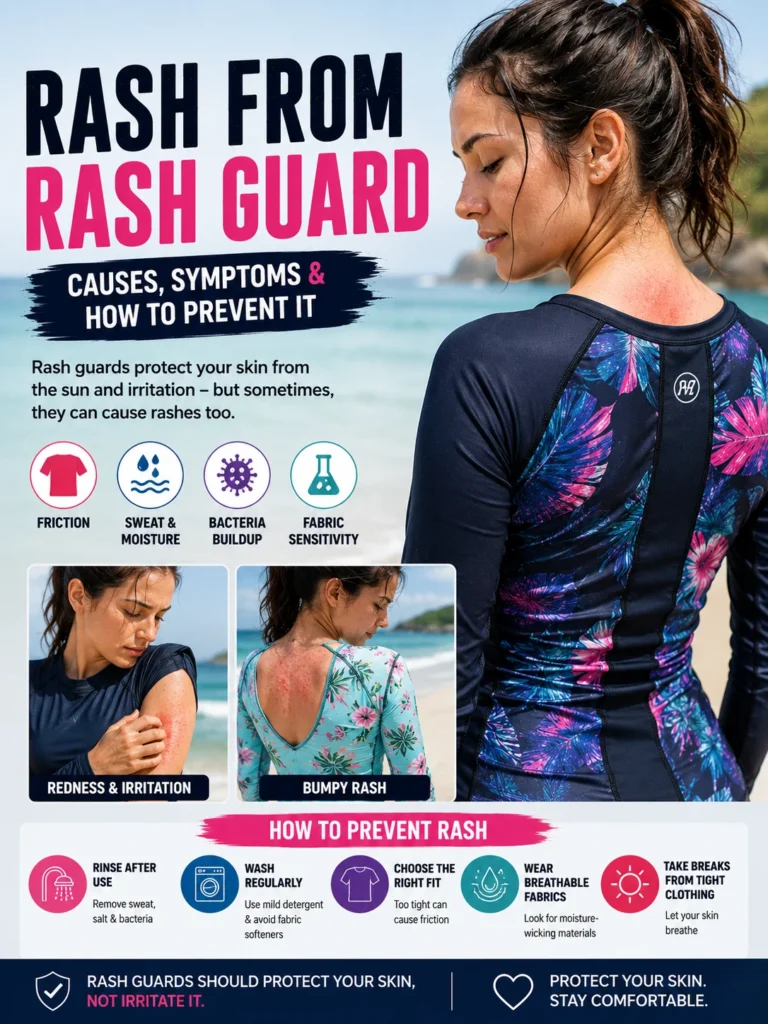
A rash guard is a stretchy athletic shirt made from synthetic fabrics like polyester, nylon, or spandex to protect the skin from rashes, saltwater, sunburn, and sand friction.
Most rash guards carry a UPF (Ultraviolet Protection Factor) rating, meaning the fabric itself physically blocks UV rays. It is like a solid backup when sunscreen wears off during long hours outdoors.
However, the same things that make rash guards so useful, their snug fit, the synthetic material, and the fact that you wear them for hours, are exactly what become the cause of rashes. Too much heat, trapped sweat, or a fabric your body doesn’t get along with, and suddenly, your protective gear becomes the problem.
That’s what we’re going to discuss here.
Why Does a Rash Guard Cause a Rash?
If you’ve ever gotten a rash after wearing a rash guard, it’s usually not just one single thing to blame. Here are the most common causes why this happens:
1. Friction from the Tight Fit
Rash guards are snug by design, and during swimming, surfing, or paddling, that tight fabric rubs against your skin with every move you make. Do that for an hour straight, and it starts wearing down your skin’s outer layer. The result is redness, soreness, and raw patches in high-friction spots like your underarms, chest, and inner thighs.
2. Heat and Sweat Trapped Against Skin
Polyester and nylon absorb sweat off your skin fast, but they also trap heat. Wear your rash guard for hours in hot weather, and sweat builds up underneath. That warm, damp environment weakens your skin barrier and blocks your sweat glands. According to MedlinePlus, heat rashes worsen with tight clothing and heavy sweating—a rash guard checks both boxes.
3. Fabric Dyes and Chemical Sensitivities
Some people aren’t reacting to the fabric; they’re reacting to what’s in it. Synthetic rash guards commonly contain disperse dyes, formaldehyde finishes, antimicrobial coatings, and detergent residue. According to the NIH, textile dyes in synthetic fabrics are established triggers for allergic contact dermatitis, where your immune system treats a chemical like an intruder and inflames the skin.
4. Wearing a Damp or Unwashed Rash Guard Too Long
If you wear a damp, salt-soaked, or unwashed rash guard, you’re basically inviting bacteria and fungi onto your skin. This can lead to folliculitis, fungal rashes, or general bacterial buildup, which show up as red, itchy, bumpy skin. That’s why the National Athletic Trainers’ Association (NATA) recommends washing athletic clothing after every single session, and your rash guard is no exception.
Symptoms to Watch For
The appearance of a rash can vary depending on the cause. But here are some common symptoms that you can watch for:
- Redness or pink patches in areas where the fabric pressed against the skin
- Itching or a burning sensation that starts during or shortly after wearing the garment
- Tiny raised bumps (can look like small pimples, hives, or a heat rash)
- Raw or sore skin in high-friction zones like the underarms, chest, inner thighs, or neck
- Blisters are a sign of more severe allergic reactions
- A spreading rash that moves beyond the garment’s edges (It is a warning sign that the reaction is more serious).
Get proper medical treatment if you develop a fever, significant swelling, pus, or a rash that is spreading too quickly. All these symptoms indicate that you are infected and need medical help.
Types of Rashes
🩺 Types of Rashes
Causes · Symptoms · Affected Areas
How to Treat a Rash from a Rash Guard
Most rash guard rashes get healed within a few days, as long as you stop the irritation and give your skin what it needs to treat the rash. With proper attention, you can heal rashes within days. Here are some steps that can help you treat rashes:
Step 1: Take It Off and Cool the Skin Down
The moment you notice irritation, remove the rash guard. Don’t push yourself to keep on wearing it. Right away, take a cool or lukewarm shower. Avoid hot water because it can make inflammation worse. Use a gentle, fragrance-free cleanser to wash away sweat, salt, chlorine, or bacteria sitting on the skin. Slowly dry the area with a clean towel.
Step 2: Soothe the Irritation Right Away
After gently cleaning and drying, put on a soothing product to help cool down the skin, such as:
- Calamine Lotion: It calms surface redness and stops that persistent itch. In fact, dermatologists regularly recommend it for acute allergic reactions and contact dermatitis.
- Aloe Vera Gel: It naturally cools that burning sensation on contact and has mild anti-inflammatory properties to help bring down the swelling.
- Colloidal Oatmeal Bath: It is incredibly soothing. Colloidal oatmeal actively reduces skin inflammation by forming a hydrating, protective barrier over the rash.
- Cold Compress: Taking a clean, cool, damp cloth and laying it gently over the rash pulls the heat right out of your skin and brings fast, real relief.
Step 3: Add OTC Products If Needed
If soothing alone isn’t enough, you can go to a local pharmacy and get some medicines.
- 1% hydrocortisone cream. It is a mild tropical steroid that reduces redness and inflammation. It also works well for contact dermatitis and heat rash.
- Oral antihistamines like Zyrtec (cetrizine) or Claritin (loratadine). If a rash feels like an allergic reaction, an antihistamine helps calm down the immune response from the inside.
- Antifungal cream like clotrimazole. If the rash has small pustules and may be fungal, especially after wearing a damp garment for too long.
According to StatPearls through NCBI, topical corticosteroids and antihistamines like cetrizine are standard treatments for contact dermatitis and are safer for most adults. But it’s always a good idea to get confirmation from a doctor.
Step 4: Let Your Skin Breathe and Recover
This step is simple, yet many people skip it all the time. Switch to loose, breathable cotton clothing for a few days while the rash heals. Don’t wear anything tight-fitting like a rash guard until your skin is completely healed. Putting tight synthetic fabric over a healing rash can make the whole irritation cycle start all over again. If possible, skip the chlorinated pool or saltwater while recovering, too.
Are Rash Guards for Swimming?
Yes, rash guards are designed for swimming, but that’s not their only purpose.
A rash guard is a lightweight, stretchy athletic shirt made from materials such as polyester, nylon, and spandex. It is commonly worn for swimming, surfing, snorkeling, paddleboarding, and other water sports.
Benefits of Wearing a Rash Guard for Swimming
- Sun Protection: Many rash guards offer UPF 30–50+ protection, helping shield your skin from harmful UV rays.
- Reduced Skin Irritation: They help prevent chafing and rashes caused by swimwear, surfboards, or prolonged water exposure.
- Comfort and Coverage: Rash guards provide extra coverage while remaining lightweight and quick-drying.
- Warmth: They offer a small amount of insulation in cooler water.
- Protection from Scratches: Helpful when swimming in areas with rocks, reefs, or rough surfaces.
Are Rash Guards Better Than Regular T-Shirts?
For swimming, yes. Regular cotton T-shirts absorb water, become heavy, and dry slowly. Rash guards are specifically designed for water activities, allowing greater freedom of movement and faster drying.
Can You Wear a Rash Guard Without Swimming?
Absolutely. Many people wear rash guards for:
- Beach activities
- Outdoor workouts
- Boating
- Hiking in sunny weather
- General sun protection
When You Need to See a Doctor
Home care handles most rash guard rashes just fine. But there are situations where a dermatologist visit is the right call:
- The rash isn’t improving after 3–5 days of consistent home treatment
- Blisters form and start to break open
- You notice signs of infection like pus, unusual warmth, tenderness, or fever
- The rash spreads well beyond where the garment sat
- This keeps happening every time you wear a rash guard
A dermatologist can run a patch test to identify the exact material or chemical triggering your reaction. According to Dermatology Times, patch testing with pieces of the offending athletic gear is a recommended diagnostic step when simply avoiding the gear doesn’t bring enough improvement.
Prevention Tips: Stop the Rash Before It Starts
Preventing a rash from your rash guard is way easier than treating one. A few simple habits make all the difference.
- Before you put it on
Always wash a brand-new rash guard before wearing it for the first time. This removes manufacturing chemical residue that can irritate skin on first contact. Apply a fragrance-free anti-chafing balm to high-friction spots like your underarms, chest, and inner thighs. Make sure the fit is snug, not suffocatingly tight.
- During activity
Rinse off with fresh water partway through long sessions to flush away salt, sand, and chlorine. When you step out of the water for a break, pull the rash guard off too.
- Right after the activity
Change immediately. Sitting in a wet rash guard is one of the fastest ways to trigger a rash. Rinse it out right away, then machine wash in cool water with a mild, fragrance-free detergent. Avoid using fabric softener. It leaves residue that irritates the skin. Always air-dry completely. Never stuff a damp one back into a bag.
- Long-term
Switch between two rash guards so each one fully dries for the next use. Stay well-hydrated because healthy skin naturally resists irritation better. And look for rash guards with flat-lock seams, which lie flush against the skin and cut friction down significantly.
The Bottom Line
Rash guards are great gear, but even the best ones can irritate your skin when conditions aren’t right. But once you know what’s causing the problem, fixing it is usually pretty simple. Clean your gear after every use, apply a barrier in friction-prone spots, and get out of a wet rash guard the second you’re done.
Most rashes clear up within a few days with basic home care. But if yours isn’t or keeps coming back, don’t ignore it. A quick dermatologist visit can pinpoint exactly what’s triggering the reaction and help you treat it without any complications.
Your skin is as important as every other body part, so give it the same attention and care as the rest of your body. With correct knowledge, you can go back in the water, itch-free.
Frequently Asked Questions
How long does a rash from a rash guard last?
Most mild rashes clear up within 2 to 7 days once you stop wearing the tight-fit garment and care for the skin properly. However, allergic reactions can take a little longer, especially if you haven’t found the specific trigger and stopped exposing your skin to it yet.
What’s the fastest way to get rid of a rash?
Immediately rinse the area with cool water and then soothe the irritation with aloe vera gel or calamine lotion. For itching, use 1% hydrocortisone cream or an antihistamine. It works for most people. This is a quick first aid for rashes.
Is it safe for kids to wear rash guards?
Yes, rash guards are safe for children, too. Just make sure it’s not too tight, and the fabric is soft and high quality. Keep an eye on the child’s skin and swap out the rash guard if there are any problems.
How do I choose the best rash guards?
Choose a snug but comfortable fit over an extremely tight fit. Its fabrics should be soft and absorbent, pulling sweat away from the skin. It should have built-in UPF protection and flat seams to avoid chafing. All these features help to choose the best rash guard.
References & Sources
National Athletic Trainers’ Association
National Institutes of Health (NIH) |

Olivia Reed
Women's Health & Skincare Writer
Better Health Focus
Expertise
Women's Health • Skincare • Hormonal Health • Beauty & Skin Science • Preventive Wellness • Healthy Aging • Nutrition for Skin Health • Lifestyle Medicine • Evidence-Based Health Education
About Olivia Reed
Olivia Reed is a Women's Health & Skincare Writer at Better Health Focus, where she creates evidence-based educational content focused on helping readers better understand women's wellness, hormonal health, skincare, healthy aging, and preventive self-care.
Her writing combines scientific research with practical lifestyle guidance, making complex health and skincare topics easy to understand without relying on misleading beauty trends or unrealistic health claims. Olivia Reed believes that informed readers make better health decisions, and she strives to present balanced information that reflects current scientific evidence.
Before publishing an article, Olivia Reed reviews guidance and research from respected organizations, including the National Institutes of Health (NIH), PubMed, the World Health Organization (WHO), the American Academy of Dermatology (AAD), the American College of Obstetricians and Gynecologists (ACOG), the Office on Women's Health (OWH), and peer-reviewed medical journals whenever applicable.
Her work regularly explores women's hormonal changes throughout different life stages, skincare science, acne, eczema, pigmentation, menopause, nutrition for healthy skin, reproductive wellness, hair health, and evidence-based approaches to beauty and preventive healthcare.
Olivia Reed is committed to separating scientific evidence from social media trends and marketing claims, helping readers understand what current research supports—and where evidence is still emerging.
Education
Bachelor of Arts (B.A.) in Health Communication
Professional Development
- Continuing education in Women's Health and Skin Science
- Ongoing study of dermatology research and preventive healthcare
- Regular review of peer-reviewed publications related to dermatology, endocrinology, nutrition, women's health, and public health
- Continuous monitoring of clinical guidance from leading medical organizations
Areas of Focus
- Women's Health
- Hormonal Health
- Menstrual & Reproductive Wellness
- Pregnancy & Postpartum Education
- Menopause & Healthy Aging
- Skincare & Dermatology Education
- Acne, Eczema & Sensitive Skin
- Hair & Scalp Health
- Nutrition for Healthy Skin
- Preventive Health & Lifestyle Medicine
Editorial Standards
Every article written by Olivia Reed Ward follows the editorial standards of Better Health Focus and is developed using reputable medical references and current scientific literature whenever available.
Her editorial approach emphasizes:
- Evidence-based health education
- Scientific accuracy
- Balanced discussion of benefits, risks, and research limitations
- Clear, accessible language for everyday readers
- Responsible reporting without exaggerated claims
- Alignment with Google E-E-A-T principles for health content
Rather than promoting miracle treatments or viral beauty trends, Olivia Reed focuses on practical, research-informed guidance that supports informed decision-making and long-term wellness.
Research Sources
Articles may reference information from organizations and databases such as:
- National Institutes of Health (NIH)
- PubMed
- World Health Organization (WHO)
- American Academy of Dermatology (AAD)
- American College of Obstetricians and Gynecologists (ACOG)
- Office on Women's Health (OWH)
- American Academy of Pediatrics (AAP)
- U.S. Food & Drug Administration (FDA)
- Peer-reviewed scientific journals
Editorial Disclaimer
The information published by Olivia Reed Ward on Better Health Focus is intended for educational and informational purposes only. It should not replace professional medical advice, diagnosis, or treatment. Readers should consult a qualified healthcare professional or dermatologist regarding personal medical concerns, medications, skincare treatments, or significant health decisions.