

Yes, sunscreen does expire. According to the U.S. Food and Drug Administration (FDA), all SPF lotion are required to remain stable and effective for at least three years. If a bottle has no printed expiration date, you should treat it as expired three full years after the date you bought it. Using sunscreen past that point means the active ingredients may no longer protect your skin properly, leaving you far more exposed to sunburn, premature skin aging, and skin cancer risk than you might think.
Let’s break down exactly how to check your bottle, what happens to the ingredients over time, and how to stay safe in the sun.
Table of Contents
Why Does Sunscreen Have an Expiration Date at All?
Most people know SPF lotion is important, but they don’t think about it expiring the way milk or medicine does. But SPF lotion is actually regulated as an over-the-counter drug in the United States, not just a cosmetic product. That means it has to follow the same rules as any other drug on your pharmacy shelf.
The FDA holds UV protection cream manufacturers to strict stability standards. Every bottle you pick up at the store has been tested to ensure the active ingredients, those working hard to block or absorb UV radiation, stay effective for at least three years. After that, all effects are off.
Over time, those protective ingredients naturally break down. The chemistry changes. And once a SPF lotion active ingredients degrade, the SPF number printed on the label no longer means anything. You could be rubbing on an SPF 50 that’s now performing more like SPF 5, or perhaps nothing at all. And that is why sunscreen has an expiration date.
How Long Does Sunscreen Last?
Generally, up to three years of sunscreen is good, but only if the bottle has been stored correctly.
Mayo Clinic confirms this clearly: the FDA requires that Sun protection lotion remain at its original strength for at least three years. So, a bottle from last summer? It’s perfectly fine to use this summer, as long as the expiration date hasn’t passed and it was stored properly.
But one common mistake can make it go bad before its expiration date. It’s leaving it exposed to high temperatures. It can degrade the
sun protection cream even before the date.
How to Find Your Sunscreen Expiration Date
Most brands put a clear expiration date directly on the packaging. You can usually find it printed on the bottom of the bottle, pressed into the top crimp of a squeeze tube, or printed on the label on the back.
Some brands use a tiny icon known as the PAO (Period After Opening) symbol. This looks like a small jar with an open lid and a number followed by an “M,” 12M. This tells you the product is good for 12 months after you open the seal.
If your container is completely blank, take a permanent marker and write the month and year of purchase directly on the front label. As noted by the Mayo Clinic
Sun protection cream Expiration Guide, keeping track of this three-year window is your simplest defense against a useless product.
How to Tell if Sun Protection lotion is Expired (Without a Date)
When a bottle has been exposed to heat and moisture, it can cause it to get bad before the three-year date. If you aren’t sure how old your sunscreen is, take a small amount onto your hand and check for these three immediate red flags:
- The Texture: Is it watery, runny, or completely separated? If the smooth emulsion has broken down into liquid oil and chalky clumps, the active protective ingredients will not spread evenly across your skin.
- The Smell: Expired Sun protection lotion often develops a stale, sour, or heavily chemical odor. If it smells odd or distinctly different, don’t use it anymore.
- The Color: Clear or white lotions that turn a cloudy yellow or off-white shade have oxidized and are no longer stable.
Experts warn that once a formula reaches this state of physical breakdown, it cannot protect you from intense ultraviolet (UV) rays.
What Happens If You Use Expired Sunscreen?
Once your sun protection lotion has expired, the active ingredients are pretty much useless. This means you will be exposed to:
- Sunburns that wouldn’t have happened with effective sunscreen
- Cumulative sun damage to your skin cells over time
- Increased skin cancer risk from unprotected UV exposure
A lot of people think sunscreen will make them invincible, but if it’s old or expired, you are actually susceptible to getting burnt because it’s no longer effective.
The FDA also specifically warns against using expired sunscreen, saying it may no longer be safe or effective. There is no way to know for sure how much (if any) protection remains in a Sun protection lotion after it has expired.
What About Chemical-Based Sunscreens Specifically?
Chemical sunscreens are worth a special mention here. According to the Cleveland Clinic, if a chemical-based sunscreen has been oxidized, it could actually trigger an allergic-type skin rash that resembles a blistering sunburn. That’s a risk you really don’t want to take, especially on a beach vacation.
Mineral Sunscreen vs. Chemical Sunscreen: Difference
Not all sun protection lotion expire in the same way. However, understanding the difference can help you recognize when yours has gone bad.
| Feature | Mineral SPF cream | Chemical SPF cream |
| How it protects | Sits on skin, physically blocks/reflects UV | Absorbs into skin, converts UV to heat |
| How it typically expires | Gets gritty, hard to rub in, clumps | It becomes watery and yellow and may cause irritation |
| Speed of degradation | Slower in heat | Faster in heat and sunlight |
| Risk of skin reaction when expired | Low | Possible oxidation-triggered rash |
| General shelf life | Up to 3 years, properly stored | Up to 3 years, but sensitive to heat |
Both types need to be replaced on time. But if you’re using chemical SPF cream and you’ve left it sitting in a sunny bag all summer, it’s worth replacing it sooner rather than later.
How to Store SPF cream the Right Way
Proper storage is the biggest thing you can do to make sure your sunscreen is good for as long as possible. It’s a very common mistake people generally make with solar protection cream.
Here’s what Cleveland Clinic and the FDA both recommend:
- Keep it somewhere cool and dry
A bathroom cabinet, bedroom drawer, or medicine cabinet all works well. Heat breaks down the active ingredients faster.
- Never leave it in a hot car
Temperatures inside parked cars can exceed 130°F on a hot day, which absolutely destroys sunscreen.
- Keep it out of direct sunlight
On the beach, wrap it in a towel, tuck it in a bag, or place it in the shade. The FDA actually requires sunscreen labels to say, “Protect the product in this container from excessive heat and direct sun.”
- Close the lid after every use
Exposure to air oxidizes sunscreen and speeds up the breakdown process, especially with chemical formulas.
- Wash your hands before applying it
Transferring bacteria into the bottle contributes to the product degrading faster.
You can simply replace your sunscreen every summer season or every month if you’re applying it correctly every single day.
What SPF Should You Be Using?
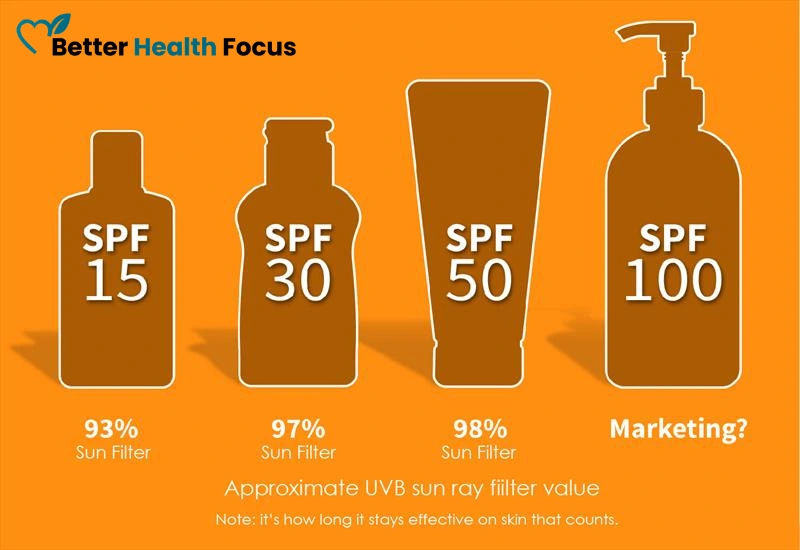
For your daily routine, like driving to work or grabbing coffee, the FDA says an SPF 15 is a good choice. However, if you’re planning a big day outdoors, like a long hike, a game of tennis, or a trip to the pool, you should definitely use an SPF 30 or higher.
And, remember, there is no such thing as “waterproof” SPF cream. In fact, the FDA actually banned companies from using that word because it’s misleading. Instead, you’ll see labels that say “water-resistant.” These formulas are great for about 40 to 80 minutes of swimming or sweating, but remember, if exposure is too much, you might need to reapply immediately to stay protected.
Final Thoughts
Sun protection is one of those things that are easy to take for granted until you end up with a painful burn or worse. The good news is that keeping yourself protected really isn’t that complicated. A fresh bottle of broad-spectrum SPF 30+ costs a few dollars and takes seconds to apply. Check the expiration date, store it properly, and replace it when it’s time. That’s truly all there is to it.
The payoff is healthier skin, fewer wrinkles, and a lower cancer risk over time, which is absolutely worth it.
Frequently Asked Questions
Can sunscreen expire if it’s never been opened?
It can, yes. Even a sealed, packed sunscreen bottle can expire after the date printed on the bottle. In case a date is not mentioned, it will still expire three years after the manufacture or purchase date.
Does sunscreen lose effectiveness in heat?
Yes, and faster than most people expect. Leaving your sunscreen exposed to high temperatures speeds up how quickly those active ingredients break down. Your bottle might still be within its expiration date, but it may not actually be doing its job anymore.
What’s the difference between mineral and chemical sunscreen?
Mineral sunscreens are a good everyday option, as they’re more resistant to heat and are gentler for sensitive skin. While chemical sunscreens feel lighter and blend in more easily, they can get bad faster in direct sunlight.
What happens if I use expired sunscreen?
You will not get proper sun protection, or you might get none. The active ingredients that block UV rays break down over time, so an expired one might not be working well. On top of that, chemical sunscreens sometimes can trigger skin irritation or a rash.
Does UV shield prevent tanning?
Yes. UV shield and tanning are connected in a way most people don’t fully think through. Sunscreen works by reducing the amount of UV radiation that reaches your skin, and since tanning is your skin’s response to UV damage, a good sunscreen will slow the tanning process noticeably.
References & Sources
U.S. Food and Drug Administration

Olivia Reed
Women's Health & Skincare Writer
Better Health Focus
Expertise
Women's Health • Skincare • Hormonal Health • Beauty & Skin Science • Preventive Wellness • Healthy Aging • Nutrition for Skin Health • Lifestyle Medicine • Evidence-Based Health Education
About Olivia Reed
Olivia Reed is a Women's Health & Skincare Writer at Better Health Focus, where she creates evidence-based educational content focused on helping readers better understand women's wellness, hormonal health, skincare, healthy aging, and preventive self-care.
Her writing combines scientific research with practical lifestyle guidance, making complex health and skincare topics easy to understand without relying on misleading beauty trends or unrealistic health claims. Olivia Reed believes that informed readers make better health decisions, and she strives to present balanced information that reflects current scientific evidence.
Before publishing an article, Olivia Reed reviews guidance and research from respected organizations, including the National Institutes of Health (NIH), PubMed, the World Health Organization (WHO), the American Academy of Dermatology (AAD), the American College of Obstetricians and Gynecologists (ACOG), the Office on Women's Health (OWH), and peer-reviewed medical journals whenever applicable.
Her work regularly explores women's hormonal changes throughout different life stages, skincare science, acne, eczema, pigmentation, menopause, nutrition for healthy skin, reproductive wellness, hair health, and evidence-based approaches to beauty and preventive healthcare.
Olivia Reed is committed to separating scientific evidence from social media trends and marketing claims, helping readers understand what current research supports—and where evidence is still emerging.
Education
Bachelor of Arts (B.A.) in Health Communication
Professional Development
- Continuing education in Women's Health and Skin Science
- Ongoing study of dermatology research and preventive healthcare
- Regular review of peer-reviewed publications related to dermatology, endocrinology, nutrition, women's health, and public health
- Continuous monitoring of clinical guidance from leading medical organizations
Areas of Focus
- Women's Health
- Hormonal Health
- Menstrual & Reproductive Wellness
- Pregnancy & Postpartum Education
- Menopause & Healthy Aging
- Skincare & Dermatology Education
- Acne, Eczema & Sensitive Skin
- Hair & Scalp Health
- Nutrition for Healthy Skin
- Preventive Health & Lifestyle Medicine
Editorial Standards
Every article written by Olivia Reed Ward follows the editorial standards of Better Health Focus and is developed using reputable medical references and current scientific literature whenever available.
Her editorial approach emphasizes:
- Evidence-based health education
- Scientific accuracy
- Balanced discussion of benefits, risks, and research limitations
- Clear, accessible language for everyday readers
- Responsible reporting without exaggerated claims
- Alignment with Google E-E-A-T principles for health content
Rather than promoting miracle treatments or viral beauty trends, Olivia Reed focuses on practical, research-informed guidance that supports informed decision-making and long-term wellness.
Research Sources
Articles may reference information from organizations and databases such as:
- National Institutes of Health (NIH)
- PubMed
- World Health Organization (WHO)
- American Academy of Dermatology (AAD)
- American College of Obstetricians and Gynecologists (ACOG)
- Office on Women's Health (OWH)
- American Academy of Pediatrics (AAP)
- U.S. Food & Drug Administration (FDA)
- Peer-reviewed scientific journals
Editorial Disclaimer
The information published by Olivia Reed Ward on Better Health Focus is intended for educational and informational purposes only. It should not replace professional medical advice, diagnosis, or treatment. Readers should consult a qualified healthcare professional or dermatologist regarding personal medical concerns, medications, skincare treatments, or significant health decisions.