

If you’re following a ketogenic diet, you may be wondering: Is balsamic vinegar keto-friendly? The good news is that traditional balsamic vinegar can fit into a keto diet when used in moderation. A typical tablespoon contains about 2–4 grams of carbohydrates, mostly from naturally occurring sugars. While this amount is relatively small, the carbs can add up quickly if you’re not careful. That’s why it’s important to understand how balsamic vinegar affects ketosis, how many carbs it contains, and the best ways to use it in low-carb meals. In this guide, you’ll learn the nutrition facts, carb count, health benefits, and smart keto-friendly uses for balsamic vinegar.
Table of Contents
What Is Balsamic Vinegar?
Before we jump into more detail, let’s look at what makes this dark dressing (balsamic vinegar vinegar) so different from the other vinegars.
The real, authentic balsamic vinegar originated in Italy. Unlike regular vinegars, which are mostly just fermented liquid, true balsamic starts with “grape must.” It is simply freshly crushed grapes, complete with their skins, seeds, and stems.
This fresh grape mixture is boiled down into a dark syrup, and then it is stored in wooden barrels to get ready. Some of the highest-quality bottles are stored in these barrels for 12-25 years. Over time, the water evaporates. It makes the flavor super rich and concentrates the natural sugars from the grapes, which gives the vinegar its famous sweet and tart taste.
This unique aging process is what helps balsamic naturally hold more carbs than plain white or apple cider vinegar. It has no fat and almost zero protein.
But here is where vinegar can be bad for your keto diet. According to Harvard’s Nutrition Sources, many cheap store-bought vinegars contain just a quick mixture of grape juice and wine. Some brands even add extra sugar and thickeners, which makes vinegar more like a heavy, sugary sauce. Which means while one bottle might be perfect for your low-carb keto diet, the next one to it might be the exact opposite and is a hidden carb trap. That’s why checking the balsamic vinegar nutrition facts label on the bottle is so important.
Balsamic Vinegar Nutrition Facts
To really understand what you are adding to your food, you should know about the nutrition facts of balsamic vinegar. According to the US Department of Agriculture (USDA), regular balsamic vinegar is very low in calories and has zero fat, but it does have a few hidden carbs.
Here is a quick look at exactly what a standard 1-tablespoon (approx. 16 grams) serving of original balsamic vinegar contains:
| Nutrient | Amount per 1 Tablespoon |
| Calories | 14 kcal |
| Total Fat | 0 g |
| Protein | 0 g |
| Total Carbohydrates | 2.7 g |
| Dietary Fiber | 0 g |
| Total Sugars | 2.4 g |
| Sodium | 4 mg |
| Potassium | 18 mg |
Understanding the Macros
As you can see from the above-provided balsamic vinegar nutrition fact table, a single tablespoon contains about 2.7 grams of carbs. Because there is no dietary fiber, the net carbs are the same as total carbs (2.4 grams). Almost all the carbohydrates come in the form of natural sugar (2.4) resulting from the concentrated grape mixture.
While 2.7 grams of carbs might seem like a small number, it is important to remember that it comes without any fats or protein to slow down digestion, which will result in a direct impact on blood sugar.
So, Is Balsamic Vinegar Keto-Friendly?
Yes, using balsamic vinegar dressing on keto diets is completely okay. But it all comes down to how much you are using and which one you are buying. Many balsamic vinegar brands alter the process, which might not work for your keto diet.
Because it’s made from a real grape mixture, balsamic naturally has some sugar. Its flavor is so strong and rich that you only need a little amount to make your food taste amazing. If you use only a single tablespoon daily, it’s perfect and easy to fit these 2.7 grams of carbs into your keto-friendly diet plan.
Even if your strict keto diet allows for 25-35 grams of carb intake, using 3 grams of that limit for making your food taste better is a fair deal. It can make your food better while staying under the limited carb intake.
The issue can happen when you add balsamic vinegar to your food without measuring. If you add more than 5 tablespoons of balsamic vinegar, your carb goals can easily be messed up.
The Golden Rules for Using Balsamic Vinegar dressing on a Keto Diet:
- Always add it with a spoon instead of pouring directly from the bottle. It will help you with controlling portions.
- Always check the balsamic vinegar nutrition facts label on the bottle. A keto-friendly balsamic vinegar must have “grape” and “vinegar.”
- If the bottle has anything like “glaze,” “maple,” “raspberry,” or “honey,” don’t buy it. These can mess up your keto diet.
Types of Balsamic Vinegar Keto Diet
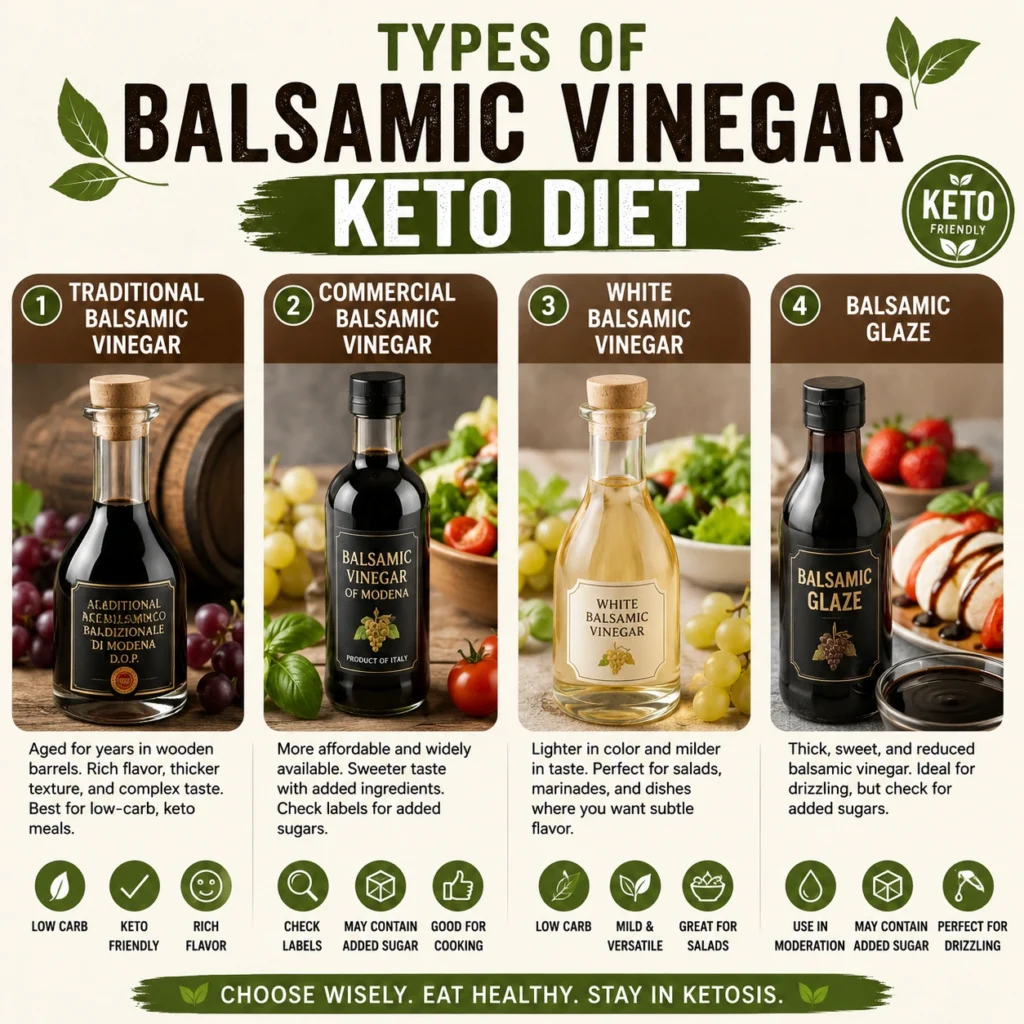
Not every bottle of balsamic vinegar at the store is the same. Depending on what you are going to make, you will have different types of vinegar on the shelves. Let’s look at the types of balsamic vinegar for a keto diet.
1. Traditional Balsamic Vinegar Keto
This is the original balsamic vinegar that comes from Italy. It is stored in wooden barrels for years to age, which makes it thick and naturally sweet without any fake additives. Because the flavor is so strong and rich, only a single tablespoon is more than enough to make your food taste amazing. That small serving makes balsamic vinegar keto-friendly.
2. Commercial Balsamic Vinegar Keto
Thai is the normal version that most of us have in our kitchens. It uses grape must with wine vinegar to keep it cheap and affordable. It usually contains approx 2.7 grams of carbs per tablespoon. Just check the balsamic vinegar nutrition facts label for any hidden sugar before buying one.
3. White Balsamic Vinegar
This one is a great option, but many people completely miss it. White balsamic vinegar uses the exact same grapes but is cooked at low heat, so it stays clear. It gives you a clean, tangy taste with just 2-3 carbs without changing your foods’ or salads’ color.
4. Balsamic Glaze
If you are on a strict keto diet, you should definitely not use glazed balsamic vinegar. It is just boiled vinegar mixed with extra sugar or honey to keep it in a thick form. Just one tablespoon can give you approximately 18 grams of carbs. It will instantly mess up your keto diet.
Health Benefits of Balsamic Vinegar Keto
When you use the best balsamic vinegar, it doesn’t just give an amazing taste to the food; it also helps your body in many healthy ways.
Whether you prefer the dark, authentic version or white balsamic vinegar, the natural ingredients give you many great benefits, especially if you are on a keto diet.
1. Keeps Your Gut Happy
The main ingredient in all vinegars is acetic acid. This ingredient is very beneficial for your digestion. It contains natural probiotic strains that support a healthy and balanced environment in your gut, which makes your digestion better.
2. Helps Steady Your Blood Sugar
According to the studies, having a small amount of vinegar in your meal can actually help your body handle insulin better. It works to prevent those sudden blood sugar spikes right after eating.
3. Loaded With Antioxidants
As balsamic vinegar is made from fresh grapes, it contains the fruit’s natural antioxidants (known as polyphenols). These helpful title compounds work hard to fight harmful free radicals in your body. Over time, this helps to lower stress on your cells and support a healthy heart.
4. Keeps You Feeling Full Longer
According to research, the acetic acid in vinegars can make you feel full. When you use a keto-friendly balsamic vinegar with healthy, rich fats like extra virgin olive oil, it can reduce your appetite. You will feel full for hours, which will make it easy to avoid unnecessary snacking.
Best Ways to Use Balsamic Vinegar on Keto Diet
Now that you know almost everything about balsamic vinegar, let’s look at the best balsamic vinegar uses without messing up your keto diet. Here are a few easy, delicious ways to enjoy it every day:
- Mix A Quick Vinaigrette:
Store-bought dressings are usually packed with hidden sugar. Instead, mix 1 tablespoon of balsamic vinegar with 3 tablespoons of olive oil, a dab of mustard, minced garlic, salt, and pepper. It gives that tangy flavor to your food while keeping carbs very low.
- Marinate Your Meats:
Vinegar is a fantastic natural meat tenderizer. Marinate your chicken or steak in balsamic vinegar, olive oil, and herbs before cooking it. You will get that deep and rich flavor while keeping your calorie intake very low.
- Brighten Roasted Veggies:
You can drizzle one teaspoon of keto-friendly balsamic vinegar on a hot pan right after taking out broccoli, cauliflower, or Brussels sprouts from the oven. It gives the veggies a gourmet, sweet taste for less than 1 extra calorie per serving.
- Finish Off Fresh Snacks:
You can add small drops to avocado or fresh mozzarella cheese. It is the perfect, quick flavor booster to support healthy fats.
Best Keto-Friendly Alternatives to Balsamic Vinegar
If you are not okay with even 3 grams of carbs from balsamic vinegar, don’t worry. Here are the best alternatives that give you a similar tangy flavor with a lower count of carbs.
- Apple Cider Vinegar (0g carbs):
It is very well known among health-conscious people. It has zero carbs, a great fruity taste, and goes perfectly in homemade dressings.
- Red Wine Vinegar (0g carbs):
If you want that grape flavor but without the natural sugar, you can try “red wine vinegar.” It is amazing on heavy meats.
- White Wine Vinegar (0g carbs):
This version of vinegar is very light and crisp. It is a great option if you want something for fish.
- Fresh Lemon Juice (1g carb per spoon):
It is a super easily found option. Squeezing fresh lemon over your food gives you a bright, natural flavor with almost zero carbs.
Final thoughts
So, is balsamic vinegar keto-friendly? Yes, it is. Just be careful about how much and which one you use. A little bit of the right type of balsamic vinegar is a great way to add lots of flavor to your meal without piling on extra calories.
Just remember the golden rules to always check the balsamic vinegar nutrition facts label to catch hidden sugar, skip glazed balsamic vinegar, and use it by measuring instead of just pouring it directly from the bottle. These things can help you keep balsamic vinegar keto-friendly and make your food taste better.
FAQs
Why is checking the balsamic vinegar nutrition facts label important?
Checking the balsamic nutrition label of every bottle is super important because not every bottle is made the same way. Lots of store-bought brands sneak extra sugar into their mix. If you spot words like “glaze,” “maple,” “raspberry,” or “honey,” just put them right back on the shelf.
Which is healthier, white or dark balsamic vinegar?
Both white and dark balsamic vinegar can be part of a healthy diet, but dark balsamic vinegar typically contains more antioxidants because it is aged longer and made from cooked grape must. White balsamic vinegar has a milder flavor and lighter color, making it popular for salads and light dishes. Nutritionally, the differences are small, and both contain similar calories and carbohydrates. The healthier choice depends on your dietary needs, taste preferences, and how you plan to use it in your meals.
How do I choose the best balsamic vinegar for my diet?
To choose the best balsamic vinegar, you must check the nutrition facts label before buying. Buy if that bottle only contains “grape must” and “wine vinegar.” Avoid cheap bottles because they contain added sugar, corn syrup, or caramel color, as these can increase carb intake.
Is balsamic vinegar keto-friendly?
Yes, it is as long as you watch your portion and which one you are using. A single tablespoon has about 2.7 grams of carbs, which makes it a perfect choice for a keto diet.
Can you have balsamic vinegar on a keto diet?
Yes, you can have balsamic vinegar on a keto diet in moderation. While it contains more natural sugars and carbs than other vinegars, small amounts (1–2 tablespoons) can fit into most keto meal plans. Always check the nutrition label and avoid balsamic glazes with added sugar.
Which type of vinegar is best for weight loss?
There is no single “best” vinegar for weight loss, but apple cider vinegar is the most commonly studied. Some research suggests it may help increase feelings of fullness and support healthy weight management when combined with a balanced diet and regular exercise. However, vinegar alone is not a weight loss solution.
References & Sources

Daniel Brooks
Men's Health & Blood Sugar Writer
Better Health Focus
Expertise
Men's Health • Blood Sugar Management • Type 2 Diabetes Education • Prediabetes • Healthy Lifestyle • Nutrition • Metabolic Health • Preventive Wellness • Evidence-Based Health Content
About Daniel Brooks
Daniel Brooks is a Men's Health & Blood Sugar Writer at Better Health Focus, where he develops evidence-based educational content focused on men's wellness, blood sugar management, diabetes prevention, metabolic health, and healthy lifestyle habits.
With more than five years of experience writing health content, Daniel specializes in transforming complex medical research into practical, reader-friendly articles that help people better understand chronic disease prevention and long-term wellness. His work emphasizes realistic lifestyle changes, balanced nutrition, physical activity, and sustainable habits rather than quick fixes or unsupported health claims.
Daniel has completed professional education in Lifestyle Medicine through the American College of Lifestyle Medicine (ACLM) and has undertaken extensive independent study of evidence-based guidance, clinical recommendations, and educational resources published by the American Diabetes Association (ADA). His writing reflects current research and established best practices related to blood sugar management, diabetes prevention, cardiovascular health, and men's health.
Before publishing an article, Daniel reviews reputable medical literature and guidance from organizations including the National Institutes of Health (NIH), PubMed, the American Diabetes Association (ADA), the American Heart Association (AHA), the Centers for Disease Control and Prevention (CDC), and peer-reviewed scientific journals whenever applicable.
His goal is to help readers understand the science behind healthy living while making evidence-based information clear, practical, and accessible.
Education & Professional Development
- Professional education in Lifestyle Medicine through the American College of Lifestyle Medicine (ACLM)
- Ongoing study of evidence-based resources and clinical guidance published by the American Diabetes Association (ADA)
- Continuing education in nutrition science, metabolic health, and preventive medicine
- Regular review of peer-reviewed medical research and public health guidance
Areas of Focus
- Men's Health
- Blood Sugar Management
- Prediabetes Education
- Type 2 Diabetes Prevention
- Metabolic Health
- Heart Health
- Healthy Weight Management
- Nutrition & Healthy Eating
- Exercise & Lifestyle Medicine
- Preventive Health
Editorial Approach
Every article written by Daniel Brooks follows the editorial standards of Better Health Focus and is based on current scientific evidence from reputable medical organizations and peer-reviewed research whenever available.
His content is guided by the principles of:
- Evidence-based health education
- Scientific accuracy and transparency
- Balanced discussion of benefits, risks, and research limitations
- Clear and practical language for everyday readers
- Responsible reporting without exaggerated health claims
- Alignment with Google E-E-A-T principles for health content
Daniel believes that trustworthy health information should empower readers to make informed decisions in partnership with qualified healthcare professionals.
Research Sources
Daniel regularly consults information from:
- National Institutes of Health (NIH)
- PubMed
- American Diabetes Association (ADA)
- American College of Lifestyle Medicine (ACLM)
- Centers for Disease Control and Prevention (CDC)
- American Heart Association (AHA)
- U.S. Department of Agriculture (USDA)
- Office of Dietary Supplements (ODS)
- Peer-reviewed scientific journals
Editorial Disclaimer
The information published by Daniel Brooks on Better Health Focus is intended for educational and informational purposes only. It is not a substitute for professional medical advice, diagnosis, or treatment. Readers should consult a qualified healthcare professional before making decisions regarding medications, diabetes care, supplements, diet, or lifestyle changes.