
The answer to “how to improve your mental health naturally” is your daily lifestyle habits. You don’t need expensive treatments or challenging procedures to improve your mental health. Small changes to your morning routine are more than enough. Let’s discuss these natural ways you can follow to boost your mental abilities.
Table of Contents
Why Daily Habits Matter for Mental Health
Your mind and body work together more closely than most people think. When you don’t get enough sleep, everything you do can feel overwhelming. When you don’t stay active, your mood drops. When you are down, you feel isolated, and even small everyday problems start to feel unbearable. According to many experts, being socially isolated can cause serious damage to your overall well-being.
When you follow healthy habits daily, you don’t need complex methods or expensive treatments to improve mental health. Sleeping sufficiently, moving daily, eating healthy meals, staying connected with others, and managing stress are enough to give a boost to your mental health. These daily habits keep your connection between mind and body better, which leads to improved overall health.
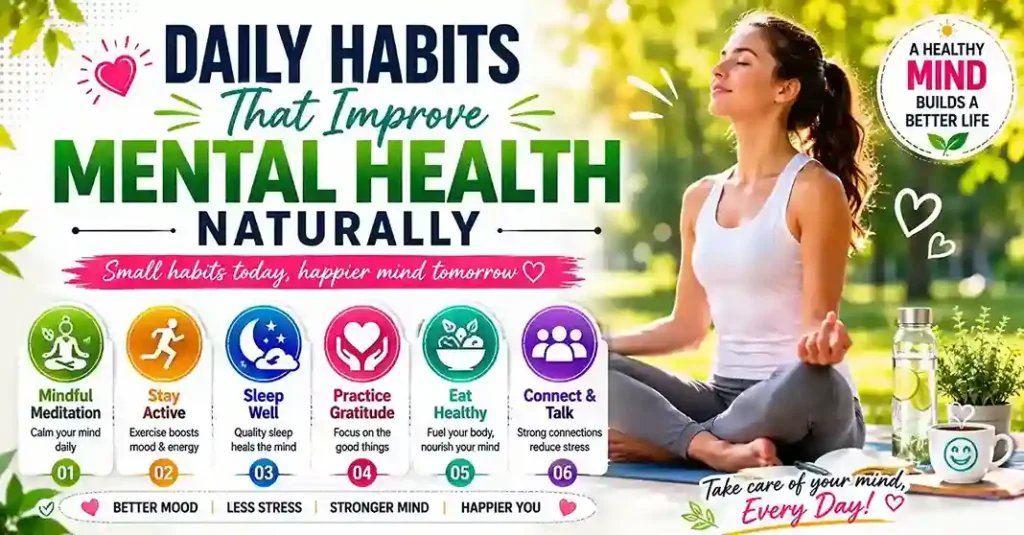
Daily Habits That Improve Mental Health Naturally
1. Make Sleep Your Number One Priority
Most people don’t realize how important sleeping properly is. They easily sacrifice their sleep for watching shows, working late, or just scrolling through Insta. But sleep isn’t something you can compromise with. It is an essential need of your body. Your mental health also gets affected by your sleeping routine.
Why Sleep Matters
Your brain keeps working hard while you are sleeping without any worry. It removes toxins, sorts through your emotions, and neatly organizes your daily memories. However, lack of sleep disrupts this process.
When you are exhausted, the amygdala, a part of the brain that manages emotions, goes into overload. You react more to stress even without any valid reason. According to the CDC, an adult should get 7-9 hours of sleep every night for better health.
How to Build a Better Sleep Habit
- Go to bed and wake up at the same time every day, even on weekends.
- Put your phone or laptop away at least 30 to 60 minutes before bed. The blue light from screens tricks your brain into thinking it’s still daytime.
- A slightly cool, dark room signals to your body that it’s time to rest.
2. Move Your Body to Boost Your Mood
When you are not in a good mood, being physically active is the last thing that might come to your mind. But staying physically active can help to improve your mental health.
Why Exercise Matters
During exercise, your mind releases a chemical called endorphins. These naturally help improve your mood. Physical activities also lower the stress hormones in your body, like cortisol.
According to the CDC, physical activities improve your thinking, learning, and decision-making abilities as you grow older. It also helps you sleep better.
Experts recommend doing at least 150 minutes of moderate exercise or 75 minutes of intense exercise each week, with 2 or more days of strength exercise.
How to Build a Daily Movement Habit
- Do what you enjoy. If you hate running, try swimming, cycling, dancing, or hiking.
- Don’t start with 30-60 minutes at once. Divide it into 2-4 small sessions to stick with it better.
- Try to make these exercises a part of your routine.
3. Eat Healthy Food
We all know that junk food is not good for our health. But you might not know that it’s bad for our brains too. What you eat can have an effect on how you feel.
Why Nutrition Matters
Your brain works very hard to control your movements, thoughts, breathing, and heart, which consumes a large amount of energy. And what you eat is what gives that energy.
Your brain and stomach have a closer connection than you might think. In fact, 90% of serotonin (a hormone that manages mood and sleep) is produced in your digestive tract. That’s why eating unhealthy food can affect your mental health. And you need to eat foods that improve your mental health.
How to Build a Brain-Healthy Eating Habit
- Drink plenty of water because being even a little thirsty can quickly drain your energy and ruin your mood.
- Cut back on sugar to avoid a quick spike and sudden crash of energy.
- Fill your plate with fresh veggies, fruits, nuts, and seeds.
4. Practice Mindfulness to Calm Your Nervous System
Stress is a part of everyone’s daily life. You can’t eliminate it from your life completely. But yes, you can learn to manage it better. That’s where simple mindfulness activities help you.
Why Mindfulness Matters
When you are stressed, your body enters “fight or flight” mode. Your heartbeat increases, your breathing gets ragged, and your muscles get tense. Mindfulness activities are a simple practice of paying attention to the present moment without reacting to it. It is like pressing the brake on your racing thoughts.
How to Build a Mindfulness Habit
- Try the 4-7-8 breathing trick. Inhale for 4 seconds, hold for 7, and exhale for 8 anytime you feel stressed out.
- Do one thing at a time. If you’re having a cup of coffee, focus on just enjoying your coffee.
- Take a few minutes daily to drop your shoulders, take a deep breath, and feel how your body is doing.
5. Build Strong Social Connections
A human being is a social animal and needs to connect with others. It’s not something optional. It’s essential for your better mental health.
Why Social Connection Matters
According to experts, loneliness isn’t just an emotional feeling. It’s an actual harmful health risk. Research shows that social isolation can increase the risk of early death, the same as smoking 15 cigarettes a day. That’s why having people to laugh, talk, and lean on gives you an emotional safety that’s hard to replace.
How to Build Social Connection as a Habit
- Reach out every day to a friend or family member. It doesn’t have to be a long conversation.
- You don’t need a huge social circle. One or two close friendships you can really count on go a very long way.
- If you’re feeling lonely, look for local clubs, volunteer opportunities, or classes where you can meet people who share your interests.
6. Manage Screen Time Wisely
Nowadays, screens have become an indispensable part of daily life. But spending too much time quietly damages your mental health.
Why Limiting Screen Time Matters
The damage from screens doesn’t stop at just the eyes. Especially social media can harm your mental health. Constantly seeing the polished, well-planned reels of other people’s lives can make you feel like you are not good enough, even when you are.
Regular alerts and news updates force your mind to stay on high alert, causing your stress levels to climb as time goes on. Studies show that too much use of social media increases the risk of depression and anxiety, especially in the younger generation.
How to Build a Healthier Screen Habit
- Create spots in your home where the use of your phone is not allowed.
- Track your screen time and slowly try to lower your average screen time every week.
- Change your feed if it makes you feel bad about yourself. Follow more accounts that motivate and entertain you.
7. Spend Time in Nature Every Day
In modern lifestyles, most of our time is spent indoors, under artificial lights, staring at screens. But going outside in nature, even for some time, can help to improve your mental health significantly.
Why Nature Matters
Nature gives calmness, lowers your heart rate and blood pressure, and reduces stress hormones. Exposure to sunlight gives your body vitamin D, which is good for better health and mood.
Nature gives your brain time to rest and wander freely without letting mental fatigue develop.
How to Build a Nature Habit
- Go outside for 10 to 20 minutes each morning.
- Take a short walk after meals instead of sitting right back down after eating.
- If getting outside isn’t regularly possible, open your windows to let in fresh air and natural light.
A Simple Daily Routine That Can Improve Mental Health Naturally
You don’t need a long to-do list or a perfect routine. A simple-to-follow daily routine for mental health is enough to improve your mental health naturally.
Morning
Wake up, do some stretching for a few minutes, drink a glass of water, and go outside for a little walk. It helps set a positive vibe for the rest of your day.
Daytime
Eat healthy, whole foods that promote mental health. Go for a short walk after lunch. And talk for a few minutes with someone.
Evening
Have a proper and healthy dinner, take a short walk, and don’t use your phone for at least 30 minutes before sleeping. This gives your brain time to calm down and reset.
That’s it. There is no need to change your entire lifestyle and purchase expensive equipment. Just these small and consistent habits are more than enough.
When Daily Habits Aren’t Enough: What Actually Helps
Sometimes, good habits just aren’t enough, and there is absolutely no issue in that. Conditions like severe depression, anxiety, PTSD, and bipolar disorder are real medical conditions. They often need more than early morning walks and healthy meals to get better.
That’s when reaching out for professional help becomes the most important step you can take.
Therapy is a great place to start. It gives you a safe, private space to talk through what you’re carrying, learn how to cope better, and slowly start feeling like yourself again.
Beyond therapy, things like peer support groups, mindfulness sessions, and workplace counseling programs have genuinely helped a lot of people turn things around.
And in some cases, medication is simply what the body needs. Always talk to your doctor honestly about what you’re going through.
In short, combining your daily habits with the right professional support gives you the best possible shot at real, lasting recovery.
Conclusion
A single habit can’t do everything alone. Improving your mental health naturally takes time.
Daily habits like sleeping better, exercising regularly, eating healthy foods, forming real connections, and practicing mindfulness activities are simple, proven tools that really do make a difference.
Treat your mental health just as you treat your physical body. So, keep it simple and small, and stay consistent.
FAQs
How soon will you start seeing results from these habits?
Everyone experiences changes differently. Usually, there are small gains after some weeks. However, for the true advantages, you’ll need to follow these routines consistently for a couple of months.
What are some daily habits that can naturally boost mental health in adults?
Some of the daily habits that can help to improve mental health naturally are eating healthy food, exercising regularly, practicing mindfulness activities, using less mobile, and forming close social connections.
What is the 3-3-3 rule for mental health?
A simple method to help you relax your mind when you’re feeling stressed. This is where you look around and name 3 things you see, write 3 things you hear, and move 3 areas of your body. This will bring you back to the present and help you relax.
Which is the easiest habit to start with?
The easiest habits to start with to begin improving your mental health are drinking plenty of water and eating foods that improve mental health.
Can I improve my mental health without medication?
Yes, you can. Healthy habits are enough to improve mental health significantly. But these can’t replace proper medical treatment. If you think these habits are not helping you, do not ignore the issue and visit a doctor.
How to improve mental health in schools?
You can start with creating a safe, supportive, and positive learning space. As a student you can reduce stress by staying physically active, staying hydrated, using quiet space, and having open conversations with close ones about mental health.
What are the different types of therapy for improving mental health?
Cognitive behavioral therapy (CBT), talk therapy, and group therapy are some common types of therapy for improving mental health.
What are good activities to improve mental health in the workplace?
Taking short walks, practicing the calming breathing techniques, stretching, or having a conversation with a coworker can help reduce stress, improve focus, and make you feel more refreshed throughout the day while improving mental health in the long term.
References & Sources

Noah Ross
Health & Wellness Writer
Better Health Focus
Expertise
Weight Management • Gut Health • Nutrition • Metabolic Health • Healthy Lifestyle • Mental Wellness • Preventive Health • Dietary Supplement Research • Evidence-Based Health Education
About Noah Ross
Noah Ross is a Health & Wellness Writer at Better Health Focus, where he creates evidence-based educational content focused on helping readers make informed decisions about their health. His work covers weight management, gut health, nutrition, metabolism, preventive wellness, and healthy lifestyle strategies.
With a background in health communication, Noah specializes in translating complex medical research into clear, practical, and easy-to-understand articles. He believes reliable health information should be accessible to everyone without relying on sensational claims or misleading marketing.
Before publishing an article, Noah reviews scientific literature and guidance from respected health organizations, including the National Institutes of Health (NIH), PubMed, the World Health Organization (WHO), the Centers for Disease Control and Prevention (CDC), the Office of Dietary Supplements (ODS), and other peer-reviewed medical journals. His writing emphasizes transparency by distinguishing well-established scientific evidence from preliminary findings and promotional claims.
At Better Health Focus, Noah regularly researches topics related to digestive wellness, metabolism, healthy eating, blood sugar management, dietary supplements, weight loss strategies, healthy aging, and preventive healthcare. His content is designed to help readers understand both the potential benefits and limitations of current scientific evidence while encouraging realistic expectations and sustainable lifestyle habits.
Education
Bachelor of Arts (B.A.) in Communications
Professional Development
- Continuing education in Nutrition Science and Public Health
- Ongoing study of evidence-based medicine and clinical research
- Regular review of peer-reviewed research related to nutrition, metabolism, obesity, digestive health, and preventive medicine
- Continuous monitoring of updates from major public health organizations and medical research databases
Areas of Focus
- Weight Loss & Healthy Weight Management
- Gut Microbiome & Digestive Wellness
- Nutrition & Healthy Eating
- Blood Sugar & Metabolic Health
- Mental Wellness & Lifestyle Habits
- Preventive Health Education
- Dietary Supplement Reviews
- Evidence-Based Wellness Research
Editorial Standards
Every article written by Noah Ross follows the editorial standards of Better Health Focus. Content is developed using current scientific evidence, reputable medical references, and trusted public health resources whenever applicable.
Each article is written with a commitment to:
- Accuracy and factual reporting
- Evidence-based health education
- Transparent discussion of scientific findings
- Balanced coverage of benefits, risks, and research limitations
- Clear, reader-friendly language
- Compliance with Google E-E-A-T principles for health content
Noah avoids unsupported health claims, miracle cures, and exaggerated promises. When evidence is limited or still emerging, that uncertainty is clearly communicated so readers can make informed decisions based on the best available research.
Research Sources
Articles may reference information from organizations and databases such as:
- National Institutes of Health (NIH)
- PubMed
- World Health Organization (WHO)
- Centers for Disease Control and Prevention (CDC)
- Office of Dietary Supplements (ODS)
- U.S. Department of Agriculture (USDA)
- American Heart Association (AHA)
- Peer-reviewed scientific journals
Editorial Disclaimer
The information published by Noah Ross on Better Health Focus is intended for educational and informational purposes only. It should not be considered medical advice and is not a substitute for consultation with a qualified physician or other licensed healthcare professional. Readers should seek professional medical guidance before making decisions regarding diagnosis, treatment, medications, supplements, or significant lifestyle changes.