

Waking up exhausted? Struggling to hold onto muscle, or noticing a sudden drop in your sex drive and daily motivation? Millions of men deal with this frustrating slump every single day without knowing the actual culprit. Usually, these are classic warning signs of declining hormone levels.
While it’s easy just to blame aging, everyday stress and modern lifestyle habits are the real forces dragging your health down.
Thankfully, you don’t need to rush into expensive supplements or medical treatments. Instead, this guide maps out simple, science-backed shifts to naturally revive your body’s hormone production and help you feel like yourself again.
Table of Contents
Understanding Low Testosterone
Your testosterone levels are at their peak during your late teens and early twenties. After that, they slowly start to enter a slow, gradual fall of about 1% each year. While a small drop in levels is completely normal, you don’t have to accept feeling permanently out of energy, unmotivated, or underconfident just because you are getting older.
Real medically low testosterone (also known as hypogonadism) is rarely simply due to aging. In reality, your everyday routine often affects testosterone levels more than the age written on your birth certificate.
What Actually Causes Low Testosterone?
Think of your endocrine system as a finely tuned biological engine. When your numbers drop, it’s usually a combination of modern lifestyle stressors or underlying medical factors.
1. Lifestyle and Environmental Causes
For most men experiencing a mild-to-moderate slump, the root causes are hiding in plain sight:
- High cortisol levels
- Sleep deprivation
- Carrying extra weight, especially around your belly
- Being physically inactive
2. The Medical Causes
In some cases, the cause is a medical issue rather than your everyday lifestyle. Usually, doctors divide it into Primary Hypogonadism (in which the issue lies directly in the testicles due to injury, aging, or genetics) and Secondary Hypogonadism (in which the pituitary glands or hypothalamus in the brain are not able to signal your body for testosterone production).
The Warning Signs of Low Testosterone
Because symptoms appear slowly, many men mistake them for normal workday stress. Keep an eye out for these classic warning signs:
- Persistent Fatigue
- Physical Changes (like an increase in body fat, loss of muscles and breast issues)
- Mental & Emotional Shifts
- Low Sex Drive
- Erectile dysfunction
- Focus and memory issues
- Decrease in stamina
How to Test for Low Testosterone: What Labs Do You Actually Need?
If your symptoms refuse to budge, guessing won’t fix the problem. You need concrete data from a comprehensive blood panel.
When you consult a healthcare professional, ensure they order a full endocrine panel. A proper evaluation must look at three specific markers:
- Total Testosterone
The overall amount of the hormone circulating in your bloodstream.
- Free Testosterone
The active, unbound hormone your body actually uses for energy and repair.
- SHBG (Sex Hormone-Binding Globulin)
A protein that locks onto testosterone. If your SHBG is too high, it makes your testosterone useless.
For many men dealing with testosterone drops due to lifestyle, you don’t need a medical prescription to increase levels. Implementing structured resistance training, cleaning up your sleep environment, and dropping excess body fat can spark a massive, natural recovery in your numbers.
9 Actionable, Science-Backed Ways to Increase Testosterone Naturally
If you want to increase your testosterone naturally, you don’t really need the expensive supplements. Your daily habits, such as sleep, eating, exercising, and managing stress, make a much bigger difference than you realize.
1. Use Heavy Compound Lifts to Support Healthy Testosterone
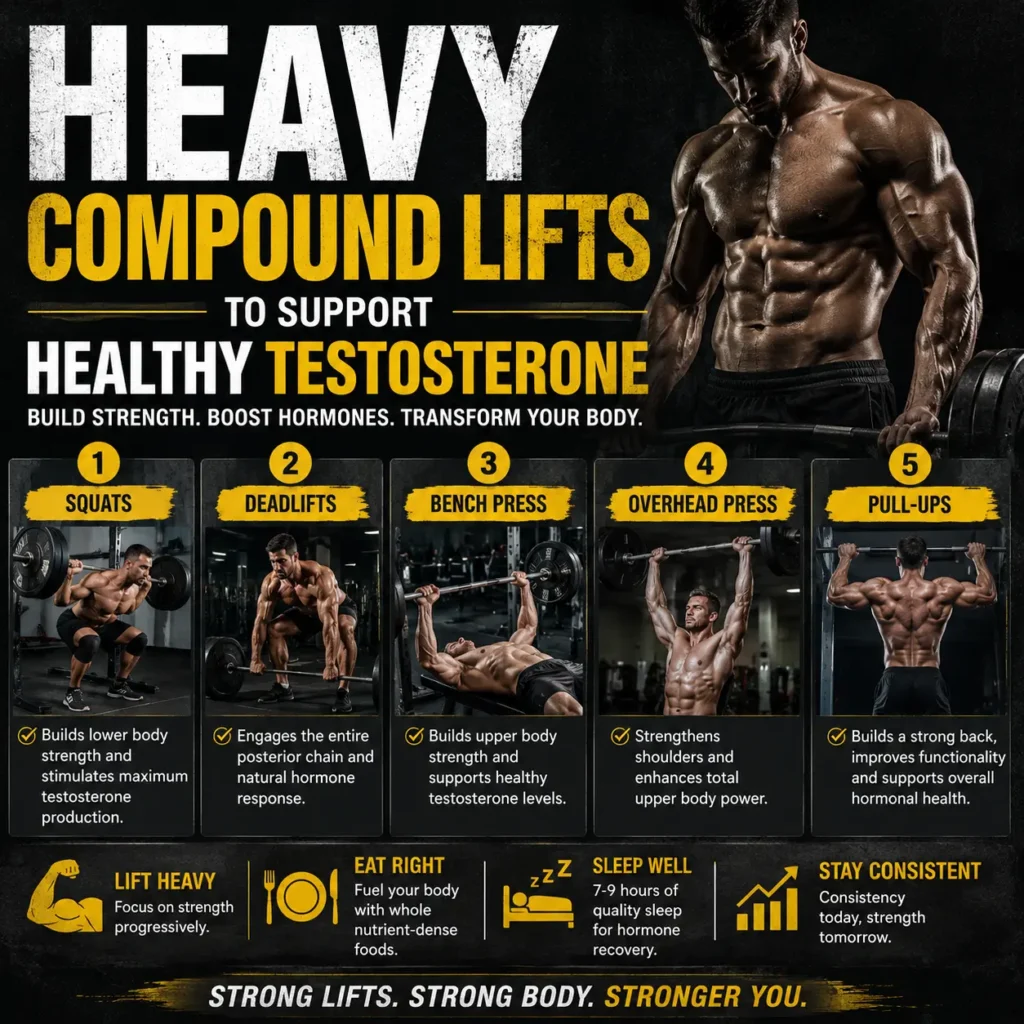
If you want to increase hormone production naturally, weightlifting is one of the best tools you can use. But not all workouts are the same.
- The Secret is Compound Exercises for Testosterone
Isolation movements like bicep curls won’t help. You need heavy lifts and movements like squats, deadlifts, overhead presses, and rows, which use multiple joints of your body. These exercises trigger more growth hormone and testosterone.
- Keep it Short and Intense
Try to do 3-4 sessions in a week, which should add up to 45 to 75 minutes per week.
- Avoid Overtraining
More always isn’t good. Overtraining can raise cortisol levels, resulting in low testosterone. That is why you should refrain from overtraining and exhausting yourself.
2. Fix Your Sleep Routine
Hormones are produced while you are sleeping. The same is with testosterone, which happens specifically during deep, uninterrupted REM sleeping periods. If you don’t sleep enough and properly, you are taking away your body’s time to produce hormones.
Cutting your sleep down from 8 hours to just 5 hours a night can drop your daytime testosterone levels by 10% to 15% in less than a single week.
How to increase testosterone from sleep:
- Try to sleep 7 to 9 hours every night
- Go to bed and wake up at the same time daily
- Stop using screens and blue light at least an hour before going to bed
- Keep your room dark, quiet, and cool
3. Burn Stubborn Visceral Fat
Carrying excess body fat, especially around your belly, actually harms your testosterone levels.
Fat tissue contains a high concentration of an enzyme called aromatase. This enzyme acts like a biological thief: it literally takes your circulating testosterone and converts it into estrogen. The more belly fat you carry, the faster this conversion happens.
The solution is simple but needs consistency. Just focus on a high-protein diet, weightlifting, and hitting 8,000 to 10,000 steps a day. Losing just 5% to 10% of your body weight can increase your free testosterone levels.
4. Reduce Chronic Stress
You can’t eliminate stress from modern life, but you have to control how your body reacts to it. When you are constantly stressed about work, money, or life, your body stays in a permanent “fight or flight” state.
This higher cortisol level state paralyzes your Leydig cells (the cells in your testicles that produce testosterone). To manage this, build simple, daily relaxation habits into your life. Spend 10 minutes outside without your phone. Practice deliberate deep breathing, or take a tech-free walk. Managing your mental health is directly tied to managing your hormones.
5. Eat Enough Protein and Clean Dietary Fats
Hormones don’t just appear out of nowhere; your body has to build them out of the nutrients you eat.
- Protein
Eat roughly 1.6 to 2.2 grams of protein per kilogram of body weight daily. This keeps your metabolism high and stops your body from breaking down muscle tissue for energy.
- Healthy Fats
You might not know this, but cholesterol is the literal raw building block your body uses to manufacture testosterone. Extremely low-fat diets are notorious for crushing male hormone production.
- What to Eat
Whole eggs, avocados, olive oil, grass-fed beef, nuts, and fatty fish like salmon.
6. Eliminate Micronutrient Deficiencies
If your body is missing a few key vitamins and minerals, your hormone production can stop. If you are struggling with low testosterone signs, focus on these essential micronutrients:
- Vitamin D3: This acts more like a master steroid hormone than a basic vitamin. Increasing vitamin D3 is directly linked to higher testosterone levels.
- Zinc and Magnesium: Magnesium relaxes your nervous system for deeper sleep and a faster metabolism, while zinc acts as the literal building block your body needs to manufacture testosterone.
- Omega-3 Fatty Acids: They help to reduce inflammation.
7. Limit Your Alcohol Intake
That casual evening drink might be costing you more than you think. Heavy or frequent alcohol consumption damages your testosterone levels on multiple fronts. It completely disrupts your deep REM sleep, strains your liver, and actually accelerates the process by which your body converts testosterone into estrogen. Keep drinking occasionally and moderately if you want to protect your baseline health.
8. Break Up Long Hours of Sitting
Sitting for 8 to 10 hours a day is a massive problem. It slows down your blood circulation, drops your insulin sensitivity, and contributes directly to weight gain.
You don’t need to quit your day job. You just need to move frequently and avoid sitting continuously. Set a timer to stand up and stretch for two minutes every single hour. Take a quick 10-minute walk right after you finish lunch. Take the stairs instead of the elevator. These small, daily movements keep your metabolism active and prevent your body from sliding into a hormonal shutdown.
9. Take Care of Your Heart Health
Your cardiovascular system and your endocrine system are directly linked to each other. If your arteries are narrow, or if your blood pressure and blood sugar are constantly high, it can affect the transportation of hormones to where they should go.
You should try to do at least 150 minutes of moderate aerobic exercise (like brisk walking, cycling, or swimming) every week. Keeping your heart healthy and your blood flowing smoothly ensures that your natural testosterone can actually do its job.
When Lifestyle Changes Aren’t Enough: Medical Options
While weight lifting and eating healthy make a significant difference, in some cases, they are not effective. If you have tried every natural method and still struggle, it’s time to seek medical help.
Exploring Peptide Therapy
Many US wellness clinics now suggest peptides for testosterone optimization before going straight for medical treatments.
Unlike synthetic testosterone, which shuts down your body’s natural hormone factory, a targeted testosterone peptide protocol signals your brain to produce more of its own luteinizing hormone. This helps safely bring your levels back into a safe zone while fully protecting your natural fertility.
What to Know About TRT Injections
If your blood work shows your baseline numbers are very low, direct Testosterone Replacement Therapy (TRT) injections are the gold standard.
If you and your doctor choose this route, using the right gear is the secret to avoiding pain and scar tissue. Clinical guidelines show the best needle gauge to inject testosterone in the glutes is a 23-gauge to 25-gauge needle that is 1 to 1.5 inches long. This size is thin enough to prevent muscle irritation, but strong enough to easily handle thick, oil-based testosterone solutions.
There is zero shame in getting medical backup. Taking charge of your health, whether it’s through a squat rack or a doctor’s prescription, is the best move you can make for your future.
A Reality Check on “Testosterone Boosters”
If you have seen flashy social media ads promising quick “testosterone boosts,” your hormones don’t increase that way. Natural lifestyle changes aren’t some magic trick. They won’t make your numbers touch the sky overnight, nor will they do anything if your health is already perfectly balanced.
When you are not sleeping enough, carry extra belly fat, or live under constant stress, your testosterone is bound to be lower than normal. Making healthy changes in your lifestyle can’t increase your levels beyond your genetic limit. It simply helps with clearing biological hurdles so your body can be in its best condition.
If your everyday routine is already perfect, even a million-dollar supplement won’t do a thing. But if you are currently stuck in a modern, high-stress life, skip these quick fixes and focus on building a healthy lifestyle. It is the only strategy that can help you increase testosterone naturally for the long term.
Final Thoughts
Increasing your testosterone isn’t about using expensive supplements for quick fixes. It simply comes down to building a healthy lifestyle routine.
Everyday habits like eating healthy, lifting weights, sleeping enough, eating whole foods, and managing stress are what actually help to improve hormone levels. You won’t get results overnight, but with consistent efforts over time, you will feel entirely different.
Start with these science-backed lifestyle changes. But remember, if you are consistent and still don’t feel any difference, you should definitely get medical help.
Frequently Asked Questions
How long does it take to increase testosterone naturally?
You can expect to see noticeable changes in 10 to 16 weeks of consistent healthy eating, sleeping enough, and lifting weights. Hormones take time to adapt, but following the basics gives you genuine, long-lasting results.
Does getting older automatically mean low testosterone?
Not automatically. While testosterone naturally drops about 1% each year after age 30, keeping a lean body, lifting weights, and managing stress can help men maintain completely normal, healthy levels in middle age.
Can losing weight help increase testosterone?
Absolutely. Dropping just 5% to 10% of excess body fat reduces a harmful fat enzyme called aromatase. This stops your body from converting testosterone into estrogen, sparking a major natural jump in your numbers.
Is cardio bad for testosterone?
No, moderate cardio protects your heart. But extreme endurance training without proper rest spikes cortisol, which puts your body in a state of stress that affects your body’s natural hormone manufacturing. That’s why you should avoid overtraining.
What are the benefits of peptides for testosterone?
Using peptides for testosterone optimization offers a great alternative to traditional TRT. A targeted testosterone peptide protocol signals your brain to produce more hormones. Many US clinics use these testosterone peptides to restore levels while protecting natural fertility.
What is the best needle gauge for TRT glute injections?
Usually, the best needle gauge to inject testosterone in the glutes is a 23-gauge to 25-gauge needle (1 to 1.5 inches long). This allows thick, oil-based solutions to pass smoothly into the muscle without causing painful scar tissue.
References & Sources

Daniel Brooks
Men's Health & Blood Sugar Writer
Better Health Focus
Expertise
Men's Health • Blood Sugar Management • Type 2 Diabetes Education • Prediabetes • Healthy Lifestyle • Nutrition • Metabolic Health • Preventive Wellness • Evidence-Based Health Content
About Daniel Brooks
Daniel Brooks is a Men's Health & Blood Sugar Writer at Better Health Focus, where he develops evidence-based educational content focused on men's wellness, blood sugar management, diabetes prevention, metabolic health, and healthy lifestyle habits.
With more than five years of experience writing health content, Daniel specializes in transforming complex medical research into practical, reader-friendly articles that help people better understand chronic disease prevention and long-term wellness. His work emphasizes realistic lifestyle changes, balanced nutrition, physical activity, and sustainable habits rather than quick fixes or unsupported health claims.
Daniel has completed professional education in Lifestyle Medicine through the American College of Lifestyle Medicine (ACLM) and has undertaken extensive independent study of evidence-based guidance, clinical recommendations, and educational resources published by the American Diabetes Association (ADA). His writing reflects current research and established best practices related to blood sugar management, diabetes prevention, cardiovascular health, and men's health.
Before publishing an article, Daniel reviews reputable medical literature and guidance from organizations including the National Institutes of Health (NIH), PubMed, the American Diabetes Association (ADA), the American Heart Association (AHA), the Centers for Disease Control and Prevention (CDC), and peer-reviewed scientific journals whenever applicable.
His goal is to help readers understand the science behind healthy living while making evidence-based information clear, practical, and accessible.
Education & Professional Development
- Professional education in Lifestyle Medicine through the American College of Lifestyle Medicine (ACLM)
- Ongoing study of evidence-based resources and clinical guidance published by the American Diabetes Association (ADA)
- Continuing education in nutrition science, metabolic health, and preventive medicine
- Regular review of peer-reviewed medical research and public health guidance
Areas of Focus
- Men's Health
- Blood Sugar Management
- Prediabetes Education
- Type 2 Diabetes Prevention
- Metabolic Health
- Heart Health
- Healthy Weight Management
- Nutrition & Healthy Eating
- Exercise & Lifestyle Medicine
- Preventive Health
Editorial Approach
Every article written by Daniel Brooks follows the editorial standards of Better Health Focus and is based on current scientific evidence from reputable medical organizations and peer-reviewed research whenever available.
His content is guided by the principles of:
- Evidence-based health education
- Scientific accuracy and transparency
- Balanced discussion of benefits, risks, and research limitations
- Clear and practical language for everyday readers
- Responsible reporting without exaggerated health claims
- Alignment with Google E-E-A-T principles for health content
Daniel believes that trustworthy health information should empower readers to make informed decisions in partnership with qualified healthcare professionals.
Research Sources
Daniel regularly consults information from:
- National Institutes of Health (NIH)
- PubMed
- American Diabetes Association (ADA)
- American College of Lifestyle Medicine (ACLM)
- Centers for Disease Control and Prevention (CDC)
- American Heart Association (AHA)
- U.S. Department of Agriculture (USDA)
- Office of Dietary Supplements (ODS)
- Peer-reviewed scientific journals
Editorial Disclaimer
The information published by Daniel Brooks on Better Health Focus is intended for educational and informational purposes only. It is not a substitute for professional medical advice, diagnosis, or treatment. Readers should consult a qualified healthcare professional before making decisions regarding medications, diabetes care, supplements, diet, or lifestyle changes.