
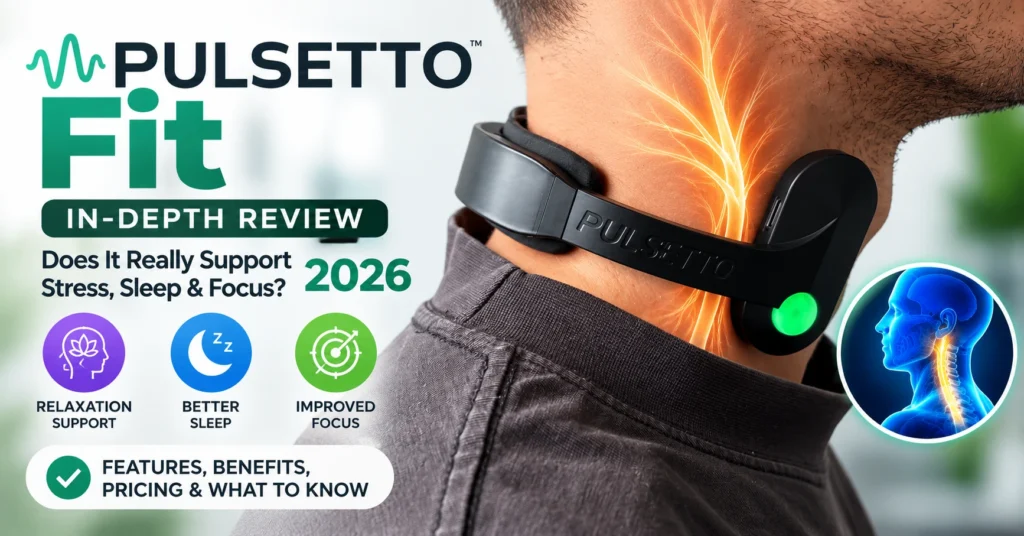
Pulsetto Fit is a neck-worn device that sends mild electrical pulses toward the vagus nerve and is marketed for stress, relaxation and sleep support. Early research on this type of stimulation is promising, but the Pulsetto-specific study we could check was small, had company-affiliated authors and no placebo group described, and the device is not FDA-cleared. It may help some people unwind, but independent proof is still missing.
Table of Contents
Pulsetto Fit Quick Overview
| Item | Details |
| Product name | Pulsetto Fit, sold as Lite, FIT and the newer FIT X, made by Pulsetto UAB (Vilnius, Lithuania) |
| Product category | Consumer wellness device: transcutaneous (through-the-skin) cervical vagus nerve stimulator |
| Intended use | Marketed for stress management, relaxation and sleep support, not as a medical treatment |
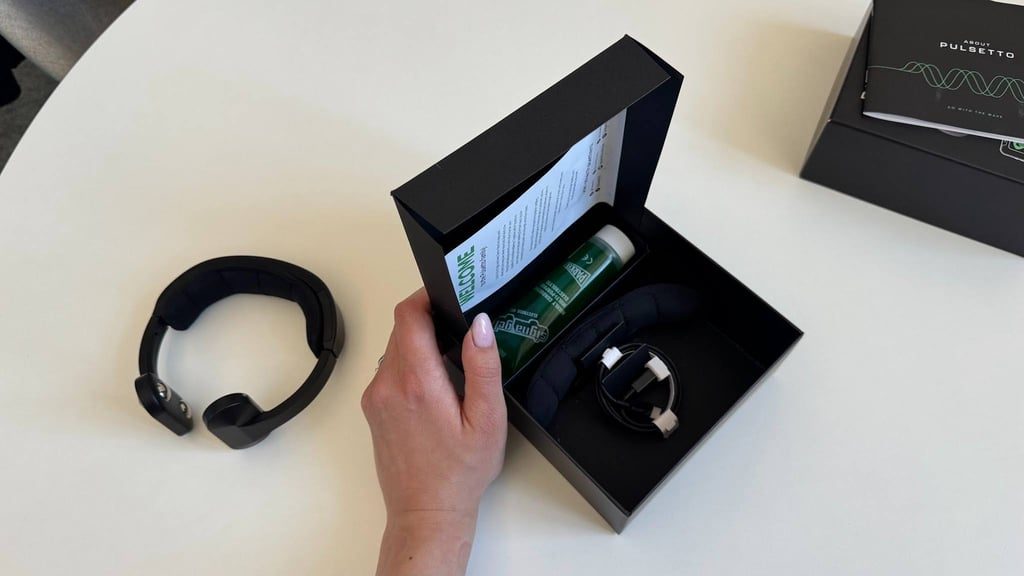
| How it is worn | U-shaped band around the back of the neck, with an electrode pad on each side and electrode gel |
| Stimulation technology | Mild electrical pulses through the skin of the neck on both sides (bilateral) |
| App requirements | Bluetooth smartphone app. The free version has five programs, and Premium is optional (reviewers report about $15 a month or $139 a year, not independently verified) |
| Main advertised features | Programs for stress, anxiety, sleep, burnout and pain, nine intensity levels, 4 to 10 minute sessions, USB-C charging |
| Current price | Not independently verified. Recent reviews list about $251 for Lite and FIT and $399 for FIT X |
| Warranty or return policy | Reviewers and retailer listings report a 2-year warranty and a 30-day money-back guarantee. Verify before buying |
| Regulatory status | Company-linked material says it is not a medical device and is not FDA-cleared or approved |
| Official website | Pulsetto Fit Official Website |
Prices and policies change often, so confirm them on the official site. Figures marked “reviewer-reported” come from the reviews listed in the sources and were checked October 27, 2026.
What Is Pulsetto Fit?
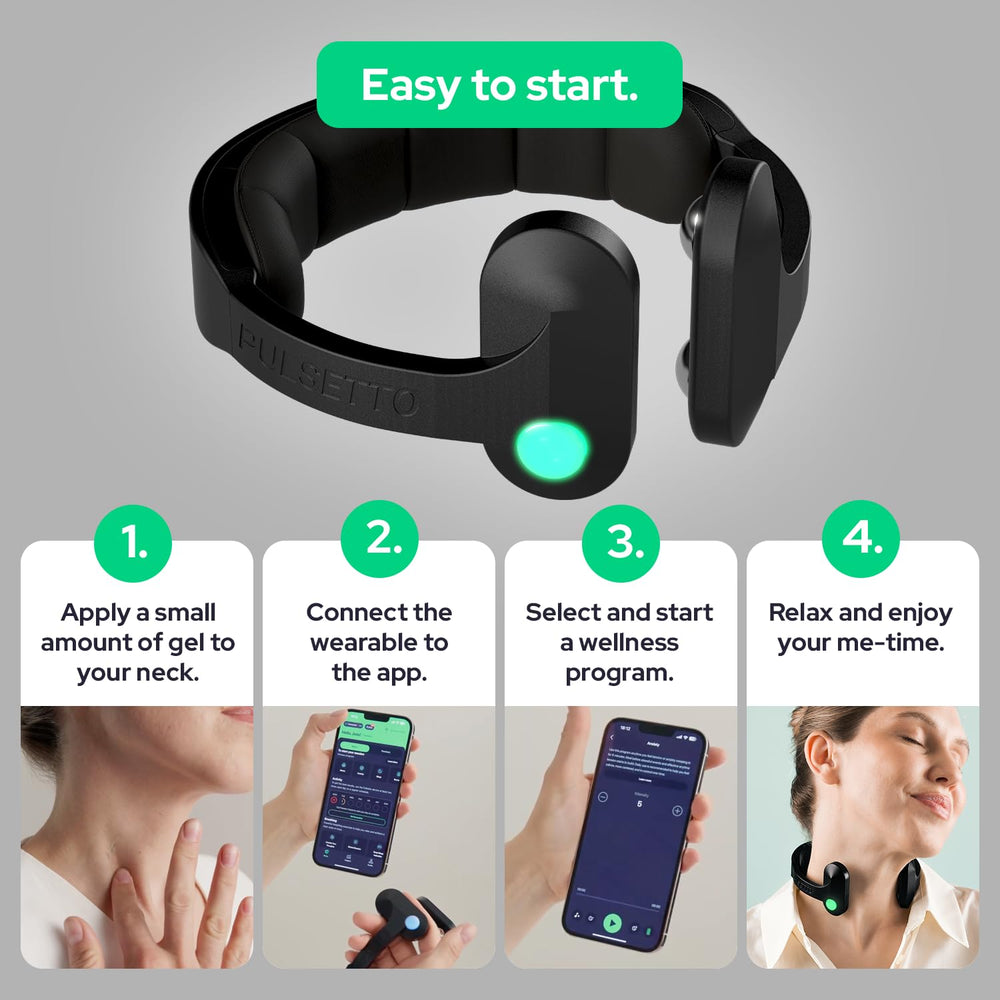
Pulsetto Fit is a consumer wellness wearable from Pulsetto UAB, a company founded in 2021 in Vilnius, Lithuania. It targets adults who want a drug-free way to build a calming or wind-down routine. The lineup is Lite, FIT (designed for smaller necks) and the newer FIT X, which a company announcement listed as available from September 17.
The company says it is the only device that delivers bilateral stimulation on the neck and that it has more than 300,000 users. Those are manufacturer claims we could not verify.
| Manufacturer claim | What independent sources show |
| Stimulating the vagus nerve moves the body from stress to calm | Vagus nerve stimulation is a real, researched technique. Whether this consumer device activates it in everyday use is the open question |
| Clinical trial results are remarkable | The study we could check was small, company-linked and had no placebo group described |
| Simple, safe and easy to use | Reviewers find setup easy but the gel messy and the sensation unusual, and the official contraindication list is long |
| Only bilateral neck device | Not independently verified |
How Does Pulsetto Fit Work?
What does the vagus nerve do?
The vagus nerve is the tenth cranial nerve. It runs from the brainstem through the neck to the chest and abdomen and is a major part of the parasympathetic, or “rest and digest,” side of the nervous system. Implanted vagus nerve stimulators have established medical uses, including drug-resistant epilepsy, as reviewed in this article.
How is stimulation different from relaxation techniques?
Breathing exercises and meditation influence vagal activity indirectly through behavior. A stimulation device applies an external electrical current through the skin so that nerve fibers beneath it fire, whether or not you feel calm. That brings possible sensations such as tingling, and safety rules that a breathing exercise does not need.
How do wearable stimulators work?
Transcutaneous vagus nerve stimulation (tVNS) sends mild current through the skin to reach a branch of the nerve. Most published tVNS studies target the ear (the auricular branch), while Pulsetto targets the neck (the cervical branch) on both sides. Neck-based research exists as well, such as a sleep-deprivation study, but it used other devices.
What is known and unknown about Pulsetto Fit?
The brand recommends 4 to 10 minute sessions twice a day, and a Wareable tester noted a short delay between pressing play and feeling current. Still unknown are long-term effects, whether its stimulation settings match those in published studies, and whether independent teams can replicate the company’s results. Evidence for one stimulation technology does not transfer automatically to another.
Pulsetto Fit Features
- Design. A hands-free neck band with a pad on each side. Cybernews says FIT suits people who wear size S or smaller tops.
- Electrode gel. Required for conductivity and included in the box. Wareable found it messy and slow to clean up.
- Programs. Five free programs (stress, anxiety, sleep, burnout, pain). Premium adds guided breathing, meditations and advanced pulse controls.
- Intensity and sessions. Nine intensity levels and short sessions. Wareable noted the app gives little guidance on which program or session length to use.
- Battery and charging. USB-C. Cybernews reports roughly 20 sessions (Lite) or 30 sessions (FIT) per charge, depending on use. No carrying case is included.
- Compatibility. Controlled by a smartphone app. Supported phone models and operating-system versions: not independently verified.
- Subscription. Not required to use the device, but some reviewers complain about unexpected subscription costs for full app access.
Potential Benefits of Pulsetto Fit
Stress management
The idea is that stimulating the vagus nerve nudges the autonomic nervous system toward its calming side. In the Pulsetto Fit study, 40 healthy adults enrolled (37 completed) and used it twice daily for four weeks. Bilateral stimulation was linked to lower hair cortisol (p = 0.024), and questionnaire scores for depression, anxiety and sleep problems improved.
But it is a conference abstract with a Pulsetto-affiliated first author, no placebo group described and self-reported outcomes in healthy people. It cannot show that Pulsetto caused the changes. Studies of other cervical devices, such as a sham-controlled PTSD trial of 25 people, suggest the approach can reduce physiological stress responses, but they did not test Pulsetto.
Relaxation
Reviewers describe the feeling as tingling, buzzing or prickly. Cybernews’ tester noticed a subtle calm within a few days, while Wareable’s tester felt nothing immediate. These are single-person accounts. A session can work as a prompt to pause, which may help by itself, but a guaranteed physiological relaxation response is not established.
Sleep support
Pulsetto’s study reported better sleep scores, again without a control group. A separate randomized trial of ear-based stimulation found improved sleep in adults, but it used a different device and a different nerve branch. Wareable’s tester reported easier falling asleep after about four weeks, which is an anecdote. We found no large, independent, sham-controlled trial of Pulsetto’s sleep effects.
Daily wellness
A structured routine of a few minutes twice a day may be convenient for people who like guided habits. Some Trustpilot reviewers mention using it for pain, headaches, MS symptoms or seizures. Those are individual reports, not evidence, and the company’s own list says safety and effectiveness have not been evaluated in people with a history of seizures.
What Does Scientific Research Say?
| Study | Device | Design and size | What it found | Limits |
| Bilateral nVNS in healthy adults (Eur Psychiatry abstract, 2026) | Pulsetto | 40 enrolled, 37 completed; 4 weeks; randomized to one-sided or two-sided stimulation | Two-sided stimulation lowered hair cortisol; symptom scores improved | Conference abstract, company-affiliated author, no placebo group described, healthy volunteers |
| Cervical vs auricular stimulation, alpha waves and blood pressure (AJP Regul, 2025) | Described by Wareable as Pulsetto-related | Single session; Wareable calls it small | Cervical stimulation raised alpha activity and lowered blood pressure | We could not verify sample size, funding or hardware |
| Frequency study, NCT07274332 | Pulsetto FIT | Registered randomized crossover with a sham condition | Results not verified | Basic-science trial; status unknown |
| PTSD sham-controlled trial | Other cervical device | 25 people, double-blind | Reduced sympathetic responses to stress | Not Pulsetto; patients, not general users |
| Sleep-deprivation study | Other cervical device | Human participants | Better arousal and multitasking | Not Pulsetto; a different outcome |
| Auricular sleep trial | Ear-based device | Randomized, community adults | Improved global sleep | Different nerve branch and device |
| Safety review | Various | Systematic review | Generally well tolerated | Long-term data lacking |
In short: all of these studies involved humans, none of the Pulsetto-specific work has been independently replicated that we could find, and the findings only tentatively support the advertised outcomes. Company materials quote slightly different figures (for example 55.2%, 46.8% and 32.8%) from the abstract’s 56%, 45% and 41%, which is a reason to read primary sources. Company materials also mention a trial in the journal Neuroscience Applied. We could not locate it, so we do not rely on it.
Pulsetto Fit Pros and Cons
- Hands-free neck wearable with guided app programs
- Free app tier works without Premium, per Wareable
- Short sessions that fit a routine
- Easy to set up and start using
- 2-year warranty and 30-day return reported
- 4.1 out of 5 on Trustpilot, with many positive sleep and stress comments
- Device-specific evidence is small and company-linked
- The effects, if any, require time and consistency
- The app lacks clear guidance on session time
- App delays, upsells and subscription complaints
- Long contraindication list
- 16% of Trustpilot reviews are one-star; price varies by source
Pulsetto Fit Side Effects and Safety
The manual, as summarized by Cybernews, lists possible slight discomfort, irritation or redness, mild local pain, toothache, muscle twitching, migraine, dizziness, tingling and pins and needles, usually fading when stimulation stops. A systematic review found transcutaneous stimulation generally well tolerated, though long-term data are lacking.
Pulsetto’s official support page lists these precautions.
Contraindicated:
- Active implanted electronic devices such as a pacemaker
- Metal implants (stent, plate or screw) at or near the neck
- Using another device at the same time, such as a TENS unit or muscle stimulator
Safety and effectiveness not evaluated in:
- Uncontrolled high or low blood pressure, or abnormal heart rate
- Heart disease, abnormal ECG, long QT or arrhythmia
- Past cutting of the vagus nerve in the neck
- Children and pregnant women
- Active cancer or cancer in remission
- Abnormal neck anatomy, or history of brain tumor, aneurysm, bleeding or head trauma
- History of fainting or seizures
Stop use and seek medical advice if discomfort or unusual symptoms persist. People with medical conditions or implanted electronic devices should consult a qualified healthcare professional and follow the manufacturer’s instructions first. Pulsetto is not a proven treatment for anxiety disorders, insomnia or depression.
One note on certifications: Pulsetto’s support page cites FCC certification as a safety assurance. FCC certification concerns radio-frequency emissions, not clinical safety or effectiveness, and it is not FDA clearance.
Pulsetto Fit Price and Packages
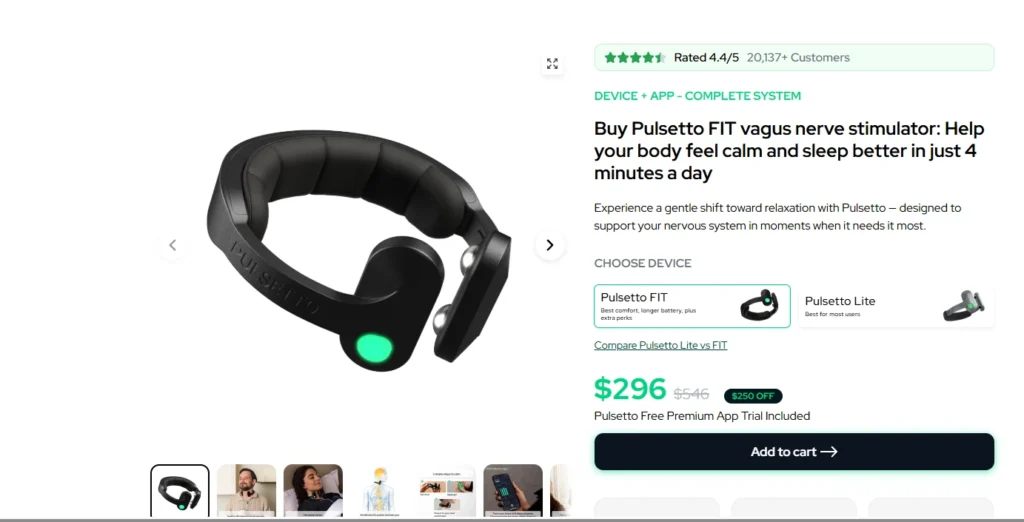
| Model | Reviewer-reported price | Notes |
| Lite | About $251 | Earlier 2026 reviews listed $224 to $278 |
| FIT | About $251 | Earlier 2026 reviews listed $224 to $296 |
| FIT X | About $399 | Newest model |
These figures are not verified and differ between reviews. Some pages show much higher “full prices” ($478 to $610) that may be reference prices rather than what buyers pay. Other costs to check: the optional Premium app (about $15 a month or $139 a year, reviewer-reported), shipping, taxes and the return policy. One Trustpilot reviewer claims returns carry a $10 to $30 charge, which we could not verify. Reviewers and retailers report a 2-year warranty and a 30-day money-back guarantee.
If current prices cannot be confirmed, check the official website for the latest offer. Check Current Pulsetto Fit Price:
Pulsetto Fit Customer Reviews and Complaints
On Trustpilot, Pulsetto Fit scored 4.1 out of 5 from 3,469 reviews when checked: 62% five-star, 16% four-star, 4% three-star, 2% two-star and 16% one-star. Note that the company holds a paid Trustpilot subscription, invites reviews and replies to negative ones, and Trustpilot does not fact-check reviewers’ claims.
| Topic | What reviewers report |
| Ease of use | Setup is quick. Wareable’s tester initially felt nothing on one side because of too little gel |
| Comfort and fit | Described as tingly or prickly; bulkier necks may find it snug; one reviewer wants a strap |
| App experience | Mixed: smooth to some, confusing program choice and Premium upsells to others |
| Perceived relaxation | Many users describe calmer days; professional testers describe a subtle effect |
| Perceived sleep effects | The most common positive theme, often after several weeks |
| Device reliability | Some report parts breaking after short use; others report years of use and quick replacement of a faulty unit |
| Customer support | Some praise helpful staff; others cite unhelpful automated replies |
| Returns and refunds | Warranty replacements are reported; one reviewer claims a return fee. Verify terms first |
Critical user threads also exist, such as a 2024 Reddit post, whose claims we did not verify. These are subjective experiences, not scientific evidence.
Pulsetto Fit vs. Other Wellness Devices
| Device | Type | Stimulation | Intended use | App | Reported price | Evidence limits |
| Pulsetto Fit | Neck wearable | Electrical, cervical, both sides | Stress, relaxation, sleep | Required | $251 to $399 | Small, company-linked studies |
| Nurosym | Ear clip | Electrical, auricular | Relaxation | Not independently verified | About $810 to $900 | Wareable says cited studies are not in peer-reviewed journals |
| Sensate | Chest device | Vibration plus sound | Relaxation | Yes, for soundscapes | About $349 | Not marketed as vagus stimulation |
| Apollo Neuro | Wrist or ankle band | Vibration | Stress recovery | Yes | About $448 | Small studies; not a vagus stimulator |
| gammaCore Sapphire | Handheld, neck | Electrical, cervical | FDA-cleared for migraine and cluster headache | Not independently verified | Not independently verified | Prescription device, not for stress or sleep |
Our sources for these rows are Wareable, Cybernews, WellnessPulse and gammaCore. There is no clear winner: gammaCore has FDA-cleared headache uses that Pulsetto lacks, and the others differ in mechanism, price and comfort.
Who Should Consider Pulsetto Fit?
Pulsetto may suit a healthy adult who wants a structured relaxation routine, can tolerate a tingling sensation and gel, has none of the listed contraindications and has modest expectations. Talk to a clinician first if you have an implant, a heart rhythm or blood pressure problem, a history of fainting or seizures, cancer history, or are pregnant.
Persistent stress, anxiety or sleep problems may need professional evaluation, and evidence-based options such as cognitive behavioral therapy for insomnia are worth discussing instead of relying only on a consumer wellness device.
Is Pulsetto Fit Worth It in 2026?
It is a reasonable experiment but not a proven fix. It is more convenient than many devices, and the first-hand reviewers we read found it easy to use. Against that, the Pulsetto-specific evidence is small and company-linked, it is not FDA-cleared, and total cost may rise with a subscription.
Before buying, verify:
- Current price, taxes and shipping on the official site
- Premium app pricing and what the free tier includes
- Return window, warranty and any return fees
- The full contraindication list against your health history
- That you can commit to several weeks of regular use
Frequently Asked Questions
What is Pulsetto used for?
Pulsetto is a neck-worn wellness device marketed for stress management, relaxation and sleep support. Its app offers programs labeled stress, anxiety, sleep, burnout and pain. The company positions it as a general wellness product, so it is not intended to diagnose, treat, cure or prevent any condition.
Does Pulsetto really work?
The evidence is early and mixed. Vagus nerve stimulation research is promising, and many reviewers report feeling calmer or sleeping better. But the Pulsetto-specific study we could verify was small, had company-affiliated authors and no placebo group described. Independent, device-specific proof is lacking, so results may vary.
Can Pulsetto help reduce stress?
It might help some people feel calmer, but this is unproven. A four-week study of 37 completers reported lower hair cortisol with two-sided stimulation and better questionnaire scores, but it lacked a placebo group. Other stress research used different devices. Treat any stress benefit as possible, not established.
Can Pulsetto improve sleep?
Possibly. Pulsetto’s study reported better sleep scores, and a randomized trial of ear-based stimulation found improved sleep, but that used another device and nerve branch. Reviewers describe falling asleep more easily after weeks of use. No large, independent, sham-controlled Pulsetto sleep trial was found.
How does Pulsetto stimulate the vagus nerve?
It sends mild electrical pulses through gel-covered electrode pads on both sides of the neck, aiming at the cervical branch of the vagus nerve. A Bluetooth app controls the program and intensity. Sessions are typically 4 to 10 minutes, and users often feel tingling. How fully it activates the nerve in daily use is still being studied.
What are Pulsetto’s potential side effects?
The manual lists possible discomfort, redness or irritation, mild local pain, toothache, muscle twitching, dizziness, headache or migraine and tingling, usually fading after a session. Contraindications include implanted electronic devices and metal implants near the neck. Stop use and speak with a clinician if symptoms persist.
How much does Pulsetto cost?
Recent reviews list about $251 for Lite and FIT and $399 for FIT X, but prices vary with promotions and we could not verify the current official figures. The optional Premium app is reportedly about $15 a month. Check pulsetto.tech for current pricing, shipping, taxes and return terms before you buy.
Does Pulsetto require an app?
Yes. The device is controlled through a smartphone app that selects programs and adjusts intensity. The free version includes five programs, and reviewers say Premium is optional. Some Trustpilot reviewers complain about unexpected subscription costs, so confirm what is included before ordering.
Is Pulsetto FDA-approved or FDA-cleared?
No. A company-linked disclaimer says Pulsetto is not a medical device and is not cleared or approved by the FDA for any medical use, and the company has said it is seeking certification. It is marketed as a wellness product. Its FCC certification concerns radio emissions, not safety or effectiveness.
Is Pulsetto worth buying in 2026?
It can be a reasonable experiment for healthy adults who want a structured relaxation routine, accept the gel and app, have no listed contraindications and keep expectations modest. It is a weaker choice if you want a proven treatment or have heart, seizure or implant concerns. Verify price, returns and fees first.
Final Verdict
Pulsetto’s strongest verified points are its easy, hands-free format, a free app tier, short sessions, a reported 2-year warranty and 30-day return window, and generally positive user feedback. Its main limits are small, company-linked evidence, no FDA clearance, a long contraindication list, a messy gel, subscription complaints and prices that vary by source.
A simple framework: consider it if you are a healthy adult with no listed contraindications who wants a structured routine and accepts that benefits are uncertain. Skip it, or ask a clinician first, if you have an implant, heart or seizure history, or need treatment for persistent anxiety or insomnia. Do not expect guaranteed results.
Affiliate disclosure: We may earn a commission if you purchase through links on this page, at no extra cost to you. This does not change our assessment.
Health disclaimer: This article is for general information and is not medical advice. Pulsetto is a wellness device, is not intended to diagnose, treat, cure or prevent any disease, and has not been cleared or approved by the FDA. Talk to a qualified healthcare professional before using any stimulation device, especially if you have a medical condition or implanted electronic device.

Better Health Focus Team
Health, Wellness & Supplement Research Team
The Better Health Focus Team researches and reviews health, wellness, nutrition, and dietary supplement products. Our goal is to provide readers with clear, practical, and research-informed information before they make a purchasing decision.
Our reviews examine product ingredients, potential benefits, usage instructions, available scientific research, customer feedback, pricing, refund policies, and manufacturer claims. We also look at potential limitations and highlight claims that may require additional evidence.
We believe supplement information should be presented realistically—not through exaggerated promises. Where scientific evidence is limited or conflicting, we make that clear so readers can make more informed decisions.
Areas We Cover:
Dietary Supplement Reviews
Nutrition & Wellness
Ingredient Research
Product Benefits & Potential Side Effects
Customer Reviews & Complaints
Pricing & Money-Back Policies
Evidence-Based Health Information
Editorial Approach: Our content is based on information available from reputable scientific, government, manufacturer, and consumer sources. Supplement reviews are informational and should not replace advice from a qualified healthcare professional.
Affiliate Disclosure: Some articles may contain affiliate links. If a reader purchases a product through one of these links, Better Health Focus may receive a commission at no additional cost to the reader. This does not determine how we evaluate or describe products.