

If you have ever searched for weight loss, then you might have come across terms like “cardio” and “strength training.” Many people wondered which one is better when it comes to cardio vs strength training. But there is no single answer for this. Research has shown that both of them have their unique benefits in weight loss.
Physical health guidelines recommend that an adult do at least 150 minutes of moderate-intensity cardio and two or more days of strength training.
However, people still have different opinions. While some say cardio, like running and cycling, burns the most calories, others believe lifting weights is most important for getting lean. In this blog, we will discuss how cardio and strength training work. This will help you learn what works for you and how to create a healthy routine.
Table of Contents
What Is Cardio (Aerobic) Exercise?
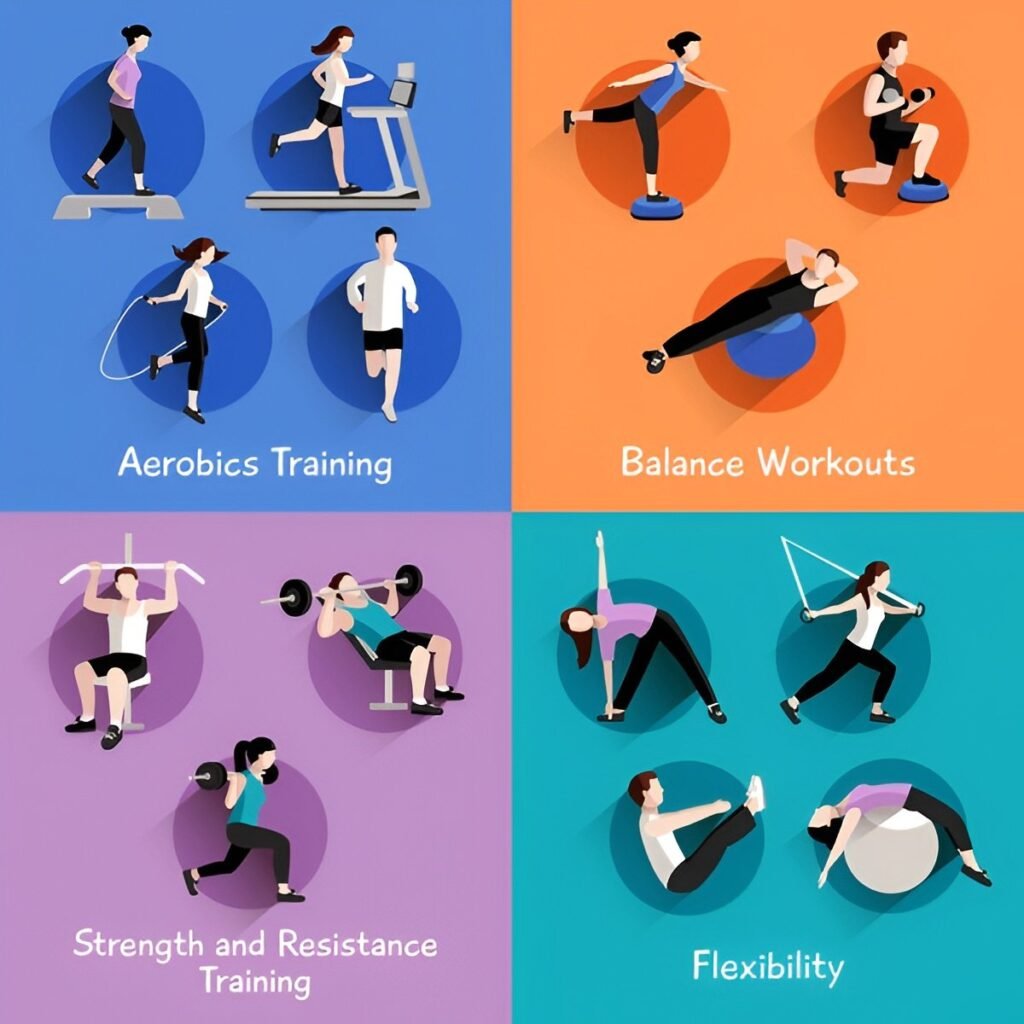
Cardio, short for cardiovascular or aerobic exercise, is anything that increases your heart rate and keeps it up for a certain period of time. Brisk walking, running, cycling, swimming, dancing, and rowing are some of the examples of cardio exercise.
How cardio helps with weight loss
- It burns calories during the workout. The more intensely and longer you exercise, the more calories you will burn. Like how running burns more calories than brisk walking, but it is still helpful in weight loss when done regularly.
- Improves your heart and lung health. Being fit often makes your everyday tasks and activities easier and can help you be more active overall. It increases the total number of burned calories.
- It helps to create a calorie deficit. Burning more calories than consuming is what makes weight loss happen. And cardio is a simple and the best way to increase calories burned.
Cardio is very effective for burning calories during exercise. It also supports heart health, improves endurance, and can boost your mood, which makes it an important part of a healthy fitness routine.
What Is Strength Training?
Strength training is a type of exercise that helps you make your muscles stronger. Examples of strength training include bodyweight exercises like push-ups, squats, and planks, as well as using resistance bands and machines that exert pressure on your muscles.
How strength training helps with weight loss
- It helps to build and protect muscle mass. Muscle tissues are metabolically active, which means having more muscles will increase the number of calories burned even at rest. Many studies and reviews show that resistance training increases lean muscle mass and resting metabolic rate.
- Improves your body’s composition. Strength training changes the ratio of fat to lean tissue so that even if numbers don’t indicate weight loss, you might have become more fit. Your clothes might start to fit better, and your body shape may improve.
- Increase strength and functioning ability. This helps you stay active with daily life and might make your cardio feel easier and safer.
- Helps in burning calories after exercise. Strength training provides an “afterburn” effect, which is called EPOC (excess post-exercise oxygen consumption). This effect increases calorie usage for hours after exercising. Although the effect is not as significant as the immediate calorie burn from an intense cardio workout, it is still important.
Cardio vs Strength: A Clear Comparison for Weight Loss
Let’s take a closer look at how cardio vs strength training compares for weight loss.
1. Calories burned during exercise
- Cardio workouts usually burn more calories than strength training workouts, especially when they are very intense, like cycling, running, or HIIT.
- Strength training burns fewer calories per minute than cardio, but its sessions can still be hard and require a lot of energy. Also, it helps build muscles, which is important for the long term.
2. Long-term calorie burn (metabolism)
- Strength training helps in building more muscle, which can increase your resting metabolic rate. According to studies, resistance training can make your lean muscle mass and resting metabolic rate go up a lot in just a few weeks to a few months. This increased resting metabolic rate helps maintain weight loss over the long term.
- Cradio can help you get in better shape, which can make your daily tasks easier. It also helps you stay more active during the day, which means you burn more calories.
3. Fat loss specifically
Studies show that combining both is better than choosing one for better fat loss. In the context of fat loss, strength training helps to preserve and build muscles, which means lost weight is fat. Cardio is known to help you burn more calories in a short period of time. Many clinical reviews and research studies say that resistance training is a key to improving body composition.
4. Health benefits beyond weight
- Cardio training: It significantly helps to lower the risk of heart disease, high blood pressure, and high blood sugar and improves endurance.
- Strength training: It helps to improve bone density, balance, strength, daily functions, and metabolic health. It is important to keep the muscles as we age.
The Best Approach: Combining Cardio and Strength Training
After comparing both, we know that cardio burns more fat in a short period of time, but strength training helps build muscles, which is more advantageous in the long term. Now, let’s discuss what you should do.
We should combine both types of exercise for better results. As discussed before in cardio vs strength training, you burn more calories in a short period of time during a cardio workout, and you build muscles, which increases your resting metabolic rate during your strength training.
The CDC also strongly recommends this combined approach. For overall health and better weight loss, the national health guidelines recommend that an adult should get
- At least 150 minutes of moderate aerobic (cardio) exercises a week, like brisk walking, OR 75 minutes of high-intensity aerobic (cardio) exercises a week, like running or swimming.
- And at least 2 days a week or more of muscle-strengthening exercises that engage all major muscle groups, like hips, legs, arms, shoulders, chest, back, and abdomen.
Combining these two will help you lose more weight. What you will lose will be mostly fat rather than important muscle tissues. It helps protect your joints, improves your stamina, and keeps your workout diverse and enjoyable.
Myths About Cardio vs Strength Training
Myth: Cardio is the only way to lose fat.
Truth: While cardio does help to burn more calories in a short period of time, it is not the only way to lose fat. Strength training also plays an important role. It helps to build muscles, so what you lose is fat, not muscles. That’s why doing both of them is better for weight loss.
Myth: Lifting weights will make women bulky.
Truth: This assumption is a very common misunderstanding among people. Most women lack the hormones necessary to develop large, bulky muscles. In reality, strength training helps improve their body shape, lean muscle mass, and overall health.
Myth: You need to do hours of cardio to see results.
Truth: In reality, there is no need to spend hours doing cardio. National health guidelines suggest that an average person needs about 150 minutes of moderate exercise or 75 minutes of high-intensity exercise per week, with 2 or more days of strength training. The key is to stay consistent with your routine.
Common Mistakes in Cardio vs Strength Training (and How to Avoid Them)
1. Doing too much of one thing and not enough of the other
Solution: You should do both cardio and strength training to keep your body in shape. Don’t just do one or the other; do both in your workout routine.
2. Hoping for quick results
Solution: There is no secret formula for quick results. Stick to your workout plan and be patient. You will start to see results that last for a long time. You might lose motivation if you expect results quickly and don’t get them.
3. Ignoring rest and recovery.
Solution: Your body needs time to heal and rest. Your body needs time to rest and heal, or it might slow down your progress. To help your body recover and support your workouts, make sure you get enough sleep, eat well, and take breaks often.
4. Using cardio to make up for overeating
Solution: Working out alone isn’t enough. Prepare a healthy diet plan and stick to it. This method will help you lose weight, stop overeating, and work out.
Actionable Tips for Building Your Routine
Now that we have discussed cardio vs strength training, it’s time to learn how to fit these exercises into your routine. Here are some of the simple, practical, and proven tips based on national health guidelines to start your weight loss journey.
1. Start Slowly and Understand Your “Why.”
Don’t do high-intensity workouts on your first day if you haven’t worked out in a while. The CDC also says that you should start slowly. Know what drives you and let it push you to work harder and more often. Walk for 10 to 20 minutes every day for a few days or a week to start. Then, over time, speed up and walk for longer.
2. Schedule Your Workouts
Make a proper workout schedule and treat it like any other important work in your day. You don’t need hours daily. Simply doing 20–30 minutes daily for five days a week is more than enough. You can even break those 30 minutes into two 15-minute sessions.
3. Mix It Up
You may lose motivation to work out if you do the same exercises every day. That’s why many experts suggest having various and different types of exercises in your workout routine. You can walk one day, try a simple strength workout with dumbbells the next, and do something like cycling, dancing, or something else you like, or even a short hike, on another day. Remember, having rest days is also important.
4. Focus on Nutrition and Recovery
Exercise alone is not enough to lose weight. A healthy, balanced diet and proper recovery are also important. Eating healthy foods completes your body’s need for vitamins, protein, and other important nutrients, which helps it to recover and stay strong. Staying hydrated and sleeping enough is also important because they help your muscles recover and keep your body functions smooth.
Final Thought
When it’s about cardio vs strength training, you can’t choose one over the other or say which one is better. Using both of them in your workouts is the best way to get faster and better results. Cardio helps you burn calories and stay active, while strength training helps you build muscles that will be useful in the long run.
Just stay consistent and keep things simple. Add activities in your workout plan that you enjoy doing, whether it’s cycling, swimming, dancing, lifting weights, or simply walking. Don’t keep all your focus on the numbers. Stay patient, and you will start seeing results.
In the end, the best choice in the cardio vs strength training debate for weight loss is to combine both of them and follow them consistently, and the results will follow.
Frequently Asked Questions
1. Which is better, cardio vs strength training, for weight loss?
You might have come across the debate of cardio vs strength training. But there is no definite answer that says one is better than the other. According to national health guidelines, both cardio and strength training are important. While cardio burns more calories during a workout, strength training helps to build muscles and improve metabolism, which is important in the long term. That’s the best approach: to combine both of them.
2. How often should I do cardio and strength training?
Health guidelines say to do cardio most days and strength training at least twice a week. You don’t need long hours of intense workouts—a short 30 minutes of regular sessions is more than enough if you are consistent.
3. Can I lose weight with only cardio?
Yes, it is possible to lose weight with only cardio exercises, but it also helps to burn calories. However, without proper strength training, you can lose your muscles. Doing strength training helps to protect your muscles, increases resting metabolic rate, and improves your overall body composition.
4. Will strength training make me bulky?
No, it is not absolute that strength training will make you bulky. It usually helps you build lean muscles and look more in shape. Unless you are following a specific training and diet plan, you won’t become bulky.
5. Can I do cardio and strength training on the same day?
Yes, you may do both cardio and strength training on the same day. Many experts suggest combining both of them in a daily workout plan. Just make sure you are not overdoing it.
6. Is diet essential for weight loss?
Yes, what you eat is a big part of losing weight. Only exercise is not enough to make you lose weight. Eating healthy, well-balanced meals can give you the protein, vitamins, and other nutrients you need to support your workouts and help you lose weight. In addition to eating well, getting enough sleep, staying hydrated, and resting properly are also important.

Daniel Brooks
Men's Health & Blood Sugar Writer
Better Health Focus
Expertise
Men's Health • Blood Sugar Management • Type 2 Diabetes Education • Prediabetes • Healthy Lifestyle • Nutrition • Metabolic Health • Preventive Wellness • Evidence-Based Health Content
About Daniel Brooks
Daniel Brooks is a Men's Health & Blood Sugar Writer at Better Health Focus, where he develops evidence-based educational content focused on men's wellness, blood sugar management, diabetes prevention, metabolic health, and healthy lifestyle habits.
With more than five years of experience writing health content, Daniel specializes in transforming complex medical research into practical, reader-friendly articles that help people better understand chronic disease prevention and long-term wellness. His work emphasizes realistic lifestyle changes, balanced nutrition, physical activity, and sustainable habits rather than quick fixes or unsupported health claims.
Daniel has completed professional education in Lifestyle Medicine through the American College of Lifestyle Medicine (ACLM) and has undertaken extensive independent study of evidence-based guidance, clinical recommendations, and educational resources published by the American Diabetes Association (ADA). His writing reflects current research and established best practices related to blood sugar management, diabetes prevention, cardiovascular health, and men's health.
Before publishing an article, Daniel reviews reputable medical literature and guidance from organizations including the National Institutes of Health (NIH), PubMed, the American Diabetes Association (ADA), the American Heart Association (AHA), the Centers for Disease Control and Prevention (CDC), and peer-reviewed scientific journals whenever applicable.
His goal is to help readers understand the science behind healthy living while making evidence-based information clear, practical, and accessible.
Education & Professional Development
- Professional education in Lifestyle Medicine through the American College of Lifestyle Medicine (ACLM)
- Ongoing study of evidence-based resources and clinical guidance published by the American Diabetes Association (ADA)
- Continuing education in nutrition science, metabolic health, and preventive medicine
- Regular review of peer-reviewed medical research and public health guidance
Areas of Focus
- Men's Health
- Blood Sugar Management
- Prediabetes Education
- Type 2 Diabetes Prevention
- Metabolic Health
- Heart Health
- Healthy Weight Management
- Nutrition & Healthy Eating
- Exercise & Lifestyle Medicine
- Preventive Health
Editorial Approach
Every article written by Daniel Brooks follows the editorial standards of Better Health Focus and is based on current scientific evidence from reputable medical organizations and peer-reviewed research whenever available.
His content is guided by the principles of:
- Evidence-based health education
- Scientific accuracy and transparency
- Balanced discussion of benefits, risks, and research limitations
- Clear and practical language for everyday readers
- Responsible reporting without exaggerated health claims
- Alignment with Google E-E-A-T principles for health content
Daniel believes that trustworthy health information should empower readers to make informed decisions in partnership with qualified healthcare professionals.
Research Sources
Daniel regularly consults information from:
- National Institutes of Health (NIH)
- PubMed
- American Diabetes Association (ADA)
- American College of Lifestyle Medicine (ACLM)
- Centers for Disease Control and Prevention (CDC)
- American Heart Association (AHA)
- U.S. Department of Agriculture (USDA)
- Office of Dietary Supplements (ODS)
- Peer-reviewed scientific journals
Editorial Disclaimer
The information published by Daniel Brooks on Better Health Focus is intended for educational and informational purposes only. It is not a substitute for professional medical advice, diagnosis, or treatment. Readers should consult a qualified healthcare professional before making decisions regarding medications, diabetes care, supplements, diet, or lifestyle changes.