
Disclosure: Better Health Focus earns a commission if you buy through links on this page, at no extra cost to you. This does not change how we evaluate products. Read our editorial policy.
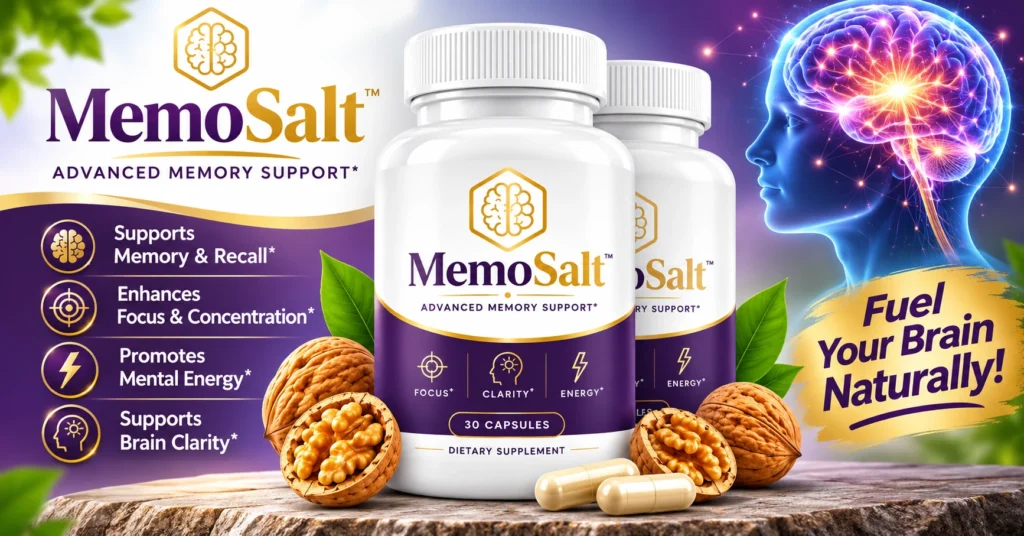
Quick Summary: MemoSalt (stylized as Memosalt™) is an over-the-counter daily dietary supplement capsule formulated to support memory, mental clarity, and focus. Despite its name, MemoSalt is not an electrolyte drink or table salt; its primary “salt” compound is D-Glucosamine Sulfate Potassium Chloride, combined with five botanical extracts: Ginkgo biloba, Turmeric, Marigold, Green Tea, and Bamboo. While its botanical antioxidants and circulation-supporting herbs provide mild cognitive wellness support, MemoSalt is not an FDA-approved treatment for Alzheimer’s disease, clinical dementia, or severe memory impairment. It is a legitimate dietary supplement rather than an outright scam, but aggressive promotional claims promising rapid memory restoration should be viewed with skepticism.
Table of Contents
MemoSalt Product Specifications
| Feature | Details |
| Product Name | MemoSalt™ (also searched as Memo Salt) |
| Category | Nootropic & Cognitive Wellness Dietary Supplement |
| Form & Serving Size | Oral chew-free capsules (1 capsule daily; 30 capsules per bottle) |
| Key Active Ingredients | D-Glucosamine Sulfate Potassium Chloride, Ginkgo biloba, Turmeric (Curcuma longa), Marigold extract (Tagetes erecta), Green Tea extract (Camellia sinensis), Bamboo extract |
| Core Themes on Label | Focus, Clarity, Energy |
| Manufacturing Standards | Produced in the USA in an FDA-registered, cGMP-compliant facility |
| Pricing | $49 to $79 per bottle (tiered bulk packages) |
| Refund Policy | 60-day money-back guarantee |
| Official Website | Click Here Official Website |

What Is MemoSalt?
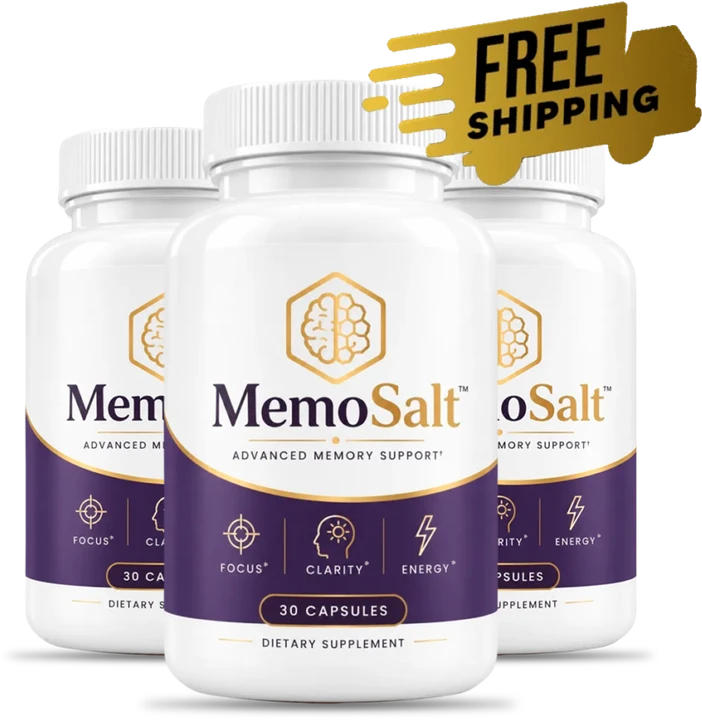
MemoSalt is marketed to men and women seeking nutritional support for everyday executive function, recall speed, and sustained attention. Modern lifestyle factors—including chronic sleep deficits, digital multitasking, poor diet, and stress—frequently manifest as “brain fog,” delayed name recall, and difficulty concentrating on complex tasks.
The manufacturer positions MemoSalt as a simple, once-daily nutritional habit built around three core pillars:
- Focus: Sustaining task-oriented attention throughout the workday.
- Clarity: Reducing feelings of mental sluggishness and cloudiness.
- Energy: Providing subtle, non-jittery cognitive alertness without high doses of caffeine.
Under United States law (DSHEA), MemoSalt is classified strictly as a dietary supplement. It has not been evaluated by the FDA to diagnose, treat, cure, or prevent any neurological or psychiatric disorder.
How Does MemoSalt Claim to Work?
The promotional concept behind MemoSalt focuses on microvascular blood flow, neuro-inflammation reduction, and cellular antioxidant defense:
- Cerebral Microcirculation: The brain requires an uninterrupted supply of oxygenated blood and glucose. Ingredients such as Ginkgo biloba are included to support arterial elasticity and capillary perfusion in neural tissues.
- Anti-Inflammatory and Antioxidant Shielding: Systemic low-grade inflammation and oxidative stress degrade neuronal membranes over time. Turmeric curcuminoids and green tea catechins serve as radical scavengers to mitigate cellular oxidative wear.
- Macular and Visual-Cognitive Signaling: Carotenoids from Marigold (such as lutein and zeaxanthin) accumulate in neural and retinal tissue, assisting visual processing speed and mental reaction times.
- Aminosugar Cellular Support: Glucosamine sulfate potassium chloride contributes aminosugar building blocks that influence glycosylation pathways and vascular integrity.
In-Depth Ingredient Breakdown: What Does the Science Say?
To determine whether MemoSalt delivers measurable cognitive benefits, we analyzed the scientific evidence for its six disclosed active ingredients:
1. D-Glucosamine Sulfate Potassium Chloride
- What It Is: An aminosugar compound naturally found in cartilage, chemically bound to potassium chloride salt for stability.
- The Cognitive Evidence: Historically taken for joint osteoarthritis, glucosamine garnered attention when epidemiological data from the UK Biobank (over 490,000 participants) revealed that regular glucosamine users exhibited a modest inverse association with all-cause and vascular dementia incidence.
- The Scientific Nuance (Critical Gap): While observational data suggest long-term vascular benefits, 2026 mechanistic research published in Nature Metabolism indicated that excessive exogenous glucosamine in mice with pre-existing Alzheimer’s pathology could alter O-GlcNAcylation and accelerate amyloid-related memory impairment. Thus, while healthy adults may tolerate it well, it should not be taken by individuals with established neurodegenerative diagnoses.
2. Ginkgo Biloba Leaf Extract
- What It Is: One of the oldest living tree species, widely recognized in traditional European and Asian herbal medicine for memory.
- The Cognitive Evidence: Ginkgo contains terpene lactones and flavonoid glycosides that inhibit platelet-activating factor and enhance microcirculatory flow. Clinical studies indicate modest improvements in cognitive processing speed and executive function in fatigued or middle-aged adults.
- Limitations: The landmark Ginkgo Evaluation of Memory (GEM) study demonstrated that Ginkgo does not prevent the onset of Alzheimer’s disease or dementia in healthy older adults.
3. Turmeric Root Extract (Curcuma longa)
- What It Is: A golden rhizome containing bioactive curcuminoids with potent anti-inflammatory properties.
- The Cognitive Evidence: Curcumin crosses the blood-brain barrier and exhibits neuroprotective qualities by downregulating inflammatory cytokines (such as TNF-alpha and IL-6). Human trials link bioavailable curcumin with improvements in working memory and sustained attention.
- Bioavailability Consideration: Standard turmeric powder is poorly absorbed unless formulated with piperine (black pepper extract) or lipid carriers.
4. Marigold Flower Extract (Tagetes erecta)
- What It Is: The botanical source for macular carotenoids, specifically lutein and zeaxanthin.
- The Cognitive Evidence: Lutein crosses into brain tissue (the macula and cerebral cortex) and accounts for over 50% of total carotenoids in pediatric and geriatric neural tissue. Clinical trials demonstrate that daily lutein supplementation improves neural efficiency, visual processing speed, and composite memory scores.
5. Green Tea Leaf Extract (Camellia sinensis)
- What It Is: Rich in epigallocatechin gallate (EGCG) and trace amounts of L-theanine and caffeine.
- The Cognitive Evidence: The natural combination of EGCG and L-theanine promotes “alert relaxation”—sharpening alpha brain wave activity while blunting the anxiety or rapid heart rate associated with conventional stimulants.
6. Bamboo Extract (Bambusa vulgaris)
- What It Is: A concentrated organic source of natural silica (silicon dioxide).
- The Cognitive Evidence: While silica is essential for collagen and connective tissue synthesis, direct clinical trials demonstrating significant cognitive or memory enhancement in humans remain scarce. Its primary role in capsule manufacturing is often as a natural excipient and flow agent.
Does MemoSalt Really Work for Memory and Focus?
The realistic answer depends entirely on your baseline health and your expectations:
- What It May Help With: For healthy working adults and seniors experiencing occasional brain fog, fatigue from screen time, or mild age-related delays in recall, the combination of Ginkgo, green tea polyphenols, and macular carotenoids can provide a noticeable, mild boost in clarity, alertness, and eye-brain coordination over 4 to 8 weeks.
- What It Cannot Do: It will not reverse Alzheimer’s disease, repair structural brain damage, or grant photographic memory. Anyone marketing MemoSalt as an effortless cure for severe cognitive impairment is misrepresenting nutritional science.
Is MemoSalt a Scam or Legit?
When consumers search “MemoSalt scam or legit”, they are usually trying to answer three critical questions:
| Concern | Assessment | Verdict |
| Is it a fake product? | No. Physical bottles with a sealed safety cap and disclosed botanical actives are delivered from an FDA-registered, cGMP-certified facility. | Legit |
| Are the marketing claims inflated? | Some third-party promotional landing pages use dramatic storytelling and exaggerated promises of overnight memory restoration. | Caution Advised |
| Is the billing transparent? | The official store offers straightforward multi-bottle packages with a stated 60-day refund window without hidden auto-billing traps when ordered carefully. | Legit |
Conclusion: MemoSalt is a legitimate dietary supplement. However, prospective buyers must disregard hyper-sensationalized ad claims and treat it as a supportive nutritional tool rather than a miracle remedy.
Potential Benefits of MemoSalt
When taken consistently alongside balanced lifestyle habits (proper hydration, Mediterranean-style nutrition, and adequate sleep), users may experience:
- Clearer Mental Focus: Less cognitive fatigue during intense reading or computer work.
- Improved Visual & Processing Speed: Lutein and green tea catechins support faster neural reaction times and screen comfort.
- Mild Cerebral Perfusion: Ginkgo biloba assists healthy blood flow to cerebral capillaries.
- Convenient Once-Daily Dosing: One capsule per day eliminates the hassle of taking multiple pills or mixing powders.
Potential Side Effects and Safety Precautions
MemoSalt’s botanical and aminosugar ingredients are generally well-tolerated by healthy adults, but certain safety considerations apply:
- Mild Gastrointestinal Upset: Some users may experience slight nausea or stomach discomfort if capsules are swallowed on an empty stomach. Always consume with a meal and water.
- Blood-Thinning Precautions (Ginkgo Biloba): Ginkgo possesses mild antiplatelet activity. Individuals taking prescription anticoagulants (such as Warfarin, Eliquis, or daily high-dose aspirin) or scheduled for surgery must consult their doctor before use.
- Shellfish / Glucosamine Sensitivities: While most modern glucosamine is derived via microbial fermentation, individuals with severe shellfish allergies should inspect the batch label.
- Severe Dementia / Alzheimer’s Warning: Based on recent metabolic findings regarding glucosamine pathways in damaged neural tissue, patients with diagnosed Alzheimer’s should not self-administer glucosamine-based nootropics without neurologist oversight.
MemoSalt Pros and Cons
- Simple once-a-day capsule protocol (30-day supply per bottle)
- Contains validated botanicals (Ginkgo, Green Tea, Lutein-rich Marigold)
- Non-habit forming; free of excessive stimulants
- Produced in an FDA-registered, cGMP-audited US facility
- Backed by a standard 60-day money-back guarantee
- Individual milligram potencies not fully broken down on promotional pages
- Not suitable for individuals on pharmaceutical blood thinners without clearance
- Premium cost for single-bottle purchases ($79 plus shipping)
- Only accessible through the official online distribution store
- Cannot treat or reverse diagnosed clinical neurodegenerative conditions
Real Customer Reviews and Common Complaints
Verified buyer feedback paints a clear picture of what real users experience:
- Positive Experiences: Users frequently report better concentration during morning tasks, a subtle lift in energy around 2:00 PM without coffee jitters, and easier word recall after approximately four weeks of daily use.
- Common Complaints: Critical reviews focus on two main points:
- Lack of Instant Results: Consumers who expected immediate pharmaceutical-grade memory enhancement within 48 hours felt let down.
- Shipping & Return Costs: As with most online supplement purchases, return postage fees are the customer’s responsibility under the 60-day refund policy.
Pricing, Packages, and Where to Buy
To guarantee product authenticity and ensure eligibility for the refund policy, MemoSalt should only be purchased through its official online portal.
Current package pricing:
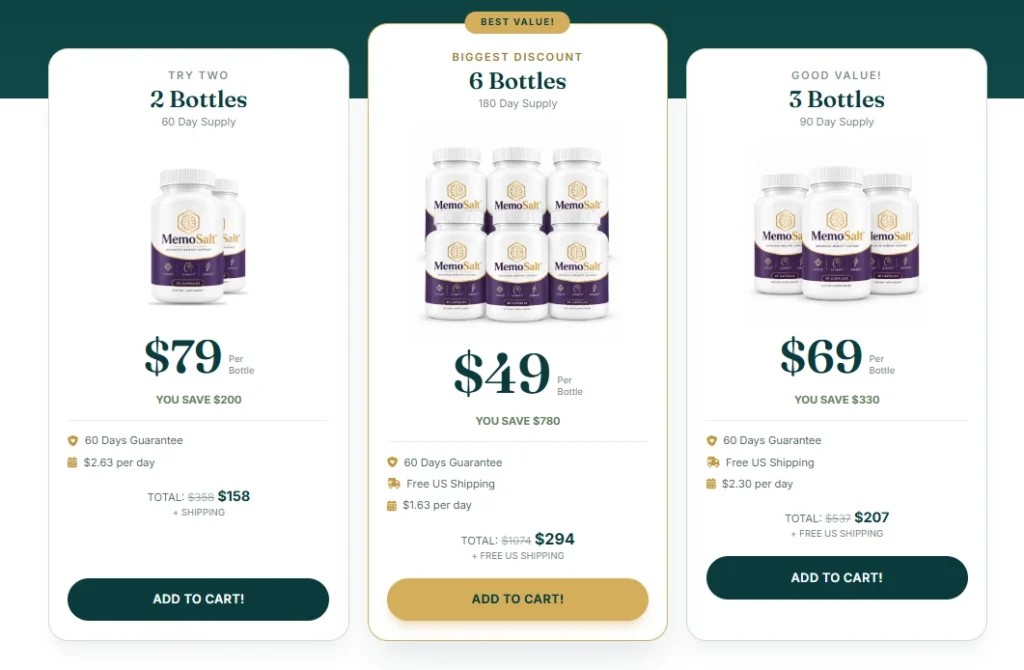
- Starter Package (2 Bottles / 60-Day Supply): 79perbottle(158 total) + $9.99 shipping.
- Most Popular (3 Bottles / 90-Day Supply): 69perbottle(207 total) + Free US Shipping & bonus digital guides.
- Best Value (6 Bottles / 180-Day Supply): $49 per bottle ($294 total) + Free US Shipping.
Refund Policy Terms
MemoSalt provides a 60-day money-back guarantee. To request a refund, customers must contact customer support within 60 days of their delivery date, obtain return authorization, and return all bottles (including opened or empty ones) to the fulfillment facility.
Who Should Consider MemoSalt?
- Recommended For:
- Healthy adults looking for non-stimulant herbal support for workday focus and mental clarity.
- Individuals spending long hours in front of screens who want combined ocular-cognitive antioxidant support (lutein and green tea).
- Seniors seeking gentle daily nutritional wellness alongside a brain-healthy diet.
- Not Recommended For:
- Anyone seeking a substitute for prescription medication for Alzheimer’s disease or dementia.
- Patients taking anticoagulant medications without direct physician approval.
- Pregnant or nursing women.
Frequently Asked Questions (FAQs)
What is MemoSalt?
MemoSalt is a daily dietary supplement capsule formulated with D-Glucosamine Sulfate Potassium Chloride, Ginkgo biloba, Turmeric, Marigold, Green Tea, and Bamboo extract, positioned to support memory, mental clarity, and focus.
Is MemoSalt a salt powder or a pill?
MemoSalt is an oral capsule, not a salt powder or drink. The name reflects its inclusion of glucosamine sulfate potassium chloride salt.
How do I take MemoSalt?
Take one capsule daily with a full glass of water, preferably alongside a morning or midday meal.
Is MemoSalt FDA approved?
Dietary supplements are not approved by the FDA prior to marketing. However, MemoSalt is manufactured in an FDA-registered facility adhering to current Good Manufacturing Practices (cGMP).
Does MemoSalt have side effects?
Most users tolerate it well. Mild digestive upset can occur if taken on an empty stomach. Because Ginkgo has mild blood-thinning properties, consult your doctor if you take anticoagulants.
Can MemoSalt cure dementia or memory loss?
No. MemoSalt is a nutritional supplement and cannot diagnose, cure, treat, or prevent Alzheimer’s disease or clinical dementia.
Final Verdict: Is MemoSalt Worth Trying in 2026?
MemoSalt brings together a unique combination of time-tested botanical extracts (Ginkgo, Green Tea, Marigold, and Turmeric) and an aminosugar potassium salt. For adults in search of a convenient, once-daily capsule to combat brain fog, sharpen focus, and provide ocular-cognitive antioxidant protection, it offers reasonable nutritional support.
However, consumers must approach it with grounded expectations. It is not a quick-fix cure for age-related cognitive disorders. If you decide to test MemoSalt, opt for the discounted multi-bottle tiers on the official website to secure the lowest price per bottle ($49) and preserve your 60-day refund protection.
Research and Source
National Center for Complementary and Integrative Health (NCCIH / NIH)
National Institutes of Health / NCCIH
National Library of Medicine / PubMed Central (PMC)
National Library of Medicine (PubMed / PMC)

Noah Ross
Health & Wellness Writer
Better Health Focus
Expertise
Weight Management • Gut Health • Nutrition • Metabolic Health • Healthy Lifestyle • Mental Wellness • Preventive Health • Dietary Supplement Research • Evidence-Based Health Education
About Noah Ross
Noah Ross is a Health & Wellness Writer at Better Health Focus, where he creates evidence-based educational content focused on helping readers make informed decisions about their health. His work covers weight management, gut health, nutrition, metabolism, preventive wellness, and healthy lifestyle strategies.
With a background in health communication, Noah specializes in translating complex medical research into clear, practical, and easy-to-understand articles. He believes reliable health information should be accessible to everyone without relying on sensational claims or misleading marketing.
Before publishing an article, Noah reviews scientific literature and guidance from respected health organizations, including the National Institutes of Health (NIH), PubMed, the World Health Organization (WHO), the Centers for Disease Control and Prevention (CDC), the Office of Dietary Supplements (ODS), and other peer-reviewed medical journals. His writing emphasizes transparency by distinguishing well-established scientific evidence from preliminary findings and promotional claims.
At Better Health Focus, Noah regularly researches topics related to digestive wellness, metabolism, healthy eating, blood sugar management, dietary supplements, weight loss strategies, healthy aging, and preventive healthcare. His content is designed to help readers understand both the potential benefits and limitations of current scientific evidence while encouraging realistic expectations and sustainable lifestyle habits.
Education
Bachelor of Arts (B.A.) in Communications
Professional Development
- Continuing education in Nutrition Science and Public Health
- Ongoing study of evidence-based medicine and clinical research
- Regular review of peer-reviewed research related to nutrition, metabolism, obesity, digestive health, and preventive medicine
- Continuous monitoring of updates from major public health organizations and medical research databases
Areas of Focus
- Weight Loss & Healthy Weight Management
- Gut Microbiome & Digestive Wellness
- Nutrition & Healthy Eating
- Blood Sugar & Metabolic Health
- Mental Wellness & Lifestyle Habits
- Preventive Health Education
- Dietary Supplement Reviews
- Evidence-Based Wellness Research
Editorial Standards
Every article written by Noah Ross follows the editorial standards of Better Health Focus. Content is developed using current scientific evidence, reputable medical references, and trusted public health resources whenever applicable.
Each article is written with a commitment to:
- Accuracy and factual reporting
- Evidence-based health education
- Transparent discussion of scientific findings
- Balanced coverage of benefits, risks, and research limitations
- Clear, reader-friendly language
- Compliance with Google E-E-A-T principles for health content
Noah avoids unsupported health claims, miracle cures, and exaggerated promises. When evidence is limited or still emerging, that uncertainty is clearly communicated so readers can make informed decisions based on the best available research.
Research Sources
Articles may reference information from organizations and databases such as:
- National Institutes of Health (NIH)
- PubMed
- World Health Organization (WHO)
- Centers for Disease Control and Prevention (CDC)
- Office of Dietary Supplements (ODS)
- U.S. Department of Agriculture (USDA)
- American Heart Association (AHA)
- Peer-reviewed scientific journals
Editorial Disclaimer
The information published by Noah Ross on Better Health Focus is intended for educational and informational purposes only. It should not be considered medical advice and is not a substitute for consultation with a qualified physician or other licensed healthcare professional. Readers should seek professional medical guidance before making decisions regarding diagnosis, treatment, medications, supplements, or significant lifestyle changes.