
Table of Contents
Losing weight is not only about eating less or exercising more. Your daily habits, including what you consume after dinner, can also influence your overall health and weight-management journey. Many people wonder what to drink after dinner for weight loss because they want a healthy nighttime routine that supports digestion, hydration, and better sleep.
The good news is that you do not need expensive supplements or complicated recipes to make healthier choices. Simple drinks such as plain water, unsweetened herbal tea, and low-calorie homemade beverages can be included in a balanced lifestyle.
According to the CDC guide to water and healthier drinks, replacing sugary beverages with plain water can help reduce calorie intake.
However, it is important to understand that no nighttime drink directly burns belly fat or causes weight loss on its own. Sustainable weight management depends on your overall calorie intake, physical activity, sleep quality, and eating habits.
In this guide, you will discover 10 healthy drinks to consider after dinner, how they fit into a weight-management routine, and which ingredients are best to avoid at night.
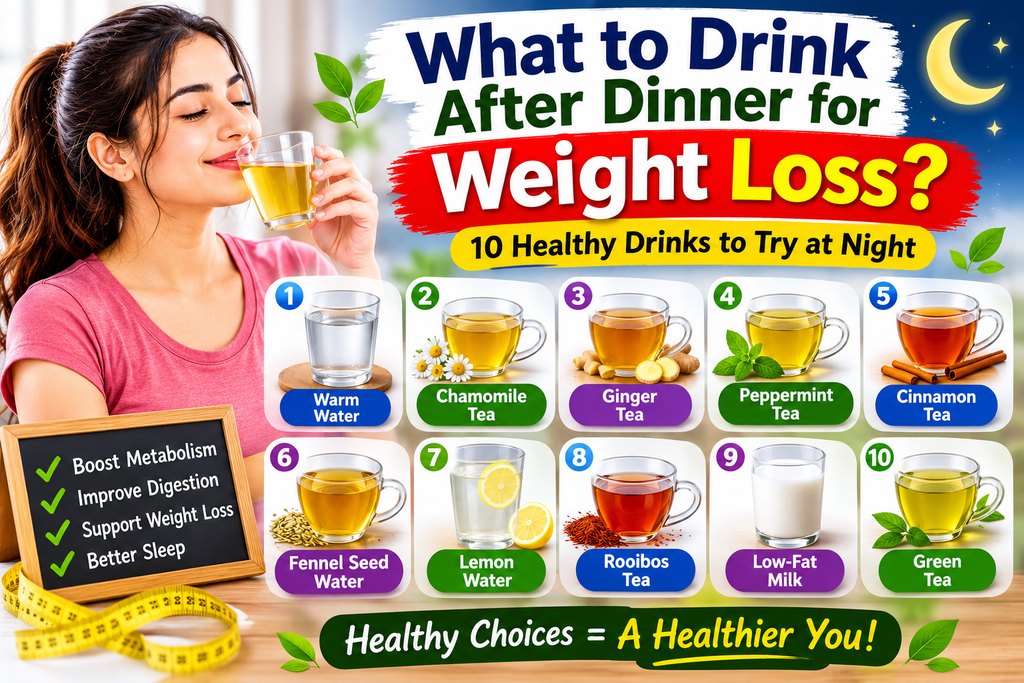
What to Drink After Dinner for Weight Loss?
If you are looking for a simple answer, plain water, unsweetened chamomile tea, peppermint tea, and ginger tea are some good options after dinner.
These drinks are generally low in calories and can help you maintain hydration without adding unnecessary sugar to your diet. Choose a drink according to your personal preferences, digestion, and caffeine sensitivity.
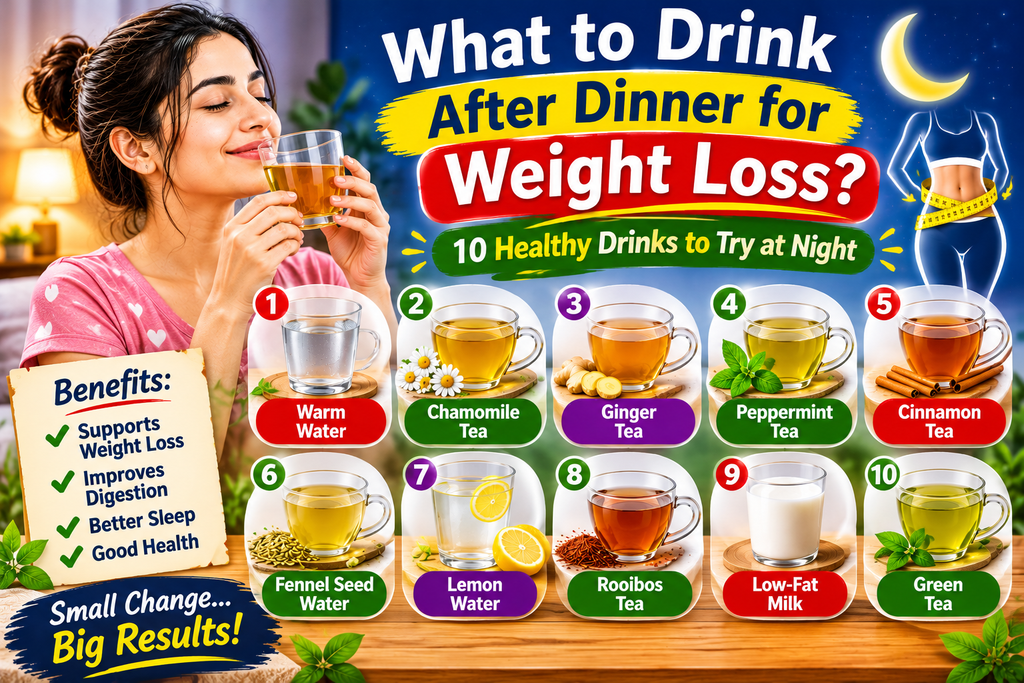
Here are 10 options worth considering.
1. Warm Water
Warm water is one of the simplest choices when deciding what to drink after dinner for weight loss.
For more information, read the CDC information about healthier drink options.
It contains zero calories and helps maintain proper hydration. Drinking water can also support normal digestion and may help you avoid confusing thirst with hunger.
Potential Benefits:
- Supports daily hydration.
- Contains no added calories.
- Provides a simple alternative to sugary beverages.
- Can become part of a consistent nighttime routine.
How to Prepare: Heat a glass of drinking water until comfortably warm. Allow it to cool slightly before drinking.
You do not need to add lemon, honey, or any special ingredient. Plain warm water is enough.
2. Chamomile Tea
Chamomile tea is a caffeine-free herbal beverage commonly enjoyed before bedtime. It is a suitable option for people who want a relaxing drink without consuming extra sugar.
When considering what to drink after dinner for weight loss, chamomile tea can be a useful alternative to sweetened tea, coffee, or other high-calorie beverages.
Learn more about the scientific evidence and safety of chamomile in the NIH NCCIH Chamomile Guide.
Potential Benefits:
- Naturally caffeine-free.
- Contains very few calories when consumed without sweeteners.
- Can be included in a relaxing bedtime routine.
- May support relaxation and sleep quality.
How to Prepare: Add one chamomile tea bag or dried chamomile flowers to a cup of hot water. Let it steep for approximately 5 minutes, then remove the tea bag or strain the flowers.
Drink it plain without adding sugar.
3. Ginger Tea
Ginger tea is a popular homemade beverage in Indian households. Ginger contains natural compounds called gingerols, which have been studied for their potential effects on digestive processes.
It can be a comforting option after a meal, especially if you enjoy warm beverages.
Potential Benefits:
- Provides a caffeine-free beverage option.
- Ginger may help relieve certain types of nausea.
- Can be enjoyed without added sugar.
- Adds flavor without requiring high-calorie ingredients.
How to Prepare: Add a few thin slices of fresh ginger to a cup of hot water. Simmer for 5–7 minutes and strain before drinking.
Avoid adding large quantities of honey or sugar if you are trying to reduce your calorie intake.
4. Peppermint Tea
Peppermint tea is another caffeine-free herbal drink that you can enjoy after dinner.
It contains naturally occurring menthol, which gives it a refreshing taste. Some people find peppermint tea soothing, although it is not suitable for everyone.
Potential Benefits:
- Naturally caffeine-free.
- Contains very few calories when unsweetened.
- Provides a refreshing alternative to sugary drinks.
- May help some people with digestive discomfort.
How to Prepare: Add fresh peppermint leaves or a peppermint tea bag to hot water. Allow it to steep for around 5–10 minutes.
Important: Peppermint may worsen acid reflux or heartburn in some individuals. If you experience these symptoms, choose another drink.
5. Cinnamon Tea
Cinnamon tea is a flavorful drink that can be prepared without adding sugar.
Cinnamon contains plant compounds called polyphenols. Although cinnamon has been studied for possible effects on blood glucose regulation, it should not be considered a weight-loss treatment.
If you want to know what to drink after dinner for weight loss, unsweetened cinnamon tea is one option for replacing calorie-rich beverages.
Potential Benefits:
- Contains very few calories without sweeteners.
- Provides natural flavor.
- Can help reduce dependence on sugary drinks.
- Offers a warm, comforting beverage option.
How to Prepare: Add a small cinnamon stick to a cup of hot water. Simmer for approximately 5–10 minutes and allow it to cool slightly.
Use cinnamon in moderate food amounts. Avoid consuming large quantities of cassia cinnamon regularly because it contains coumarin, which can affect the liver.
6. Fennel Seed Water (Saunf Water)
Fennel seed water is a traditional Indian homemade drink. Many people consume it after meals because of its mild flavor and traditional use as a digestive beverage.
It is another simple choice when exploring what to drink after dinner for weight loss.
However, there is not enough strong scientific evidence to establish that fennel water directly reduces body fat.
Potential Benefits:
- Provides a low-calorie beverage.
- Has a naturally mild, slightly sweet flavor.
- Can replace sweetened after-dinner drinks.
- May be a comfortable addition to a healthy routine.
How to Prepare: Add half a teaspoon of fennel seeds to a cup of hot water. Let them steep for 5–10 minutes and strain before drinking.
Avoid adding sugar or honey if your goal is to keep the drink low in calories.
7. Lemon Water
Lemon water is a popular choice among people trying to improve their eating habits.
Lemons provide vitamin C, but adding lemon to water does not directly burn fat or accelerate weight loss.
The main advantage is that lemon water can make plain water more enjoyable, helping some people drink more fluids throughout the day.
Potential Benefits:
- Helps maintain hydration.
- Contains very few calories without sweeteners.
- Provides a small amount of vitamin C.
- Can replace sugary juices and soft drinks.
How to Prepare: Squeeze a small amount of fresh lemon juice into a glass of plain or warm water. Mix and drink.
If you experience acidity or acid reflux, lemon water may not be comfortable for you. Frequent exposure to acidic drinks can also affect tooth enamel, so avoid sipping it continuously.
8. Rooibos Tea
Rooibos tea is a naturally caffeine-free herbal beverage made from the leaves of the rooibos plant.
It has a slightly sweet, earthy flavor and can be consumed without sugar or artificial sweeteners.
For anyone wondering what to drink after dinner for weight loss, rooibos tea is another low-calorie alternative to regular sweetened tea.
Potential Benefits:
- Naturally caffeine-free.
- Contains no calories when consumed plain.
- Offers a different flavor from traditional tea.
- Can be enjoyed as part of a relaxing evening routine.
How to Prepare: Steep a rooibos tea bag in hot water for approximately 5–7 minutes. Remove the bag and enjoy it plain.
9. Low-Fat Milk
A small serving of low-fat milk can be a suitable evening beverage for people who enjoy milk after dinner.
Milk provides protein, calcium, and other nutrients. However, it also contains calories, so portion size matters when managing your overall calorie intake.
Potential Benefits:
- Provides protein.
- Supplies calcium.
- Contains nutrients important for bone health.
- Can be a satisfying beverage option.
How to Prepare: Warm approximately half a cup of low-fat milk and drink it without adding sugar.
People with lactose intolerance may prefer lactose-free milk or another suitable alternative.
10. Unsweetened Green Tea
Green tea contains naturally occurring plant compounds called catechins, along with caffeine.
Some research suggests that green tea compounds may have a modest effect on energy expenditure, but the effects on body weight are generally small and not guaranteed.
Although green tea is often included in discussions about what to drink after dinner for weight loss, it may not be the best bedtime choice because of its caffeine content.
Potential Benefits:
- Contains antioxidant compounds.
- Provides a low-calorie alternative to sweetened beverages.
- Contains naturally occurring catechins.
- May have modest effects on energy expenditure.
How to Prepare: Steep a green tea bag in hot water for 2–3 minutes, depending on the product instructions. Drink without added sugar.
Tip: If caffeine affects your sleep, drink green tea earlier in the day rather than immediately before bedtime.
Best Drinks After Dinner: Quick Comparison
| Drink | Calories | Caffeine |
|---|---|---|
| Warm water | 0 | No |
| Chamomile tea | Very low | No |
| Ginger tea | Very low | No |
| Peppermint tea | Very low | No |
| Cinnamon tea | Very low | No |
| Fennel water | Very low | No |
| Lemon water | Very low | No |
| Rooibos tea | Very low | No |
| Low-fat milk | Contains calories | No |
| Green tea | Very low | Yes |
Calorie values depend on serving size and preparation. These estimates assume no added sugar, honey, or other sweeteners.
What Drinks Should You Avoid After Dinner?
Choosing the right beverage is important, but knowing which drinks to limit is equally useful.
If your goal is weight management, consider reducing the following drinks:
1. Sugary Soft Drinks: Regular soft drinks can contain significant amounts of added sugar and calories without providing much nutritional value.
2. Packaged Fruit Juices: Some packaged juices contain added sugar and can contribute extra calories.
3. Sweetened Milk Drinks: Chocolate milk, flavored milk, and sweetened shakes may contain more calories than expected.
4. Caffeinated Coffee: Coffee late at night may interfere with sleep in people sensitive to caffeine.
5. Alcoholic Beverages: Alcohol provides calories and may affect sleep and food choices. Limiting alcohol can support healthier habits.
Does Drinking Water After Dinner Help With Weight Loss?
Drinking water after dinner can support weight management as part of a healthy lifestyle.
The CDC water and health resource explains how water supports normal body functions and why choosing water instead of sugary beverages can be beneficial.
Water does not contain calories, and replacing high-calorie beverages with plain water can help reduce your overall calorie intake.
It also supports normal body functions, including digestion and temperature regulation.
However, drinking excessive amounts of water at night will not increase fat burning. It may also disturb sleep by making you wake up frequently to use the bathroom.
A practical approach is to maintain hydration throughout the day instead of drinking large quantities immediately before bedtime.
Best Time to Drink After Dinner
There is no scientifically established perfect time to drink a particular beverage for weight loss.
You can enjoy a small glass of water or an unsweetened herbal tea after dinner according to your comfort.
Here are a few practical suggestions:
- Drink water when you feel thirsty.
- Choose caffeine-free herbal tea if you prefer a warm nighttime drink.
- Avoid large quantities of fluids immediately before sleeping.
- Avoid sugary beverages after dinner.
- Allow enough time between dinner and bedtime to feel comfortable.
Remember that consistency in your daily habits matters more than the exact timing of a nighttime drink.
Additional Tips for Healthy Weight Management
Knowing what to drink after dinner for weight loss is only one part of the process. Your overall routine plays a much bigger role.
Along with maintaining a balanced diet, choosing nutritious fruits and vegetables can support overall wellness. Read our guide on Best Juices for Liver Detox to explore different juice options and learn more about liver health.
Eat Balanced Meals: Include vegetables, fruits, whole grains, protein sources, and healthy fats in appropriate portions.
Control Portion Sizes: Eating more calories than your body uses over time can contribute to weight gain. Pay attention to serving sizes.
Stay Physically Active: Regular walking, cycling, strength training, or other enjoyable activities can support weight management.
Get Enough Sleep: Adults generally need at least 7 hours of sleep each night. Consistent sleep habits support overall health.
Reduce Added Sugar: Limit sugary beverages, desserts, and highly sweetened packaged foods.
Be Consistent: Sustainable changes are usually more useful than extreme diets or quick-fix solutions.
Frequently Asked Questions (FAQs)
1. What is the best drink to have after dinner for weight loss?
Plain water is one of the best choices because it contains zero calories. Unsweetened chamomile, ginger, and peppermint teas are also suitable options for people who prefer flavored beverages.
2. Can I drink lemon water after dinner to lose belly fat?
You can drink lemon water after dinner if it suits your digestion. However, lemon water does not directly burn belly fat. Weight loss generally requires a sustainable calorie deficit and regular physical activity.
3. Which drink burns fat while sleeping?
No drink has been proven to burn significant amounts of body fat while you sleep. Plain water and unsweetened herbal teas can support healthy nighttime habits without adding unnecessary calories.
4. Is ginger tea good after dinner?
Ginger tea can be a comfortable caffeine-free beverage after dinner. Ginger may also help with certain digestive symptoms, including nausea. However, its effects on weight loss are not established.
5. Can I drink green tea at night?
You can drink green tea at night, but it contains caffeine. If you are sensitive to caffeine or have difficulty sleeping, choose a caffeine-free herbal tea instead.
6. Does warm water reduce belly fat?
No. Warm water does not directly reduce belly fat. It can support hydration and replace higher-calorie beverages, which may help with overall calorie management.
7. Should I avoid drinking water immediately after dinner?
There is generally no need to avoid normal amounts of water after dinner. Drinking water with or after meals is safe for most healthy individuals and does not prevent digestion.
8. Is milk good before bedtime for weight loss?
Unsweetened low-fat milk can provide protein and calcium. However, it contains calories, so consider your portion size and overall daily calorie intake.
Conclusion
Choosing what to drink after dinner for weight loss does not need to be complicated. Simple options such as warm water, chamomile tea, ginger tea, peppermint tea, and unsweetened fennel water can fit into a healthy nighttime routine.
The most important thing to remember is that no drink can independently eliminate belly fat or guarantee weight loss. Your overall diet, daily calorie intake, physical activity, hydration, and sleep habits all contribute to long-term results.
Start with simple changes, avoid unnecessary added sugar, and choose beverages that suit your body and lifestyle. A consistent and balanced approach is more effective than relying on quick weight-loss promises.
Health Disclaimer: This article is for educational purposes only and does not replace professional medical advice. Individuals with medical conditions, allergies, or dietary restrictions should consult a qualified healthcare professional before making significant dietary changes.

Noah Ross
Health & Wellness Writer
Better Health Focus
Expertise
Weight Management • Gut Health • Nutrition • Metabolic Health • Healthy Lifestyle • Mental Wellness • Preventive Health • Dietary Supplement Research • Evidence-Based Health Education
About Noah Ross
Noah Ross is a Health & Wellness Writer at Better Health Focus, where he creates evidence-based educational content focused on helping readers make informed decisions about their health. His work covers weight management, gut health, nutrition, metabolism, preventive wellness, and healthy lifestyle strategies.
With a background in health communication, Noah specializes in translating complex medical research into clear, practical, and easy-to-understand articles. He believes reliable health information should be accessible to everyone without relying on sensational claims or misleading marketing.
Before publishing an article, Noah reviews scientific literature and guidance from respected health organizations, including the National Institutes of Health (NIH), PubMed, the World Health Organization (WHO), the Centers for Disease Control and Prevention (CDC), the Office of Dietary Supplements (ODS), and other peer-reviewed medical journals. His writing emphasizes transparency by distinguishing well-established scientific evidence from preliminary findings and promotional claims.
At Better Health Focus, Noah regularly researches topics related to digestive wellness, metabolism, healthy eating, blood sugar management, dietary supplements, weight loss strategies, healthy aging, and preventive healthcare. His content is designed to help readers understand both the potential benefits and limitations of current scientific evidence while encouraging realistic expectations and sustainable lifestyle habits.
Education
Bachelor of Arts (B.A.) in Communications
Professional Development
- Continuing education in Nutrition Science and Public Health
- Ongoing study of evidence-based medicine and clinical research
- Regular review of peer-reviewed research related to nutrition, metabolism, obesity, digestive health, and preventive medicine
- Continuous monitoring of updates from major public health organizations and medical research databases
Areas of Focus
- Weight Loss & Healthy Weight Management
- Gut Microbiome & Digestive Wellness
- Nutrition & Healthy Eating
- Blood Sugar & Metabolic Health
- Mental Wellness & Lifestyle Habits
- Preventive Health Education
- Dietary Supplement Reviews
- Evidence-Based Wellness Research
Editorial Standards
Every article written by Noah Ross follows the editorial standards of Better Health Focus. Content is developed using current scientific evidence, reputable medical references, and trusted public health resources whenever applicable.
Each article is written with a commitment to:
- Accuracy and factual reporting
- Evidence-based health education
- Transparent discussion of scientific findings
- Balanced coverage of benefits, risks, and research limitations
- Clear, reader-friendly language
- Compliance with Google E-E-A-T principles for health content
Noah avoids unsupported health claims, miracle cures, and exaggerated promises. When evidence is limited or still emerging, that uncertainty is clearly communicated so readers can make informed decisions based on the best available research.
Research Sources
Articles may reference information from organizations and databases such as:
- National Institutes of Health (NIH)
- PubMed
- World Health Organization (WHO)
- Centers for Disease Control and Prevention (CDC)
- Office of Dietary Supplements (ODS)
- U.S. Department of Agriculture (USDA)
- American Heart Association (AHA)
- Peer-reviewed scientific journals
Editorial Disclaimer
The information published by Noah Ross on Better Health Focus is intended for educational and informational purposes only. It should not be considered medical advice and is not a substitute for consultation with a qualified physician or other licensed healthcare professional. Readers should seek professional medical guidance before making decisions regarding diagnosis, treatment, medications, supplements, or significant lifestyle changes.