
Introduction
When people search for the best juice for liver detox, they’re usually hoping for a quick fix — something to sip that will “cleanse” the liver after a period of poor eating, alcohol, or stress. In reality, your liver is already an incredibly efficient detox organ. It filters your blood, breaks down toxins, and eliminates waste on its own, 24/7, without needing a special drink to “kickstart” the process.
That said, what you eat and drink absolutely affects how well your liver functions over time. A nutrient-dense diet — rich in antioxidants, fiber, and healthy fats — supports liver health, helps manage fatty liver (MASLD), and even influences gut health, since the gut and liver are closely connected through what’s known as the gut-liver axis.
Juice can be part of that picture, but it works best as a complement to a balanced diet, not a replacement for whole foods or a substitute for medical care. This guide breaks down the best juice for fatty liver, how juice affects gut health, and practical ways to build liver-friendly habits — including realistic answers to common questions like whether a same day detox drink actually works.
Table of Contents
Can Juice Help Detox the Liver?
There’s no scientific evidence that any single juice — or any commercial “liver detox juice cleanse” — flushes toxins out of the liver. The liver and kidneys handle detoxification continuously, and no food or drink can speed up or replace that process.
What juice can do is support overall health in a few practical ways:
- Hydration – Adequate fluid intake supports every organ system, including the liver.
- Fruit and vegetable nutrients – Many juices are rich in vitamins, minerals, and antioxidant plant compounds.
- Fiber differences – Juicing removes most of the fiber found in whole fruits and vegetables, which is a meaningful downside since fiber supports gut and metabolic health.
- Added sugar and portion size – Even 100% fruit juice is concentrated in natural sugars, and many bottled juices have added sugar on top.
- Whole foods first – Because of the fiber and sugar differences, whole fruits and vegetables are generally the better everyday choice, with juice used in moderation.
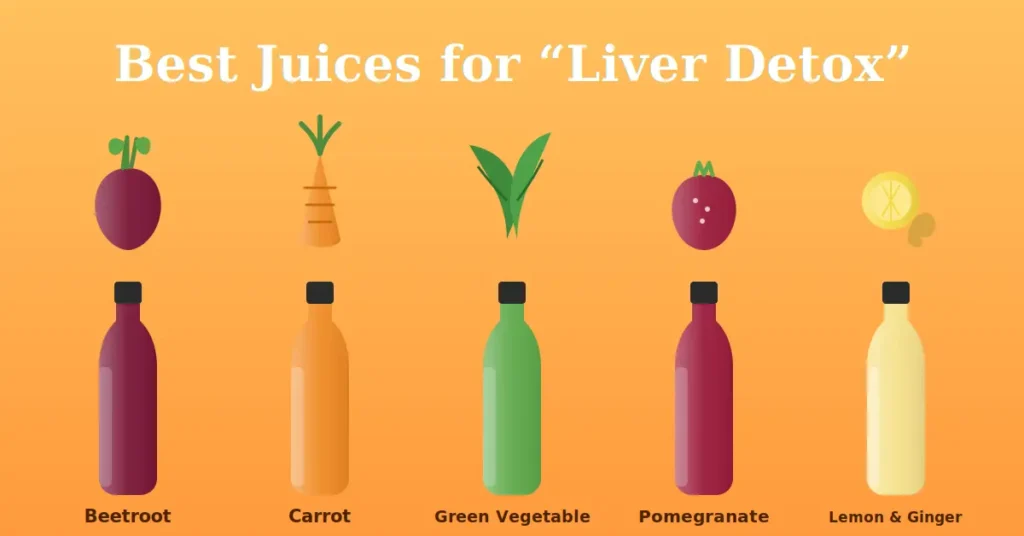
5 Best Juices for Liver Detox Health and Fatty Liver
1. Beetroot Juice
Beetroot is rich in nitrates and betalains, plant compounds studied for their antioxidant and anti-inflammatory properties. Some research suggests beet juice may support healthy blood flow and reduce oxidative stress, both of which are relevant to liver function.
- Nutritional profile: Low in calories, contains folate, manganese, and potassium.
- Potential benefits: Antioxidant support; some studies link beet compounds to reduced liver fat markers in animal models, though human evidence is still limited.
- How to include it: Try a small glass (4–6 oz) diluted with water, or blended with carrot for a milder taste.
- Portion considerations: Beet juice is naturally sweet and can be intense in large amounts — stick to small servings a few times a week.
2. Carrot Juice
Carrot juice is one of the most commonly recommended options when people ask about the best juice for liver health, largely because of its beta-carotene content.
- Beta-carotene: Converts to vitamin A in the body, an antioxidant that supports healthy liver cells.
- Nutritional benefits: Also provides potassium, vitamin K, and small amounts of fiber if pulp is retained.
- How it fits into a balanced diet: Best enjoyed unsweetened, in modest portions, alongside protein and whole grains rather than on its own.
3. Green Vegetable Juice
Green juices tend to be lower in natural sugar than fruit-based juices, which makes them a smart choice for anyone watching their intake closely.
Common ingredients include:
- Spinach
- Cucumber
- Celery
- Lemon
- A small amount of apple for taste
Keeping the added fruit low is important — many store-bought “green” juices actually contain more apple or pineapple than vegetables, which can quietly push up the sugar content.
4. Pomegranate Juice
Pomegranate is well known for its polyphenol content, a group of antioxidant compounds that have been studied for their potential role in reducing inflammation and oxidative stress in the liver.
- Polyphenols and antioxidants: Punicalagins, one of pomegranate’s signature compounds, are of particular research interest.
- Unsweetened vs. sweetened varieties: Always check labels — many pomegranate juice blends are diluted with added sugar or cheaper juices like apple or grape.
- Portion size: A small glass (about 4 oz) is plenty; pomegranate juice is calorie-dense and sugar-concentrated.
5. Lemon and Ginger Water/Juice
Lemon and ginger water is popular in liver-cleanse content, but it’s best understood as a hydrating, low-sugar option rather than something that detoxifies the liver. The vitamin C in lemon and the anti-inflammatory compounds in ginger are beneficial in general, and warm lemon-ginger water can be a pleasant, low-calorie way to start the day — just without the “detox” claims attached to it.
Which Juice Is Best for Fatty Liver?
This is one of the most common searches related to fatty liver — people want a single juice for fatty liver that will fix the problem. Realistically, no juice alone treats or reverses fatty liver disease (MASLD).
For fatty liver, the bigger dietary priorities are:
- Healthy weight management
- A Mediterranean-style eating pattern
- Plenty of vegetables and whole foods
- Adequate protein intake
- Whole grains and legumes
- Limiting added sugars
- Limiting saturated fat
- Avoiding or limiting alcohol
Juice can be a small, supportive piece of this pattern — particularly unsweetened vegetable juices — but it should never replace these core dietary strategies.
Best Juices for Gut Health
Does Juice Contain Fiber?
Most juice contains significantly less fiber than the original whole fruit or vegetable, because the pulp — where much of the fiber lives — is removed during juicing. Fiber is what feeds beneficial gut bacteria and supports regular digestion, so this is a meaningful trade-off.
Juice vs. Whole Fruits for Gut Health
It’s a common assumption that juice is just a more convenient version of whole fruit, but for gut health specifically, whole fruits and vegetables are generally the better choice. They deliver fiber alongside the vitamins and antioxidants, which supports both digestion and a healthy gut microbiome. Juice can still contribute nutrients and hydration, but it shouldn’t be relied on as a fiber source.
Juices to Limit If You Have Fatty Liver
Not all juice is created equal. Be cautious with:
- Sugary fruit juices (apple, grape, pineapple blends)
- Juice drinks with added sugar or high-fructose corn syrup
- Large portions of concentrated juice
- Sweetened bottled beverages marketed as “juice cocktails” or “juice drinks”
Even 100% fruit juice can carry a substantial amount of naturally occurring sugar in a small serving, so portion size matters just as much as ingredient quality.
How Much Juice Should You Drink?
- Portion size: A serving of juice is typically 4–6 oz (about half a cup to three-quarters of a cup) — smaller than most people assume.
- Frequency: A few times a week is a reasonable target for most people, rather than daily large glasses.
- Choosing unsweetened options: Always check for “no added sugar” on the label.
- Pairing juice with a balanced meal: Drinking juice alongside protein, fiber, or healthy fat helps slow the sugar spike.
- Avoiding juice-only diets: Juice cleanses or fasts are not recommended for liver support and can leave you short on protein and fiber.
As for best time to take dose for liver support through diet — there’s no medical requirement to drink juice at a specific hour. Many people prefer a small glass with breakfast, since pairing it with food helps balance blood sugar. If you’re taking any liver-related supplement or medication, follow your doctor’s or pharmacist’s specific dosing instructions rather than juice-related advice.
7-Day Liver-Friendly Juice and Meal Plan
| Day | Juice Option | Food Pairing |
| Day 1 | Beetroot | Eggs + whole-grain toast |
| Day 2 | Carrot | Oats + nuts |
| Day 3 | Green vegetable juice | Lentils + vegetables |
| Day 4 | Pomegranate | Greek yogurt + seeds |
| Day 5 | Carrot-beet blend | Tofu + brown rice |
| Day 6 | Green vegetable juice | Chickpea salad |
| Day 7 | Lemon-ginger water | Mediterranean-style meal |
If you’d like to try a simple liver cleanse juice recipe at home, a basic combination of cucumber, celery, spinach, a squeeze of lemon, and a small piece of green apple covers most of the options above in one glass — just keep portions modest and unsweetened.
Can You Drink Juice Every Day With Fatty Liver?
In small, unsweetened portions, occasional daily juice is unlikely to cause harm for most people. But the bigger picture matters far more than any single drink: overall dietary pattern, weight management, physical activity, and alcohol intake have a much greater impact on fatty liver than whether you drink juice on a given day. Think of juice as a minor addition to a healthy pattern, not the centerpiece of it.
Frequently Asked Questions
What is the best juice for fatty liver?
No single juice is proven to treat fatty liver. Unsweetened options like beetroot, carrot, and green vegetable juice can fit into a liver-friendly diet, but overall eating pattern and weight management matter far more.
Can beetroot juice help with fatty liver?
Some early research suggests beet compounds may reduce oxidative stress and support healthy liver fat levels, but evidence in humans is limited. It can be a reasonable addition to a balanced diet, not a standalone treatment.
Is carrot juice good for liver health?
Carrot juice provides beta-carotene and other antioxidants that support overall liver function, especially when unsweetened and consumed in moderate portions.
Is lemon juice good for the liver?
Lemon juice provides vitamin C and hydration, and is often paired with warm water as a morning drink. It doesn’t “detox” the liver, but it’s a low-sugar, refreshing choice.
Is drinking cranberry juice good for your liver?
Unsweetened cranberry juice contains antioxidants called proanthocyanidins, which have been studied for general health benefits. There isn’t strong evidence it specifically improves liver function, and most bottled cranberry juice is heavily sweetened, so if you try it, choose an unsweetened version and watch portion size.
Can juice improve gut health?
Juice can contribute some nutrients and hydration, but because most juicing removes fiber, whole fruits and vegetables are generally better for gut health.
Should I drink juice on an empty stomach?
There’s no strong evidence this is necessary or harmful for most people. Pairing juice with a meal can help moderate blood sugar response, which may be preferable for those managing fatty liver or blood sugar concerns.
Can I drink fruit juice every day with fatty liver?
Small, unsweetened portions occasionally are generally fine for most people, but large or frequent servings of sugary juice are best limited, since excess sugar intake is linked to worsening fatty liver.
Is juice better than eating whole fruits?
No — whole fruits retain fiber that juice loses in processing, making them generally the better everyday choice for both liver and gut health.
What are common liver detox symptoms people look out for?
People sometimes search for liver detox symptoms expecting signs that a cleanse is “working,” such as fatigue, headaches, or common digestive changes. These are more often signs of low calorie or nutrient intake during a restrictive cleanse rather than evidence of detoxification. If you’re experiencing ongoing fatigue, yellowing skin or eyes, abdominal pain, or swelling, these can be signs of a liver problem that needs medical attention — not something to address with juice or detox tea for liver products.
Bottom Line
There is no proven “liver detox juice,” liver detox juice cleanse, or same day detox drink that flushes toxins from the liver — your body already handles that job continuously. Some unsweetened vegetable and fruit juices, including beetroot, carrot, green vegetable juice, and pomegranate juice, can fit into a healthy diet in modest portions. But fatty liver and gut health are far better supported by an overall nutrient-dense eating pattern, healthy weight management, regular physical activity, adequate fiber from whole foods, and limiting excess sugar and alcohol.
If you’re dealing with symptoms of liver trouble or have been diagnosed with fatty liver disease, talk to a doctor or registered dietitian before starting any cleanse, detox tea, or restrictive juice plan.
References & Sources
https://pmc.ncbi.nlm.nih.gov/articles/PMC11820471

Noah Ross
Health & Wellness Writer
Better Health Focus
Expertise
Weight Management • Gut Health • Nutrition • Metabolic Health • Healthy Lifestyle • Mental Wellness • Preventive Health • Dietary Supplement Research • Evidence-Based Health Education
About Noah Ross
Noah Ross is a Health & Wellness Writer at Better Health Focus, where he creates evidence-based educational content focused on helping readers make informed decisions about their health. His work covers weight management, gut health, nutrition, metabolism, preventive wellness, and healthy lifestyle strategies.
With a background in health communication, Noah specializes in translating complex medical research into clear, practical, and easy-to-understand articles. He believes reliable health information should be accessible to everyone without relying on sensational claims or misleading marketing.
Before publishing an article, Noah reviews scientific literature and guidance from respected health organizations, including the National Institutes of Health (NIH), PubMed, the World Health Organization (WHO), the Centers for Disease Control and Prevention (CDC), the Office of Dietary Supplements (ODS), and other peer-reviewed medical journals. His writing emphasizes transparency by distinguishing well-established scientific evidence from preliminary findings and promotional claims.
At Better Health Focus, Noah regularly researches topics related to digestive wellness, metabolism, healthy eating, blood sugar management, dietary supplements, weight loss strategies, healthy aging, and preventive healthcare. His content is designed to help readers understand both the potential benefits and limitations of current scientific evidence while encouraging realistic expectations and sustainable lifestyle habits.
Education
Bachelor of Arts (B.A.) in Communications
Professional Development
- Continuing education in Nutrition Science and Public Health
- Ongoing study of evidence-based medicine and clinical research
- Regular review of peer-reviewed research related to nutrition, metabolism, obesity, digestive health, and preventive medicine
- Continuous monitoring of updates from major public health organizations and medical research databases
Areas of Focus
- Weight Loss & Healthy Weight Management
- Gut Microbiome & Digestive Wellness
- Nutrition & Healthy Eating
- Blood Sugar & Metabolic Health
- Mental Wellness & Lifestyle Habits
- Preventive Health Education
- Dietary Supplement Reviews
- Evidence-Based Wellness Research
Editorial Standards
Every article written by Noah Ross follows the editorial standards of Better Health Focus. Content is developed using current scientific evidence, reputable medical references, and trusted public health resources whenever applicable.
Each article is written with a commitment to:
- Accuracy and factual reporting
- Evidence-based health education
- Transparent discussion of scientific findings
- Balanced coverage of benefits, risks, and research limitations
- Clear, reader-friendly language
- Compliance with Google E-E-A-T principles for health content
Noah avoids unsupported health claims, miracle cures, and exaggerated promises. When evidence is limited or still emerging, that uncertainty is clearly communicated so readers can make informed decisions based on the best available research.
Research Sources
Articles may reference information from organizations and databases such as:
- National Institutes of Health (NIH)
- PubMed
- World Health Organization (WHO)
- Centers for Disease Control and Prevention (CDC)
- Office of Dietary Supplements (ODS)
- U.S. Department of Agriculture (USDA)
- American Heart Association (AHA)
- Peer-reviewed scientific journals
Editorial Disclaimer
The information published by Noah Ross on Better Health Focus is intended for educational and informational purposes only. It should not be considered medical advice and is not a substitute for consultation with a qualified physician or other licensed healthcare professional. Readers should seek professional medical guidance before making decisions regarding diagnosis, treatment, medications, supplements, or significant lifestyle changes.