
Puffy nipples can catch a lot of men off guard. Suddenly, your chest starts to look swollen or puffy, with a bump under one or both nipples. It is a topic that does not get talked about enough at the gym or with friends, but it is incredibly common, and in many cases, the reason is hormonal imbalance.
Instead of hiding behind loose t-shirts, understanding why this happens is the first step toward addressing it. Let’s break down exactly what causes puffy nipples, how your hormones play a role, and what you can actually do about it.
Table of Contents
What Causes Puffy Nipples in Men?
In many cases, puffy nipples are the result of hormone imbalance, specifically a drop in testosterone and an increase in estrogen. Every man’s body produces both of these hormones, but testosterone is normally higher than estrogen by a big gap. But when that ratio changes to an increase in estrogen, whether from puberty, aging, extra body fat, medicines, or certain medical conditions, the breast gland tissues right under the nipples can get enlarged and feel harder.
According to the Mayo Clinic, gynecomastia is rarely dangerous because an imbalance of hormones is not a sign of something very dangerous.
The Hormone Connection: Estrogen and Testosterone in Balance
How Estrogen in Men Plays a Role
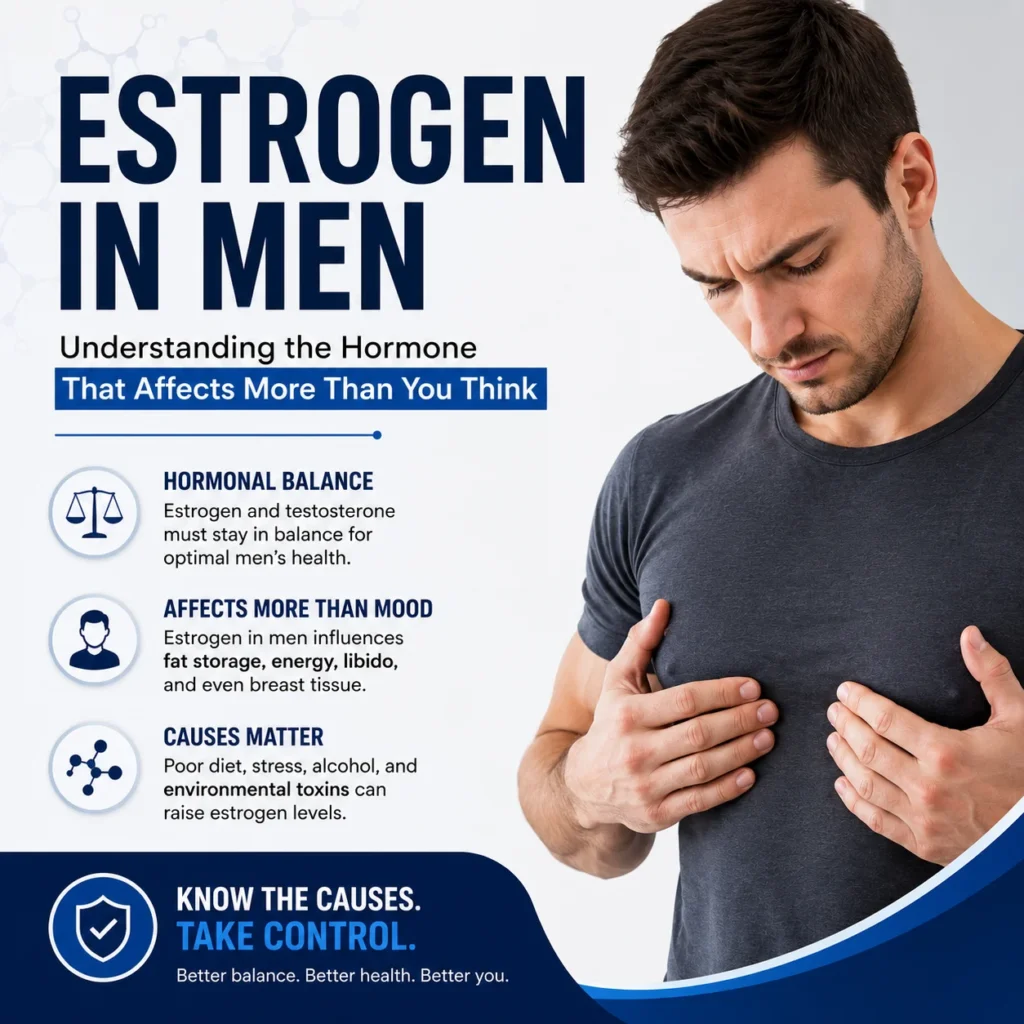
It might be surprising, but men also have estrogen, just lower than women. While testosterone controls traits like muscle mass and body hair, estrogen drives breast tissue growth. Normally, the two hormones sit in a ratio that keeps male breast tissue normal.
Trouble starts when estrogen rises relative to testosterone. Extra body fat is one of the biggest reasons, since fat tissue can convert testosterone into estrogen. Certain medications, health conditions, and even plant oils like tea tree or lavender oil have also been linked to higher estrogen activity in men.
How Low Testosterone Tips the Scale
The same hormone problem can also happen the other way around, when testosterone levels drop instead of estrogen levels going up. This is often called “Low T.” According to the Cleveland Clinic, it happens when the body doesn’t make enough of this important male hormone.
Aging, obesity, certain medications, and conditions affecting the testicles or pituitary gland can all reduce testosterone levels. One study estimates that approximately 40% of men over 45 have lower-than-normal levels. When testosterone levels drop, estrogen’s influence grows relatively stronger, even though estrogen levels do not rise, and this imbalance is what causes puffy nipples.
Common Causes of Puffy Nipples in Men
At any age, you can develop puffy nipples, but there are a few common triggers that are known to be the main culprits:
Puberty
This is the most common cause of this issue. More than half of male teenagers develop puffy nipples during puberty, usually going away around six months to two years, according to the Cleveland Clinic.
Getting older
As you get older, your testosterone levels start to decline naturally. The Mayo Clinic reports that roughly around 24% to 65% of men between the ages of 50 and 80 develop gynecomastia, often alongside extra weight.
Certain medications
Medications for enlarged prostate (finasteride and spironolactone), heartburn (cimetidine and omeprazole), heart conditions (digoxin), and some antibiotics and anti-anxiety medications have been linked to developing gynecomastia.
Anabolic steroids and supplements
These causes are very common in athletes and bodybuilders. Misusing anabolic steroids is a well-known cause of puffy nipples. A case report in JCEM Case Reports notes a man who developed gynecomastia and low testosterone after consuming “performance” supplements that had a banned, hormone-altering compound.
Other Contributing Factors
While age, puberty, and medications are the most common culprits, there are a few other causes related to lifestyle and health that can trigger hormone imbalance:
- Excess Body Fat
As we already know, fat cells play a big role in producing estrogen. Being overweight can create a hormone imbalance, leading to puffy nipples.
- Alcohol
Drinking too much alcohol, especially beer, can seriously mess with your hormones. Especially beer, because it contains ingredients that act like estrogen, which confuses your liver and can easily cause puffy nipples.
- Underlying Health Conditions
Sometimes, health issues with your liver, kidneys, or thyroid can throw your hormones completely out of balance. When these natural chemicals get mixed up, it can easily cause puffy nipples.
Puffy Nipples From Hormones vs. Puffy Nipples From Fat
Not everyone with puffy nipples has the same condition. While hormone imbalance is the cause for most of them, extra body fat can also make your nipples look puffy.
| Characteristics | Hormone-Related (True Gynecomastia) | Fat-Related (Pseudogynecomastia) |
| What’s happening | Breast gland tissue itself grows | Fat builds up in the chest |
| How it feels | Firm or rubbery, often a distinct lump under the nipple | Soft, spreads evenly, feels like body fat elsewhere |
| Common trigger | Puberty, aging, medication, or a health condition | Being overweight or carrying extra body fat |
| Does exercise help? | Not on its own | Often yes, since losing fat can reduce it |
| One side or both? | Can be one-sided or uneven | Usually even on both sides |
According to the Cleveland Clinic, hormone-driven puffiness generally won’t respond to weight loss or exercise, since the swelling comes from glandular tissue, not fat.
Symptoms of a Hormone Imbalance in Men
While it’s true that not every case is a hormonal issue and needs medical attention, if you notice these signs, there is a high chance of a hormone imbalance. You should visit your doctor for proper treatment:
- Swelling that shows up suddenly or grows quickly
- A firm, distinct lump under one or both nipples
- Tenderness or pain outside the usual puberty timeline
- Swelling on only one side
- Fluid or discharge from the nipple
- Puffy nipples with fatigue, lower sex drive, or reduced body hair, which often signal low testosterone specifically
Treatment Options for Hormone-Related Puffy Nipples
Here are some treatment options that can help you with puffy nipples due to hormone imbalance:
Careful waiting
Sometimes waiting is the best thing you can do, especially for teenagers, because they get better around their early twenties.
Review your medication
If you notice a change in your nipples after using a medicine, consult your doctor to change it or get another way out.
Lifestyle changes
Dropping excess body fat through diet and exercise can lower the amount of estrogen your body produces. Limiting alcohol can also help your liver process hormones more efficiently.
Medication
Medicines like tamoxifen or aromatase inhibitors are some non-approved drugs that are used for gynecomastia. So before using this method, consult your doctor to avoid any complications.
Surgery
In some cases, surgery may be needed to treat puffy nipples. Liposuction and a subcutaneous mastectomy are the most common surgeries. Some people may need both procedures for the best outcome.
The Bottom Line
Puffy nipples are one of the most common things that nobody talks about openly. In most cases, the cause is a normal, temporary hormone imbalance in estrogen and testosterone levels, which is not something very dangerous. Still, if the puffiness and swelling are painful, sudden, on one side, or along with other symptoms, you should get it checked out by a doctor for proper treatment.
A simple blood test can check your hormone levels and help you figure out the best, safest plan of action to get your body and your confidence back in balance.
Frequently Asked Questions
Are puffy nipples a sign of low testosterone?
Yes, it can be. Low testosterone compared to estrogen in men is one of the main causes of gynecomastia. But puffy nipples don’t always mean low testosterone. Sometimes, puberty and body fat can also be the cause.
Can high estrogen in men cause puffy nipples?
Yes, definitely. When a man’s estrogen levels get too high, it signals the body to grow actual breast gland tissue, which directly causes that puffy, swollen look.
Will puffy nipples go away on their own?
They can, especially if it is just a temporary hormone swing during puberty. But if the puffiness comes from extra body fat or true glandular growth, it usually won’t fade on its own. You will need to lose the weight or explore medical options actively.
Are puffy nipples common in men?
Yes, puffy nipples in men are a very common condition. It affects more than half of men at some point in their lives. Having it doesn’t mean something is wrong with you. And you can treat it very easily depending on the cause.
References & Sources
https://my.clevelandclinic.org/health/treatments/15245-hormone-therapy-for-menopause-symptoms
https://academic.oup.com/jcem/article/104/7/2490/5310131
https://www.mayoclinic.org/diseases-conditions/gynecomastia/symptoms-causes/syc-20351793
