

Yes, being overweight can cause puffy nipples, but not always. Sometimes they could be signs of gynecomastia, the condition where glandular breast tissue enlarges in males because of a hormone imbalance.
In this guide, you’ll learn what causes puffy nipples, understand chest fat vs. gynecomastia, find clear treatments, and discover simple ways to help prevent the problem in the future.
Table of Contents
The Link Between Overweight and Chest Fat
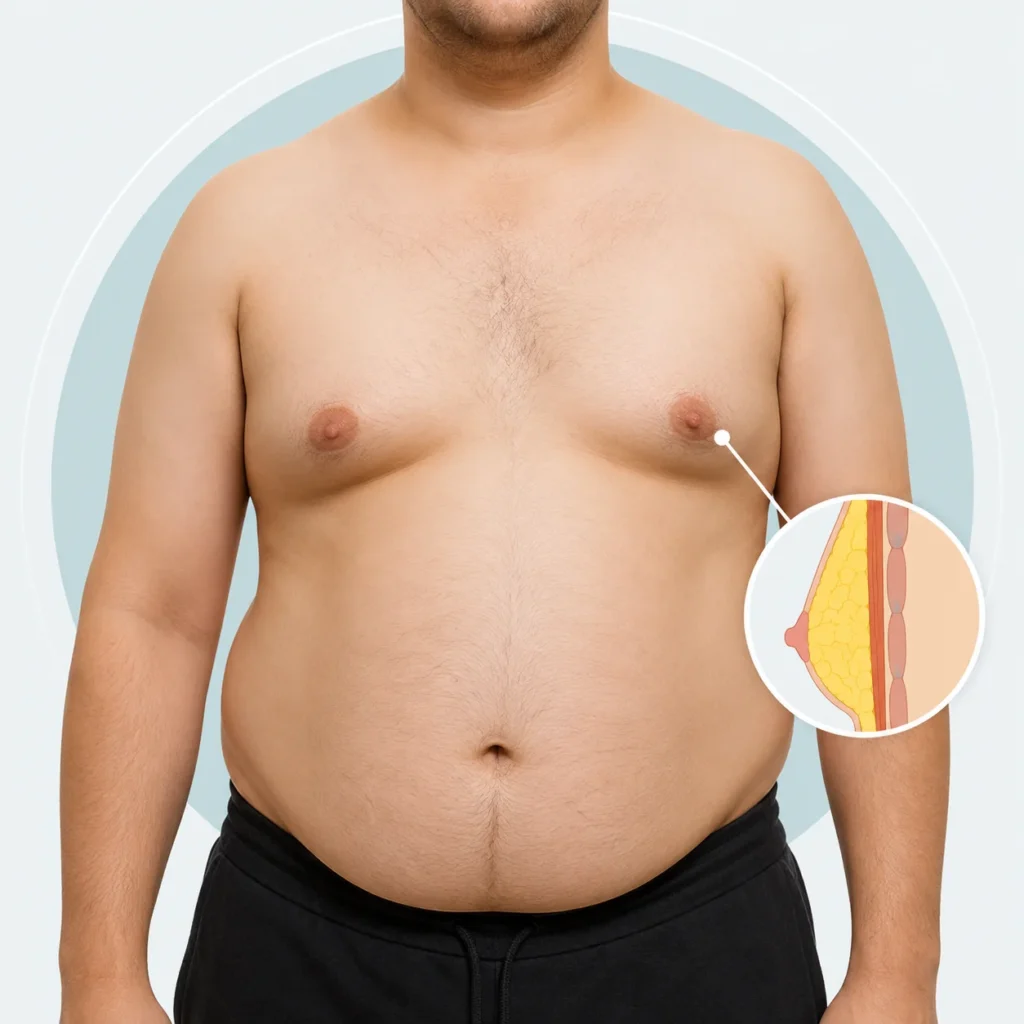
When you gain weight, your body stores extra calories as fat. Everyone’s body distributes this fat differently based on their genetics. For many men, fat tends to gather in the belly, the love handles, and the chest area.
When there is excess fat in the chest area, it is medically known as pseudogynecomastia. This simply means “false gynecomastia.” The extra fat pushes the skin outwards, leading to what many people call overweight, puffy nipples.
What Causes Puffy Nipples in Men?
- Excess chest fat
When you carry extra weight, your body stores some of that fat directly in your chest. This buildup pushes your nipples outward, creating that swollen look. In medical terms, fat-related nipple enlargement in men is called pseudogynecomastia, in which your breast area has increased fatty tissue (not a gland issue).
- Hormonal imbalances (gynecomastia)
Hormones like estrogen and testosterone help to control breast tissue. And when there is an imbalance during certain conditions like puberty, aging, or medical conditions, the glandular tissue under the nipple can become enlarged. This makes your breasts look larger and nipples puffier.
- Medications and substances
Some prescription medications and supplements can change the breasts. Some medications for mental health are linked with gynecomastia and anabolic steroids, as well as some herbal products like lavender oil. Also, this can be excessive alcohol use and recreational drugs such as amphetamines, marijuana, and heroin.
Read More Mental Health Improve Naturally
- Genetics and other health issues
A family history of gynecomastia or conditions like Klinefelter syndrome or thyroid problems can sometimes lead to puffy or enlarged nipples.
In short, being overweight is one of the common causes because extra fat increases the estrogen hormone and increases fatty tissue in the chest. Even so, not everyone who is overweight will have puffy nipples. Other factors also matter.
Chest Fat vs Gynecomastia: What’s the Difference?
To treat the puffy nipples, first, you need to know what you are dealing with. Is it just fat, or is it actually an issue with glandular tissue?
Gynecomastia is a medical condition where the gland tissue of the nipples gets enlarged due to a hormone imbalance. Unlike puffy nipples due to chest fat, gynecomastia has firm, rubbery tissue growing right under the nipple.
Here is a quick overview to help you understand chest fat vs. gynecomastia:
| Factors | Chest Fat | Gynecomastia |
| Cause | Extra fatty tissue in the chest | Growth of glandular breast tissue |
| Texture | Soft and squishy | Firm, rubbery, or slightly hard |
| Appearance | Nipples may look puffy or swollen | Puffy nipples, and you’ll feel a lump or firm area under the areola |
| Common in | Overweight individuals with high body fat percentage | Pubertal boys, older men, or anyone with a hormonal change |
| Treatment | Often improves with weight loss and exercise (since it’s fat) | May require medical treatment or surgery to remove the breast tissue |
How to Get Rid of Fat Around Nipples
If your puffy nipples are caused by being overweight, the good news is that you can reduce them naturally through lifestyle changes. Here is the step-by-step guide on how you can reduce the fat around your nipples at home.
1. Fix Your Diet (Caloric Deficit)
There is no way to lose fat in just one area of your body, also known as “spot reduction.” To lose fat around the nipples, you have to lose overall body fat. And the first thing for that is to fix your diet.
- Eat in a caloric deficit: Consume fewer calories than your body burns each day.
- Boost protein: Protein helps you build muscle and keeps you feeling full.
- Cut back on sugar and alcohol: Alcohol and highly processed sugars are empty calories that heavily contribute to fat storage, especially around the midsection and chest.
2. Strength Train Your Chest
While diet is important, you can’t lose fat by just eating better. While diet helps to lose fat, exercise helps to build muscles underneath. Building your pectoral (chest) muscles will stretch the skin and give your chest a much firmer and more masculine shape.
Here are some of the best exercises you can include in your daily routine:
- Push-ups
- Bench Press
- Dumbbell Flyes
- Incline Presses
What Are The Medical Treatments For Puffy Nipples?
Rarely, but in some cases, people lose weight, get into great shape, and still have puffy nipples. That’s when you need to give proper medical treatment because you might have true gynecomastia, and you can’t cure it in the same way as puffy nipples due to extra fat.
Here are some medical treatments that can help you:
- Medication
If you have noticed the condition early (often during puberty or shortly after hormone imbalance), doctors can recommend medications that can block estrogen to help shrink the tissue.
- Gynecomastia Surgery
This is another common and safe method to get rid of puffy nipples caused by glandular enlargement. In this surgery, the surgeon makes a tiny cut and completely removes the firm gland tissue under the nipple.
- Liposuction
This procedure is used along with surgery to permanently remove the stubborn fat cells from the chest to sculpt a flat shape.
How to Prevent Puffy Nipples
Mostly, preventing puffy nipples is preventing the things that cause your nipples to be puffy and swollen. Here are some ways to do this:
- Maintain a healthy weight
Be consistent with regular exercise and a balanced diet. It helps not only with better overall health but also in keeping fat around the nipples in control. Losing even a small amount of weight can improve how the chest looks in overweight individuals.
- Avoid anabolic steroids and toxic substances
Since we already know that steroids and too much consumption of drugs and alcohol can cause gynecomastia, staying away from them lowers your risk of developing it. The experts specifically advise men to avoid drugs like heroin, amphetamines, and steroids.
- Regular check-ups
If you notice any sudden changes in nipples, regularly visiting a doctor can help you catch any hormonal issues or medical conditions early. This can help to increase the chances of getting better faster and more easily.
Doing all of this still does not guarantee that you will not have puffy nipples, but these habits can help reduce your chances of developing these conditions.
The Bottom Line
Yes, being overweight is definitely a big reason behind puffy nipples. When we gain weight, fat naturally gathers in the chest area, creating that swollen appearance. On top of that, excess weight can mess with your natural hormone balance, which only makes the problem worse.
The main thing to remember is the difference between regular chest fat and true gynecomastia. If the puffiness is just from extra weight, eating a cleaner diet and getting regular exercise will usually take care of that stubborn fat around nipples.
But if you have put in the work with your diet and workouts and still aren’t seeing any changes, go ahead and talk to a doctor. They can figure out if you actually have glandular tissue enlargement and help you find the right medical treatment to finally fix the issue.
Frequently Asked Questions
Does losing weight get rid of puffy nipples?
Yes, if the cause of your puffy nipples is excessive fat around the nipples. However, if the cause is actual glandular tissue enlargement as a result of a hormonal imbalance, you may require medical attention.
How can I tell if it is chest fat or gynecomastia?
Puffy nipples caused by extra fat feel soft and squishy, while actual gynecomastia feels like a firm, rubbery lump right under your nipples or areola.
Do chest exercises fix puffy nipples?
Yes, chest exercises like push-ups and bench presses help to build the muscle in your pectoral area. This stretches your skin tighter and gives your chest a better shape, which reduces puffiness caused by excess fat around your nipples.
Will puffy nipples go away on their own?
Yes, they go away on their own if they are caused by a temporary hormone imbalance, like during puberty, with time (around the early twenties) when hormones get balanced. But if it’s due to extra chest fat or true gynecomastia, you need to lose excess fat or get proper medication and surgery, depending on the cause.
References & Sources
Medical News Today

Daniel Brooks
Men's Health & Blood Sugar Writer
Better Health Focus
Expertise
Men's Health • Blood Sugar Management • Type 2 Diabetes Education • Prediabetes • Healthy Lifestyle • Nutrition • Metabolic Health • Preventive Wellness • Evidence-Based Health Content
About Daniel Brooks
Daniel Brooks is a Men's Health & Blood Sugar Writer at Better Health Focus, where he develops evidence-based educational content focused on men's wellness, blood sugar management, diabetes prevention, metabolic health, and healthy lifestyle habits.
With more than five years of experience writing health content, Daniel specializes in transforming complex medical research into practical, reader-friendly articles that help people better understand chronic disease prevention and long-term wellness. His work emphasizes realistic lifestyle changes, balanced nutrition, physical activity, and sustainable habits rather than quick fixes or unsupported health claims.
Daniel has completed professional education in Lifestyle Medicine through the American College of Lifestyle Medicine (ACLM) and has undertaken extensive independent study of evidence-based guidance, clinical recommendations, and educational resources published by the American Diabetes Association (ADA). His writing reflects current research and established best practices related to blood sugar management, diabetes prevention, cardiovascular health, and men's health.
Before publishing an article, Daniel reviews reputable medical literature and guidance from organizations including the National Institutes of Health (NIH), PubMed, the American Diabetes Association (ADA), the American Heart Association (AHA), the Centers for Disease Control and Prevention (CDC), and peer-reviewed scientific journals whenever applicable.
His goal is to help readers understand the science behind healthy living while making evidence-based information clear, practical, and accessible.
Education & Professional Development
- Professional education in Lifestyle Medicine through the American College of Lifestyle Medicine (ACLM)
- Ongoing study of evidence-based resources and clinical guidance published by the American Diabetes Association (ADA)
- Continuing education in nutrition science, metabolic health, and preventive medicine
- Regular review of peer-reviewed medical research and public health guidance
Areas of Focus
- Men's Health
- Blood Sugar Management
- Prediabetes Education
- Type 2 Diabetes Prevention
- Metabolic Health
- Heart Health
- Healthy Weight Management
- Nutrition & Healthy Eating
- Exercise & Lifestyle Medicine
- Preventive Health
Editorial Approach
Every article written by Daniel Brooks follows the editorial standards of Better Health Focus and is based on current scientific evidence from reputable medical organizations and peer-reviewed research whenever available.
His content is guided by the principles of:
- Evidence-based health education
- Scientific accuracy and transparency
- Balanced discussion of benefits, risks, and research limitations
- Clear and practical language for everyday readers
- Responsible reporting without exaggerated health claims
- Alignment with Google E-E-A-T principles for health content
Daniel believes that trustworthy health information should empower readers to make informed decisions in partnership with qualified healthcare professionals.
Research Sources
Daniel regularly consults information from:
- National Institutes of Health (NIH)
- PubMed
- American Diabetes Association (ADA)
- American College of Lifestyle Medicine (ACLM)
- Centers for Disease Control and Prevention (CDC)
- American Heart Association (AHA)
- U.S. Department of Agriculture (USDA)
- Office of Dietary Supplements (ODS)
- Peer-reviewed scientific journals
Editorial Disclaimer
The information published by Daniel Brooks on Better Health Focus is intended for educational and informational purposes only. It is not a substitute for professional medical advice, diagnosis, or treatment. Readers should consult a qualified healthcare professional before making decisions regarding medications, diabetes care, supplements, diet, or lifestyle changes.