

A laundry detergent rash is a surprisingly common, yet highly uncomfortable, problem that affects millions of Americans every single year. Whether it is a mild, annoying itch or a fiery, red breakout that keeps you up at night, figuring out what is causing it, treating it, and preventing it from ever coming back is your top priority.
Table of Contents
What Is a Laundry Detergent Rash?
In the medical world, a laundry detergent rash is known as contact dermatitis. According to the American Academy of Dermatology (AAD), contact dermatitis is simply an inflammation of the skin that happens when you come into physical contact with an irritating substance.
This reaction generally falls into one of two distinct categories:
- Irritant Contact Dermatitis
This is the most common type of reaction. It happens when the harsh chemicals in your detergent physically damage the top, protective layer of your skin. It is not a true allergy. It’s because chemicals are too harsh.
- Allergic Contact Dermatitis
This is a true immune system response. Your body mistakenly identifies a specific ingredient in the detergent (usually a fragrance or a dye) as harmful to you. Your immune system activates and starts to fight it, which results in an uncomfortable laundry detergent allergy rash. Unlike an irritant reaction, an allergic reaction can take a few days to fully show up, making it harder to identify the exact cause.
What Does a Laundry Detergent Rash Look Like?
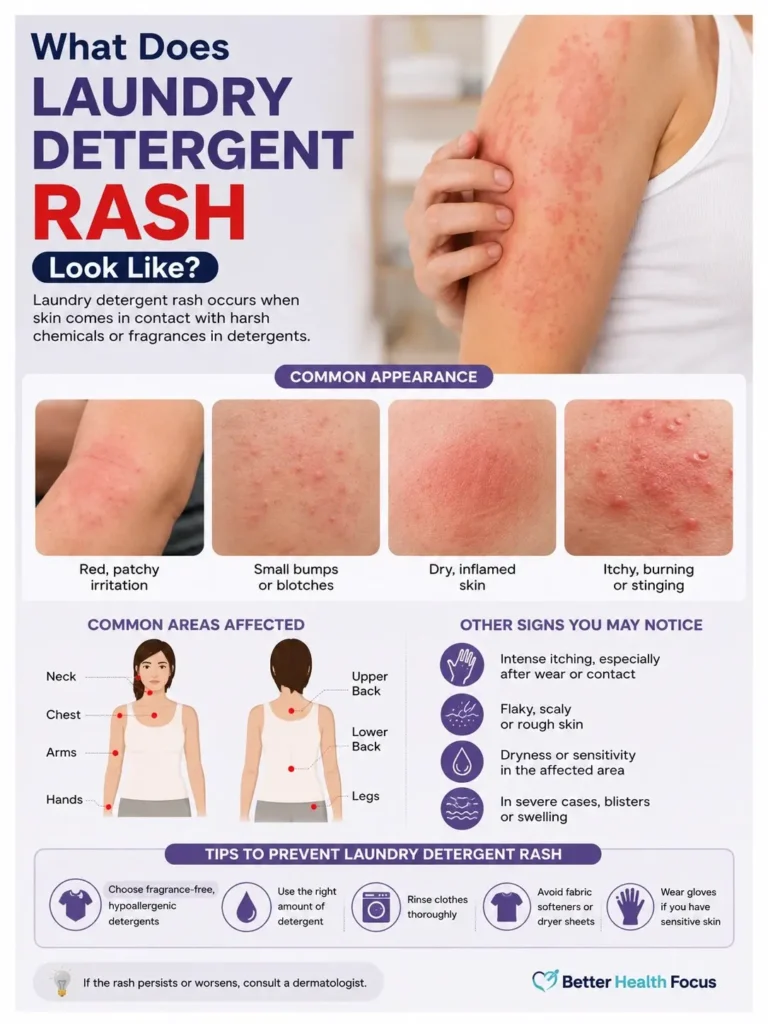
If you are dealing with a mystery skin issue, figuring out what it looks like is the very first step to solving it. A rash caused by laundry detergent usually develops right in the areas where your clothing fits the tightest against your body, like around your waistline, under your arms, behind your knees, or right where your socks grip your ankles.
If you search for laundry detergent rash pictures on the internet, you will usually see a few highly consistent symptoms. The affected skin typically appears:
- Red, angry, and noticeably inflamed
- Covered in small, raised red bumps that look a bit like hives
- Dry, scaly, or flaky, especially if the rash has been lingering for a few days
- Intensely itchy, burning, or tender to the touch
In more severe cases, or if you scratch the area repeatedly, the skin might even develop small blisters that can ooze clear fluid or crust over.
When comparing a rash from a rash guard with a skin rash caused by laundry detergent, the location of the irritation is often the biggest clue. A rash from a rash guard usually appears where the fabric rubs against the skin, while a detergent-related rash often matches the outline of clothing such as a sports bra, waistband, collar, or underwear.
What Causes a Laundry Detergent Rash?
Detergents are very complex chemical mixtures designed to pull stubborn dirt, grease, and sweat out of thick fabric. While they clean our clothes easily, the same strong ingredients can be harsh on our skin.
A skin rash from detergent is rarely caused by the actual cleaning soap itself but by the extra chemical additives mixed into the modern formulas. The most common culprits that cause skin issues are:
- Fragrances
According to the Food and Drug Administration (FDA), artificial fragrances are the absolute number one cause of allergic skin reactions in consumer cosmetic and cleaning products. Even products labeled as “unscented” can contain masking fragrances designed to cover up raw chemical smells.
- Dyes
Artificial colors are added to detergents to make the liquid look blue, green, or appealing in the bottle. They offer zero actual cleaning power but are notorious for triggering skin irritation.
- Surfactants
These are the active chemicals that loosen dirt and oil so they can be washed away in the water. However, they can also aggressively strip the natural, healthy moisturizing oils right off your skin barrier.
- Preservatives and Parabens
These are added to extend the shelf life of the liquid detergent so it can sit in a warehouse, but they are known sensitizers that can trigger immune responses over time.
- Enzymes
Added to heavy-duty detergents to break down tough organic stains (like blood, sweat, or grass), enzymes can sometimes break down the natural proteins in your skin if the clothes are not rinsed thoroughly enough in the wash.
Laundry Detergent Rash vs Eczema
Because they both look too similar, people often mistake detergent rash for eczema (atopic dermatitis) because both cause itching and red skin. However, their cause, triggers, and treatments are completely different.
| Feature | Laundry Detergent Rash | Eczema |
| Primary Cause | External trigger (harsh chemicals, fragrances, dyes). | Internal trigger (genetics, immune system, stress, weather). |
| Location on Body | Specifically where clothing touches, rubs, or grips the skin tightly. | Often found in the creases of elbows, backs of knees, and the face or hands. |
| Duration | Clears up within weeks once the offending detergent is removed. | A chronic, lifelong condition that flares up and calms down repeatedly. |
| Visual Appearance | Bright redness, raised bumps, and clear borders matching clothing lines. | Thickened, rough, and leather-like skin resulting from long-term inflammation. |
Laundry Detergent Rash vs Heat Rash
Another commonly mistaken rash is heat rash. Especially during the hot, sticky summer months, people get confused between detergent rash and heat rash (medically known as miliaria).
| Feature | Laundry Detergent Rash | Heat Rash |
| Root Cause | A chemical reaction happening on the skin’s surface. | Blocked sweat ducts trapping natural sweat under the skin. |
| Common Triggers | Putting on freshly washed, chemical-laden clothing. | Hot weather, heavy sweating, humidity, and intense exercise. |
| Visual Appearance | Widespread redness, flaking, or raised itchy welts. | Tiny, pinpoint red bumps or small, clear, fluid-filled blisters. |
| Best Treatment | Removing the chemical, washing the skin, and applying anti-itch creams. | Cooling the skin down, wearing loose clothing, and letting the sweat dry. |
How to Treat a Laundry Detergent Rash
Now that you know symptoms and causes, and you have a rash from laundry detergent, your main concern right now is to calm down the inflammation and stop the itching so your skin can finally start healing.
Here are some highly effective ways to treat contact dermatitis at home:
- Remove the Trigger Immediately
As soon as you notice the rash, wash off any detergent residue. Take a lukewarm shower and gently cleanse the skin with water. Then strip all clothing and bedding that may contain the detergent and launder those items again using a gentle, hypoallergenic detergent (fragrance- and dye-free) and double-rinse them. This ensures any leftover soap is removed.
- Apply a Cold Compress
Soak a clean, soft towel in cool water and squeeze until there is no dripping, and cover your rashes with it. The cool temperature naturally constrains your blood vessels, which helps to reduce painful swelling and the sensation of itching. Leave it on for 10-20 minutes and repeat this a few more times a day.
- Use Over-the-Counter Creams
You can easily get over-the-counter creams like hydrocortisone. Apply it directly to the rash. Corticosteroids actively fight inflammation at a cellular level. In addition, a thick layer of calamine lotion can provide wonderful cooling and soothing effects that prevent scratching your skin.
- Take an Antihistamine
Even after doing the previously mentioned steps, if itching is causing you too much discomfort and keeping you awake at night, you can take an antihistamine. These over-the-counter medicines can calm down your body’s allergic response from the inside out. But remember that some antihistamines can make you drowsy, so it is best to take them before going to bed.
- Soothe with an Oatmeal Bath
For a very long time, people used colloidal oatmeal to treat inflamed, angry skin. It helps your skin hold in natural moisture while easing inflammation. Prepare an oatmeal bath and soak your whole body for 15-20 minutes. It will help you lower discomfort significantly.
How Long Does Detergent Rash Take to Heal?
The time to heal depends on how quickly you identify and remove the cause. Once you stop wearing the clothes washed in that specific harsh detergent and do gentle skin care, a mild irritant rash usually starts to fade and clear up within a few days.
However, if you are dealing with a true allergic reaction, the rash can be much more stubborn. According to the CDC, an allergic reaction can take anywhere from two to four weeks to heal completely, even after you have successfully removed the trigger from your environment. Being patient and consistently applying your soothing creams is the key during this waiting period.
How to Prevent a Laundry Detergent Rash
Treating the rash is only half the battle. Preventing it is also very important. It is mostly about avoiding the irritating ingredients. Switch to a gentle, hypoallergenic detergent designed for sensitive skin.
Here are a few very simple, yet highly effective, changes to your weekly laundry routine to prevent rashes:
- Switch to a Hypoallergenic Detergent
Buy detergents that are specifically labeled as “free and clear.” This means they are completely free of the harsh dyes and artificial fragrance that might cause many types of skin issues.
- Run an Extra Rinse Cycle
Modern washing machines that come with high efficiency are great for our environment, but they use very little water. This sometimes leaves thick soap or detergent residues on the clothes, which might cause rashes. That’s why rinsing them again in your washing process can help to make sure all chemical residues are eliminated completely.
- Use Less Detergent
One common mistake people make is using too much detergent. Modern-day detergents are highly concentrated, and using too much can make it harder to rinse them out. That’s why you should always follow the instructions given on the detergents to avoid leaving chemical residues on the clothes.
- Clean Your Washing Machine
Daily washing can lead to a buildup of detergent in your washing machine. That’s why you should try to clean your washing machine once a month. Use hot water with two cups of plain vinegar to clean and keep your machine chemical-free.
- Skip the Fabric Softeners and Dryer Sheets
These products are the main culprits, which leave a thin layer of chemical on your clothes to make them feel softer to the touch. This is what then rubs on your skin all day and causes rashes. So swap these chemical-based products for natural products.
When Should You See a Doctor?
While most detergent rashes can be handled perfectly safely and effectively at home, there are certain times when you need professional medical treatment. You should immediately contact a dermatologist or your doctor if:
- The rash begins to release yellow pus and feels hot to the touch. These are common signs of a bacterial skin infection.
- The rash is spreading rapidly across your entire body.
- You develop a fever or chills alongside the rash.
- Your symptoms do not improve at all after two full weeks of home treatments.
- The itching is so severe that it is completely disrupting your sleep, your work, and your daily life.
The Bottom Line
Laundry detergent rash is incredibly frustrating, but the good news is it’s completely treatable. You can heal and prevent rashes by switching to fragrance-free detergent, skipping harsh fabric softeners, and adding an extra rinse cycle to your laundry routine.
However, if your skin rash from laundry detergent doesn’t get better even after a few weeks, definitely visit a doctor to get some further help. You deserve to feel totally comfortable in your favorite outfits again without worrying about rashes.
Frequently Asked Questions
Can laundry detergent cause eczema?
Laundry detergent doesn’t cause genetic eczema (atopic dermatitis), but it can trigger or worsen eczema symptoms. If you already have eczema-prone skin, the chemicals in soap can make the rash much worse. In fact, experts note that contact dermatitis (like from detergent) can worsen existing eczema.
Is a laundry-detergent rash transmissible?
No. The rash from laundry detergent is an irritant/allergic reaction on your skin. It’s not an infection or virus, which can be spread through contact. So there is no need to worry about spreading it to other people.
How do I know if the detergent is causing my rash?
A common method is an “elimination test.” In this, you wear natural-fiber clothes and avoid other old detergents and use mild, fragrance-free products. If the rash improves during that time, your original detergent was likely the problem. Another test is a simple patch test at home. In this, you have to mix a small amount of your detergent with water, apply it to a clean bandage, and tape it on your inner forearm for 24–48 hours. If redness or itching appears only under that patch, the detergent is likely to blame.
How to identify a rash caused by laundry detergent?
Detergent rash usually shows up after laundering clothes and often has sharp edges along seams. It follows clothing lines or only flares after wearing certain shirts. These are some common ways to identify them.
How long does it take for a laundry detergent rash to go away?
You might start to notice improvement within a week or two of removing the irritant. If your skin still looks red or itchy after 2–3 weeks with no exposure to the problem detergent, you should go to a doctor.
References & Sources
The American Academy of Dermatology

Olivia Reed
Women's Health & Skincare Writer
Better Health Focus
Expertise
Women's Health • Skincare • Hormonal Health • Beauty & Skin Science • Preventive Wellness • Healthy Aging • Nutrition for Skin Health • Lifestyle Medicine • Evidence-Based Health Education
About Olivia Reed
Olivia Reed is a Women's Health & Skincare Writer at Better Health Focus, where she creates evidence-based educational content focused on helping readers better understand women's wellness, hormonal health, skincare, healthy aging, and preventive self-care.
Her writing combines scientific research with practical lifestyle guidance, making complex health and skincare topics easy to understand without relying on misleading beauty trends or unrealistic health claims. Olivia Reed believes that informed readers make better health decisions, and she strives to present balanced information that reflects current scientific evidence.
Before publishing an article, Olivia Reed reviews guidance and research from respected organizations, including the National Institutes of Health (NIH), PubMed, the World Health Organization (WHO), the American Academy of Dermatology (AAD), the American College of Obstetricians and Gynecologists (ACOG), the Office on Women's Health (OWH), and peer-reviewed medical journals whenever applicable.
Her work regularly explores women's hormonal changes throughout different life stages, skincare science, acne, eczema, pigmentation, menopause, nutrition for healthy skin, reproductive wellness, hair health, and evidence-based approaches to beauty and preventive healthcare.
Olivia Reed is committed to separating scientific evidence from social media trends and marketing claims, helping readers understand what current research supports—and where evidence is still emerging.
Education
Bachelor of Arts (B.A.) in Health Communication
Professional Development
- Continuing education in Women's Health and Skin Science
- Ongoing study of dermatology research and preventive healthcare
- Regular review of peer-reviewed publications related to dermatology, endocrinology, nutrition, women's health, and public health
- Continuous monitoring of clinical guidance from leading medical organizations
Areas of Focus
- Women's Health
- Hormonal Health
- Menstrual & Reproductive Wellness
- Pregnancy & Postpartum Education
- Menopause & Healthy Aging
- Skincare & Dermatology Education
- Acne, Eczema & Sensitive Skin
- Hair & Scalp Health
- Nutrition for Healthy Skin
- Preventive Health & Lifestyle Medicine
Editorial Standards
Every article written by Olivia Reed Ward follows the editorial standards of Better Health Focus and is developed using reputable medical references and current scientific literature whenever available.
Her editorial approach emphasizes:
- Evidence-based health education
- Scientific accuracy
- Balanced discussion of benefits, risks, and research limitations
- Clear, accessible language for everyday readers
- Responsible reporting without exaggerated claims
- Alignment with Google E-E-A-T principles for health content
Rather than promoting miracle treatments or viral beauty trends, Olivia Reed focuses on practical, research-informed guidance that supports informed decision-making and long-term wellness.
Research Sources
Articles may reference information from organizations and databases such as:
- National Institutes of Health (NIH)
- PubMed
- World Health Organization (WHO)
- American Academy of Dermatology (AAD)
- American College of Obstetricians and Gynecologists (ACOG)
- Office on Women's Health (OWH)
- American Academy of Pediatrics (AAP)
- U.S. Food & Drug Administration (FDA)
- Peer-reviewed scientific journals
Editorial Disclaimer
The information published by Olivia Reed Ward on Better Health Focus is intended for educational and informational purposes only. It should not replace professional medical advice, diagnosis, or treatment. Readers should consult a qualified healthcare professional or dermatologist regarding personal medical concerns, medications, skincare treatments, or significant health decisions.