
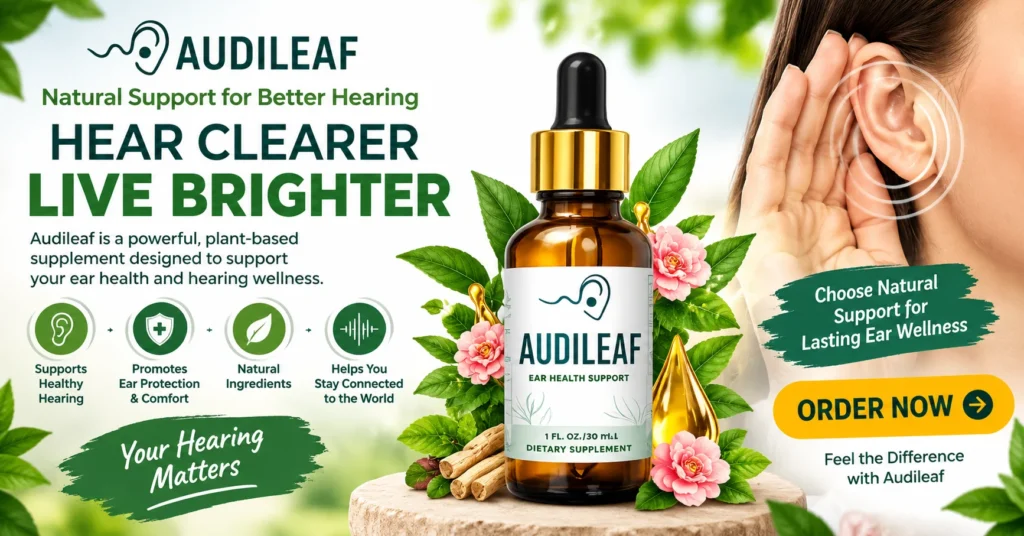
If you’ve been searching “AudiLeaf reviews,” you’ve probably noticed the same pattern we did: a lot of pages either read like a personal diary or like they were built purely to funnel you toward checkout. This one is neither. We pulled apart what’s actually in AudiLeaf, what the ingredient-level research does and doesn’t support, what it costs, and where the real trade-offs sit — so you can make a decision based on facts rather than a story.
Table of Contents
AudiLeaf | Quick Overview
| Product Type | Liquid dietary supplement (dropper bottle) for hearing wellness, ear comfort, and cognitive/nervous-system support |
| Natural Formula | Yes — a proprietary botanical and amino-acid blend, including Grape Seed Extract, Ginseng Root Extract, L-Arginine, GABA, Eleutherococcus Senticosus, Astragalus, Maca Root Extract, and Chromium Picolinate |
| Key Benefits | Positioned to support auditory nerve function, inner-ear circulation, reduced oxidative stress, and mental focus — see full breakdown below |
| Usage | Roughly 1 mL (about two dropperfuls) daily, taken straight or mixed into water |
| Customer Ratings | Independent, verified review volume is still limited for this newer formula — see the note below rather than a fabricated star score |
| Price | From $49/bottle on the 6-bottle package, up to $89/bottle on the 2-bottle package — see Pricing |
| Official Website | See current AudiLeaf offer |
What Is AudiLeaf?
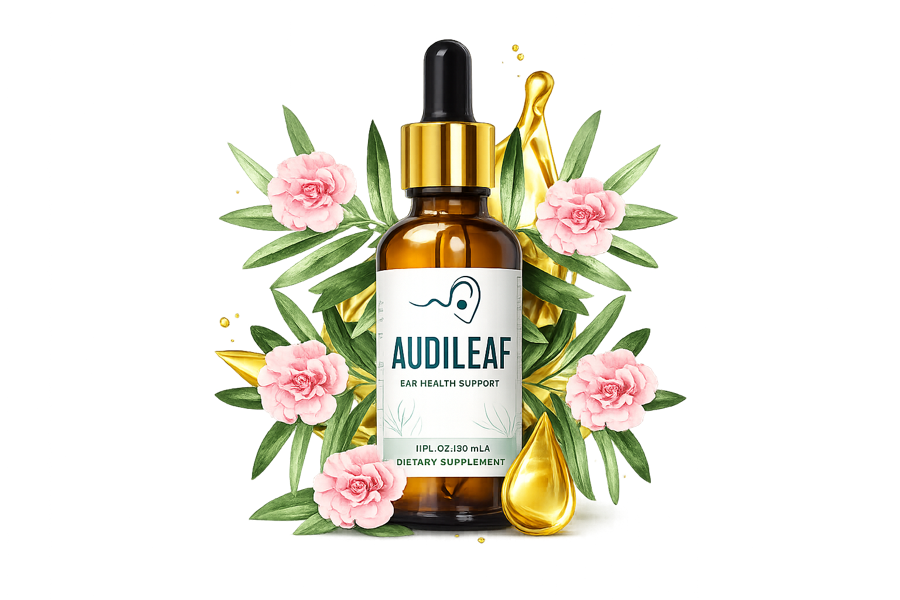
AudiLeaf is a liquid herbal supplement sold in dropper-bottle form and marketed for hearing clarity, inner-ear circulation, and calm auditory nerve function, with secondary claims around cognitive focus and nervous-system support. Instead of capsules, the formula is delivered as a small daily liquid dose — the brand’s stated reasoning is faster absorption than a pill has to digest through first.
At the center of the label is a proprietary blend, reported at roughly 200 mg, built from botanical extracts, an adaptogenic root or two, and a calming amino acid, alongside a small dose of Chromium Picolinate. It’s manufactured in an FDA-registered, GMP-certified facility in Aurora, Colorado, and sold directly through the official website rather than in stores.
As with any supplement in this category, it carries the standard FDA disclaimer: statements about it haven’t been evaluated by the FDA, and it isn’t intended to diagnose, treat, cure, or prevent hearing loss or any other medical condition. That framing matters — keep it in mind through the rest of this review.
Who AudiLeaf Is Actually Built For
AudiLeaf is aimed at adults noticing the everyday, gradual kind of auditory fatigue — asking people to repeat themselves more often, turning the TV up a notch every few months, feeling drained after a loud meeting or dinner — rather than adults managing a diagnosed hearing condition that needs clinical treatment.
It’s built for people who want a low-effort daily addition to their routine: a dropper of liquid in the morning, not a device fitting, a prescription, or a complicated regimen. It also tends to appeal to people who’d rather try a botanical, non-invasive option first and see how their body responds before considering anything more clinical.
What it’s explicitly not built to do is reverse diagnosed hearing loss, replace a hearing aid, or substitute for care from an audiologist or physician. If you have a diagnosed hearing condition, ringing that’s sudden or severe, or hearing loss confirmed by a professional, AudiLeaf is something to discuss with your doctor as a possible addition to care — not a replacement for it.
The Science Behind AudiLeaf
It’s worth separating what’s individually studied from what’s been proven about this specific formula, because those are two different claims and marketing copy tends to blur them together.
Circulation-focused ingredients. L-Arginine is an amino acid the body converts into nitric oxide, which plays a role in vasodilation — the widening of blood vessels. Grape Seed Extract and Green Tea Leaf Extract are both antioxidant botanicals that have been studied, in isolated form, for their role in supporting circulation and reducing oxidative stress at the cellular level. Some peer-reviewed nutrition literature has looked at grape seed proanthocyanidins specifically in relation to oxidative damage, though that research generally isn’t specific to inner-ear tissue.
Adaptogens. Ginseng Root Extract, Eleutherococcus Senticosus (Siberian Ginseng), and Maca Root Extract are all traditionally classified as adaptogens — herbs used to help the body manage stress and sustain energy. There’s a reasonable body of general adaptogen research, though again, it’s rarely specific to hearing or auditory pathways.
Calming amino acids. GABA is a neurotransmitter involved in calming nervous system activity, and it’s included here with the stated goal of supporting a relaxed response to background noise, rather than a stimulating effect.
The honest summary, consistent across the more careful third-party reviews of this product: several of AudiLeaf’s individual ingredients have research behind them at the ingredient level, at specific isolated dosages. No published clinical trial evaluating AudiLeaf as a finished, proprietary formula has been identified in publicly available sources. That’s typical for the entire liquid-supplement category — it isn’t unique to AudiLeaf — but it’s an important distinction from a product that’s undergone its own clinical testing.
AudiLeaf Ingredients
Rather than listing every name on the panel, it’s more useful to understand what role each ingredient group is meant to play.
Circulation and Antioxidant Support
L-Arginine, Grape Seed Extract, and Green Tea Leaf Extract form the circulation-and-oxidative-stress core of the formula, aimed at supporting healthy blood flow to the structures involved in hearing.
Adaptogenic and Energy Support
Ginseng Root Extract, Eleutherococcus Senticosus, Astragalus Membranaceus, and Maca Root Extract are included as traditional adaptogens, aimed at stamina, mental clarity, and resilience to everyday stress.
Nervous System Calm
GABA is included specifically to support a calm nervous system response, which the brand ties to reduced perceived background noise and listening fatigue.
Trace Mineral Support
A small amount of Chromium Picolinate (reported around 7 mcg) is included to support normal energy metabolism.
Benefits of AudiLeaf
Based on the formula’s stated design, here’s what AudiLeaf is built to support — framed as intent, not a guaranteed outcome:
- Inner-ear circulation support — L-Arginine, Grape Seed Extract, and Green Tea Extract are included to support healthy blood flow to auditory structures.
- Reduced oxidative stress — Antioxidant botanicals are aimed at protecting cells from everyday wear, a mechanism tied to age-related decline generally.
- Calmer response to background noise — GABA is positioned to support a relaxed nervous system rather than a heightened, fatigued one.
- Sustained mental energy — Adaptogens like Ginseng and Eleutherococcus are aimed at stamina and focus without a stimulant spike.
- Simple daily routine — A liquid dropper format that doesn’t require swallowing pills.
- Transparent-ish labeling — Ingredients are named on the panel, though the total blend is reported as a proprietary amount rather than individually dosed per ingredient.
- Low-risk trial period — A money-back guarantee window (see below) gives you a real opportunity to judge results before fully committing.
How Does It Work
AudiLeaf is designed for daily, cumulative use, not an on-demand product. The circulation-focused ingredients are meant to support blood flow to the inner ear consistently over time, rather than in a single dose. The adaptogenic and calming ingredients are aimed at addressing a less obvious contributor to hearing complaints: the mental and nervous-system fatigue that builds up from straining to hear in noisy environments day after day.
Because this is a liquid botanical blend rather than a pharmaceutical, any effect is going to build gradually rather than appear immediately. That’s a meaningful difference from a hearing aid or a prescription treatment, and it’s worth knowing going in so early expectations stay realistic.
How to Take This Supplement
The suggested use is straightforward: roughly 1 mL, about two dropperfuls, once daily — taken directly or mixed into water. There’s no loading phase or complicated schedule.
Because the formula is meant to work cumulatively, taking it at a consistent time — many people pair it with breakfast — makes it easier to stick with over the weeks it may take to notice anything. Some users report mild stomach discomfort when taking it on an empty stomach, which is a reasonable argument for pairing it with food rather than taking it first thing before eating.
Safety, Side Effects, and When to Check With a Doctor First
AudiLeaf is manufactured in an FDA-registered, GMP-certified facility, which is a baseline quality signal, though it doesn’t substitute for a conversation with your own doctor if any of the following applies to you.
Because several ingredients (L-Arginine, Grape Seed Extract, Ginseng, Astragalus) can influence circulation, anyone taking blood pressure medication, blood thinners, or blood sugar medication should talk to a doctor before starting, since interactions are possible even with “natural” ingredients. GABA and the adaptogenic botanicals are also worth flagging if you’re on any prescription medication affecting the nervous system.
Reported side effects across user accounts are generally mild — occasional stomach discomfort when taken on an empty stomach is the most commonly mentioned issue, and it typically resolves by taking the dose with food. As with any supplement, stop use and consult a doctor if you notice an adverse reaction. This product isn’t intended for children, or for pregnant or nursing women, without medical guidance.
What Realistic Results Look Like
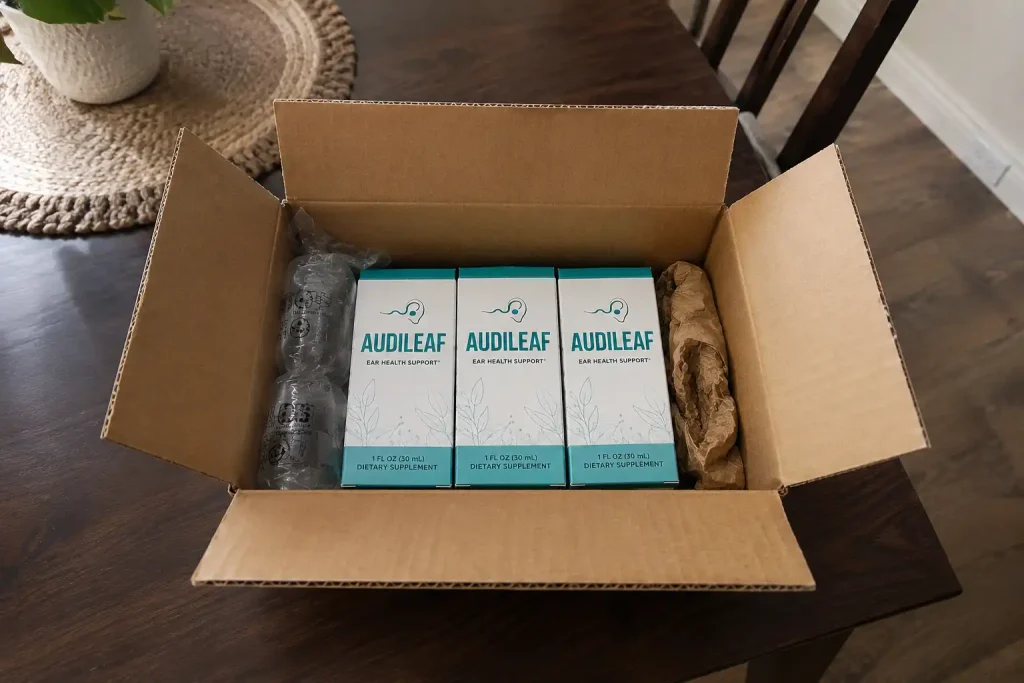
Because AudiLeaf is built around cumulative-acting botanicals rather than an instant mechanism, it’s reasonable to expect a gradual timeline rather than an overnight change.
Weeks 1–3: Typically an adjustment period. Effects, if any, tend to be subtle — slightly less mental drain by the end of long or noisy days, rather than a noticeable hearing change.
Weeks 4–8: This is where more consistent, noticeable shifts are commonly reported — fewer requests for people to repeat themselves, an easier time following conversations in background noise.
Weeks 9–12 and beyond: The fuller picture tends to build here, with the 60-day guarantee window (see below) acting as a reasonable checkpoint for deciding whether the product is worth continuing.
Individual results vary substantially depending on baseline hearing health, consistency of use, and factors outside the supplement entirely — overall cardiovascular health, noise exposure, and whether an underlying condition is present. A supplement doesn’t override those variables, and it won’t reverse diagnosed hearing loss.
What People Are Saying
Because AudiLeaf is a relatively new product, there isn’t yet a large, independently audited body of customer review data to draw from. Some individual reviewers have published detailed personal accounts describing reduced listening fatigue and easier conversation-following in noisy settings after two to three months of consistent daily use — but a single detailed account, however sincere, isn’t the same as verified aggregate data across a large customer base. We’re presenting that distinction plainly rather than dressing up one story as if it represents everyone’s experience.
Pricing and Bundles
AudiLeaf is sold in three package sizes directly through the official site:
- 2 bottles (30-day supply): around $89 per bottle, $178 total, plus shipping
- 3 bottles (90-day supply): around $72 per bottle, $216 total, free US shipping
- 6 bottles (180-day supply): around $49 per bottle, $294 total, free US shipping — the brand’s best-value tier
Since the formula is designed for cumulative, multi-month use, the 3- or 6-bottle options make more practical sense than a single bottle if you’re planning to give it a genuine, fair-length trial. Pricing and shipping terms can shift, so confirm current numbers on the official checkout page before ordering
👉 See current AudiLeaf pricing and availability
The Money-Back Guarantee
AudiLeaf is commonly backed by a 60-day money-back guarantee, without a requirement to ship bottles back to receive a refund, according to multiple third-party accounts — always confirm the exact current terms on the official order page, since guarantee policies can change. This is a meaningful trust signal: it gives you a real window to judge results through consistent use rather than a few days, and it shifts some of the financial risk off of you as the buyer.
If you do request a refund, keep your order confirmation and reach out to support with time to spare before the window closes.
Where to Buy It Safely
The only place we’d recommend ordering AudiLeaf is the official website. Buying direct means your order is covered by the stated guarantee, and it avoids the risk of counterfeit, expired, or relabeled product sometimes found on third-party marketplace listings. Legitimate checkout pages in this category use secure, encrypted payment processing — confirm that before entering payment details.
👉 Check AudiLeaf’s current bundle pricing
Is AudiLeaf Legit or Just Hype?
AudiLeaf checks several of the boxes that tend to separate a legitimate supplement from an obvious scam. It’s made in an FDA-registered, GMP-certified facility with a real, named manufacturing location, the ingredient panel is disclosed rather than hidden behind vague claims, and the marketing consistently uses “support” language rather than direct claims about curing hearing loss. A money-back guarantee without a mandatory bottle return is a genuine trust signal.
That said, “legitimate” doesn’t mean “clinically proven” or “guaranteed to work for you.” No published trial has evaluated the finished AudiLeaf formula itself, independent review volume is still thin, and — as with any supplement — individual results vary. The fair read is that this looks like a properly manufactured product with a plausible, ingredient-backed formula, but it’s not a substitute for medical evaluation of an actual hearing problem, and it deserves evidence-based expectations rather than hype-driven ones.
Pros and Cons
| Pros | Cons |
| Ingredient panel is disclosed on the label | No published clinical trial on the finished formula itself |
| Made in an FDA-registered, GMP-certified US facility | Total blend is reported as a proprietary amount, not individually dosed per ingredient |
| Liquid dropper format, no pills to swallow | Newer brand — independent, verified review volume is still limited |
| 60-day money-back guarantee, commonly without return shipping required | Contains circulation-active ingredients — a consideration if you’re on blood pressure or blood thinning medication |
| No subscription/auto-billing reported by reviewers | Not a treatment for diagnosed hearing loss or ear conditions |
| Multiple ingredients have individual-level research support | Effects are gradual — not built for immediate results |
| Sold direct, reducing counterfeit risk | Only available through the official website, not retail stores |
Best Fit For / Probably Not Ideal If
AudiLeaf is a reasonable fit if you:
- Want a non-invasive, daily-use option to support general hearing wellness and listening comfort
- Are comfortable giving a botanical liquid formula a full 60-plus days before judging results
- Value ingredient-level transparency and a real guarantee over aggressive marketing claims
- Don’t have a diagnosed hearing condition that needs clinical or audiological treatment
It’s probably not the right fit if you:
- Have diagnosed hearing loss and are looking for a replacement for hearing aids or medical treatment
- Want a fast-acting solution rather than a gradual, cumulative one
- Are on blood pressure, blood thinner, or blood sugar medication and haven’t cleared it with a doctor
- Aren’t likely to take a liquid supplement consistently for two to three months
Frequently Asked Questions
How soon will I notice a difference?
Most accounts describe minimal change in the first few weeks, with more noticeable shifts — like less listening fatigue — commonly reported between weeks four and eight, and a fuller picture building through 90 days of consistent use.
Is AudiLeaf safe with other medications?
Talk to your doctor first, especially if you take blood pressure, blood thinner, or blood sugar medication, since several ingredients are included specifically for their circulatory effects.
Will AudiLeaf treat hearing loss?
No. It’s a dietary supplement intended to support general ear and circulatory wellness, not a treatment for diagnosed hearing loss. Anyone with a diagnosed condition should continue working with an audiologist or physician.
Is this a subscription?
Multiple third-party accounts describe it as a one-time purchase without auto-billing, but confirm current checkout terms on the official site before ordering, since policies can change.
What happens if it doesn’t work for me?
You’re commonly covered by a 60-day money-back guarantee — confirm the current terms and return/refund process on the official order page.
Are there side effects?
Reported side effects are generally mild, with occasional stomach discomfort on an empty stomach being the most cited issue, typically resolved by taking it with food. Consult a doctor if you experience anything more significant.
The Bottom Line
AudiLeaf isn’t positioned as a cure for hearing loss, and that restraint is actually a point in its favor. It’s a liquid, botanically formulated daily supplement built around circulation, antioxidant protection, and nervous-system calm — aimed at everyday listening fatigue rather than a medical condition.
If you have diagnosed hearing loss or a real ear condition, that’s a conversation for an audiologist or physician, not a supplement bottle. Outside of that, AudiLeaf is a reasonable, lower-risk option for anyone curious about a gradual, botanical approach to everyday hearing comfort — especially with a money-back guarantee acting as a safety net while you find out if it works for you.
👉 Get the current AudiLeaf offer
Reference and Source
PubMed/NIH studies on individual ingredients (e.g., a study on L-Arginine and nitric oxide, or Grape Seed Extract and oxidative stress)
Mayo Clinic, NIH, or NCCIH pages on hearing health or a specific herb
The FDA’s dietary supplement disclaimer page

Better Health Focus Team
Health, Wellness & Supplement Research Team
The Better Health Focus Team researches and reviews health, wellness, nutrition, and dietary supplement products. Our goal is to provide readers with clear, practical, and research-informed information before they make a purchasing decision.
Our reviews examine product ingredients, potential benefits, usage instructions, available scientific research, customer feedback, pricing, refund policies, and manufacturer claims. We also look at potential limitations and highlight claims that may require additional evidence.
We believe supplement information should be presented realistically—not through exaggerated promises. Where scientific evidence is limited or conflicting, we make that clear so readers can make more informed decisions.
Areas We Cover:
Dietary Supplement Reviews
Nutrition & Wellness
Ingredient Research
Product Benefits & Potential Side Effects
Customer Reviews & Complaints
Pricing & Money-Back Policies
Evidence-Based Health Information
Editorial Approach: Our content is based on information available from reputable scientific, government, manufacturer, and consumer sources. Supplement reviews are informational and should not replace advice from a qualified healthcare professional.
Affiliate Disclosure: Some articles may contain affiliate links. If a reader purchases a product through one of these links, Better Health Focus may receive a commission at no additional cost to the reader. This does not determine how we evaluate or describe products.