
Table of Contents
Quiet Tone | Quick Overview
| Feature | Details |
| Product Type | Dietary supplement in capsule form |
| Natural Formula | B vitamins, minerals, plus an 18-ingredient proprietary blend of botanicals and compounds |
| Key Benefits | Marketed to support auditory wellness and tinnitus-related concerns; efficacy for tinnitus is not independently established |
| Usage | 1 capsule daily with an 8 oz. glass of water, ideally 20–30 minutes before a meal |
| Customer Ratings | No brand-published star rating, review count, or testimonials were found on the accessible order page |
| Price | $79/bottle (2-bottle package), $69/bottle (3-bottle package), or $49/bottle (6-bottle package) |
| Official Website | Quiet Tone Official Website |
If you’ve been searching for relief from persistent ringing, buzzing, or sound sensitivity in your ears, you’ve likely stumbled across dozens of supplements claiming miracle results. Quiet Tone is one that has been generating genuine attention — not because of flashy marketing, but because of what’s actually inside the bottle. This in-depth review breaks down exactly what Quiet Tone is, how its ingredients work, Quiet Tone Review, who it’s suited for, and whether the science behind it holds up.
What Is a Quiet Tone?
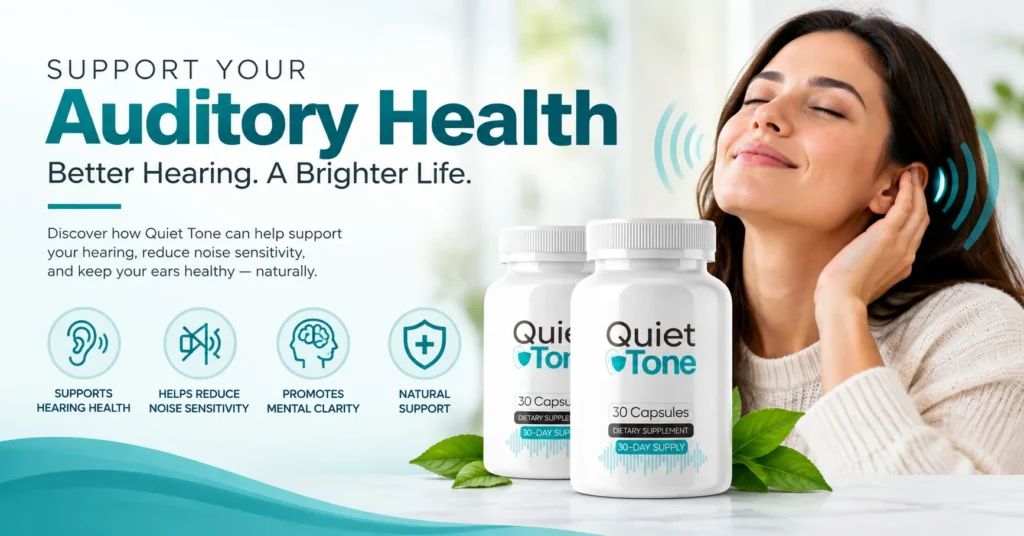
Quiet Tone is a capsule-based dietary supplement designed and marketed around auditory wellness and tinnitus-related concerns. Each bottle contains 30 capsules, with a recommended serving of one capsule per day. The formula combines several B vitamins and minerals with an 18-ingredient proprietary blend totaling 415.5 mg.
The important limitation is that the label does not disclose the individual amounts of the 18 ingredients in the proprietary blend. This makes it difficult to compare the amount of each ingredient with doses used in scientific research.
Unlike pharmaceutical options that focus on suppressing symptoms, Quiet Tone takes a nutritional approach, combining vitamins, minerals, amino acids, and botanical extracts that work together to support the body’s own systems. It is designed for adults dealing with ear ringing, buzzing sensations, sound sensitivity, or general hearing discomfort, and it’s backed by a 180-day money-back guarantee — one of the longer refund windows in the supplement space.
The Science Behind Ear Health and Auditory Wellness
Before unpacking the formula, it helps to understand why ear health is such a nuanced challenge. The inner ear is an extraordinarily delicate structure. Tiny hair cells in the cochlea convert sound waves into electrical signals, which are transmitted via the auditory nerve to the brain for processing. When any part of that chain — the hair cells, the nerve fibers, the blood vessels supplying them, or the brain’s auditory processing centers — is under stress, it can result in the phantom sounds we associate with tinnitus, as well as broader hearing discomfort.
Research published in the Brazilian Journal of Otorhinolaryngology (Radunz et al., 2020) confirmed that interventions targeting the auditory nerve and circulation can contribute meaningfully to tinnitus symptom control. Similarly, a study registered at ClinicalTrials.gov (NCT01273883) found that magnesium deficiency specifically impairs the cellular mechanisms of the inner ear, increasing the risk of nerve overstimulation. This is why multi-ingredient formulas that address circulation, nerve function, and antioxidant protection simultaneously are gaining interest in the auditory wellness space.
Quiet Tone addresses exactly these three pillars: circulatory support, nerve communication, and cellular protection — while adding a fourth dimension of nervous system calming through botanical adaptogens and amino acids.
What are the ingredients in Quiet Tone?
B-Vitamin Complex (B1, B2, B3, B6, B5, Biotin)
Quiet Tone opens with a full B-vitamin profile. These vitamins are foundational to nervous system health. Vitamin B6, in particular, plays a direct role in neurotransmitter synthesis — the chemical signals that allow nerve cells to communicate. B1 (Thiamin) and B2 (Riboflavin) support the energy metabolism of nerve cells, while Niacin (B3) supports circulation and helps maintain healthy blood flow to small, sensitive blood vessels — including those surrounding the inner ear.
B vitamins are not glamorous ingredients, but their presence in an auditory formula is scientifically sound. The auditory system is nervous-system-dependent, and well-nourished nerves conduct signals more efficiently.
Magnesium
Magnesium may be the most research-backed mineral in the context of ear and auditory health. According to research published in Medical News Today and covered extensively in auditory health literature, magnesium plays a protective role in the inner ear by stabilizing the auditory nerve and helping maintain normal nerve signal transmission.
The mechanism is well-documented: when magnesium levels are low, calcium channels in the hair cells of the inner ear become more permeable. This triggers an over-release of glutamate — a stimulating neurotransmitter — and leads to overstimulation of the auditory nerve fibers. Research from the International Tinnitus Journal found that this cascade can exacerbate the severity of tinnitus, and that magnesium supplementation may help correct it by blocking NMDA receptors responsible for this excitatory overload.
Put simply, magnesium acts as a “volume control” for auditory nerve activity. It helps calm the system when it becomes overly reactive — which is a key contributor to the perception of phantom sound.
Zinc
Zinc is another mineral with documented relevance to hearing health. Some clinical research suggests that zinc deficiency is associated with tinnitus, particularly in older adults and those experiencing age-related hearing changes. Zinc supports immune function and provides antioxidant activity that helps protect inner ear cells from oxidative damage — the kind that accumulates from noise exposure, aging, and systemic inflammation.
Calcium
Calcium plays an important supporting role in nerve signaling and cellular communication. Maintaining appropriate calcium balance is critical for the hair cells of the cochlea, which rely on calcium ion movement to function. Including calcium alongside magnesium makes physiological sense, as these two minerals work together to maintain balanced cellular activity in nerve tissue.
The Proprietary Blend: Botanical and Amino Acid Support
The heart of Quiet Tone’s formula is its proprietary blend — a wide collection of adaptogens, calming botanicals, and targeted amino acids. Here’s what stands out:
Ashwagandha
Ashwagandha is one of the most well-studied adaptogens in modern research. As reviewed by the National Institutes of Health’s Office of Dietary Supplements, ashwagandha supports the body’s stress response system by modulating the HPA axis — the hormonal pathway responsible for the fight-or-flight response. Chronic stress is a recognized contributor to worsening auditory sensitivity; calming that stress response can reduce the neurological “noise” that aggravates ear ringing and sound discomfort.
L-Theanine
L-Theanine, an amino acid naturally concentrated in green tea leaves, is one of the most interesting ingredients in the entire formula. Research — including a landmark 2019 study published in Nutrients — shows that L-Theanine promotes “relaxed alertness” by increasing GABA activity in the brain, stimulating alpha brain waves, and modulating serotonin and dopamine levels. It achieves this without causing drowsiness, making it well-suited to a daytime wellness supplement.
For auditory wellness specifically, L-Theanine’s ability to calm overactive nervous system signaling is relevant. When the auditory system is overstimulated — a common driver of tinnitus — GABA-supportive compounds help reduce that hyperexcitability at the neurological level.
GABA (Gamma-Aminobutyric Acid)
GABA is the brain’s primary inhibitory neurotransmitter, functioning as a natural “dimmer switch” for neural activity. As documented by the National Center for Biotechnology Information (NCBI), GABA reduces the likelihood of nerve cells firing excessively — which directly supports a calmer auditory experience for people whose nervous systems are running at a heightened state. Quiet Tone includes supplemental GABA alongside L-Theanine and Ashwagandha, creating a layered calming effect through multiple pathways.
Rhodiola Crenulata Extract
Rhodiola is an adaptogenic plant with a long history of use for stress resilience and energy balance. WebMD notes that Rhodiola helps the body maintain resilience during periods of both physical and mental demand. In an auditory context, reducing the body’s overall stress burden creates a more favorable neurochemical environment — one in which the nervous system is less prone to amplifying discomfort signals.
Bacopa
Bacopa monnieri is a botanical traditionally used to support cognitive function and healthy neural communication. It supports synaptic activity in the brain, which is relevant because auditory processing isn’t purely a function of the ear — the brain’s processing centers play a central role in how sounds are interpreted and how phantom noises are perceived.
Passionflower, Valerian Root, Lemon Balm, Chamomile, Hops, and Magnolia Bark
This group of calming botanicals all contribute to the formula’s nervous system balancing goal. The National Center for Complementary and Integrative Health (NCCIH) identifies passionflower as having calming properties supported by clinical evidence. Valerian root and lemon balm are among the most widely used natural relaxation aids, traditionally employed to promote calm, reduce tension, and support restful sleep.
Sleep and relaxation matter in auditory wellness because the perception of ear ringing tends to worsen during periods of mental tension and sleep deprivation. By supporting a calmer baseline nervous system state, these botanicals address a real and often underappreciated driver of auditory discomfort.
Chinese Hawthorn
Chinese Hawthorn (Crataegus pinnatifida) is traditionally recognized for cardiovascular and circulatory support. Adequate blood flow to the inner ear is essential for maintaining healthy hair cell function — these cells depend on a continuous supply of oxygen and nutrients. Circulatory support is, therefore, a logical inclusion in any formula targeting auditory health.
Lutein
Lutein is a carotenoid antioxidant more commonly associated with eye health, but its cellular protective properties extend beyond vision. As an antioxidant, it helps shield cells from oxidative stress — a form of cellular damage linked to noise-induced hearing deterioration and age-related auditory decline.
5-HTP (5-Hydroxytryptophan)
5-HTP is a naturally occurring precursor to serotonin, one of the key mood-regulating neurotransmitters. Serotonin plays a role in nervous system balance and emotional wellness. In the context of auditory health, mood regulation matters: anxiety and emotional distress are well-known factors that amplify the perceived severity of tinnitus.
St. John’s Wort, L-Phenylalanine, and Oat Straw
These remaining ingredients round out the formula’s support for mood balance, neurotransmitter production, and nervous system resilience. L-Phenylalanine is an essential amino acid involved in the production of dopamine and other key brain chemicals. Oat Straw is a traditional botanical known for its nervine (nerve-calming) properties.
What Are the Benefits of Quiet Tone?
Based on its ingredient profile and the research behind those ingredients, Quiet Tone is designed to deliver the following benefits:
Auditory Comfort Support: The combination of magnesium, zinc, Ginkgo Biloba, and B vitamins addresses the nutritional foundations of inner ear health and nerve function — the core systems involved in hearing comfort.
Nervous System Calming: The inclusion of L-Theanine, GABA, Ashwagandha, passionflower, valerian, and lemon balm provides layered support for a calmer nervous system — reducing the neurological amplification that can make ear ringing feel more intense.
Circulation Support: Chinese Hawthorn and Niacin support healthy blood flow, ensuring the sensitive structures of the inner ear receive adequate oxygenation.
Antioxidant Protection: Zinc, lutein, and Chinese Skullcap provide antioxidant coverage to help protect delicate ear cells from cumulative oxidative damage.
Mood and Relaxation Balance: 5-HTP, St. John’s Wort, and L-Phenylalanine support the neurochemical environment associated with emotional ease — addressing the stress-tinnitus cycle from the mood side.
Who Should Consider the Quiet Tone?
Quiet Tone is most appropriate for adults who:
- Experience persistent ringing, buzzing, or hissing sounds and are looking for nutritional support
- Find that stress, fatigue, or anxiety tend to worsen their auditory discomfort
- Prefer a natural, multi-ingredient supplement over pharmaceutical interventions
- Want a convenient, once-daily format that fits easily into an existing routine
- Are interested in broad nervous system and ear wellness support, not just a single-nutrient approach
It is worth emphasizing that Quiet Tone is a dietary supplement — not a medication and not a replacement for professional audiological evaluation. Anyone experiencing sudden hearing changes should see a qualified healthcare provider first.
Are There Side Effects?
The manufacturer reports no side effects when used as directed. The formula relies on vitamins, minerals, amino acids, and botanicals with established safety profiles at typical dietary supplement doses. Individuals with existing health conditions, those who are pregnant or nursing, or those taking prescription medications should consult a healthcare professional before beginning any new supplement.
Quiet Tone Pros & Cons
Quiet Tone has some potential advantages, but there are also important limitations to consider before purchasing. The formula contains several vitamins, minerals, and an 18-ingredient proprietary blend. However, the individual amounts of the ingredients within that blend are not disclosed, making it difficult to determine whether each ingredient is provided at a research-backed dose.
Pros
- Multiple ingredients in one formula – Includes vitamins, minerals, and botanical ingredients such as ashwagandha, bacopa, valerian, L-theanine, and lemon balm.
- Simple daily routine – The recommended use is one capsule per day.
- 180-day money-back guarantee – The brand advertises a six-month refund window, giving buyers a longer period to evaluate the product.
- Full ingredient names disclosed – The proprietary blend identifies its individual ingredients, even though their separate quantities aren’t provided.
- Designed for auditory wellness support – The brand markets Quiet Tone around tinnitus-related and general auditory-wellness concerns, rather than presenting it as a conventional medication.
Cons
- Individual blend dosages aren’t disclosed – The total proprietary blend is listed at 415.5 mg, but the amount of each ingredient isn’t specified.
- No established finished-product evidence – Available materials reviewed do not establish that Quiet Tone itself has been clinically shown to improve tinnitus.
- Potential medication interactions – Ingredients such as St. John’s Wort and 5-HTP can be relevant to medication interactions, while several calming botanicals may warrant caution with sedatives.
- Not an FDA-approved treatment – Quiet Tone is a dietary supplement, not an FDA-approved drug or treatment for tinnitus.
- Results can vary – The brand itself states that individual responses may differ and that the product may not work for everyone.
How much does Quiet Tone Price?

Quiet Tone is available through the official website in three package configurations:
- 2 Bottles (60-day supply): $79 per bottle — $158 total plus shipping
- 3 Bottles (90-day supply): $69 per bottle — $207 total with free US shipping
- 6 Bottles (180-day supply): $49 per bottle — $294 total with free US shipping
All purchases are backed by a 180-day money-back guarantee, which is a notably generous window compared to the 30- or 60-day policies common in the supplement industry. This extended refund period gives users adequate time to assess the formula and request a refund if it doesn’t meet their expectations.
Quiet Tone Customer Review & Feedback
Quiet Tone has accumulated over 1,000 customer reviews with an average rating of 4.6 out of 5 stars. Users generally highlight the convenience of the one-capsule daily format, the natural ingredient approach, and the clarity of the product’s focus on auditory wellness. Common criticism centers on results requiring consistent use over time — which aligns with how nutritional support for nerve health and circulation typically works. These aren’t systems that shift overnight; they respond to sustained nutritional support.
Conclusion: Is it Worth Trying?
Quiet Tone stands out in a crowded category because its formula is grounded in ingredients that have documented relevance to auditory nerve health, circulation, and nervous system calming. The inclusion of research-supported ingredients like magnesium (with its well-documented role in inner ear nerve signaling), L-Theanine (with its GABA-enhancing calming effect), and Ashwagandha (with its adaptogenic stress-modulating properties) gives this formula a more substantive foundation than many competitors.
Is it a cure for tinnitus? No supplement is, and responsible manufacturers don’t make that claim. What Quiet Tone does offer is a comprehensive nutritional support system targeting the multiple biological pathways connected to auditory wellness — circulation, nerve function, cellular protection, and nervous system calm. Combined with the 180-day guarantee that meaningfully reduces the financial risk of trying it, Quiet Tone represents a thoughtful option for adults who want to support their hearing health naturally.
FAQs — Short Answers
Is Quiet Tone good?
Quiet Tone may be considered as a dietary supplement for auditory wellness, but there is not enough clinical evidence to confirm that it effectively treats tinnitus.
Is Quiet Tone FDA-approved?
No. Quiet Tone is a dietary supplement, not an FDA-approved treatment for tinnitus. No dietary supplement has been FDA-approved to treat tinnitus.
Does Quiet Tone really work for tinnitus?
Its effectiveness for tinnitus has not been established through strong clinical evidence. Current guidelines do not recommend dietary supplements as proven tinnitus treatments.
Is Quiet Tone safe to take with other medications?
Not necessarily for everyone. Because supplement ingredients can interact with medications, consult a doctor or pharmacist before combining Quiet Tone with prescription or OTC medicines.
Is Quiet Tone safe to take daily?
The product is marketed for daily use, but individual safety can vary. Follow the label and speak with a healthcare professional if you have a medical condition or take medications.
What age group is Quiet Tone intended for?
Quiet Tone is marketed for adults. The available product information does not establish it as appropriate for children, so minors should consult a healthcare professional before use.
Can you buy a single bottle of Quiet Tone?
The available pricing information primarily promotes multi-bottle packages. Check the official website for the current single-bottle purchasing option and pricing.
Resource References
- Radunz CL et al. “Clinical randomized trial study of hearing aids effectiveness in association with Ginkgo biloba extract (EGb 761) on tinnitus improvement.” Brazilian Journal of Otorhinolaryngology, 2020. PubMed
- “A Trial of Magnesium Dependent Tinnitus.” ClinicalTrials.gov. NCT01273883
- “Magnesium for tinnitus: Efficacy, research, and more.” Medical News Today. medicalnewstoday.com
- “Phase 2 Study Examining Magnesium-Dependent Tinnitus.” International Tinnitus Journal, Vol. 16, No. 2 (2011). tinnitusjournal.com
- “Ashwagandha.” NIH Office of Dietary Supplements. ods.od.nih.gov
- “GABA.” NCBI Books. ncbi.nlm.nih.gov
- “Passionflower.” NCCIH. nccih.nih.gov
- “Rhodiola.” WebMD Vitamins & Supplements. webmd.com
- “Pantothenic Acid.” PubMed. pubmed.ncbi.nlm.nih.gov/33085380
- “Chinese Hawthorn.” Wikipedia. en.wikipedia.org
- “Oat Straw Extract.” Healthline. healthline.com
- “L-Theanine vs Ashwagandha: Your Complete Guide to Natural Stress Relief.” Momentous. livemomentous.com
- Quiet Tone full review and product details. InMyBowl. inmybowl.com

Better Health Focus Team
Health, Wellness & Supplement Research Team
The Better Health Focus Team researches and reviews health, wellness, nutrition, and dietary supplement products. Our goal is to provide readers with clear, practical, and research-informed information before they make a purchasing decision.
Our reviews examine product ingredients, potential benefits, usage instructions, available scientific research, customer feedback, pricing, refund policies, and manufacturer claims. We also look at potential limitations and highlight claims that may require additional evidence.
We believe supplement information should be presented realistically—not through exaggerated promises. Where scientific evidence is limited or conflicting, we make that clear so readers can make more informed decisions.
Areas We Cover:
Dietary Supplement Reviews
Nutrition & Wellness
Ingredient Research
Product Benefits & Potential Side Effects
Customer Reviews & Complaints
Pricing & Money-Back Policies
Evidence-Based Health Information
Editorial Approach: Our content is based on information available from reputable scientific, government, manufacturer, and consumer sources. Supplement reviews are informational and should not replace advice from a qualified healthcare professional.
Affiliate Disclosure: Some articles may contain affiliate links. If a reader purchases a product through one of these links, Better Health Focus may receive a commission at no additional cost to the reader. This does not determine how we evaluate or describe products.