
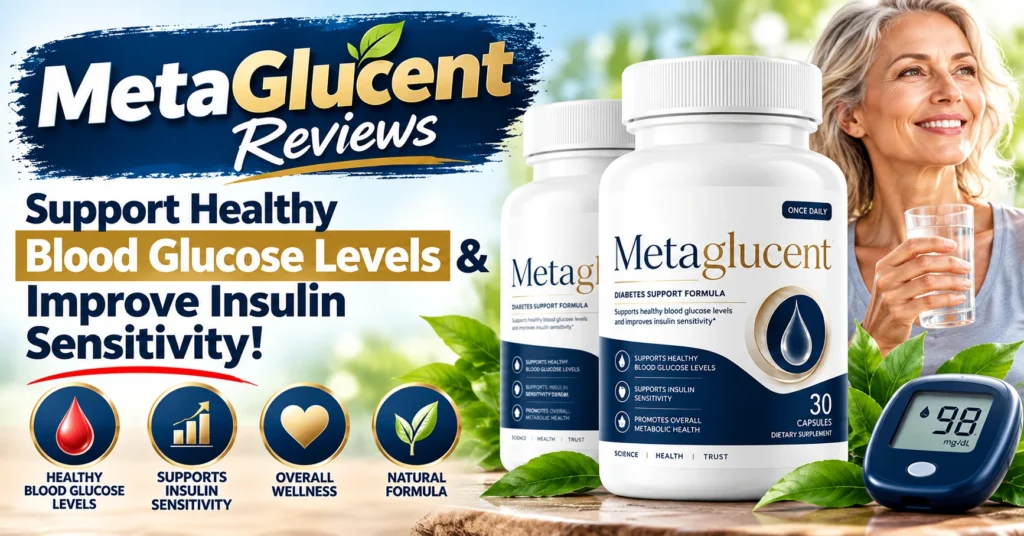
MetaGlucent Reviews 2026: MetaGlucent is a dietary supplement marketed for blood sugar and metabolic support. Its formula combines vitamins, minerals, and 13 botanical ingredients, including berberine, gymnema, cinnamon, and bitter melon. But does the product have enough evidence to justify its price? In this review, we examine the ingredient label, potential benefits, safety concerns, customer feedback, pricing, refund policy, and important details to check before buying.
If you are researching MetaGlucent reviews and complaints before making a purchase, the most important questions are whether the formula is transparent, whether its ingredients are supported by reliable research, and whether the seller provides clear purchasing and refund terms.
Table of Contents
MetaGlucent: Quick Overview
| Feature | Details |
| Product name | MetaGlucent |
| Product type | Blood sugar and metabolic support dietary supplement |
| Formula | Vitamins, minerals, and botanical extracts |
| Serving size | One capsule, according to the reviewed label |
| Supply | 30 servings per bottle |
| Key nutrients | Vitamin C, vitamin D, magnesium, and chromium |
| Featured botanicals | Berberine, gymnema, cinnamon, bitter melon, turmeric, and others |
| Main advertised purpose | Support for healthy glucose metabolism |
| Individual botanical doses | Not separately disclosed in the reviewed label |
| Suggested use | One capsule daily, according to the seller’s instructions |
| Advertised price | Brand-linked pages have displayed $49 per bottle; verify the live checkout price |
| Guarantee | A 60-day satisfaction guarantee is advertised; verify the applicable terms |
| Official website | Click Here Official Website |
| Medical status | Dietary supplement, not a proven diabetes treatment |
The ingredient quantities above are based on the available label transcription. Prices and guarantee terms may vary or change, so confirm them on the website where you intend to order. The product’s label information lists four individually quantified nutrients and a 528 mg proprietary botanical blend. Source: MetaGlucent Supplement Facts.

What Is MetaGlucent?
MetaGlucent is marketed as a daily dietary supplement intended to support healthy blood sugar metabolism and general metabolic wellness. It combines essential nutrients with plant-derived ingredients in a capsule designed for routine use.
The product’s advertised formula includes berberine HCl, Gymnema sylvestre, bitter melon, cinnamon bark, banaba leaf, turmeric, olive leaf, and several other botanicals. Vitamin C, vitamin D, magnesium, and chromium are also listed on the supplement facts panel.
The seller presents MetaGlucent as a complement to healthy eating and physical activity. That positioning is important: a supplement should not be confused with a medication prescribed to manage diabetes or another metabolic condition.
There is also an important distinction between ingredient research and finished-product research. Studies examining berberine or chromium individually do not prove that MetaGlucent itself produces the same effects. The available research reviewed for this article did not establish that the complete MetaGlucent formula has been validated in a published clinical trial.
MetaGlucent Ingredients: What’s Inside the Formula?
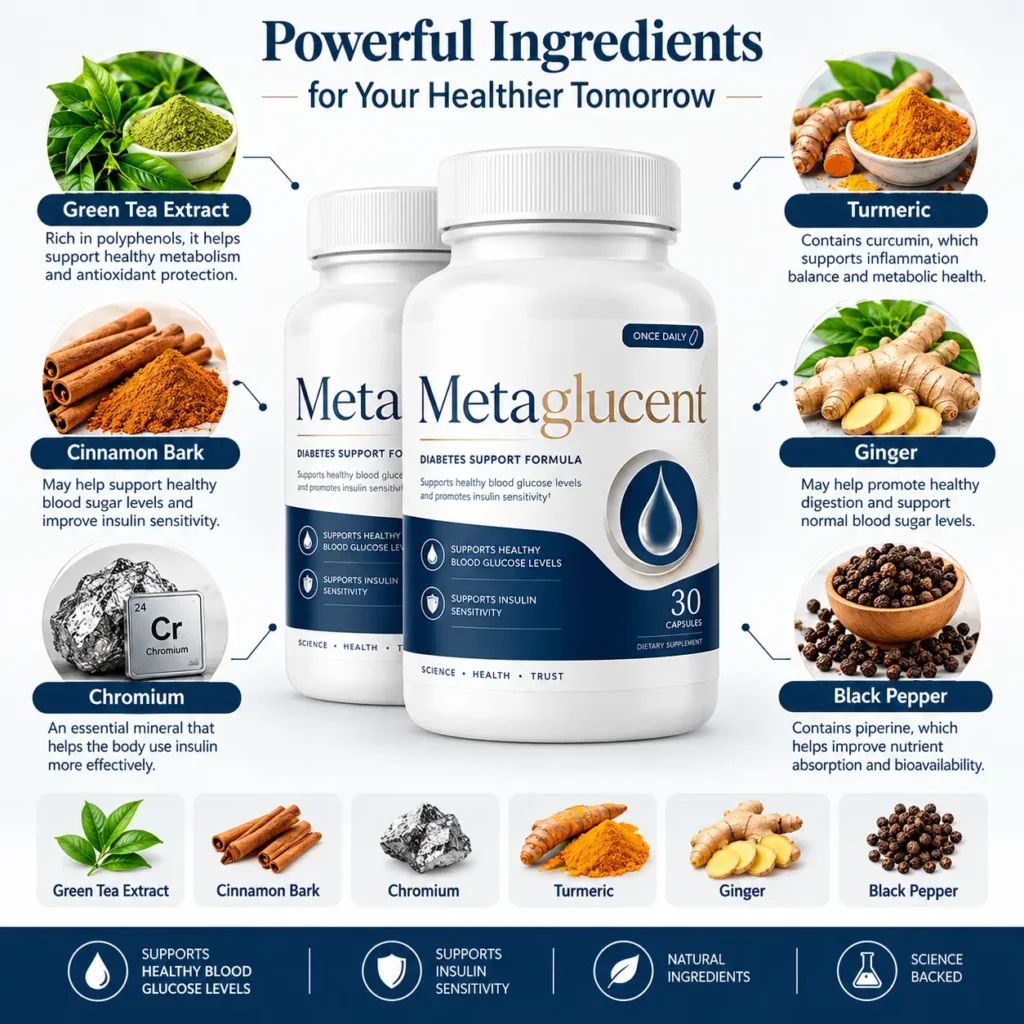
Understanding the ingredients is one of the most useful steps when evaluating MetaGlucent reviews. The available label identifies four nutrients with specific amounts and a combined proprietary blend of 13 botanicals.
1. Vitamin C — 90 mg
Vitamin C is an essential nutrient involved in normal immune function, collagen formation, and antioxidant activity. MetaGlucent lists 90 mg per capsule.
Although vitamin C contributes to normal health, its inclusion does not independently demonstrate that the complete supplement improves blood sugar control.
2. Vitamin D — 25 mcg
Vitamin D supports calcium absorption, bone health, and normal immune function. The label lists 25 mcg per serving.
Vitamin D is important for people who need it nutritionally, but the presence of vitamin D in a supplement does not establish a specific glucose-management benefit.
3. Magnesium — 20 mg
Magnesium participates in many normal enzymatic processes, including those involved in energy metabolism and muscle and nerve function.
The listed amount is 20 mg, equivalent to 5% of the Daily Value shown on the label. This is a relatively small contribution to daily magnesium requirements and should not be confused with a comprehensive magnesium supplement.
4. Chromium — 100 mcg
Chromium is an essential trace mineral involved in normal macronutrient metabolism. It is frequently included in supplements marketed for glucose metabolism.
However, research on chromium supplementation for diabetes has produced mixed results. The National Institutes of Health Office of Dietary Supplements notes that evidence does not establish a clear benefit for people with diabetes. Chromium may also interact with insulin, metformin, and other medications. Source: NIH Office of Dietary Supplements.
5. Berberine HCl
Berberine is a plant-derived compound studied for several metabolic effects. Some studies suggest potential benefits in people with type 2 diabetes, but research quality, dosage, and study populations vary.
The National Center for Complementary and Integrative Health notes that the evidence has limitations and that berberine may interact with medicines. Reported side effects include nausea, diarrhea, bloating, and constipation. Source: NCCIH.
The MetaGlucent label places berberine inside its proprietary blend without disclosing its individual amount. Consequently, it is not possible to determine from the label whether the formula provides a dose comparable to those studied in clinical research.
6. Gymnema sylvestre
Gymnema is a botanical traditionally used in herbal preparations and investigated for potential metabolic effects. However, research on an individual botanical cannot establish the effectiveness of a multi-ingredient supplement.
Because MetaGlucent does not separately disclose the amount of gymnema in its proprietary blend, its contribution to the overall formula is difficult to assess.
7. Bitter Melon
Bitter melon is used in traditional food and herbal practices and has been investigated for potential effects on glucose metabolism. Human evidence remains insufficient to establish a dependable benefit for a particular commercial formula.
People taking glucose-lowering medications should seek professional advice before adding bitter melon or other products marketed for blood sugar support.
8. Cinnamon Bark
Cinnamon is a common ingredient in metabolic wellness supplements. Research has investigated its possible effects on blood glucose, but findings vary by preparation, dose, and study design.
The presence of cinnamon in MetaGlucent does not establish that the product can lower blood sugar or replace medical care.
9. Banaba Leaf Extract
Banaba leaf is a botanical used in traditional preparations and investigated for potential metabolic effects. The amount and specific extract used in MetaGlucent would be important when evaluating the relevance of any study.
The reviewed label does not provide its individual dose.
10. Turmeric Rhizome
Turmeric contains curcuminoids and other plant compounds studied for their biological properties. It is often used in supplements for general wellness.
Its inclusion does not prove a clinically meaningful effect on blood sugar, particularly when the amount and extract specifications are not disclosed.
11. Olive Leaf Extract
Olive leaf contains plant compounds, including polyphenols, that have been investigated for antioxidant and other physiological effects.
The available label does not identify a separate amount for olive leaf extract, so its contribution to the finished formula cannot be reliably evaluated.
12. Pine Bark Extract
Pine bark extract contains naturally occurring compounds that have been investigated for antioxidant and cardiovascular-related effects. The evidence for an individual extract should not be interpreted as evidence that MetaGlucent improves circulation or prevents disease.
13. Cocoa Bean Extract
Cocoa contains flavonoids and other naturally occurring compounds. Its effects depend on the extract, dose, and preparation, and cannot be assumed from the ingredient name alone.
14. Eleuthero Root Extract
Eleuthero is traditionally used in herbal preparations marketed for stamina and general wellness. Claims about energy or stress support require evidence for the specific preparation and dose.
15. Juniper Berry
Juniper berry is another botanical named in the proprietary blend. Its inclusion does not establish a particular blood sugar benefit, and the individual quantity is not disclosed.
16. Butcher’s Broom Root Extract
Butcher’s broom is traditionally associated with certain circulation-related herbal products. Its presence in MetaGlucent does not establish an effect on blood sugar, blood pressure, or vascular disease.
17. Guggul Resin Extract
Guggul is a plant-derived resin used in traditional preparations and studied for several potential effects. Research findings cannot be transferred automatically to a formula containing an undisclosed amount.
The Biggest Ingredient Transparency Concern
The 13 botanicals share a total proprietary-blend weight of 528 mg. The label does not disclose how much of that total comes from each botanical.
That makes it difficult for consumers to compare the product with research studies, assess individual ingredient exposure, or determine whether a particular botanical is present at a meaningful dose. This is a material limitation when evaluating MetaGlucent’s advertised benefits.
Potential Benefits of MetaGlucent
MetaGlucent is marketed for several aspects of metabolic wellness. Its actual effects, however, have not been established by the product’s ingredient list alone.
Supports a Daily Nutritional Routine
The product combines several nutrients and botanicals in one capsule. For adults who prefer a single daily supplement, this format may be convenient.
Convenience is a practical product feature, not proof of improved health outcomes.
Contains Ingredients Studied for Glucose Metabolism
Berberine, chromium, cinnamon, and other ingredients have been examined in research relating to glucose metabolism. The evidence differs substantially by ingredient, dose, and population.
NCCIH reports that some studies suggest possible benefits from certain supplements, but limitations in the evidence prevent firm conclusions for many products. Source: NCCIH.
Provides Selected Vitamins and Minerals
The formula includes vitamin C, vitamin D, magnesium, and chromium. These nutrients have established roles in normal human physiology.
Whether supplementation is useful for a particular person depends on diet, nutritional status, medical circumstances, and the amount provided.
May Appeal to People Seeking a Multi-Ingredient Formula
Some consumers prefer a combined formula rather than several separate products. The trade-off is that a proprietary blend makes it harder to assess the individual dose of each botanical.
What the evidence does not establish: The available sources do not demonstrate that MetaGlucent cures diabetes, guarantees normal blood sugar, removes the need for medication, or produces a particular result for every user.
MetaGlucent Pros and Cons
Pros
- Combines vitamins, minerals, and several botanical ingredients in one capsule.
- Lists four nutrients with specific amounts on the available supplement facts panel.
- Uses a once-daily serving, according to the seller’s directions.
- Provides a full list of the botanical ingredients in the proprietary blend.
- Brand-linked pages advertise a satisfaction guarantee, subject to the applicable terms.
Cons
- Individual quantities of the 13 botanical ingredients are not disclosed.
- No peer-reviewed clinical trial of the complete MetaGlucent formula was identified in the sources reviewed.
- Evidence for some ingredients is mixed or limited.
- Potential medication interactions are relevant to people managing blood glucose.
- Reliable independent customer feedback was insufficient to calculate a representative satisfaction rating.
- Advertised prices and refund conditions need to be verified at checkout.
How to Use MetaGlucent
The brand-linked product information recommends taking one capsule daily. Follow the instructions printed on the bottle you receive, because the label supplied with the actual product is the most relevant source for directions and warnings.
Do not take more than the labeled serving to try to achieve faster results. Increasing the amount may increase risk without establishing greater benefit.
If you take insulin, metformin, other glucose-lowering medication, or medication that may interact with botanical supplements, ask your healthcare professional or pharmacist before using MetaGlucent. Do not change prescribed medication or monitoring routines based on a supplement advertisement.
Are There Any Side Effects?
A complete side-effect profile for the finished MetaGlucent formula has not been established in the research reviewed. Possible concerns depend on the ingredients, their amounts, individual health, and other medications being taken.
Berberine can cause gastrointestinal symptoms, including nausea, diarrhea, constipation, and bloating. Chromium may interact with certain medicines, including insulin and metformin, and may affect levothyroxine absorption when taken together. These risks are described in NIH and NCCIH resources.
The undisclosed quantities of the botanical blend make it harder to assess the exposure to individual ingredients. People with diabetes, kidney or liver disease, or other ongoing medical conditions should obtain individualized advice before use. Pregnant or breastfeeding individuals should not use berberine-containing supplements without appropriate medical guidance; berberine itself is not recommended during pregnancy or breastfeeding.
Stop taking the product and seek medical advice if you develop concerning symptoms. Severe symptoms of low blood sugar, including confusion, fainting, or seizures, require urgent medical attention.
Is MetaGlucent a Scam or Legit?
A fair evaluation should distinguish three separate questions: whether a product is being sold, whether the seller is transparent, and whether the product’s health claims are supported by reliable evidence.
MetaGlucent is presented online as a commercial dietary supplement with an ingredient label and advertised package offers. That alone does not establish that its advertised health benefits have been clinically proven.
The main concerns identified in this review are:
- Undisclosed botanical doses: The 528 mg proprietary blend does not reveal the amount of each of its 13 ingredients.
- Limited product-specific evidence: The sources reviewed did not establish a peer-reviewed clinical trial demonstrating the effectiveness of the finished formula.
- Limited independent review data: The available evidence was insufficient to calculate a dependable customer satisfaction score or recurring complaint rate.
- Purchasing terms need verification: Buyers should confirm the seller’s identity, final charge, shipping arrangements, and return conditions before ordering.
The FDA states that it does not approve dietary supplements for safety and effectiveness before they are marketed. Claims that a supplement is “FDA approved” should therefore be treated cautiously. Facility registration or manufacturing standards are not the same as approval of a finished product. Source: FDA.
Verdict on legitimacy: The information reviewed is not sufficient to label MetaGlucent a scam, but neither does it establish that the product is clinically effective. Consumers should make their decision based on verified label details, transparent purchasing terms, and realistic expectations.
MetaGlucent Customer Reviews and Complaints
Customer reviews can help shoppers understand delivery, packaging, customer support, and purchasing experiences. They cannot independently establish that a supplement improves blood sugar.
The available review material includes seller-hosted testimonials and affiliate-style product reviews. I could not establish a representative, independently verified customer rating or a reliable pattern of recurring complaints from the sources reviewed.
Before relying on a testimonial, check whether it links to an original review platform, provides a date, identifies the exact product purchased, and explains whether the reviewer received compensation or a free product.
Complaints to Check Before Ordering
Rather than assuming complaints are widespread, investigate the issues that could materially affect a purchase:
- Whether the final checkout amount matches the advertised price.
- Whether the correct number of bottles is selected.
- Whether shipping fees or additional offers appear during checkout.
- Whether the refund policy is clearly available before payment.
- Whether the seller provides a working support contact and written return instructions.
- Whether the product label and bottle received match the advertised formula.
These are sensible consumer checks, not proof that MetaGlucent has committed misconduct.
Is MetaGlucent Worth Trying?
MetaGlucent may appeal to consumers looking for a combined vitamin, mineral, and botanical supplement. Its once-daily format is convenient, and the label identifies a range of ingredients that have been studied individually.
The key drawback is the undisclosed amount of each botanical. Without those amounts, consumers cannot confidently compare the blend with the preparations used in scientific studies. The absence of established clinical evidence for the complete product further limits the conclusions that can be drawn.
For someone considering the product, the decision should depend on the price, the transparency of the seller, the return conditions, and professional advice about safety and medication interactions.
It is not a substitute for prescribed diabetes treatment, medical monitoring, a balanced diet, or physical activity. People seeking to manage an abnormal blood glucose result should speak with a healthcare professional rather than relying on an over-the-counter supplement.
MetaGlucent Money-Back Guarantee
Brand-linked MetaGlucent pages advertise a 60-day satisfaction guarantee. However, a guarantee is only useful when its terms are clear and applicable to the actual order.
Before purchasing, confirm the following on the seller’s current policy page:
- When the 60-day period begins.
- Whether opened bottles must be returned.
- Whether all bottles in a multi-bottle order must be returned.
- Whether return shipping is the buyer’s responsibility.
- Whether shipping fees or other charges are refundable.
- How to obtain a return authorization and the correct return address.
- How long refund processing typically takes.
Save a copy of the policy and your order confirmation. Do not assume that terms displayed on one MetaGlucent-related website apply to every seller or checkout domain.
MetaGlucent Pricing
Brand-linked pages have advertised a promotional price of $49 per bottle against a stated regular price of $179. Other review material has reported the following package offers:
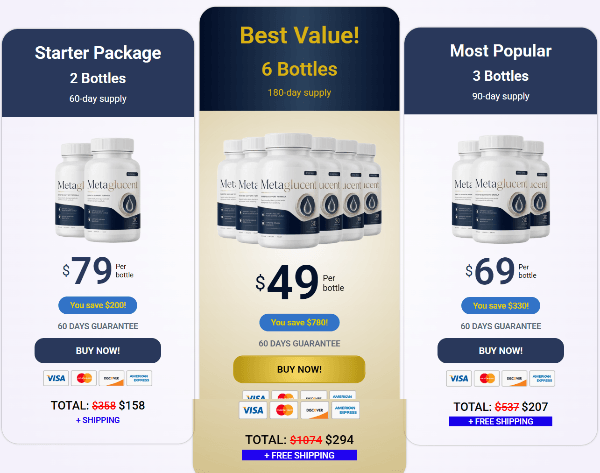
| Package | Advertised price | Price per bottle |
| 2 bottles | $158 | $79 |
| 3 bottles | $207 | $69 |
| 6 bottles | $294 | $49 |
These figures come from publicly available promotional and review materials, not a confirmed live checkout. They may not represent the current offer available to every shopper.
The six-bottle option has the lowest listed per-bottle price among these examples, but it also requires a larger upfront payment. A lower unit price does not automatically make a multi-bottle package the best choice, especially when the formula’s effectiveness is not established.
Before placing an order, verify the final total, shipping costs, taxes, selected quantity, and refund conditions.
Where to Buy MetaGlucent
If you decide to investigate a purchase, begin with the brand-linked website you can independently verify and compare its information with the actual bottle label.
Several websites use the MetaGlucent name or similar branding. Do not assume they are all operated by the same seller or offer identical return terms.
Use the following checklist:
- Confirm the domain and the business named at checkout.
- Review the complete Supplement Facts panel.
- Check the current price and total payment.
- Read the refund policy before paying.
- Save the order confirmation and policy details.
- Avoid sellers that promise a cure, guaranteed blood sugar results, or replacement of prescribed treatment.
If you cannot verify the seller’s identity or the terms of sale, consider postponing the purchase.
Conclusion: MetaGlucent Reviews 2026
MetaGlucent is marketed as a blood sugar and metabolic support supplement containing vitamins, minerals, and 13 botanical ingredients. It offers a convenient once-daily format, but the formula has an important transparency limitation: the individual quantities of the botanicals in its 528 mg proprietary blend are not disclosed.
Some ingredients, including berberine and chromium, have been studied for possible metabolic effects. The available research is mixed or limited, however, and ingredient-level findings do not establish the effectiveness of MetaGlucent as a finished product.
The product’s advertised prices and 60-day guarantee should be verified on the actual checkout website. Independent customer feedback was not sufficient to establish a representative satisfaction score or a recurring complaint pattern.
Final verdict: MetaGlucent may interest consumers seeking a multi-ingredient supplement, but the evidence reviewed does not justify treating it as a proven blood sugar treatment. Prioritize ingredient transparency, credible research, clear purchasing terms, and professional advice about medication interactions before deciding whether it is right for you.
Frequently Asked Questions
What is MetaGlucent used for?
MetaGlucent is marketed as a dietary supplement for healthy glucose metabolism and general metabolic wellness. It is not an established treatment for diabetes.
Does MetaGlucent lower blood sugar?
The effectiveness of the complete MetaGlucent formula has not been established by the sources reviewed. Research on individual ingredients cannot guarantee that the finished product will lower blood sugar.
What are the main MetaGlucent ingredients?
The label lists vitamin C, vitamin D, magnesium, and chromium, along with a 528 mg proprietary blend of 13 botanicals, including berberine, gymnema, cinnamon, bitter melon, turmeric, and other plant extracts.
Are the individual ingredient doses disclosed?
The four nutrients have listed amounts. The 13 botanicals are grouped into a proprietary blend, so their individual quantities are not disclosed in the label transcription reviewed.
Is MetaGlucent FDA approved?
The FDA does not approve dietary supplements for safety and effectiveness before they are marketed. Consumers should be cautious of claims suggesting that FDA approval proves a supplement works.
Does MetaGlucent have side effects?
The complete formula’s side-effect profile has not been established. Individual ingredients may cause adverse effects or interact with medicines. Consult a healthcare professional before use, particularly if you take glucose-lowering medication.
How much does MetaGlucent cost?
Brand-linked pages have advertised $49 per bottle, while reported package offers have ranged from $79 per bottle for two bottles to $49 per bottle for six. Confirm the live price and final checkout total before ordering.
Does MetaGlucent offer a money-back guarantee?
Brand-linked pages advertise a 60-day satisfaction guarantee. Read the current policy carefully to confirm the start date, return requirements, shipping charges, and refund eligibility.
Is MetaGlucent a scam?
The available information does not establish that MetaGlucent is a scam. However, the undisclosed botanical doses and lack of established finished-product clinical evidence are meaningful limitations. Verify the seller and purchase terms before buying.
Can MetaGlucent replace diabetes medication?
No. Do not stop, reduce, or replace prescribed diabetes medication with MetaGlucent or another dietary supplement. Consult your healthcare professional about any changes to your treatment.
Scientific Research and Sources
- National Center for Complementary and Integrative Health (NCCIH): Diabetes and Dietary Supplements: What You Need to Know. Covers the evidence limitations and safety considerations for supplements such as berberine and chromium.
- NIH Office of Dietary Supplements: Chromium — Consumer Fact Sheet. Reviews chromium research, limitations, and potential medication interactions.
- U.S. Food and Drug Administration: Questions and Answers on Dietary Supplements. Explains the FDA’s role in dietary supplement regulation and why supplements are not FDA-approved for safety and effectiveness before marketing.

Better Health Focus Team
Health, Wellness & Supplement Research Team
The Better Health Focus Team researches and reviews health, wellness, nutrition, and dietary supplement products. Our goal is to provide readers with clear, practical, and research-informed information before they make a purchasing decision.
Our reviews examine product ingredients, potential benefits, usage instructions, available scientific research, customer feedback, pricing, refund policies, and manufacturer claims. We also look at potential limitations and highlight claims that may require additional evidence.
We believe supplement information should be presented realistically—not through exaggerated promises. Where scientific evidence is limited or conflicting, we make that clear so readers can make more informed decisions.
Areas We Cover:
Dietary Supplement Reviews
Nutrition & Wellness
Ingredient Research
Product Benefits & Potential Side Effects
Customer Reviews & Complaints
Pricing & Money-Back Policies
Evidence-Based Health Information
Editorial Approach: Our content is based on information available from reputable scientific, government, manufacturer, and consumer sources. Supplement reviews are informational and should not replace advice from a qualified healthcare professional.
Affiliate Disclosure: Some articles may contain affiliate links. If a reader purchases a product through one of these links, Better Health Focus may receive a commission at no additional cost to the reader. This does not determine how we evaluate or describe products.