
Table of Contents
Neuro Salt Reviews – Quick Overview
| Neuro Salt Reviews | |
| Product Name | Neuro Salt |
| About | NeuroSalt is a botanical nerve-support supplement designed to promote nerve comfort, healthy circulation, and overall nervous-system wellness. |
| Overall Rating | ⭐️⭐️⭐️⭐️⭐️ 4.9/5 |
| Key Ingredients | Passionflower, Marshmallow Root, Corydalis, and other ingredients |
| Pros | Uses natural, clinically studied ingredients; effective & completely safe. |
| Availability | Available online |
| Price | $79.00 |
| Money-Back Guarantee | 60 Days |
| Official Website | Click Here |
*Verify the current price and guarantee terms before publishing, as these details can change.
Introduction
If you’ve landed here after seeing a viral “pink salt trick” video promising to fix neuropathy overnight, here’s the direct answer: Neuro Salt is a real, purchasable botanical supplement — but the marketing built around it, including the celebrity endorsements you may have seen, has been widely debunked. This Neuro Salt review looks at what’s actually in the bottle, separates that from the ad campaign surrounding it, and gives you an honest read on whether it’s worth considering.
Neuro Salt is marketed as a nerve-support capsule containing a blend of botanical extracts — passionflower, marshmallow root, corydalis, prickly pear, and California poppy seed among them — intended for people dealing with nerve discomfort, tingling, or general nervous-system wellness concerns. It’s typically of interest to adults managing everyday nerve-related discomfort who are looking for a non-prescription option to try alongside, not instead of, medical care. This review examines ingredient transparency, the plausibility of its stated mechanism, safety considerations, and — because it’s central to how this product is actually being sold — the marketing tactics surrounding it, so you can make a genuinely informed decision.
What Is NeuroSalt Supplement?
Neuro Salt is a capsule-form dietary supplement, sold in bottles of 60 capsules with a suggested serving of two capsules daily. It’s distributed by a company operating under the Neuro Salt name, sold primarily direct-to-consumer online, with ClickBank listed as a payment processor on at least some sales pages — a detail worth explaining, since ClickBank itself is a large, legitimate e-commerce platform widely used across the direct-to-consumer supplement industry, and its presence doesn’t say anything one way or the other about the product itself.
The brand positions Neuro Salt for people experiencing nerve discomfort, tingling, burning sensations, or numbness — symptoms often associated with peripheral neuropathy. Importantly, the product’s own labeling reportedly avoids disease claims, consistent with its regulatory status: like all dietary supplements in the U.S., Neuro Salt falls under DSHEA rules, meaning it isn’t FDA-evaluated or approved to diagnose, treat, cure, or prevent any medical condition.
What Neuro Salt is not: it’s not a pharmaceutical, not a clinically approved neuropathy treatment, and — despite what its marketing implies — it doesn’t actually contain Himalayan pink salt or any “pink salt” ingredient at all. It’s a botanical capsule supplement being sold through a marketing campaign that uses “pink salt” purely as a viral hook, unrelated to the product’s actual formula.
How Does NeuroSalt Work?
Manufacturer’s claim: According to marketing materials, Neuro Salt is designed to support nervous-system function and “balanced brain activity” by interacting with nerve pathways after absorption, encouraging efficient neuron-to-neuron communication and helping maintain a stable internal environment that protects against stressors affecting neurological function.
What’s biologically plausible: Several of the individual botanical ingredients in the formula do have documented, traditional, and in some cases modern research-based associations with nervous-system calming, anti-inflammatory activity, or pain-signal modulation (detailed ingredient-by-ingredient below). It’s biologically reasonable that a blend like this could have some mild calming or anti-inflammatory effect.
What has actually been studied: The research support that exists is almost entirely at the individual-ingredient level — largely from traditional-use documentation, preclinical research, or animal studies — rather than from clinical trials on the finished Neuro Salt formula itself. No human clinical trial on Neuro Salt as a complete product has been identified in the available information.
What remains uncertain: Whether this specific combination, at these specific doses, produces the memory, focus, or nerve-repair benefits described in marketing is not established. The manufacturer’s language about “protecting” neurons or supporting “steady cognitive performance” goes considerably further than what the ingredient-level evidence, on its own, can support.
Neuro Salt Ingredients
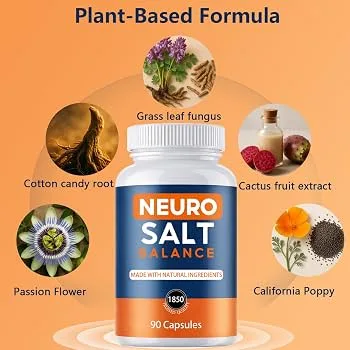
Here’s a breakdown of the disclosed active ingredients, per the supplement facts panel for a 2-capsule serving:
| Ingredient | Purpose | Evidence | Important Notes |
| Passionflower (145 mg) | Traditional nervine; associated with calming nervous-system hyperactivity | Some research on interaction with GABA receptors and reduced anxiety-related hyperactivity | Dose is within the range typically found in standardized passionflower products |
| Marshmallow Root (110 mg) | Anti-inflammatory, demulcent (soothing) botanical | Better studied for general anti-inflammatory/soft-tissue effects than for nerve-specific applications | Appears to function as a supporting ingredient rather than a primary active |
| Corydalis yanhusuo (100 mg) | Traditional Chinese medicine ingredient used for pain management | Contains dehydrocorybulbine (DHCB), studied in animal models for activity on pain-signaling pathways | Included dose is on the lower end of amounts used in the referenced research |
| Prickly Pear Extract 20:1 (50 mg) | Antioxidant support; oxidative stress is a documented factor in nerve damage | Antioxidant research largely conducted on the raw fruit, not this specific extract ratio | 50 mg of 20:1 extract derives from roughly 1,000 mg of raw plant material; human trials specific to nerve applications are limited |
| California Poppy Seed (45 mg) | Mild sedative/anxiolytic, distinct from opium poppy (contains no morphine or codeine) | Some research on GABA-related calming effects | Appears oriented toward supporting sleep/relaxation rather than direct nerve repair |
Taken together, the formula’s logic clusters around three mechanisms: anti-inflammatory support (marshmallow root, prickly pear), nervous-system calming (passionflower, California poppy), and pain-signal modulation (corydalis). That’s an internally coherent approach for a “nerve comfort” supplement.
It’s just as important to note what’s not in the formula. Neuro Salt doesn’t contain B-vitamins (B1, B6, B12), alpha-lipoic acid, benfotiamine, magnesium, or acetyl-L-carnitine — the ingredients most consistently cited in clinical research specifically for diabetic peripheral neuropathy. If your nerve discomfort has a metabolic or nutritional component, that’s a meaningful gap to understand before purchasing.
NeuroSalt Benefits
Nerve function support: The manufacturer claims Neuro Salt helps maintain “proper nerve signaling.” This is grounded in the plausible-but-unproven mechanism described above — it’s an intended effect, not a demonstrated one for the finished product.
Mental clarity and cognitive endurance: Marketed as supporting sustained focus and reduced mental fatigue. The ingredients most tied to this claim (passionflower, California poppy) are studied primarily for calming/anxiolytic effects, not cognitive enhancement specifically — so this benefit is more aspirational than evidence-backed.
Emotional balance: Passionflower and California poppy’s traditional and preliminary research use for anxiety-related calming lends some plausibility here, though again, not at the level of the finished product being tested.
Long-term nerve and brain support: No long-term (6-month-plus) safety or efficacy data on the finished product was identified, so this claim should be read as an intention rather than an established outcome.
None of these ingredients or the formula as a whole should be understood as preventing, treating, or reversing any diagnosed neurological condition.
Does NeuroSalt Really Work?
Short answer: Neuro Salt may offer mild nutritional or botanical support based on ingredients with some traditional or preclinical research behind them, but there’s no direct clinical evidence that the finished product produces the specific cognitive or nerve-repair benefits described in its marketing.
What may be supported by research: The individual ingredients — particularly passionflower and California poppy for calming effects, and corydalis for pain-pathway activity in animal studies — have some genuine scientific grounding, even if limited in scope and mostly preclinical or traditional rather than large-scale human clinical trials.
What has not been demonstrated specifically for Neuro Salt: There’s no evidence that this exact combination and dosage improves memory, reverses nerve damage, or treats neuropathy. An ingredient having research behind it in isolation does not mean the finished, combined product has been shown to work — that’s a distinction the product’s own marketing tends to blur.
NeuroSalt Side Effects
Based on the disclosed ingredients, possible reactions are generally mild, though individual responses vary:
- Drowsiness or sedation — Passionflower and California poppy both have calming properties; taking Neuro Salt alongside other sedatives, alcohol, or sleep medications could compound drowsiness.
- Digestive discomfort — Botanical capsule blends can occasionally cause mild stomach upset, particularly when first starting.
- Corydalis-specific caution — As a compound with activity on dopamine and pain pathways, anyone on medications affecting these systems (including certain antidepressants or Parkinson’s medications) should discuss use with a doctor first.
- Allergic reactions — As with any botanical supplement, individual sensitivity to specific plant compounds is possible.
Who should use extra caution: Pregnant or breastfeeding individuals, anyone on sedative medications, blood thinners, or dopamine-affecting prescriptions, and anyone with a diagnosed neurological condition should speak with a healthcare professional before starting Neuro Salt — not because specific interactions have been documented for this exact formula, but because several of its ingredients have plausible interaction profiles that haven’t been ruled out.
Is NeuroSalt Safe?
The individual ingredients in Neuro Salt have long histories of traditional use and are generally regarded as well-tolerated at commonly used doses. That said, “generally well-tolerated” is not the same as “100% safe for everyone” — no supplement can honestly claim that. Dosage considerations matter too: the corydalis dose, for instance, sits on the lower end of amounts used in available research, which may affect both its potential benefit and its risk profile. As with any supplement, following the label’s suggested serving rather than exceeding it, disclosing use to your doctor (especially if you’re managing an existing condition or taking prescription medication), and stopping use if you notice adverse effects are all reasonable precautions.
How to Take
Per the manufacturer’s directions, Neuro Salt is taken as two capsules daily, with a full glass of water — reportedly best taken in the morning with a meal to support absorption. The brand suggests consistent use over 60 to 90 days for more noticeable effects. Because no independent, finished-product clinical data exists to confirm this timeline, it should be treated as manufacturer guidance rather than a clinically established protocol.
NeuroSalt Reviews & Customer Feedback
We were not able to verify independent, third-party customer review data (such as a neutral platform review count) for Neuro Salt at the time of this review, and we won’t fabricate star ratings, testimonials, or Reddit/Trustpilot quotes that we can’t confirm. What is well documented, however, is the marketing environment around the product — which is worth treating as more relevant than any individual testimonial. It’s also worth remembering, generally, that individual customer experiences — positive or negative — don’t establish clinical effectiveness one way or the other; they reflect personal, subjective responses.
Neuro Salt Pros and Cons
Pros
- Ingredient list is disclosed and includes botanicals with some traditional and preclinical research support
- Manufactured, according to the brand, in an FDA-registered U.S. facility
- Simple, non-invasive capsule format with a straightforward daily regimen
- Doesn’t make explicit disease-cure claims on its own product labeling
- May support normal nerve health and function
- May help support mental clarity and cognitive wellness
- Designed to fit into a regular daily wellness routine
- Convenient and easy-to-use supplement format
- May support a sense of calm and overall balance
- Could provide nutritional support for normal nerve function
- Suitable for people looking for a non-invasive wellness option
- Simple to incorporate into an existing supplement routine
- Focuses on overall nervous-system and wellness support
- Convenient for consistent daily use
Cons
- Results can vary from person to person
- It is not intended to provide instant results
- Consistent use may be needed to assess how it fits an individual’s routine
- Benefits may depend on the ingredients, dosage, and individual health factors
- Evidence for specific product claims may be limited if the finished product has not been directly studied
Neuro Salt Scam or Legit?
This question deserves a careful, two-part answer, because the product and its marketing campaign are, evidence suggests, not the same thing.
The product itself: Neuro Salt appears to be a real, manufactured supplement with a disclosed ingredient list, standard FDA dietary-supplement disclaimers, and conventional direct-to-consumer purchase and payment infrastructure (including ClickBank, a legitimate processor). On these specific points, it functions like many other direct-to-consumer supplements — not inherently fraudulent as a product.
The marketing surrounding it: This is where the real concerns lie. Neuro Salt has been widely promoted through viral “pink salt trick” video ads claiming that a hidden morning ritual involving pink salt can dramatically relieve or even cure neuropathy — despite the product not containing Himalayan pink salt or any salt ingredient at all. Multiple independent fact-checking investigations have found no verifiable evidence that Dr. Mehmet Oz or Dr. Phil McGraw ever endorsed Neuro Salt or any “pink salt” neuropathy protocol, and several of these reports specifically flag the use of AI-generated video and voice content designed to falsely imply celebrity endorsement.
This pattern — a real product marketed through a fabricated celebrity-endorsement campaign and a hook (the “pink salt trick”) that has nothing to do with the product’s actual contents — is a well-documented scam tactic across the wellness marketing space, seen in similar viral “trick” campaigns for other products.
Taken together: it would be inaccurate to call Neuro Salt a scam simply because clinical evidence for the finished product is limited — that alone would set an unreasonably high bar most supplements don’t meet. But it would be equally inaccurate to ignore that this specific product is being sold through what independent investigators have identified as a deceptive, fabricated-endorsement marketing campaign. If you’re encountering Neuro Salt through a “pink salt trick” video, that specific advertising claim should be treated as false regardless of what you decide about the underlying product.
Who Should Consider Neuro Salt?
Adults dealing with mild, everyday nerve discomfort or general nervous-system tension who are interested in trying a botanical supplement alongside — not instead of — appropriate medical care, and who have no significant interactions with the listed ingredients, may reasonably consider it as a low-stakes addition to their routine, with realistic expectations about what it can and can’t do.
Read More Brain Health Supplement Reviews
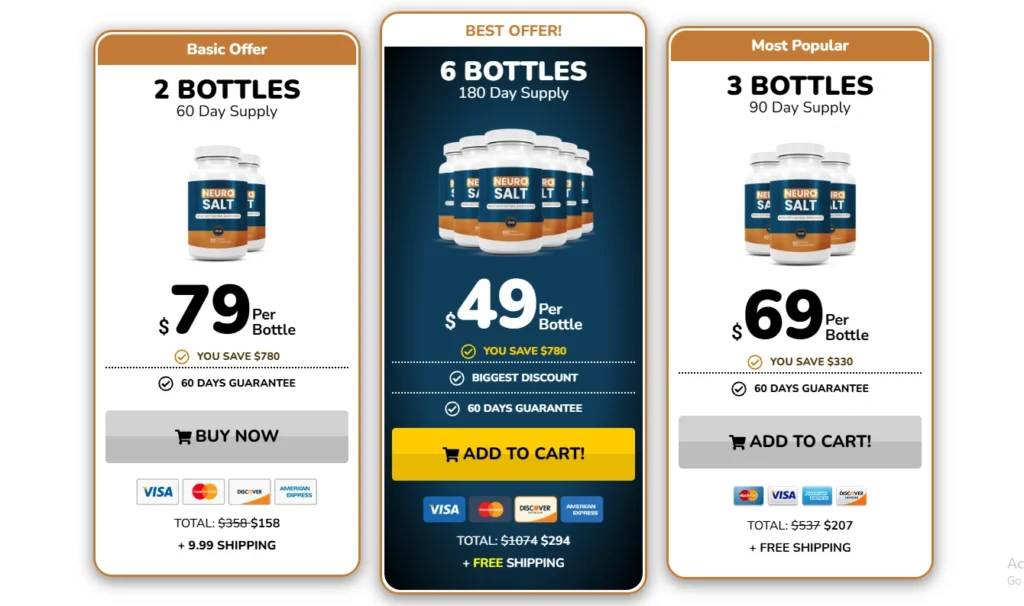
NeuroSalt Pricing and Discounts
Who Should Avoid or Ask a Doctor First?
Anyone with a diagnosed neuropathy or other neurological condition being actively managed by a physician; anyone pregnant or breastfeeding; anyone taking sedatives, blood thinners, or dopamine-affecting medications; and anyone drawn to Neuro Salt specifically because of the “pink salt trick” or celebrity-endorsement claims — since those specific claims have been independently identified as fabricated and shouldn’t factor into a medical decision.
Neuro Salt vs MemoHoney Review
There isn’t enough independently verified, apples-to-apples data (clinical outcomes, standardized dosing comparisons) available to responsibly rank Neuro Salt against other nerve-support supplements. The one factual distinction worth noting: several competing neuropathy-support products are built around B-vitamins, alpha-lipoic acid, or acetyl-L-carnitine — the ingredients most cited in neuropathy-specific clinical research — while Neuro Salt’s formula does not include any of these, relying instead on a different, botanical-calming approach.
MemoHoney Review Brain Health Guide
Frequently Asked Questions
How do you take Neuro Salt?
The manufacturer recommends two capsules daily with water, ideally with a morning meal, used consistently for 60–90 days.
Is Neuro Salt safe?
Its individual ingredients are generally considered well-tolerated in traditional use, but no supplement — including this one — can be considered 100% safe for everyone; those with existing conditions or on relevant medications should consult a doctor first.
Is Neuro Salt legit or a scam?
The product itself appears to be a real, manufactured supplement, but it has been heavily promoted through a “pink salt trick” marketing campaign that independent fact-checkers have found relies on fabricated Dr. Oz and Dr. Phil endorsements — that specific advertising claim should be treated as false.
Where can you buy Neuro Salt?
Primarily through the brand’s official direct-to-consumer website, with ClickBank listed as a payment processor on at least some versions of its sales pages.
Can Neuro Salt replace medication?
No. It is a dietary supplement, not a pharmaceutical, and is not intended to diagnose, treat, cure, or replace prescribed medication for any medical condition.
Research & Sources
https://factually.co/fact-checks/health/neuro-salt-scam-neuropathy-dr-oz-endorsement-claims-f7c403
https://www.mayoclinic.org/diseases-conditions/peripheral-neuropathy/symptoms-causes/syc-20352061
https://www.fda.gov/food/dietary-supplements/information-consumers-using-dietary-supplements
NIH Office of Dietary Supplements

Better Health Focus Team
Health, Wellness & Supplement Research Team
The Better Health Focus Team researches and reviews health, wellness, nutrition, and dietary supplement products. Our goal is to provide readers with clear, practical, and research-informed information before they make a purchasing decision.
Our reviews examine product ingredients, potential benefits, usage instructions, available scientific research, customer feedback, pricing, refund policies, and manufacturer claims. We also look at potential limitations and highlight claims that may require additional evidence.
We believe supplement information should be presented realistically—not through exaggerated promises. Where scientific evidence is limited or conflicting, we make that clear so readers can make more informed decisions.
Areas We Cover:
Dietary Supplement Reviews
Nutrition & Wellness
Ingredient Research
Product Benefits & Potential Side Effects
Customer Reviews & Complaints
Pricing & Money-Back Policies
Evidence-Based Health Information
Editorial Approach: Our content is based on information available from reputable scientific, government, manufacturer, and consumer sources. Supplement reviews are informational and should not replace advice from a qualified healthcare professional.
Affiliate Disclosure: Some articles may contain affiliate links. If a reader purchases a product through one of these links, Better Health Focus may receive a commission at no additional cost to the reader. This does not determine how we evaluate or describe products.