
How you stay active is changing fast. Whether you work out on the weekend or on a daily basis or are someone who just plays something new with friends, the world of recreation has never been more exciting, social, or science-backed than it is nowadays.
In 2026, fitness isn’t just about burning calories or hitting personal records. It’s about feeling good, staying connected, and building habits that you are actually able to follow. From high-tech fitness trackers on your wrist to the growing wave of social sports leagues in your local areas, people are redefining what it means to live an active and healthy life.
Table of Contents
Why Sport Lifestyle and Recreation Matter More Than Ever in 2026
Sport isn’t just something to watch on weekends anymore. Millions of people are building their daily lives around them, from their morning routines and what they wear to how they socialize and how they eat. That change in mindset is what “sport lifestyle” really means. And it’s growing faster than ever.
And at the same time, recreation, meaning any physical activity done for enjoyment, health, relaxation, or social connection, also plays a big role in how many people actually feel.
According to the CDC’s Physical Activity Guidelines, regular movement improves your mood, sleep, and cognitive function. Adults who sit less gain real, measurable health improvements even with just moderate activity. It is recommended to get at least 150 minutes of moderate-intensity activity per week, plus two days of muscle-strengthening exercise—but even getting some movement is definitely better than none.
Despite that, many people are still unable to meet these requirements. The CDC’s initiative aims to help 27 million more US citizens become more physically active. The good news? The sport lifestyle and recreation together are making that goal easier to reach and way more fun.
The Top Emerging Health Trends in 2026
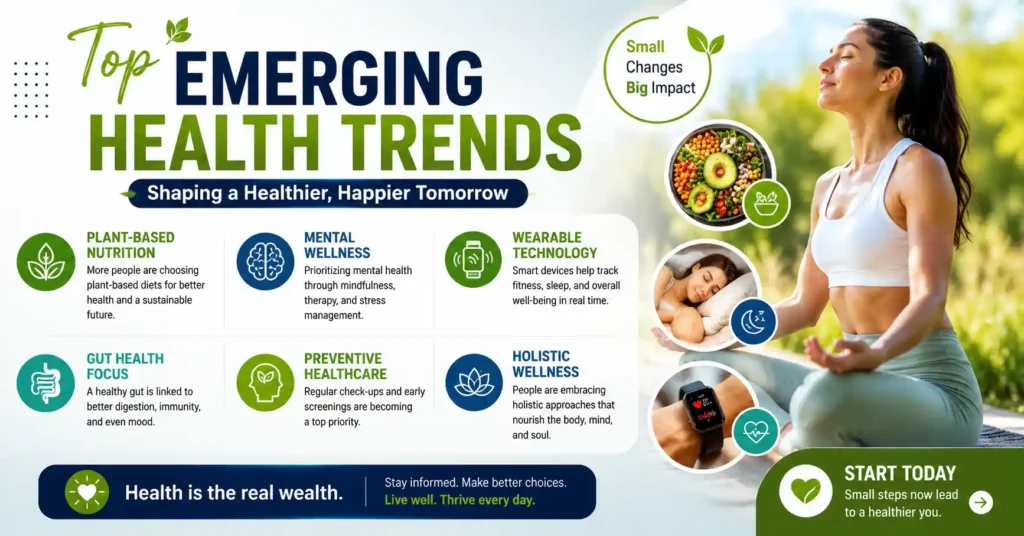
After looking at the landscape of health and wellness this year, here are some of the best trends right now:
Trend #1: Wearable Technology Is Smarter Than Ever
Wearable fitness devices have been a top trend for almost a decade, but in 2026, they have gotten dramatically smarter. We are talking about real-time health monitoring, sleep tracking, fall detection, stress scoring, and even oxygen level readings.
According to the ACSM’s 2026 report, almost half of US adults now own a fitness tracker or smartwatch. The shift is not whether people will wear them; it’s learning how to actually use data to support real behavior changes.
Think of your wearable device like having a personal health coach on your wrist 24/7. It can tell you when you haven’t been active enough, when your sleep quality is poor, or when your recovery metrics suggest you should rest instead of pushing yourself for another workout. That type of feedback works as a game-changer for anyone trying to build healthy habits.
Trend #2: Adult Recreation and Sport Clubs Are Booming
People want fitness to be less like a chore and more like a social event, and that desire fuels this trend. It’s the running clubs, the cycling groups, the volleyball leagues, and the weekend trekking crews that drag people out of their homes and into their communities. Recreational sports and social events where people come together to play, laugh, and move together are some of the best motivators for long-term health commitment.
According to a study, social and mental benefits of sports participation often exceed those of leisure activities, especially when adults participate in sports they enjoy and choose for themselves. This makes sense because when working out feels fun and connects you with other people, you are more likely to keep doing it.
These recreational sports and social formats are particularly effective for adults returning to activity after a long break—especially people motivated more by feeling connected and fun than by weight loss or performance. For recreation professionals, building these programs into community centers and local parks isn’t just a luxury anymore. It’s quickly becoming a public health priority.
Trend #3: Pickleball and Racquet Sports Are Reshaping Recreation
Pickleball is a sport that mixes up tennis, badminton, and ping-pong. It is officially the fastest-growing sport in the United States, and it perfectly captures exactly how our approach to staying active is changing for the better.
According to data from the Sports & Fitness Association (SFIA), 24.3 million Americans played pickleball in 2025, about 22.8% more than the year before. Over three years, participation has increased by 171.8%. SFIA called pickleball “the dominant multi-year growth leader across all tracked sports.
The reasons for this growth are the following:
- It’s easy to learn: most beginners are rallying within 20 minutes
- It’s low-impact: easier on knees and hips than tennis
- It’s deeply social: most people play recreationally with friends or neighbors
- It’s accessible: you can play indoors or outdoors at nearly any age.
The average player age has dropped to around 35, meaning younger adults are now driving the boom alongside older players who helped start it. Recreational sports and social leagues are where much of this growth is happening, and it’s not just pickleball. Padel, racquetball, and even cornhole leagues are all seeing renewed interest.
Trend #4: Outdoor Recreation Is an Economic Powerhouse
Outdoor recreation isn’t just a hobby. It’s a massive and growing part of the American economy and public health.
In 2024, the US outdoor recreation economy was valued at $696.7 billion, or 2.4% of the total US GDP, and supported 5.2 million jobs, according to the US Bureau of Economic Analysis (BEA). Hiking and tent camping alone are the fastest-growing activity categories, up 6.5% year-over-year.
According to the Outdoor Industry Association’s 2025 Participation Report, 181.1 million Americans participated in at least one outdoor recreation activity in 2024. More than half of the entire US population is getting outside for hiking, camping, cycling, fishing, and trail running.
Even 10 minutes of outdoor exposure measurably improved mental health symptoms across thousands of adult participants, regardless of age or gender. Sitting in a park, even without exercising, can produce real mental health benefits.
Most popular outdoor recreation activities in 2026:
- Hiking (the most popular outdoor-specific activity, with ~63 million participants)
- Trail running and walking
- Cycling and mountain biking
- Camping and backpacking
- Fishing and water sports
Trend #5: Functional Fitness for Real Life
Functional fitness has officially become a part of mainstream recreation, and for a good reason. Instead of focusing on isolated gym machines, these workouts are built around the exact movements you use every single day. The whole goal is to make your daily routine easier. Think about the basics: squatting, lunging, pushing, pulling, and carrying things. This translates perfectly to hauling heavy groceries inside in one trip, climbing a few flights of stairs without losing your breath, or running around the backyard with your kids.
At its core, this type of training focuses on enhancing your body’s physical performance in the real world. It builds a solid mix of strength, mobility, power, and endurance. And the best part is that it is designed for everyone.
This brings us right to the heart of the “longevity fitness” movement. People are no longer just working out to look good in a swimsuit. Instead, we are training so we can stay healthy, active, and fully independent well into our 70s, 80s, and beyond. It is a huge, meaningful change in how Americans view sports, recreation, and our overall physical well-being.
Trend #6: AI-Powered Coaching and Personalized Recreation
Artificial intelligence is reshaping how people approach fitness training and recreation. Today’s AI-powered workout apps function as personal trainers, analyzing your movement, tracking your recovery, and adjusting your plan in real time to how your body is actually responding.
Tools like these are democratizing personalized training for everyone, from beginners to experienced athletes who want to fine-tune their performance, according to industry analysis. Apps track your patterns for weeks and months to figure out what works for your body and your schedule.
AI tools are also helping recreation professionals and community programs design better group fitness experiences, predict participation trends, and figure out which programs are actually driving long-term engagement, not just a one-month burst of New Year’s motivation.
How Much Activity Do You Actually Need?
Here’s a simple, science-backed breakdown from the US Physical Activity Guidelines published by the CDC and the Office of Disease Prevention and Health Promotion (ODPHP):
| Age Group | Weekly Goal | Strength Training |
| Adults (18–64) | 150 min moderate OR 75 min vigorous | 2+ days/week |
| Older Adults (65+) | 150 min moderate + balance work | 2+ days/week |
| Kids (6–17) | 60 min/day moderate-to-vigorous | 3 days/week |
Always remember, some physical activity is always better than none. Even a 10-minute walk counts. The goal is to reduce sitting time and add more movement in ways that feel sustainable and enjoyable.
The Evolution of Fitness
To see just how much things have changed, let’s look at how the old-school fitness industry compares to the modern sport lifestyle we are seeing in 2026.
| Feature | Traditional Approach | New Approach |
| Primary Goal | Burning calories and trying to look a certain way | Mental clarity, living longer, and finding joy |
| The Setup | Stuffing yourself into indoor gyms with isolated machines | Getting outside in parks, trails, courts, and local communities |
| Your Motivation | Guilt, pressure, and feeling like you “have to” | Real social connection and building a fun athletic identity |
| What You Do | Repetitive cardio sessions and heavy weight lifting | Pickleball, group trail runs, and casual outdoor sports |
| How You Track It | Staring at the number on a bathroom scale | Focusing on how well you move and your daily energy levels |
The Future of Sport, Lifestyle, and Recreation
The way people play, train, and move is changing in ways we couldn’t have imagined a decade ago, and honestly, it’s changing for the better.
The sport lifestyle is evolving beyond the gym. People are building their identity around being active, not just looking fit. Athletic wear is everyday wear. Morning runs are social events. Local sports leagues are replacing happy hours. Being an athlete isn’t just for professionals anymore. It’s becoming part of how millions of ordinary Americans see themselves.
At the same time, staying active is getting smarter, more social, and easier for everyone. Smart apps, fitness trackers, and local community groups have made it easier than ever to get involved, helping to remove the barriers that held people back.
According to the 2026 SFIA report, 80.5% of Americans were active with sports or fitness in 2025. The future of sport and recreation is not coming. It’s already here.
How to Safely Start Your Own Sport Lifestyle Right Now
Here’s how you can use the emerging trends in your life safely, without burning out in week two.
- Start smaller than you think you should
A 15-minute brisk walk around the block is a real, legitimate start. The biggest mistake people make is going too hard too fast. Your body needs time to catch up.
- Check with your doctor if you need to
If you’re managing diabetes, heart disease, or any chronic condition, or if you’ve been inactive for a long time, get a quick checkup first. The CDC specifically recommends this before starting anything intense.
- Find a group that sounds fun, not intimidating
Search local Facebook groups, Meetup, or your community center’s schedule. A beginner-friendly walking club or casual softball league will do more for your long-term health than any solo gym plan.
- Mix aerobic and strength activities
Cycling one day, bodyweight exercises the next. The WHO recommends both for full health benefits.
- Gear up for contact sports
In sports like rugby, hockey, and football, always wear proper protective equipment every single time. The CDC’s Heads Up program warns that repeated head impacts carry serious long-term cognitive risks. This one isn’t negotiable.
- Let an AI app build your personal plan
AI-based fitness apps can build and adjust your workout plan for you as you improve. Fitbod, Nike Training Club, and Freeletics are popular choices that change with your progress, goals, and feedback, so you get a plan that feels more personal and easier to follow.
Final Thoughts
The future of sport, lifestyle, and recreation is looking incredibly bright in 2026. We are finally moving away from the traditional intense workouts towards a joyful, community-based approach to fitness and health.
Getting into regular, fun physical activities does so much more than just burn calories. You’re protecting your heart, strengthening your bones, clearing your mind, and forging friendships that will last a lifetime.
Remember, the best workout routine in the world is the one you enjoy doing. So start where you are. Find something you like to do. And if you can do it with a couple of friends, that’s precisely how you build a healthy life that lasts.
Frequently Asked Questions
What is the role of recreation in your daily life?
Recreation keeps your body moving, your mind clear, and your social life active. It helps to lower stress, fights anxiety and depression, improves your sleep, and lifts your mood. Even a short daily walk counts. According to the CDC, regular activity provides real health benefits.
How to choose the right recreational activity for you?
Ask yourself two things. Do I enjoy being around people, or do I prefer going solo? Additionally, what aligns best with my schedule? Start simple and low-cost, like walking or a local sports league. Try it for two weeks straight. If you look forward to it, that’s your answer.
What jobs let you stay active and healthy while working?
Careers like personal trainer, park ranger, recreation director, physical therapist, landscaper, nurse, and mail carrier keep you naturally moving all day. These roles make it easier to stay healthy without ever needing a separate gym session.
What is the most popular recreational activity?
Walking is one of the most popular recreational activities by a wide margin. Over 115 million Americans walk for fitness regularly, which is more than any other sport or activity tracked.
What are the four types of recreation?
The four main types are active recreation (sports, hiking, exercise), passive recreation (reading, relaxing, watching), social recreation (clubs, leagues, group events), and outdoor recreation (camping, trail running, nature walks).
References & Sources
CDC: Centers for Disease Control and Prevention
World Health Organization (WHO)
Outdoor Industry Association’s
US Bureau of Economic Analysis

Better Health Focus Team
Health, Wellness & Supplement Research Team
The Better Health Focus Team researches and reviews health, wellness, nutrition, and dietary supplement products. Our goal is to provide readers with clear, practical, and research-informed information before they make a purchasing decision.
Our reviews examine product ingredients, potential benefits, usage instructions, available scientific research, customer feedback, pricing, refund policies, and manufacturer claims. We also look at potential limitations and highlight claims that may require additional evidence.
We believe supplement information should be presented realistically—not through exaggerated promises. Where scientific evidence is limited or conflicting, we make that clear so readers can make more informed decisions.
Areas We Cover:
Dietary Supplement Reviews
Nutrition & Wellness
Ingredient Research
Product Benefits & Potential Side Effects
Customer Reviews & Complaints
Pricing & Money-Back Policies
Evidence-Based Health Information
Editorial Approach: Our content is based on information available from reputable scientific, government, manufacturer, and consumer sources. Supplement reviews are informational and should not replace advice from a qualified healthcare professional.
Affiliate Disclosure: Some articles may contain affiliate links. If a reader purchases a product through one of these links, Better Health Focus may receive a commission at no additional cost to the reader. This does not determine how we evaluate or describe products.