

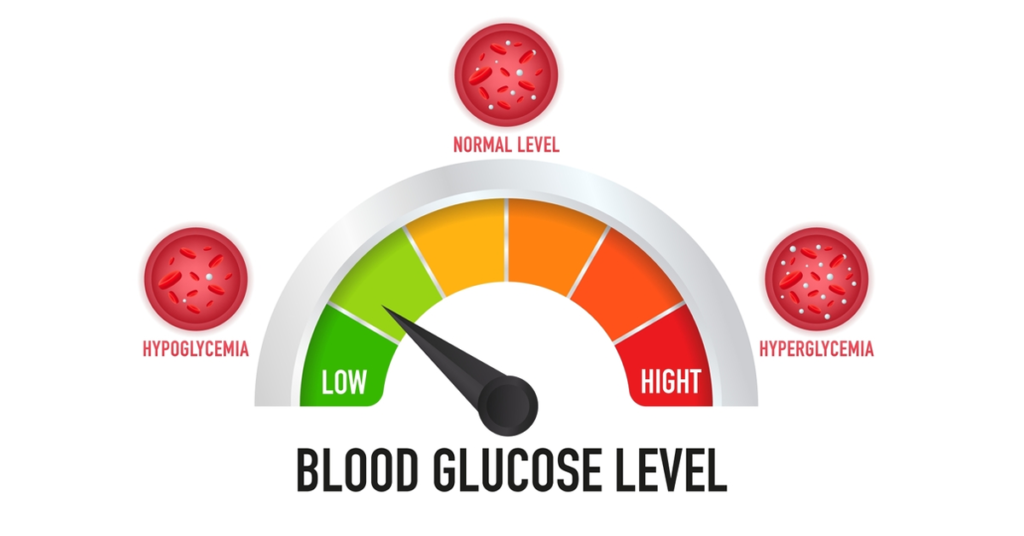
What is the normal blood sugar level by age? If you are looking at your blood sugar report, you are probably searching for a simple chart to help you understand those numbers. You aren’t alone—understanding your blood sugar is one of the best ways to get a clear picture of your overall metabolism and health.
We have made the 2026 standard guidelines easy to understand with a simple chart below. Whether you are checking your fasting sugar, post-meal numbers, or HbA1c, this guide will help you understand what is normal and offer a few easy daily habits to support better control.
Table of Contents
Why Blood Sugar Matters More Than Ever
We usually don’t think about our blood sugar until we hit that sudden afternoon crash. But it actually controls how you feel all day long.
When your numbers are balanced, you feel focused and awake. But when they are unbalanced for a long time, your body struggles, which can cause heart disease or type 2 diabetes.
And this is becoming a massive issue. According to the Centers for Disease Control and Prevention (CDC), over 40 million Americans have diabetes. The primary causes in most cases are getting older, daily stress, and the food we eat.
That is why understanding normal blood sugar levels is so useful. It gives you a clear baseline. Once you know what your numbers should look like on a glucose levels chart, it is a lot easier to catch small changes before they turn into big problems.
What Is the Normal Blood Sugar Level by Age Chart? (Simple Guide)
Honestly, normal blood sugar levels don’t change all that much as you get older. What does change is how hard your body has to work to manage the sugar you eat.
Things like childhood growth spurts, teen hormones, daily stress, and the loss of muscle mass as we age all affect how our bodies handle food. That’s why, as kids grow, their numbers can change a little bit, and older people may have slightly different goals based on their doctor’s advice.
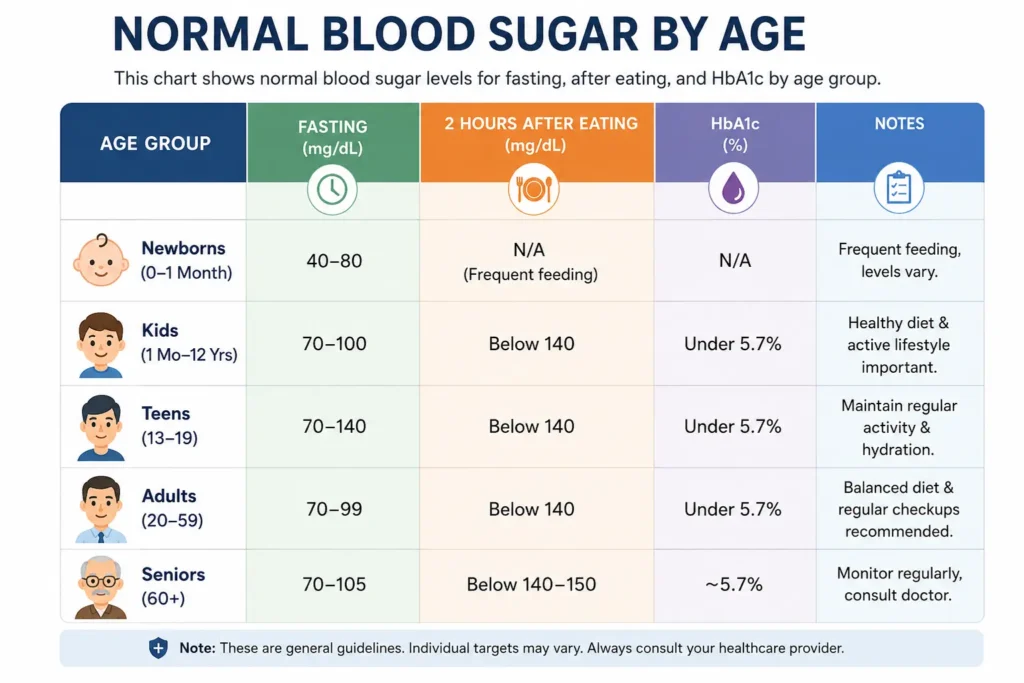
But for the most part, the initial goals remain the same. To make it easy to check your lab results without wasting time, this simple blood sugar level chart by age will help:
A Closer Look at Each Age Group
Let’s break down these numbers and understand what they actually mean in real life, starting with the newborns.
Newborns and Infants (0 to 1 Year)
If you just brought a baby home from the hospital, you might be looking at their discharge papers and wondering, what are normal blood sugar levels for newborns?
In those first few days of life, a baby’s body is just figuring out how to function outside the womb. Because of that, a normal blood sugar level for a newborn is much lower than yours.
Right after birth, a newborn’s normal blood sugar level is somewhere between 40 and 60 mg/dL. Give it a few days, and that natural baseline jumps to 50-80 mg/dL.
As long as your baby is feeding regularly, their body will adapt with time. Frequent feedings easily keep the infant’s blood sugar levels normal, without any extra worry. By the time they turn one, their numbers will start looking a lot more like a toddler’s.
Children (1 to 12 Years)
Once they are out of the infant stage, healthy kids usually manage their blood sugar naturally without even trying.
Like adults, they are constantly running around, playing, and burning off energy. All that non-stop movement keeps their system perfectly balanced.
You might notice their numbers fluctuate a bit during a big growth spurt, and that is completely normal. But if you have a family history of diabetes, simply getting your baby’s numbers checked will give you some peace of mind.
Teenagers (13 to 19 Years)
Being a teenager is basically like being on a giant hormonal roller coaster.
All these hormone changes can actually make it a bit harder for their bodies to use insulin properly. Because of this, it is pretty normal to see temporary changes in their blood sugar during puberty.
To keep things stable while they are growing so fast, you don’t have to do much. Just make sure they stay physically active, eat real food instead of just living on snacks, and actually get a good night’s sleep.
Adults (20 to 59 Years)
Once we hit our 20s and settle into adult life, our daily habits really start showing up in our lab results.
Sitting at a desk all day, dealing with non-stop stress, and grabbing quick convenience food on the go can slowly push our numbers up over time.
Keeping your blood sugar in that healthy adult range is exactly how you protect your heart, your kidneys, and your daily energy. But the good news is that you do not have to be perfect. Small, everyday choices like skipping the sugary soda or taking a short walk after dinner make a much bigger difference than most people realize.
Seniors (60+ Years)
At last, as we get into our 60s and beyond, the rules change a little. At this stage of life, doctors will sometimes adjust your target numbers based on your overall health, routine, or the medications you are taking.
Why? Because the goal isn’t just about stopping high blood sugar anymore. It is just as important to avoid levels that drop too low. A sudden drop can make you dizzy, confused, or shaky, which can lead to a bad fall. That’s why, for older people, focus should be on stability and safety.
Understanding the 3 Main Blood Sugar Tests
You really don’t need a medical degree to understand blood sugar tests or a blood sugar levels chart. According to the CDC, there are mainly three blood sugar tests. According to the Centers for Disease Control and Prevention (CDC), there are mainly three blood sugar tests. All three of these are just different ways of looking at how your body manages the food you eat.
1. Fasting Test
This test you have to take first thing in the morning before you consume anything (except water).
Think of this as your body’s resting state. It shows how well your system manages sugar, even without recent food intake. A healthy fasting number is between 70 and 99 mg/dL. Above 100 for a long time is usually an early warning sign that your body is starting to struggle with insulin.
2. Post-Meal Test
Doctors usually check this one about two hours after you finish a meal.
This test shows how quickly your body clears out the carbohydrates you just ate. It is totally normal for your blood sugar to spike right after eating, but it should return to below 140 mg/dL within 2 hours. If it still stays high, it means your system isn’t processing that food efficiently.
3. HbA1c Test
Your blood sugar fluctuates throughout the day depending on what you do, so a single test doesn’t always tell the whole story.
That is where the HbA1c comes in. Instead of just looking at one specific moment, this test measures your average blood sugar levels over the last two to three months. According to the American Diabetes Association (ADA), keeping this number under 5.7% is the ultimate goal for a healthy adult.
How to Maintain Normal Blood Sugar Levels Naturally
Let’s be real. Nobody wants to live on a miserable crash diet to keep their lab numbers happy. And the truth is, you don’t have to.
Keeping your blood sugar steady isn’t about being perfect. It is really just about stacking a few small, realistic daily habits. Here is what actually works without flipping your whole life upside down:
Exercise After Meals
You do not need to run a marathon or spend two hours at the gym. Just taking a simple 15-minute walk right after dinner is enough to pull sugar out of your blood and use it for energy.
Build a Little Muscle
As we get older, we naturally lose muscle mass, which makes it harder for our bodies to manage glucose. Doing simple things like wall push-ups, squats, or lifting light weights two days a week makes a massive difference in how your body handles food.
Don’t Skimp on Sleep
Have you ever noticed you crave junk food when you are tired? When you are exhausted, your body pumps out stress hormones that naturally spike your blood sugar. Getting a solid 7 to 9 hours of sleep is one of the easiest ways to keep your numbers balanced.
Eat Healthy Food
You don’t have to cut out carbs completely to be healthy. Just make sure you pair them with plenty of protein (like chicken or eggs) and healthy fats (like avocado or nuts). This slows down your digestion and stops those massive sugar spikes.
Lower the Daily Stress
When you are super stressed out, your body literally dumps sugar into your bloodstream to give you quick energy to fight or run away. Taking just five minutes a day to stretch, sit quietly, or breathe deeply can actually help lower your numbers.
At the end of the day, steady blood sugar is about building easy routines that support your body, one simple choice at a time.
What Are the Symptoms of High and Low Blood Sugar?
Even if you eat healthy and exercise regularly, your blood sugar levels may become unbalanced. But your body gives you warning signs before situations turn serious. That’s why knowing about these signs is important.
Symptoms of High Blood Sugar (Hyperglycemia)
When there is way too much sugar in your blood, your body works overtime trying to flush it out. You should watch out for:
- Feeling Always Thirsty
- Going to the Bathroom Frequently
- Constantly Feeling Tired
- Having a Blurred Vision
- Slow Wounds Healing
Symptoms of Low Blood Sugar (Hypoglycemia)
When your numbers dip below 70 mg/dL, your brain is literally running out of fuel. This usually happens fast. You should watch out for:
- Trembling and Shaking
- Sweating Without Any Reason
- Increased Heartbeat Without Reason
- Sudden Energy Crash
When to See a Doctor?
Online references and guides are fine, but they will never replace proper medical help. If you are suffering from the symptoms listed below, you should see a doctor:
- Your numbers won’t budge: If your blood sugar is constantly sitting above 200 mg/dL, even long after you have finished a meal.
- Online remedies didn’t work: If your blood sugar drops low, you eat a sugary snack, and 15 to 20 minutes later, you still feel dizzy, shaky, or weak.
- You can’t keep food down: If you are vomiting and unable to keep water or food in your stomach, your blood sugar can quickly become unsafe.
- You feel completely out of it: If you suddenly feel very confused, start slurring your words, or feel like you may faint, get medical help right away.
FAQs
What is the normal blood sugar level for men vs. women?
Normal blood sugar levels are the same for both men and women. The only time a woman’s blood sugar range will change is during pregnancy because hormones affect how your body manages glucose.
What does a fasting blood sugar of 110 mg/dL mean?
A fasting level of 110 mg/dL is slightly elevated and falls into the “prediabetes” range. It doesn’t mean you have diabetes, but it is a gentle warning sign from your body that it might be time to start walking after dinner or cutting back on sugary snacks.
What blood sugar level is considered dangerous?
Usually, blood sugar levels above 300 mg/dL and below 54 mg/dL are considered dangerous. If your numbers are in these ranges, you definitely need to see a doctor.
What are normal blood sugar levels for newborns?
A normal blood sugar level for a newborn is much lower than that of an adult, which is completely normal. Most of the time, their numbers range from 40 to 60 mg/dL, and you will see those levels naturally increase as they grow.
Does getting older mean my blood sugar will naturally go up?
No, getting older doesn’t mean your normal blood sugar will increase. While old age increases the risk, your everyday habits play a much bigger role than your age.
What is the best time to start checking my levels regularly?
If you are a healthy adult, you may not have to worry too much about it at the moment. Over 35 or a family history of diabetes? It’s a smart idea to get your blood sugar checked once a year.
Where can I find a normal blood sugar levels chart by age?
You can refer to the chart above, which breaks down normal ranges for newborns, children, teens, adults, and seniors. Because normal blood sugar levels chart by age can vary slightly by lab and testing method, always confirm your specific results with your doctor.
Final Thoughts
Let’s be honest. Staring at your lab report can feel overwhelming. But if you understand your blood sugar numbers, it becomes much easier to keep them balanced and protect your health.
As long as your fasting blood sugar levels are below 99 mg/dL and your post-meal numbers stay below 140 mg/dL, you are perfectly fine.
You don’t need to change your life completely to stay healthy. The real game-changer is daily choices such as eating well, getting enough sleep, and moving your body. Stay consistent and your blood sugar levels will stay balanced.
References & Sources
Centers for Disease Control and Prevention
National Institute of Diabetes and Digestive and Kidney Diseases

Daniel Brooks
Men's Health & Blood Sugar Writer
Better Health Focus
Expertise
Men's Health • Blood Sugar Management • Type 2 Diabetes Education • Prediabetes • Healthy Lifestyle • Nutrition • Metabolic Health • Preventive Wellness • Evidence-Based Health Content
About Daniel Brooks
Daniel Brooks is a Men's Health & Blood Sugar Writer at Better Health Focus, where he develops evidence-based educational content focused on men's wellness, blood sugar management, diabetes prevention, metabolic health, and healthy lifestyle habits.
With more than five years of experience writing health content, Daniel specializes in transforming complex medical research into practical, reader-friendly articles that help people better understand chronic disease prevention and long-term wellness. His work emphasizes realistic lifestyle changes, balanced nutrition, physical activity, and sustainable habits rather than quick fixes or unsupported health claims.
Daniel has completed professional education in Lifestyle Medicine through the American College of Lifestyle Medicine (ACLM) and has undertaken extensive independent study of evidence-based guidance, clinical recommendations, and educational resources published by the American Diabetes Association (ADA). His writing reflects current research and established best practices related to blood sugar management, diabetes prevention, cardiovascular health, and men's health.
Before publishing an article, Daniel reviews reputable medical literature and guidance from organizations including the National Institutes of Health (NIH), PubMed, the American Diabetes Association (ADA), the American Heart Association (AHA), the Centers for Disease Control and Prevention (CDC), and peer-reviewed scientific journals whenever applicable.
His goal is to help readers understand the science behind healthy living while making evidence-based information clear, practical, and accessible.
Education & Professional Development
- Professional education in Lifestyle Medicine through the American College of Lifestyle Medicine (ACLM)
- Ongoing study of evidence-based resources and clinical guidance published by the American Diabetes Association (ADA)
- Continuing education in nutrition science, metabolic health, and preventive medicine
- Regular review of peer-reviewed medical research and public health guidance
Areas of Focus
- Men's Health
- Blood Sugar Management
- Prediabetes Education
- Type 2 Diabetes Prevention
- Metabolic Health
- Heart Health
- Healthy Weight Management
- Nutrition & Healthy Eating
- Exercise & Lifestyle Medicine
- Preventive Health
Editorial Approach
Every article written by Daniel Brooks follows the editorial standards of Better Health Focus and is based on current scientific evidence from reputable medical organizations and peer-reviewed research whenever available.
His content is guided by the principles of:
- Evidence-based health education
- Scientific accuracy and transparency
- Balanced discussion of benefits, risks, and research limitations
- Clear and practical language for everyday readers
- Responsible reporting without exaggerated health claims
- Alignment with Google E-E-A-T principles for health content
Daniel believes that trustworthy health information should empower readers to make informed decisions in partnership with qualified healthcare professionals.
Research Sources
Daniel regularly consults information from:
- National Institutes of Health (NIH)
- PubMed
- American Diabetes Association (ADA)
- American College of Lifestyle Medicine (ACLM)
- Centers for Disease Control and Prevention (CDC)
- American Heart Association (AHA)
- U.S. Department of Agriculture (USDA)
- Office of Dietary Supplements (ODS)
- Peer-reviewed scientific journals
Editorial Disclaimer
The information published by Daniel Brooks on Better Health Focus is intended for educational and informational purposes only. It is not a substitute for professional medical advice, diagnosis, or treatment. Readers should consult a qualified healthcare professional before making decisions regarding medications, diabetes care, supplements, diet, or lifestyle changes.