

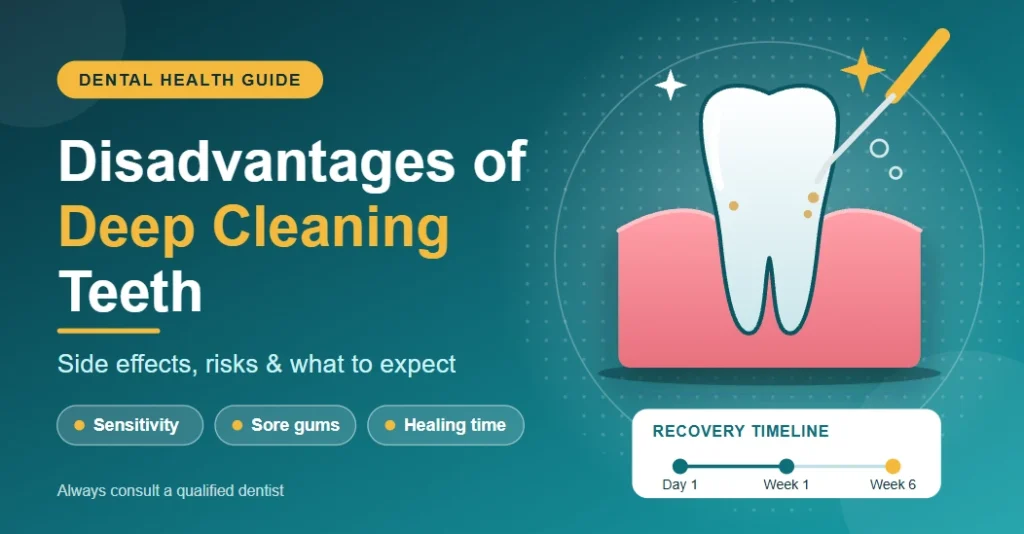
If your dentist has recommended a deep cleaning, you may be wondering what it involves and whether it has downsides. Deep cleaning is a non-surgical gum treatment that removes plaque and tartar from below the gumline. Dentists recommend it when gum disease (periodontitis) has started to form pockets around the teeth, because regular brushing and a standard cleaning cannot reach bacteria that deep.
The procedure is safe and effective for most people, and it is one of the best ways to stop gum disease from progressing. Still, it is normal to experience some temporary effects afterward. Understanding the disadvantages of deep cleaning teeth helps you prepare, recover comfortably, and know when to call your dentist.
Table of Contents
What Is Deep Cleaning of Teeth?
Deep cleaning, also called scaling and root planing, is a periodontal treatment for people with gum disease. It has two steps:
- Scaling: The dentist or hygienist removes plaque and hardened tartar (calculus) from the tooth surfaces, including below the gumline, using hand instruments or an ultrasonic scaler.
- Root planing: The tooth roots are smoothed so the gums can reattach more firmly and bacteria find it harder to build up again.
Many dentists use a local anesthetic to numb the area, so the procedure itself is usually manageable. Depending on how much of the mouth is affected, treatment may be spread over one to four visits.
If you are unsure whether your gums need this level of care, it helps to learn the signs of gum disease, such as bleeding when brushing, persistent bad breath, swollen gums, and gums pulling away from the teeth.
Regular Cleaning vs. Deep Cleaning
A regular cleaning (prophylaxis) is preventive. It removes plaque and tartar from above the gumline and the shallow area just below it, and it is meant for people with healthy gums or mild gingivitis.
A deep cleaning is therapeutic. It treats existing gum disease by cleaning the deeper pockets around the roots, and it often takes more than one visit. The two procedures serve different purposes, and a deep cleaning is not a “better” cleaning that everyone needs.
Disadvantages of Deep Cleaning Teeth
Most downsides of deep cleaning are temporary side effects. They are a normal response of inflamed gum tissue to treatment, and they usually settle as the gums heal.
Temporary Tooth Sensitivity
This is the most common side effect. Once tartar and bacteria are removed from the root surfaces, the teeth may feel more reactive to air, pressure, or touch for a short time.
Gum Soreness and Swelling
Gums that were already inflamed and tender are being treated directly, so they can feel sore, tender, or slightly puffy for a few days. This is usually mild and improves steadily.
Bleeding Gums
Light bleeding during and after the procedure is normal, especially if the gums were very inflamed. It typically eases within a few days as the tissue heals and the inflammation reduces. Bleeding that is heavy or does not stop needs a call to your dentist.
Tooth Sensitivity to Hot and Cold
Many patients notice a quick, sharp twinge with hot drinks, cold water, or ice cream. This happens because root surfaces are cleaned and sometimes a little more exposed. It tends to fade over days to a couple of weeks.
Temporary Gum Recession or Noticeable Gaps
When swollen gum tissue heals and shrinks back to a healthier, firmer state, the gums can look like they have receded, and small gaps may appear between teeth. In most cases the treatment has not damaged the gums. Swelling that was covering part of the tooth has simply gone down, revealing areas that were already affected by the disease. Some of this tissue may tighten up further during healing.
Discomfort During and After Treatment
Even with anesthetic, you may feel pressure or vibration during the procedure. Once the numbness wears off, a dull ache or tenderness is common. Over-the-counter pain relievers usually manage this well, as long as they suit your health and your dentist agrees.
Other minor inconveniences include a numb mouth for a few hours, a longer appointment time, and the cost, since deep cleaning is more involved than a routine cleaning.
Possible Risks and Complications
It helps to keep these separate from the temporary side effects above. The complications below are uncommon, and routine deep cleaning by a trained professional is not expected to cause permanent tooth damage.
- Infection: Rarely, bacteria can enter the bloodstream or the treated tissue can become infected. Signs include worsening pain, fever, pus, or a bad taste that gets worse instead of better.
- Risk for people with certain medical conditions: Some people with specific heart conditions or weakened immune systems may need precautions, such as antibiotics, before treatment. Your dentist or physician will advise on this.
- Reaction to local anesthetic: Allergic reactions are rare, but tell your dentist about any previous reactions.
- Prolonged sensitivity or soreness: Occasionally discomfort lasts longer than expected and may need extra care, such as desensitizing treatment.
- Gum abscess: In rare cases, a pocket of infection can form and needs prompt attention.
Why Professional Dental Care Matters
These risks are best managed by a qualified dental professional who can assess your gum health, take X-rays, measure pocket depths, and tailor treatment to you. Scraping at home with sharp tools or skipping treatment altogether can cause far more harm. Untreated gum disease can lead to bone loss, loose teeth, and eventually tooth loss, so the long-term risk of not treating it is generally greater than the short-term discomfort of treatment.
How Long Do Side Effects Last?
Recovery varies from person to person, but a general timeline looks like this:
- First 24 to 48 hours: Numbness fades, and soreness and light bleeding are most noticeable.
- 3 to 7 days: Swelling and tenderness usually improve significantly.
- 1 to 2 weeks: Sensitivity to hot and cold often settles, and gums look and feel firmer.
- 4 to 6 weeks: Many dentists schedule a follow-up to check pocket depths and healing.
If symptoms are getting worse after a few days rather than better, contact your dentist.
How to Reduce Discomfort After Deep Cleaning
A few simple habits can make recovery smoother:
- Follow your dentist’s instructions about pain relief and any prescribed rinses.
- Eat soft, lukewarm foods for a day or two, and avoid very hot, cold, spicy, or crunchy items.
- Rinse gently with warm salt water a few times a day, if your dentist agrees.
- Brush gently with a soft-bristled brush and a desensitizing toothpaste. Do not skip brushing, because keeping the area clean helps healing. A consistent daily oral hygiene routine is key to keeping gum disease from coming back.
- Avoid smoking and alcohol-based mouthwashes, which can slow healing and irritate tissue.
- Keep follow-up appointments so your dentist can monitor your progress.
Healthy habits between visits matter just as much as the treatment itself. If you want practical tips for daily upkeep, these simple ideas for teeth cleaning at home and these ways to improve gum health can help you protect the results of your treatment.
Who Should Avoid or Delay Deep Cleaning?
Deep cleaning is not recommended for everyone, and in some situations it should be postponed or planned with extra care. Talk to your dentist first if you:
- Have an active oral infection or abscess that needs to be treated first.
- Have uncontrolled diabetes, since healing may be slower and infection risk higher.
- Have a heart condition, artificial heart valve, or weakened immune system that may require precautions.
- Take blood thinners or have a bleeding disorder.
- Are pregnant. Dentists often prefer the second trimester for non-urgent treatment, but gum disease should not be ignored during pregnancy.
- Have a known allergy to local anesthetics.
Your dentist may coordinate with your doctor to make treatment safe for you.
Deep Cleaning vs. Regular Teeth Cleaning
| Feature | Regular Cleaning | Deep Cleaning |
| Purpose | Prevention | Treatment of gum disease |
| Area cleaned | Above and just below the gumline | Deeper pockets and tooth roots |
| Anesthesia | Usually not needed | Often used |
| Visits | Usually one | One to four |
| Recovery | Minimal | A few days of mild soreness or sensitivity |
| Best for | Healthy gums or mild gingivitis | Periodontitis with deep pockets |
Frequently Asked Questions (FAQs)
Is deep cleaning harmful to teeth?
No. When performed by a trained dentist or hygienist, deep cleaning is considered safe and is not expected to damage teeth. It removes bacteria and tartar that harm the supporting structures of the teeth. Temporary sensitivity is common but is not permanent damage.
Can deep cleaning loosen teeth?
Deep cleaning does not loosen healthy teeth. If teeth feel slightly loose afterward, it is usually because inflamed gums and supporting tissues are healing, or because gum disease had already weakened their support. Tell your dentist if looseness continues, because they may need to reassess.
Does deep cleaning damage gums?
Not in the usual sense. Gums can feel sore, swell, or bleed for a few days, and they may look like they have shrunk as swelling goes down. This is part of healing and a sign that inflammation is reducing. Ongoing pain or worsening symptoms should be checked.
How many days does sensitivity last?
Most people notice sensitivity for a few days up to about two weeks. Desensitizing toothpaste and avoiding extreme temperatures can help. If it lasts longer than that or is severe, see your dentist.
Is deep cleaning necessary for everyone?
No. It is recommended mainly for people with gum disease, such as periodontitis with deeper gum pockets. Most people with healthy gums or mild gingivitis only need regular professional cleanings and good home care.
Conclusion
The disadvantages of deep cleaning teeth are mostly short-lived: temporary sensitivity, sore or swollen gums, light bleeding, and sometimes a change in how the gums look as they heal. Uncommon complications such as infection or reactions to anesthesia are rare and are best handled with professional guidance. For most people, these drawbacks are far smaller than the risks of leaving gum disease untreated.
Research and Resource
ADA MouthHealthy – Scaling and Root Planing
Mayo Clinic – Periodontitis Diagnosis and Treatment
Cochrane Review – Full-Mouth Treatment
Cochrane Review – Routine Scale and Polish
Cochrane – Antibiotics and Professional Dental Cleaning
American Academy of Periodontology – Gum Disease
Cleveland Clinic – Tooth Scaling and Root Planing

Olivia Reed
Women's Health & Skincare Writer
Better Health Focus
Expertise
Women's Health • Skincare • Hormonal Health • Beauty & Skin Science • Preventive Wellness • Healthy Aging • Nutrition for Skin Health • Lifestyle Medicine • Evidence-Based Health Education
About Olivia Reed
Olivia Reed is a Women's Health & Skincare Writer at Better Health Focus, where she creates evidence-based educational content focused on helping readers better understand women's wellness, hormonal health, skincare, healthy aging, and preventive self-care.
Her writing combines scientific research with practical lifestyle guidance, making complex health and skincare topics easy to understand without relying on misleading beauty trends or unrealistic health claims. Olivia Reed believes that informed readers make better health decisions, and she strives to present balanced information that reflects current scientific evidence.
Before publishing an article, Olivia Reed reviews guidance and research from respected organizations, including the National Institutes of Health (NIH), PubMed, the World Health Organization (WHO), the American Academy of Dermatology (AAD), the American College of Obstetricians and Gynecologists (ACOG), the Office on Women's Health (OWH), and peer-reviewed medical journals whenever applicable.
Her work regularly explores women's hormonal changes throughout different life stages, skincare science, acne, eczema, pigmentation, menopause, nutrition for healthy skin, reproductive wellness, hair health, and evidence-based approaches to beauty and preventive healthcare.
Olivia Reed is committed to separating scientific evidence from social media trends and marketing claims, helping readers understand what current research supports—and where evidence is still emerging.
Education
Bachelor of Arts (B.A.) in Health Communication
Professional Development
- Continuing education in Women's Health and Skin Science
- Ongoing study of dermatology research and preventive healthcare
- Regular review of peer-reviewed publications related to dermatology, endocrinology, nutrition, women's health, and public health
- Continuous monitoring of clinical guidance from leading medical organizations
Areas of Focus
- Women's Health
- Hormonal Health
- Menstrual & Reproductive Wellness
- Pregnancy & Postpartum Education
- Menopause & Healthy Aging
- Skincare & Dermatology Education
- Acne, Eczema & Sensitive Skin
- Hair & Scalp Health
- Nutrition for Healthy Skin
- Preventive Health & Lifestyle Medicine
Editorial Standards
Every article written by Olivia Reed Ward follows the editorial standards of Better Health Focus and is developed using reputable medical references and current scientific literature whenever available.
Her editorial approach emphasizes:
- Evidence-based health education
- Scientific accuracy
- Balanced discussion of benefits, risks, and research limitations
- Clear, accessible language for everyday readers
- Responsible reporting without exaggerated claims
- Alignment with Google E-E-A-T principles for health content
Rather than promoting miracle treatments or viral beauty trends, Olivia Reed focuses on practical, research-informed guidance that supports informed decision-making and long-term wellness.
Research Sources
Articles may reference information from organizations and databases such as:
- National Institutes of Health (NIH)
- PubMed
- World Health Organization (WHO)
- American Academy of Dermatology (AAD)
- American College of Obstetricians and Gynecologists (ACOG)
- Office on Women's Health (OWH)
- American Academy of Pediatrics (AAP)
- U.S. Food & Drug Administration (FDA)
- Peer-reviewed scientific journals
Editorial Disclaimer
The information published by Olivia Reed Ward on Better Health Focus is intended for educational and informational purposes only. It should not replace professional medical advice, diagnosis, or treatment. Readers should consult a qualified healthcare professional or dermatologist regarding personal medical concerns, medications, skincare treatments, or significant health decisions.