
Exam pressure can be a huge burden. When you’re balancing school, family expectations, friends, and your own goals, it’s easy for stress to build up and start affecting your sleep, mood, focus, and daily life. The good news is that with easy, everyday mental health tips, students really can make exam season more manageable without needing anything fancy or complicated.
In this blog, we will share simple, easy, and medically backed mental health tips for students that will help you make exam stress manageable. These tips will help you stay calm and focused during exams.
Table of Contents
Why Exam Stress And Mental Health Matter
Worldwide, about 1 in 7 children aged 10-19 deals with a mental health condition such as depression, anxiety, or a behavior disorder. These conditions often go unnoticed, and even if noticed, they get ignored by them and the adults around them. They assume stress is a “part of growing up.”
Recent U.S. data shows that more than 5.3 million teens (about 20% of those aged 12 to 17) have a mental or behavioral health condition like anxiety, depression, or trouble with their behavior. At the same time, the Centers for Disease Control and Prevention (CDC) high school survey shows that about 4 out of 10 students say they often feel sad or hopeless.
School and exam pressure are not the only causes of these conditions, but they are major factors. According to the studies from different countries, academic and exam stress is linked with higher levels of anxiety, low mood, and even physical symptoms like headache and stomach pain. That’s why these simple mental health tips for students can help them manage stress and protect their overall well-being.
What Exam Stress Feels Like
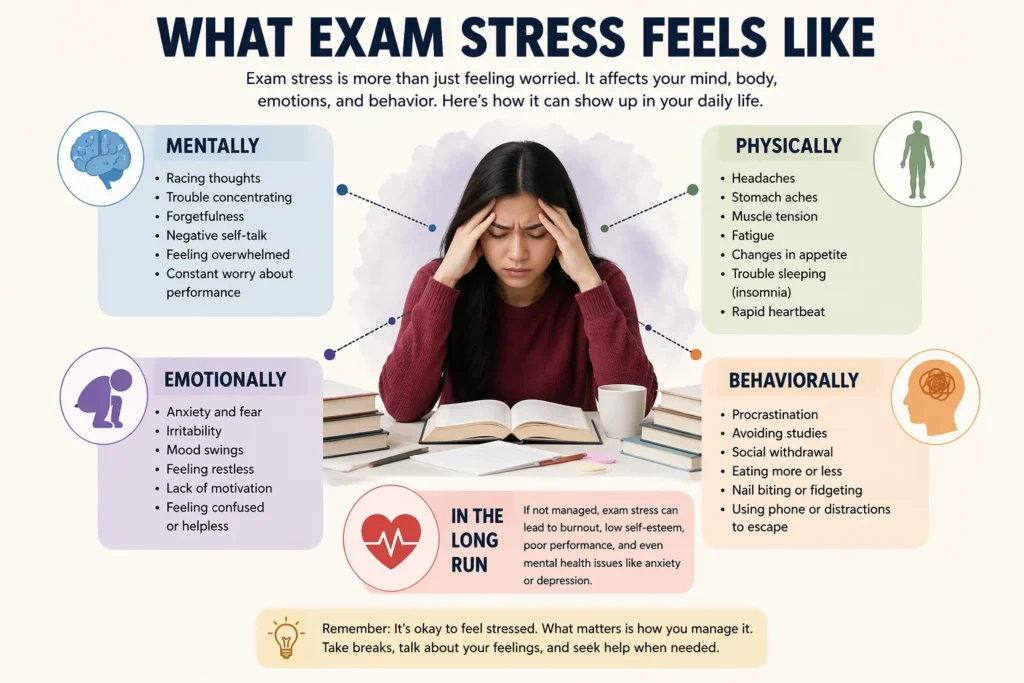
Health experts identify several common physical and emotional signs of exam stress, including:
- Worrying a lot or feeling constantly on edge
- Having trouble sleeping or waking up very early
- Headaches, stomachaches, or feeling sick without a clear medical cause
- Feeling tense, irritable, or snapping at people unexpectedly
- Eating much more or much less than usual
- Losing interest in activities you normally enjoy
- Feeling like you will fail or that the future is hopeless
In some cases, severe exam stress may also trigger temporary feelings of detachment from yourself or your surroundings. These experiences can resemble symptoms associated with Depersonalization Disorder or derealization, but temporary stress-related episodes are not the same as having the disorder. If these feelings become frequent, last beyond the exam period, or interfere with daily life, it’s important to seek evaluation from a qualified mental health professional.
If you notice several of these symptoms during exam season, it’s a sign that stress may be affecting your mental well-being, and taking steps to manage stress and seek support can be beneficial.
Simple Mental Health Tips For Students During Exam Season
Here are some practical mental health tips for students that can help to reduce pressure and stress during exams.
1. Make A Realistic, Kind Study Plan
Having good preparation for exams a few days before is one of the best ways to reduce exam stress and pressure. You can do:
- Make a realistic study plan based on how much you have to study, according to the time left
- You can break your long study sessions into small sessions of 30-40 minutes with short breaks
- Study multiple subjects so as not to get bored and overload yourself with one subject
Having a clear and realistic plan reduces uncertainty, which is a major factor of anxiety, and gives you a sense of control.
How to use this tip:
- Write down all your exam dates and topics.
- Work backward, planning what you’ll revise each day or week.
- Leave small gaps in your plan so you can catch up if you miss a day—this makes the plan kinder and more realistic.
2. Protect Your Sleep Like An Exam Superpower
According to health experts, good sleep improves your thinking, concentration, and mood. They recommend sleeping at least 8-10 hours each night for teenagers and having time for a wind-down routine before going to bed.
Not getting enough sleep can make it harder for your brain to remember what you learned, deal with stress, and control your feelings. Health professionals emphasize that numerous mental health issues in adolescents are associated with inadequate sleep and hazardous behaviors.
Tips for going to sleep quickly:
- Before bed, do something relaxing like stretching, reading a book, or listening to music.
- Maintain a fixed sleep and wake-up time, even on weekends during exams.
- Avoid heavy snacks or drinking energy drinks late at night. They can make it harder to sleep and wake up.
3. Eat, Drink And Move To Fuel Your Brain
Exam stress and pressure push students to eat more junk food, skip meals, or engage in endless coffee sipping, which can make concentration and mood worse. According to the NHS, teenagers should have a balanced diet and regular meals to support energy and growth and improve brain function. They should avoid junk and processed foods.
According to one study, more than 222,000 teenagers in 61 countries had psychological conditions associated with unhealthy eating. In short, when your mood is low, you may eat unhealthy foods, which can extend your low mood.
Being more physically active is another effective tool to manage stress. Many health experts recommend regular movement to improve mood and sleep during exam periods.
Simple habits during exams:
- Don’t skip breakfast; choose something with protein and whole grains (like eggs and whole-grain toast or yogurt and fruit).
- Keep a water bottle nearby while studying and in the exam (if allowed).
- Fit in at least 20–30 minutes of movement most days—walking, dancing, stretching, or sports all count.
4. Use Quick Calming Tools For Anxious Moments
Medical professionals at the Mayo Clinic suggest using quick calming tools and relaxation practices to manage exam pressure and stay steady during exams. Some examples of these techniques are:
- Deep breathing: slowly inhale through your nose, hold for a moment, and then exhale through your mouth.
- Progressive muscle relaxation: gently tense and relax muscle groups from your toes up to your face to release physical tension.
- Positive imagery: picture yourself entering the exam room calm and prepared, answering questions steadily, and finishing with a sense of relief.
The NHS also recommends short mindfulness breaks and combining study planning with regular movement and self-care practices to keep stress in control.
Try this 60‑second exam‑day reset:
- Put both feet on the floor and sit back in your chair.
- Take 5 slow breaths: in for a count of 4, out for a count of 6.
- Relax your shoulders and jaw.
- Quietly tell yourself, “I’ve prepared as best I can. I can handle this one question at a time.”
5. Talk It Out Instead Of Bottling It Up
Feeling connected with other people at school, like teachers and classmates, is one of the strongest protective factors for the mental health of teens. When students feel connected, there is a lower chance of experiencing serious emotional distress and risky behaviors.
Health experts recommend people tell trusted friends, family, or school staff if exam pressure feels too much, instead of trying to deal with it alone. Even a short conversation can make you feel less lonely and can give extra support like tutoring, exam adjustment, or counseling.
Who you might talk to:
- A parent or caregiver
- A teacher, school counselor, or school nurse
- A close friend who listens without judging
- A doctor or mental health professional if stress is severe
6. Avoid the Comparison And Focus on Your Own Progress
At a young age, it’s easy to compare yourself to classmates who appear to excel at studying and feel like you’re falling behind. However, each student’s learning ability and pace vary. Just because something works for someone else and not for you doesn’t mean you’re doing it wrong.
When you keep comparing yourself to others, stress increases too much. That’s why, instead of others, you should focus on your own progress, efforts, and improvements you are making each day.
Questions to gently ask yourself:
“If I stop looking at what everyone else is doing, what progress have I made this week?”
“What study method is helping me most right now?”
“What is one thing I am doing well, even if it feels small?”
Mental Health Tips For Elementary Students Dealing With Exams
While not the same level of stress, elementary students still face pressure from tests, assessments, and adults. Mental health tips for elementary students focus more on feelings, routine, and support from adults.
Younger children show exam stress by anger, clinginess, meltdowns, or tummy aches rather than words. Experts say that adults should help kids name and understand their feelings and tell them that it’s normal to feel nervous before a test and that it can even help them focus better.
Practical mental health tips for elementary students:
- Use pictures and simple words to make them understand how they feel.
- Validate their feelings.
- Teach a basic relaxation technique.
Mental Health Tips For High School Students During Exams
The high school years bring board exams, competitive entrance tests, and major decisions regarding the future, all of which can be stressful for students. These mental health tips for high school students are designed to help you maintain a healthy balance between achieving academic goals and protecting your emotional well-being.
Smart Study Tips to Reduce Exam Stress
- Make a realistic plan for how to get ready that breaks your subjects down into manageable time periods and specific topics.
- Instead of just reading your notes again, try summarizing them, teaching a friend what you’ve learned, or using flashcards.
- Do full practice papers under time limits to get used to the pressure of the exam and improve your skills.
- Take short breaks often to keep from getting tired and to stay focused while you study.
Many health experts highlight the value of preparing before the deadline, studying consistently, and having a regular pre-test routine. All this helps to reduce anxiety from preparing at the last minute.
How Parents and Teachers Can Help
Parents should:
- Listen more to their child. You don’t always have to provide a solution immediately. Just listen.
- Always appreciate their hard work, no matter the results of exams. It reduces their fear of failing.
- Talk with their child if they have stopped eating, stopped sleeping, or are withdrawing from friends.
Teachers should:
- Be approachable so that students feel it is easier to ask for help if they feel the teacher is on their side.
- If possible, coordinate with other teachers so students don’t have five projects due on the same Monday.
- Take one minute at the start of class to do a quiet breathing exercise, which can change the entire energy of the room.
When to Seek Professional Help
Sometimes, these natural mental health tips for students aren’t enough. In those cases, you should get proper professional help. Signs You Should Talk to a Professional Include the Following:
- You can’t sleep at all, or you are sleeping all day.
- You have lost interest in things you used to love.
- You feel “on edge” or panicky most of the time.
- Your grades are dropping significantly because you can’t focus.
Final Thoughts
At the end of the day, you and your mental health are more important than some exam score. Exams are just a part of school life, but your health is important for your whole life. Using these mental health tips, students can stay strong and more focused and lower their stress.
Whether you are a high school student or an elementary school student who needs help, the goal is to lower stress and focus on your own progress. Do your best with these tips, and if still needed, visit a professional for help. And again, remember that grades don’t show your true value.
Frequently Asked Questions
How much sleep do I really need during exam season?
High school students should aim for 8 to 10 hours, while younger kids need even more. Sleep helps your brain move what you learned into long-term memory. Skipping sleep to study more often backfires because you likely won’t remember the material the next day.
What are the best foods to eat when I am stressed?
Focus on foods that give you steady energy, like oatmeal, whole grains, and fresh fruit. Avoid sugary snacks and too many energy drinks, which cause a “crash” later. Staying hydrated by drinking plenty of water is also key to keeping your brain sharp and focused.
How do I handle a sudden moment of panic during a test?
Try the “Box Breathing” method: breathe in for four seconds, hold for four, exhale for four, and hold again. You can also try calming yourself by noticing five things you can see. These simple practices physically tell your body it is finally safe to relax.
Why is comparing myself to my classmates making me feel worse?
Everyone learns at their own speed and in their own way. Comparing yourself to others only makes you feel worse and lowers your self-esteem. Instead, focus on your own goals and progress. Your worth is not based on how you study compared to someone else.
How often should I take breaks while studying?
Try studying for 25 minutes and then taking a 5-minute break to stretch or grab water. These short pauses help prevent your brain from getting too tired and keep your stress levels much lower throughout the day.
References & Sources
Centers for Disease Control and Prevention

Noah Ross
Health & Wellness Writer
Better Health Focus
Expertise
Weight Management • Gut Health • Nutrition • Metabolic Health • Healthy Lifestyle • Mental Wellness • Preventive Health • Dietary Supplement Research • Evidence-Based Health Education
About Noah Ross
Noah Ross is a Health & Wellness Writer at Better Health Focus, where he creates evidence-based educational content focused on helping readers make informed decisions about their health. His work covers weight management, gut health, nutrition, metabolism, preventive wellness, and healthy lifestyle strategies.
With a background in health communication, Noah specializes in translating complex medical research into clear, practical, and easy-to-understand articles. He believes reliable health information should be accessible to everyone without relying on sensational claims or misleading marketing.
Before publishing an article, Noah reviews scientific literature and guidance from respected health organizations, including the National Institutes of Health (NIH), PubMed, the World Health Organization (WHO), the Centers for Disease Control and Prevention (CDC), the Office of Dietary Supplements (ODS), and other peer-reviewed medical journals. His writing emphasizes transparency by distinguishing well-established scientific evidence from preliminary findings and promotional claims.
At Better Health Focus, Noah regularly researches topics related to digestive wellness, metabolism, healthy eating, blood sugar management, dietary supplements, weight loss strategies, healthy aging, and preventive healthcare. His content is designed to help readers understand both the potential benefits and limitations of current scientific evidence while encouraging realistic expectations and sustainable lifestyle habits.
Education
Bachelor of Arts (B.A.) in Communications
Professional Development
- Continuing education in Nutrition Science and Public Health
- Ongoing study of evidence-based medicine and clinical research
- Regular review of peer-reviewed research related to nutrition, metabolism, obesity, digestive health, and preventive medicine
- Continuous monitoring of updates from major public health organizations and medical research databases
Areas of Focus
- Weight Loss & Healthy Weight Management
- Gut Microbiome & Digestive Wellness
- Nutrition & Healthy Eating
- Blood Sugar & Metabolic Health
- Mental Wellness & Lifestyle Habits
- Preventive Health Education
- Dietary Supplement Reviews
- Evidence-Based Wellness Research
Editorial Standards
Every article written by Noah Ross follows the editorial standards of Better Health Focus. Content is developed using current scientific evidence, reputable medical references, and trusted public health resources whenever applicable.
Each article is written with a commitment to:
- Accuracy and factual reporting
- Evidence-based health education
- Transparent discussion of scientific findings
- Balanced coverage of benefits, risks, and research limitations
- Clear, reader-friendly language
- Compliance with Google E-E-A-T principles for health content
Noah avoids unsupported health claims, miracle cures, and exaggerated promises. When evidence is limited or still emerging, that uncertainty is clearly communicated so readers can make informed decisions based on the best available research.
Research Sources
Articles may reference information from organizations and databases such as:
- National Institutes of Health (NIH)
- PubMed
- World Health Organization (WHO)
- Centers for Disease Control and Prevention (CDC)
- Office of Dietary Supplements (ODS)
- U.S. Department of Agriculture (USDA)
- American Heart Association (AHA)
- Peer-reviewed scientific journals
Editorial Disclaimer
The information published by Noah Ross on Better Health Focus is intended for educational and informational purposes only. It should not be considered medical advice and is not a substitute for consultation with a qualified physician or other licensed healthcare professional. Readers should seek professional medical guidance before making decisions regarding diagnosis, treatment, medications, supplements, or significant lifestyle changes.