

Taking care of your gums is important because they support your teeth, protect the bone underneath them, and keep your mouth healthy overall. Bleeding while brushing and bad breath are two common signs of poor gum health. According to the CDC, gum disease is a common concern among adults, but it is preventable through consistent oral hygiene and professional medical care.
Brushing and flossing, limiting sugar intake, avoiding tobacco and alcohol, and visiting the dentist regularly are all effective ways to care for your gums. In this simple guide to healthier gums, we will discuss how to improve gum health naturally.
Table of Contents
What Gum Health Really Means
Your gums should feel calm, firm, and comfortable, and they shouldn’t bleed every time you brush or floss. They shouldn’t hurt or be puffy most of the time, either. It is called periodontal disease in medical terms. It is an infection of the tissues that hold your teeth together, and it usually starts when plaque builds up and hardens because you don’t clean your teeth well. Gingivitis is the first stage, and it usually makes the gums red, swollen, or bleed.
The key is to remember that gingivitis can be reversed if detected early. The NIDCR says it can be reversed with daily brushing and flossing, along with regular dental cleanings. That means bleeding gums don’t necessarily indicate an irreversible, long-term issue. With the right care, habits, and medical help, you can improve gum health naturally.
The problem occurs when you ignore gum issues. If plaque keeps building on the teeth and along the gumline, it can harden into tartar. Once tartar has formed, home oral care alone is no longer enough to remove it. Over time, the infection will spread deeper and begin affecting the bones that support the teeth. That is when gum disease becomes harder to deal with.
Why Gum Health Matters More Than People Think
Most people ignore gum disease as just a minor mouth issue. But it’s more than that. When gums are infected or inflamed, even chewing and drinking water can become uncomfortable, and teeth can loosen. The WHO says that severe periodontal disease can cause the gums to pull away from the teeth and the supporting bone, leading to tooth loss.
The number shows that this is not a rare disease. According to the CDC, nearly 50% of US adults above 30 have periodontitis, and about 8% have severe periodontitis. The WHO says that severe gum disease affects more than 1 billion people worldwide, and oral disease affects about 3.5 billion people.
However, this doesn’t mean that gum disease is unavoidable. You need to pay more attention to catching gum disease in the early stages. It increases your chances of reversing or at least stopping from getting worse. That is why adopting healthy habits can improve the chances of prevention. If there are still problems, you should seek proper medical attention.
Common Causes of Gum Disease
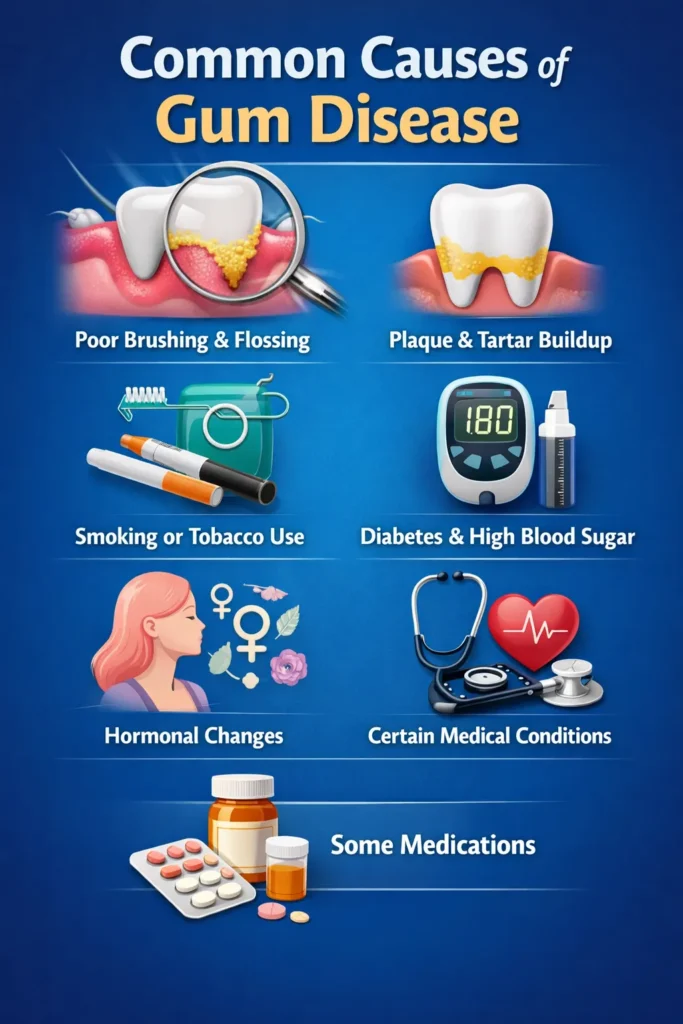
As we already know, gum disease usually starts slowly and often goes unnoticed at first. There are many reasons bacteria can build up around the gums. Here, I have provided the most common causes of gum disease:
- Poor brushing and flossing
- Plaque turning into tartar.
- Smoking or using tobacco
- Diabetes or high blood sugar
- Hormonal changes
- Certain medical conditions
- Some medicines
Gum disease usually starts when plaque isn’t cleaned properly, and certain habits or health conditions can make it worse. That’s why taking care of your teeth every day and visiting your dentist regularly really matters.
Natural Ways To Improve Gum Health At Home
Taking care of your gum health is not complicated. Small daily habits are enough to keep them cleaner, calmer, and healthier. The key is to stay consistent and pay proper attention before it gets worse.
1. Brush The Right Way, Twice A Day
Brushing is the most basic way to keep gums healthy. According to the NHS, you should brush your teeth twice a day with fluoride toothpaste. The NIDCR advises that you should brush gently, angle the bristles toward the gumline, and use small circular motions rather than just scrubbing them harder.
Many people think harder brushing means cleaner teeth, but that’s not true. It will just irritate your gums more. If your gums are already sensitive, then a soft brushing is better than an aggressive one.
The NHS says you should brush before bed because it is important. That is because when you sleep, you are not rinsing or drinking as you do during the day, so plaque has more time to sit on your teeth. Using a gum health mouthwash can also support your routine by reducing bacteria and giving fresher breath.
A good brushing routine is just brushing twice a day properly. This simple habit will help significantly.
2. Clean Between Your Teeth Every Day
Many people skip this step, and it is a major contributor to gum issues. According to the NHS, you should floss or use an interdental brush every day to remove food, debris, and plaque between your teeth. Experts say that cleaning between teeth is part of a good oral hygiene routine. If flossing is hard, you can use interdental brushes. More than a tool, being regular is important.
This part might not seem like something major, but it can make a significant difference. Once you begin cleaning between your teeth, you might notice less bleeding and less soreness over time.
3. Do Not Let Plaque Turn Into Tartar
If plaque is ignored, it can harden and become tartar. While plaque can be removed at home, tartar needs professional cleaning by a dentist. That’s why daily oral hygiene is so important.
People sometimes think they can fix everything by brushing harder, but once tartar is formed, you need proper professional help. That is also a part of gum care.
4. Eat In A Way That Helps Your Gums, Not Hurts Them
You might not think that what you eat has a big effect on your gum health. The NHS says that eating a healthy diet and cutting back on sugar is good for your teeth and gums as well as your body.
Over time, simple habits like eating fewer sugary snacks and drinks and choosing balanced, healthy meals can help keep your gums healthy.
5. Stay Hydrated And Keep Your Mouth From Drying Out
Some medications can make your mouth feel parched or sticky, which can harm your gum health. While most natural dental care focuses on habits like brushing, flossing, and cutting down on sugar or tobacco, the NIDCR notes that dry mouth from medicine can increase the risk of developing gum disease.
Drinking water is simple and helps keep your mouth from feeling parched, supporting better oral hygiene. It’s not a magic cure, but it can support your gum care.
6. Quit Smoking If You Smoke
Stopping to smoke, if you do, is one of the most effective steps you can take for your gums’ health. Tobacco use and smoking are big risk factors for periodontal disease and can make treatment less effective.
Smoking affects blood flow, healing, and the way gums respond to infection. If you want to improve gum health naturally, stopping these two things is a must.
7. Keep Blood Sugar Steady If You Have Diabetes
According to the CDC, gum disease is more common in diabetic people with diabetes and may take longer to heal. Managing your diabetes by keeping blood sugar levels balanced can prevent gum disease and other mouth infections.
That means balanced blood sugar supports your gum health. If you have diabetes, brushing, flossing, regular dental cleaning, and medical help are more important for you. You should at least brush twice a day, floss daily, and consult with your dentist if you have diabetes or high blood sugar levels.
8. Pay Attention To Medications And Mouth Changes
Some medications can affect your mouth, leading to gum issues. The NIDCR says that dry mouth from medicines can increase the risk of gum disease. It can increase the importance of oral hygiene and the need for dental care from professionals. If a new medicine makes your mouth feel off, then you should consult with your doctor before doing anything on your own.
A Simple Daily Routine for Healthier Gums
You do not need a complicated routine to keep your gums healthy. In most cases, the best routine is the one you can actually stick with every single day. Small habits done regularly help more than a big effort once in a while.
A simple gum-friendly day can look like this:
- Brush your teeth in the morning
- Clean between your teeth once a day
- Use a gum-health mouthwash
- Go easy on sugary snacks and drinks
- Drink water during the day
- Brush again before bed
These steps sound basic, but basic is what works best. Your gums stay healthy when plaque doesn’t stay on your teeth for too long.
The most important thing is not to be perfect. Missing some steps now and then is normal. What matters the most is that you stay on track the next day. Steady care is more effective than random bursts of care.
When to See a Professional
While natural methods are effective, they don’t replace professional dental care. A dentist can remove “tartar.” Once plaque turns into tartar, you cannot remove it at home with a toothbrush. If tartar stays on your teeth, it will eventually cause the gums to pull away.
See a dentist immediately if you notice:
- Gums that are pulling away from the teeth.
- Persistent bad breath that won’t go away.
- Loose or shifting teeth.
- There is pus between your teeth and gums.
Final Thoughts
You can improve your gum health naturally by brushing your teeth twice a day, cleaning between teeth, eating nutrient-rich food, drinking more water, and visiting the dentist for checkups. These small habits might seem simple, but they help prevent many gum issues. If you smoke or have diabetes, then you have to put extra care into gum health. But your steady efforts can gradually improve them.
Frequently Asked Questions
1. What are the first signs that my gums are not healthy?
If your gums are red, swollen, or sensitive, it’s usually a sign that they need some care. You might also see blood when you brush or floss. If you notice any of these, you need to start taking care of your gums.
2. Can gum disease be cured on its own?
In almost every case, gum disease doesn’t get cured on its own. You need a better oral hygiene routine and a healthy lifestyle, and, in some cases, even professional help. All these actions will help you cure gum disease over time.
3. How often should I brush my teeth to protect my gums?
Experts, including the CDC, recommend brushing at least twice every day. It is vital to brush once in the morning and once before bedtime, so you should avoid skipping either session. Using a gum health toothpaste is effective for managing plaque, and you should focus on brushing gently rather than simply scrubbing your teeth.
4. Is flossing really necessary every day?
Health experts strongly recommend that you floss every day because a regular toothbrush can’t clean and remove particles from the tight spaces between teeth. If flossing feels hard, you can use an interdental brush once a day. This small habit helps you better protect your gum health.
5. How to improve gum health naturally at home?
You can improve gum health naturally by following a routine of brushing twice daily and flossing once a day. Also, eating balanced meals, staying properly hydrated, and avoiding smoking are essential habits. These simple actions will help you keep your gums healthy.

Olivia Reed
Women's Health & Skincare Writer
Better Health Focus
Expertise
Women's Health • Skincare • Hormonal Health • Beauty & Skin Science • Preventive Wellness • Healthy Aging • Nutrition for Skin Health • Lifestyle Medicine • Evidence-Based Health Education
About Olivia Reed
Olivia Reed is a Women's Health & Skincare Writer at Better Health Focus, where she creates evidence-based educational content focused on helping readers better understand women's wellness, hormonal health, skincare, healthy aging, and preventive self-care.
Her writing combines scientific research with practical lifestyle guidance, making complex health and skincare topics easy to understand without relying on misleading beauty trends or unrealistic health claims. Olivia Reed believes that informed readers make better health decisions, and she strives to present balanced information that reflects current scientific evidence.
Before publishing an article, Olivia Reed reviews guidance and research from respected organizations, including the National Institutes of Health (NIH), PubMed, the World Health Organization (WHO), the American Academy of Dermatology (AAD), the American College of Obstetricians and Gynecologists (ACOG), the Office on Women's Health (OWH), and peer-reviewed medical journals whenever applicable.
Her work regularly explores women's hormonal changes throughout different life stages, skincare science, acne, eczema, pigmentation, menopause, nutrition for healthy skin, reproductive wellness, hair health, and evidence-based approaches to beauty and preventive healthcare.
Olivia Reed is committed to separating scientific evidence from social media trends and marketing claims, helping readers understand what current research supports—and where evidence is still emerging.
Education
Bachelor of Arts (B.A.) in Health Communication
Professional Development
- Continuing education in Women's Health and Skin Science
- Ongoing study of dermatology research and preventive healthcare
- Regular review of peer-reviewed publications related to dermatology, endocrinology, nutrition, women's health, and public health
- Continuous monitoring of clinical guidance from leading medical organizations
Areas of Focus
- Women's Health
- Hormonal Health
- Menstrual & Reproductive Wellness
- Pregnancy & Postpartum Education
- Menopause & Healthy Aging
- Skincare & Dermatology Education
- Acne, Eczema & Sensitive Skin
- Hair & Scalp Health
- Nutrition for Healthy Skin
- Preventive Health & Lifestyle Medicine
Editorial Standards
Every article written by Olivia Reed Ward follows the editorial standards of Better Health Focus and is developed using reputable medical references and current scientific literature whenever available.
Her editorial approach emphasizes:
- Evidence-based health education
- Scientific accuracy
- Balanced discussion of benefits, risks, and research limitations
- Clear, accessible language for everyday readers
- Responsible reporting without exaggerated claims
- Alignment with Google E-E-A-T principles for health content
Rather than promoting miracle treatments or viral beauty trends, Olivia Reed focuses on practical, research-informed guidance that supports informed decision-making and long-term wellness.
Research Sources
Articles may reference information from organizations and databases such as:
- National Institutes of Health (NIH)
- PubMed
- World Health Organization (WHO)
- American Academy of Dermatology (AAD)
- American College of Obstetricians and Gynecologists (ACOG)
- Office on Women's Health (OWH)
- American Academy of Pediatrics (AAP)
- U.S. Food & Drug Administration (FDA)
- Peer-reviewed scientific journals
Editorial Disclaimer
The information published by Olivia Reed Ward on Better Health Focus is intended for educational and informational purposes only. It should not replace professional medical advice, diagnosis, or treatment. Readers should consult a qualified healthcare professional or dermatologist regarding personal medical concerns, medications, skincare treatments, or significant health decisions.