

Ever wondered how to clean your teeth at home just as well as the professionals? Healthy oral hygiene doesn’t need expensive tools or treatment. It just starts with your brush and toothpaste.
While you still need a dentist for the proper deep cleaning, a good everyday dental routine is your absolute best tool to defend against plaque, weakened enamel, and gum disease. If you want a brighter, healthier smile at home, you are in the right place. Keep reading for safe, effective steps to improve your daily oral hygiene routine and clean your teeth at home.
Why Proper Teeth Cleaning Matters
Before we get into the “how,” let’s talk about the “why.” Every day, your teeth get exposed to food and drinks, which creates a sticky film called plaque. It is packed with bacteria. If you skip your daily routine, that plaque quickly builds up around your gums and causes major dental issues like cavities, gum disease, and worn-out enamel.
If you don’t clean your teeth regularly, that sticky layer of plaque turns into a hard substance called tartar. And once plaque turns into tartar, it’s not possible to remove it by normal oral routines. At that point, you need to go to a dentist to remove it safely.
The whole goal of teeth cleaning at home is to wipe away that soft plaque every single day before it hardens. When you stick to a good daily routine, the benefits are huge. You will enjoy fresher breath, dramatically lower your risk of tooth decay, and prevent painful gum disease. By staying on top of it, you stop the big dental problems long before they even start.
7 Simple Steps for Teeth Cleaning at Home
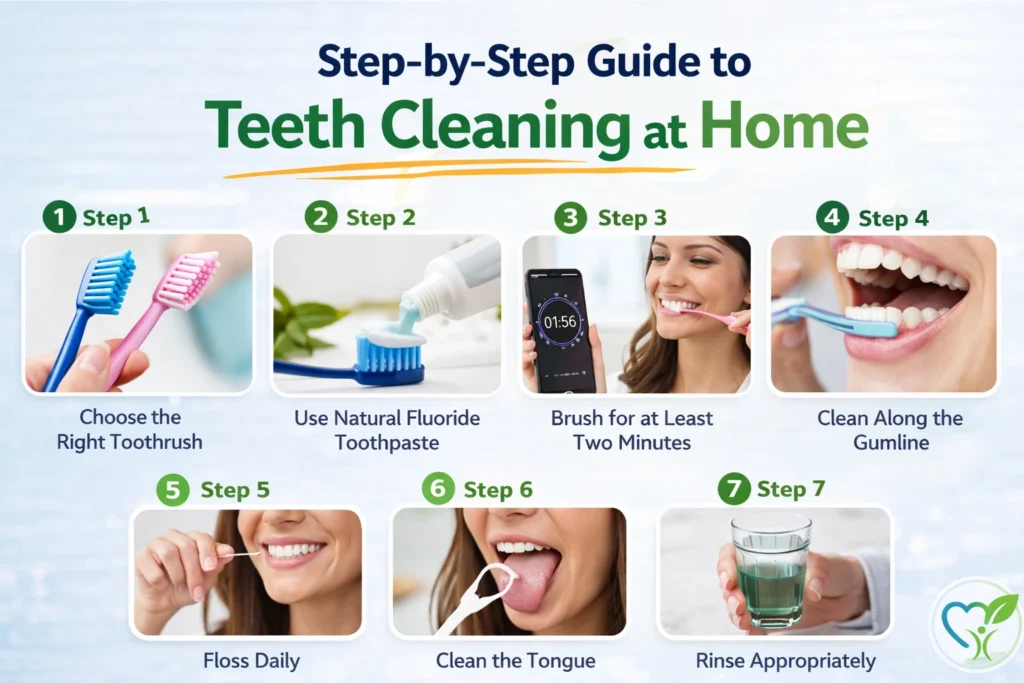
Scrubbing harder is not what matters to keep your teeth clean. It is being consistent with a good daily oral hygiene routine. Here are the simple steps you should follow to clean your teeth at home:
1. Pick the Right Toothbrush (And Replace It Often)
It all starts with choosing the right toothbrush. Do your teeth a favor and always choose a soft-bristle toothbrush. Hard bristles can actually scrub away your tooth enamel and make your gums sore. And remember, toothbrushes aren’t supposed to be used forever. The American Dental Association (ADA) recommends swapping out your brush every 3 to 4 months. If the bristles look bent or worn out before then, toss them early. Good dental care is just as much about having the right gear as it is about your brushing technique.
2. Use Fluoride Toothpaste
The right toothpaste is as important as the toothbrush. Fluoride is a natural mineral that strengthens your teeth and stops cavities from developing. The Centers for Disease Control and Prevention (CDC) highlights fluoride toothpaste as necessary to rebuild damaged enamel and prevent any further tooth decay. Usually, for adults, a pea-sized amount of toothpaste is enough for deep cleaning teeth at home.
3. Brush for Two Full Minutes
Most people rush through brushing, thinking that just quickly scrubbing with force is all that matters. But according to the ADA, you should brush your teeth for two full minutes and twice a day. You should:
- Split these two minutes into 30-second sessions for each of the corners of your mouth.
- Move your brush in gentle circular motions. Don’t just saw back and forth like you’re chopping wood.
- Remember to brush before you go to sleep. This is important as your mouth produces less saliva when you sleep. This means bacteria can grow more.
4. Gently Clean the Gumline
Plaque usually hides near your gumlines because those areas get skipped. To clean this area, hold your brush at a 45-degree angle towards the gums. According to the ADA, this specific angle allows the bristles to clean food particles and plaque without damaging your gum tissue. If left uncleaned, it becomes difficult to clean later on.
5. Floss Every Single Day
There are areas where a toothbrush simply can’t reach to clean. Those tight spaces between your teeth develop plaque over time if not cleaned thoroughly. That’s why flossing is important. According to the ADA, flossing every day is non-negotiable for removing hidden plaque and preventing gum disease.
Use floss gently so you don’t snap it against your gums. If you aren’t able to use regular string floss, you can use floss picks, an interdental brush, or a water flosser. They work just as well as the regular ones. It will help you clean those tight spaces between your teeth to protect oral hygiene.
6. Clean Your Tongue
Your tongue acts like a sponge, which grabs bacteria that cause bad breath and plaque. That’s why cleaning your tongue is just as important as cleaning your teeth. You can use your toothbrush to scrub gently or use a plastic tongue scraper. Pull the scraper gently from the back of your tongue to the front. It will remove bacteria and food particles.
7. Rinse Smart (And Keep the Fluoride)
Using mouthwash can be helpful in protecting your overall oral health. But if you use it, make sure it has fluoride or antibacterial ingredients. And don’t think of it as a substitute for brushing and flossing.
But you should not rinse your mouth after brushing, and according to experts and the Oral Health Foundation, rinsing with water immediately after brushing washes all that helpful, cavity-fighting fluoride. You should just spit out the excess toothpaste and let the fluoride do its job.
Teeth Cleaning at Home vs. Professional Dental Care
I have seen many people search for “how to clean your teeth like a dentist at home or how to deep clean your teeth at home.”
But the truth is, while your daily brushing routine helps to clean your teeth at home, you still need a dentist’s help. Deep cleaning requires specialized tools to remove tartar from the gumline, which is usually not easy to do at home. Trying to do it yourself can damage your enamel and gums.
How Long Does a Professional Cleaning Take?
If you want to deep clean your teeth professionally, you might wonder how long it takes to clean them properly.
- Standard cleaning usually takes about 30 to 60 minutes.
- Deep cleaning can take over an hour.
Are There Disadvantages of Deep Cleaning Teeth?
While it is essential for severe gum disease, there are a few disadvantages of deep cleaning teeth you should know:
- Temporary tooth sensitivity to hot and cold drinks
- Gums that feel sore, tender, or swollen for a few days
- Slight bleeding right after the procedure
Some dentists now recommend laser cleaning of the teeth to make things more comfortable and easier. The modern way is laser treatment, which removes the tartar and bacteria with less pain and bleeding than the regular method.
Common Mistakes to Avoid When Cleaning Your Teeth
Even if you brush twice a day, a few simple habits can totally ruin your oral health. Here are the most common mistakes you should avoid:
Brushing Way Too Hard
You are cleaning your teeth, not scrubbing the kitchen floor! Pressing too hard wears down your tooth enamel and causes your gums to pull back (recede). Let the bristles do the work, and use a light, gentle touch.
Forgetting Your Dental Gear
If you wear a retainer or a teeth guard, cleaning it is just as important as brushing your real teeth. If you use a dirty guard, you are undoing every bit of hard work you have put into cleaning your teeth. Gently clean your guard daily with a separate soft toothbrush and soft soap.
Overusing Harsh Home Remedies
People love shortcuts, and that’s why they try many teeth-whitening remedies, like scrubbing their teeth with charcoal or lemon juice. But these are highly acidic and rough, which can damage your enamel over time.
If you want something safer, baking soda is a much better option. According to ADA, baking soda is a safe, mild abrasive for surface stains. But how long does it take baking soda to whiten teeth? The answer is around 2-7 weeks of consistent use. However, always consult your dentist first.
Skipping the Nighttime Brush
Not brushing before sleeping is one of the common mistakes people make. When you sleep, your mouth doesn’t make as much saliva, which is your mouth’s natural defense system against bacteria. If you sleep without brushing, bacteria get the whole night to feed on leftover food particles and multiply.
When Should You Visit a Dentist
In some cases, cleaning your teeth at home isn’t enough, and you need professional help. Here are the clear warning signs that it is time to visit a dentist:
Bad breath that won’t go away
If brushing or using a mouth freshener gives you temporary relief from bad breath, you are likely to have a much deeper issue. So instead of blaming your routine, you should get help from a dentist.
Bleeding gums
Healthy gums don’t bleed easily. If you see blood during brushing often, it is a sign of early gum disease (gingivitis). It requires proper medical help.
Sharp pain or sensitivity
Feeling a sharp pain when drinking hot or cool liquid isn’t just annoying; it usually means you have weak enamel or a cavity. You should visit a dentist for proper treatment.
Receding gums
If you notice that your teeth are looking bigger, it might be a sign of a receding gumline. In that case, you need proper treatment.
If you experience any of these signs, don’t put more pressure on during brushing at home. It’s time to schedule a quick checkup with your dentist for proper treatment.
Final Thoughts
Keeping your teeth clean doesn’t require expensive toothpaste, toothbrushes, or treatments. It just needs your consistency with your regular oral routine. By following these simple habits to clean your teeth at home, you can protect your overall dental health.
Just remember that a good oral routine is your best first line of defense, and it can’t replace necessary medical help. If you ever experience constant issues with oral health, you should definitely go to a dentist.
Here at Better Health Focus, our goal is to share real, evidence-based health information so that you can take control of your health. Keep brushing and flossing regularly and keep smiling.
Frequently Asked Questions
How can I clean my teeth at home like a dentist?
The truth? You can’t safely do a deep dental clean yourself. But you can stop hard tartar from forming in the first place! To effectively clean your teeth at home, all you need is a soft-bristle toothbrush, fluoride toothpaste, some dental floss, and two minutes of your time.
How many times a day should I really brush my teeth?
You should brush at least twice a day for two full minutes each time. Once in the morning and once before going to bed.
How long does it take baking soda to whiten teeth, and is it safe?
Yes, baking soda is perfectly safe for lifting everyday surface stains left behind by coffee or tea. If you consistently use baking soda, you will usually start to notice results in about 2 to 6 weeks.
Why do my gums bleed when I brush?
Healthy gums don’t bleed easily. However, if your gums bleed during brushing often, it is a sign of early gum disease (gingivitis). It requires proper medical help.
How long does a teeth cleaning take?
If you keep up with your daily brushing, a standard professional cleaning usually takes about 30 to 60 minutes. However, if you need a professional deep cleaning to treat gum issues, expect to be in the dental chair for over an hour, or potentially split the treatment into two separate visits.
What is laser teeth cleaning?
It’s a modern method to remove plaque and bacteria using advanced laser technology. It is much more comfortable and less painful than the traditional teeth-cleaning methods.
References & Sources
The American Dental Association
The Centers for Disease Control and Prevention

Olivia Reed
Women's Health & Skincare Writer
Better Health Focus
Expertise
Women's Health • Skincare • Hormonal Health • Beauty & Skin Science • Preventive Wellness • Healthy Aging • Nutrition for Skin Health • Lifestyle Medicine • Evidence-Based Health Education
About Olivia Reed
Olivia Reed is a Women's Health & Skincare Writer at Better Health Focus, where she creates evidence-based educational content focused on helping readers better understand women's wellness, hormonal health, skincare, healthy aging, and preventive self-care.
Her writing combines scientific research with practical lifestyle guidance, making complex health and skincare topics easy to understand without relying on misleading beauty trends or unrealistic health claims. Olivia Reed believes that informed readers make better health decisions, and she strives to present balanced information that reflects current scientific evidence.
Before publishing an article, Olivia Reed reviews guidance and research from respected organizations, including the National Institutes of Health (NIH), PubMed, the World Health Organization (WHO), the American Academy of Dermatology (AAD), the American College of Obstetricians and Gynecologists (ACOG), the Office on Women's Health (OWH), and peer-reviewed medical journals whenever applicable.
Her work regularly explores women's hormonal changes throughout different life stages, skincare science, acne, eczema, pigmentation, menopause, nutrition for healthy skin, reproductive wellness, hair health, and evidence-based approaches to beauty and preventive healthcare.
Olivia Reed is committed to separating scientific evidence from social media trends and marketing claims, helping readers understand what current research supports—and where evidence is still emerging.
Education
Bachelor of Arts (B.A.) in Health Communication
Professional Development
- Continuing education in Women's Health and Skin Science
- Ongoing study of dermatology research and preventive healthcare
- Regular review of peer-reviewed publications related to dermatology, endocrinology, nutrition, women's health, and public health
- Continuous monitoring of clinical guidance from leading medical organizations
Areas of Focus
- Women's Health
- Hormonal Health
- Menstrual & Reproductive Wellness
- Pregnancy & Postpartum Education
- Menopause & Healthy Aging
- Skincare & Dermatology Education
- Acne, Eczema & Sensitive Skin
- Hair & Scalp Health
- Nutrition for Healthy Skin
- Preventive Health & Lifestyle Medicine
Editorial Standards
Every article written by Olivia Reed Ward follows the editorial standards of Better Health Focus and is developed using reputable medical references and current scientific literature whenever available.
Her editorial approach emphasizes:
- Evidence-based health education
- Scientific accuracy
- Balanced discussion of benefits, risks, and research limitations
- Clear, accessible language for everyday readers
- Responsible reporting without exaggerated claims
- Alignment with Google E-E-A-T principles for health content
Rather than promoting miracle treatments or viral beauty trends, Olivia Reed focuses on practical, research-informed guidance that supports informed decision-making and long-term wellness.
Research Sources
Articles may reference information from organizations and databases such as:
- National Institutes of Health (NIH)
- PubMed
- World Health Organization (WHO)
- American Academy of Dermatology (AAD)
- American College of Obstetricians and Gynecologists (ACOG)
- Office on Women's Health (OWH)
- American Academy of Pediatrics (AAP)
- U.S. Food & Drug Administration (FDA)
- Peer-reviewed scientific journals
Editorial Disclaimer
The information published by Olivia Reed Ward on Better Health Focus is intended for educational and informational purposes only. It should not replace professional medical advice, diagnosis, or treatment. Readers should consult a qualified healthcare professional or dermatologist regarding personal medical concerns, medications, skincare treatments, or significant health decisions.