


If you are starting your weight loss journey, it can feel confusing, especially when you see so many ads for expensive gyms and fitness machines. Many people often say that you have to take gym memberships and do intense workouts with better equipment to lose weight and get in shape.
However, it’s not entirely true. Actually, you don’t need any of that expensive equipment to lose weight. There are many people who, with a home workout plan for weight loss without equipment, have been able to lose as much as a person who goes to the gym with expensive equipment.
In this blog, we’ll discuss equipment-free exercises you can do in your room and other healthy habits important to weight loss. These tips are reliable and based on health guidance from trusted health organizations.
Table of Contents
Why Working Out at Home Works
The primary reason that stops people from working out is not lack of desire or motivation; it’s lack of time and accessibility. According to many health organizations, being physically active regularly is one of the most important things you can do to improve and protect your health. But still, there are many people who are unable to meet the minimum requirement for physical activities.
Working out at home helps to eliminate common hurdles such as
- No Commute: You save the 20–30 minutes it takes to drive to a gym.
- Privacy: Many people feel shy or intimidated in the gym. But at home, you can move freely without the fear of being judged.
- Cost: Aside from a comfortable pair of shoes, your “gym” is completely free.
- Flexibility: You can fit a 15-minute session between work calls or while dinner is in the oven.
The Science Behind the Weight Loss Process
Before a workout plan for weight loss, let’s understand how weight loss actually happens. Ignoring people’s opinions, let’s understand the science behind this.
The weight management process in your body depends on the relationship between the calories you consume through food and drinks and the calories your body burns.
According to the National Institute of Health (NIH), weight loss usually happens when you follow what people call a calorie deficit. In simple words, this means that your body is using more calories than it’s receiving from food. Physical activities increase the amount of energy usage, and when you combine this practice with a healthy diet, it will result in healthy weight loss.
How Much Physical Activity Do You Need?
- At least 150–300 minutes of moderate-intensity aerobic physical activity each week, such as brisk walking or steady bodyweight workouts
OR
- 75–150 minutes of vigorous-intensity aerobic activity, such as running or high-intensity exercise.
Adults should also do things that strengthen their muscles at least two days a week. Bodyweight exercises like squats, push-ups, and lunges can help you work all of your major muscle groups.
Setting Up Your Home Workout Space
Before starting your workout plan for weight loss, you need to prepare your workout space. Follow the tips below to prepare your workout space.
- Clear the space:
Remove anything that could hinder your workout, like coffee tables or loose clothes.
- Ventilation:
Either open a window or turn on a fan to let in air. It can get pretty hot to work out at home.
- Hydration:
Staying hydrated means drinking enough water. Have a water bottle close by. Drinking enough water will help you stay energized while you work out.
- Proper Footwear:
Wearing the right shoes is important, even when you work out at home. They can keep your feet and ankles safe.
Equipment-Free Workout Plan For Weight Loss At Home
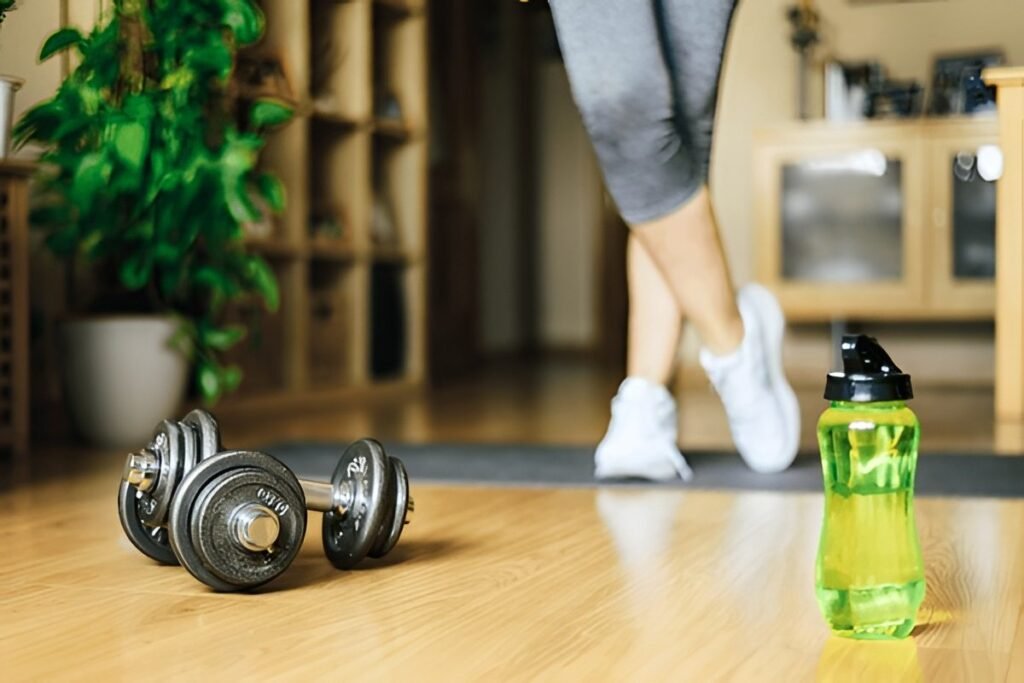
These fat-burning exercises can be done anywhere at home, without needing any equipment. Try to have a mix of cardio exercises and bodyweight exercises in your workout plan for weight loss. Below, I have provided some equipment-free exercises for weight loss.
- Jumping Jacks or High Knees:
These are excellent cardio exercises that get your blood pumping. You should do these for 30–60 seconds to start.
- Squats:
Stand with feet hip-width apart. Bend knees and lower hips down as if sitting, then stand back up. This exercise works the legs and glutes. You should do these for 10–15 reps.
- Lunges:
Place one foot forward, lower your back knee towards the ground, and then push yourself into a standing position. Now repeat this process with the other leg. You should do 8–12 repetitions on each leg. Lunges are excellent for strengthening your thighs and hips.
- Push-ups (Incline or Knee):
Traditional push-ups are tough, but you can start with your hands on a sturdy chair or wall and do them at an incline (or on your knees). This works the chest, shoulders, and arms. Try to do about 5–12 reps.
- Plank:
For a plank, hold your body in a straight line from head to toe, with the help of your forearms on the ground. You can start by using a wall or a table if it feels hard. Try to hold your plank for 15 to 30 seconds each time. This workout will help you build up your core muscles.
- Mountain Climbers:
From a plank position, bring one knee toward the chest, then switch legs rapidly (like “running” in place). Do for 20–30 seconds. This adds cardio intensity and works abs and legs.
- Burpees (advanced):
Stand, squat, and place hands on the floor; kick feet back to a plank; do a push-up (optional); jump feet forward and stand up; then jump in the air. Start with just the squat-plank jump if full burpees are too difficult. Burpees hit most major muscles and skyrocket heart rate.
You can mix these exercises into circuits, for example: 30 seconds of jumping jacks, rest; 10 squats, rest; 10 lunges per leg, rest; 5 push-ups, rest; plank for 20 seconds, rest; repeat. This workout plan for weight loss will help you lose weight and improve your overall health.
Sample Weekly Workout Plan for Weight Loss
This is a simple workout plan you can follow the whole week for weight loss.
| Days | Type | Exercises |
| Monday | Full Body Workout | Do 4–6 exercises back to back, such as jumping jacks, squats, push-ups, planks, and lunges. Exercise for 30–60 seconds and rest 30–60 seconds in between. |
| Tuesday | Cardio Training | Do 20–30 minutes of continuous exercises like brisk walking outside or in place, jogging in place, dancing to music, or doing step-ups on stairs. |
| Wednesday | Strength Training | Focus on strength training exercises like 3 sets of 12 squats, 3 sets of 10 push-ups (or incline push-ups), 3 sets of 10 lunges (each leg), and 3 planks of 20–30 seconds each. Take a rest for 1–2 minutes between sets. |
| Thursday | Active Recovery | Do a simple walk, yoga or stretching, or relaxing cycling for 20–30 minutes. The goal is to move while allowing your muscles to rest and recover. |
| Friday | HIIT (High-Intensity Interval Training) | Do 20 seconds of high knees or burpees, followed by 40 seconds of rest or slow marching, and repeat this cycle 8–10 times. This will boost metabolism. Cool down with walking and full-body stretches. |
| Saturday | Mix | Combine what you enjoy. Do fun cardio (dance, bike, or hike) or another circuit of mixed exercises. Aim for 30–45 minutes total. |
| Sunday | Rest and Stretching | On Sundays, you can do something like a gentle stretching routine or a relaxing walk, but focus on taking rest. |
You can change this workout plan for weight loss according to your needs and difficulties. The important thing is to stay consistent with exercises.
Simple Tips For Better Results
As you get comfortable with this workout plan for weight loss, keep these important tips in mind for better results and progress.
- Level up slowly:
When the workouts start feeling effortless, push yourself slowly. Pushing too much can do more damage than have beneficial effects.
- Mix things up:
If you feel like you are getting bored, then immediately mix up your exercises. Change exercises each week with something you enjoy. You can also try activities like dancing, climbing stairs, or wall sits to keep it fun and interesting.
- Pick up the pace:
To lose more weight, you have to burn more calories. Slowly keep increasing your pace and efforts. Even adding an extra 5 minutes to your walks is enough.
- Focus on consistency:
Working out for 10 minutes on busy days is more important than skipping it or exercising for 4 hours a day. Try to be more consistent with your workout plan.
Other Healthy Habits That Support Weight Loss
Healthy eating, sleeping properly, managing stress, and staying hydrated are also as important as exercising. You can expect that you will lose weight with just a workout. All these aspects are also important.
1. Healthy Eating
Eating healthy food is essential for weight loss. As we discussed, weight loss happens when your body burns more calories than it gets. Healthy, balanced, and nutritious meals combined with a workout plan for weight loss can give you much better results. It helps to provide all the essential nutrients it needs.
2. Get Enough Sleep
Most people think sleeping doesn’t have an effect on the weight loss process. But it is essential to get proper sleep daily to lose weight. Many health organizations recommend that an average adult sleep for about 7–9 hours each night.
Insufficient sleep can disrupt your hormones and increase hunger. It leads to overeating. It can also make you feel worn out and less motivated to do exercise, which can become a big hurdle in your weight loss journey.
3. Manage Stress
Having stress is completely normal. Everyone in their life gets stressed out. But if you have stress for a long time, it can make your weight loss progress difficult.
In stress, your body releases a hormone called “cortisol,” which can increase your cravings. It can also lead to skipping workouts, sleeping insufficiently, and emotional eating. That is why stress management is important for both weight loss and mental health.
4. Staying Hydrated
Drinking water is one of the simplest habits that may help with weight management. There may be situations where we think that we are hungry, but our body may only be thirsty.
Drinking water is beneficial for digestion, keeps the body cool, and ensures its smooth functioning. Drinking water at regular intervals throughout the day, especially before meals and after exercising, may help with your weight loss.
Conclusion
Weight loss does not always require hours of workouts in a gym with expensive equipment. With a simple and effective home workout plan for weight loss, you can begin your journey right from your bedroom, without the need for any equipment. You can burn calories and lose weight by doing simple bodyweight exercises, walking, and short HIIT workouts.
For better results, combine these equipment-free exercises with healthy habits like eating healthy meals, sleeping properly, managing stress, and staying hydrated.
Remember, being consistent is far more important than anything else. Every small effort matters in weight loss. Stay patient and you will see results over time.
Frequently Asked Questions (FAQs)
Can I lose weight at home without gym equipment?
Yes. Just bodyweight exercises, walking, and short HIIT sessions at home are more than enough. But you have to combine these exercises with healthy habits, and you have to stay consistent with this workout plan if you want to lose weight.
How often should I follow this at-home workout plan?
According to many health organizations, you should do this workout at least five days a week. Try to do about 30 minutes or more of moderate exercise each day. Even short workout sessions, when done consistently, are beneficial for weight loss.
Is walking beneficial for weight loss?
Yes, walking is beneficial for weight loss. It is one of the best and safest exercises that anyone can do without issue. Depending on your walking speed, it can burn calories, improve heart health, and support weight loss when done regularly as a part of a workout plan.
How long do results take?
There is no definite timeline for results because these are different for each person. Some people will start seeing results in a few months, while others may take years. The most important thing in weight loss is to stay consistent.
Is a strict diet necessary for weight loss?
For weight loss, a strict diet is not necessary. But you should focus on eating healthy and balanced meals. Make sure it contains various fruits, vegetables, whole grains, and lean protein to give your body all the essential nutrients. Eating healthy, combined with a workout plan for weight loss, can give long-term results.
What is the most important factor in this workout plan for weight loss?
The most important factor in this workout plan is being consistent. It is more beneficial to do small sessions of workouts daily instead of doing an intense and long workout occasionally.

Daniel Brooks
Daniel Brooks is a senior health writer and research editor focused on evidence-based wellness, preventive health, and nutrition science. He specializes in translating complex medical and health research into clear, practical guidance for everyday readers. His work covers weight management, metabolic health, digestive wellness, blood sugar balance, and men’s and women’s health topics.
Daniel follows a research-first writing process and references peer-reviewed studies, public health agencies, and clinical guidelines when developing content. At Better Health Focus, he leads topic research, source verification, and article drafting, ensuring that every guide is structured, up-to-date, and reader-focused.
He is committed to responsible health publishing standards, transparent sourcing, and regular content updates.