


A high-protein diet has become one of the most talked-about ways to help people lose weight. Protein-focused eating plans, on the other hand, don’t limit what you can eat. Instead, they try to make you feel full, keep your muscle mass, and improve your metabolic health while cutting down on the number of calories you eat. For many people who are trying to lose weight, eating more protein can make meals more filling and help keep them from getting hungry all the time.
Protein is crucial for the body’s structure. It helps muscles heal, keeps hormones that control hunger in check, and takes more energy to digest than carbs and fats. Many nutritionists say that when trying to lose weight in a healthy way, you should make sure you get enough protein.
This blog will tell you how a high-protein diet works, what foods are the best sources of protein, and how to make a simple meal plan that helps you lose weight slowly and keep it off.
Table of Contents
What Is a High-Protein Diet?
A high-protein diet plan is a way of eating in which you consume more protein-rich foods; it is different from a balanced diet plan. While the protein part is increased, carbohydrate and overall calorie consumption are adjusted for weight loss goals.
You need protein for many essential functions of your body, such as tissue repair, immune system, enzyme production, and maintaining muscles. Trying to lose weight without increasing your protein intake may cause your body to lose both fat and muscle mass. When you lose weight, it’s important to protect your muscle tissue because it helps your metabolism and overall strength.
Because of these factors, many experts say that weight loss plans should focus on how much protein you eat.
How Protein Can Help With Weight Loss
Protein can be a very helpful aspect in your weight loss journey. For starters, it helps you keep feeling full for a longer time. When your meal contains a sufficient amount of protein, you will notice that you do not eat unnecessarily right after the meal. This naturally makes it easy to manage your calorie intake during the day.
Another benefit is that the body works harder to break down protein. During digestion, your body uses more energy than when it processes fats or carbohydrates. Because of this, a few extra calories are burned while your body handles protein.
Protein also helps protect your muscles while you are trying to lose weight. Keeping muscle strong supports a healthy metabolism, which helps your body continue using energy effectively as you work toward your goals.
Benefits of a High-Protein Diet for Weight Loss
Fills You Up and Makes You Less Hungry
One of the most well-known benefits of a high-protein diet is that it makes you feel full longer. Protein helps hormones that control hunger, so you don’t feel as hungry between meals. This feeling of fullness makes it easier to control how many calories you eat by eating only when you need to. This approach is great for losing weight.
Helps Keep Lean Muscle Mass
If you don’t eat a balanced diet while trying to lose weight, you could lose both fat and muscle. Getting enough protein helps keep lean muscle mass while the body burns fewer calories. It’s important to protect your muscles because it makes your metabolism work better, which helps you lose weight.
Boosts Metabolism and Fat Burning
Protein has a stronger thermic effect than fats and carbs. Foods that are high in protein need more energy to digest, absorb, and process, which means they use more energy. Eating the right foods will help you burn fat more easily over time as your metabolism changes.
Helps Keep Blood Sugar Levels Stable
Protein slows down how quickly the body breaks down and absorbs carbs. This keeps blood sugar levels from changing too quickly. When your blood sugar levels are stable, you have more energy and less desire for sugary or highly processed foods. A diet high in protein is easy to follow and eat well because it keeps your blood sugar levels stable.
Best High-Protein Foods for Weight Loss
More than eating protein, choosing the right protein sources is an important aspect of making a balanced diet for weight loss. High-quality protein foods can help you feel more full, maintain muscles during weight loss, and improve the overall nutritional balance of your body. Below, I have provided the best high-protein foods for weight loss.
Animal-Based Protein Foods
Animal-based foods are often called complete proteins due to containing all essential amino acids your body needs. They are also easy to add to your regular meals. Some of the best options are
- Eggs.
- Chicken breast
- Fish (Such as salmon, tuna, or cod)
- Greek yogurt
These foods are good sources of protein without adding too many extra calories. This can help keep meals satisfying while also helping you lose weight.
Plant-Based Protein Foods
Plant-based protein foods are also crucial. In addition to protein, they also provide fiber, vitamins, and minerals, which are all essential for overall good health. Some of the best options are
- Lentils
- Chickpeas
- Beans (Black beans, kidney beans, and others)
- Tofu
- Nuts and seeds
Having these foods in your meals can complete your protein needs and also support digestion and overall health.
High-Protein Diet Plan for Weight Loss (Sample Day)
A high-protein diet plan is not a strict or complicated process. It is just adding a good protein food to your meal each day. This helps you stay full for a longer time, keep your energy levels steady, and make it easy to avoid unnecessary constant eating.
Many people also feel better and more balanced throughout the day when they eat protein at breakfast, lunch, dinner, and small snacks. Here is a simple example of what a day of eating a lot of protein might look like.
| Meal | Food |
| Breakfast | Eggs with sautéed vegetables, Greek yogurt with fresh fruit, oatmeal topped with nuts, whole-grain toast with eggs or peanut butter |
| Lunch | Grilled chicken with brown rice and vegetables, lentil curry with whole-grain bread, tofu stir-fry with mixed vegetables, a fresh salad topped with beans or grilled chicken |
| Dinner | Grilled fish with steamed vegetables, paneer or tofu with lightly cooked vegetables, chickpea or bean curry, vegetable soup with added protein |
| Other Healthy Snacks | Greek yogurt, boiled eggs, roasted chickpeas, cottage cheese, or a small handful of nuts or seeds |
The goal is not to be perfect. It’s just putting together meals that have protein and healthy foods. It’s much easier to stick to healthy eating habits over time when your meals are balanced and satisfying.
How Much Protein Do You Need Daily
Everyone’s body is different, and so are their protein needs each day. It depends on how much you weigh, how active you are, and what your health goals are. People who are more active or want to lose weight without losing muscle require more protein than ordinary people.
Many experts and nutrition guidelines say that the minimum amount of protein you should eat is based on your body weight. You need about 0.8 grams of protein for every kilogram of body weight, or 0.36 grams of protein for every pound of body weight. Keep in mind that these numbers could change as people get older.
Instead of focusing on precise numbers, you should split protein evenly across meals throughout the day.
Tips for Following a High-Protein Diet at Home
Following a high-protein diet at home isn’t hard or complicated. With some planning, it can really become a simple part of your day-to-day life. Building your meals around a good source of protein is the easiest way to get started.
You can cook things like chicken, eggs, lentils, or beans ahead of time. Having these cooked ingredients ready in the fridge makes it easy to quickly put meals together during the week, especially when you don’t have much time. You can make a balanced and filling plate by just adding vegetables, whole grains, or salads.
It’s also important to eat foods high in fiber, like fruits, vegetables, and whole grains, and drink enough water. This mix helps with digestion and keeps your diet balanced while you work on getting more protein.
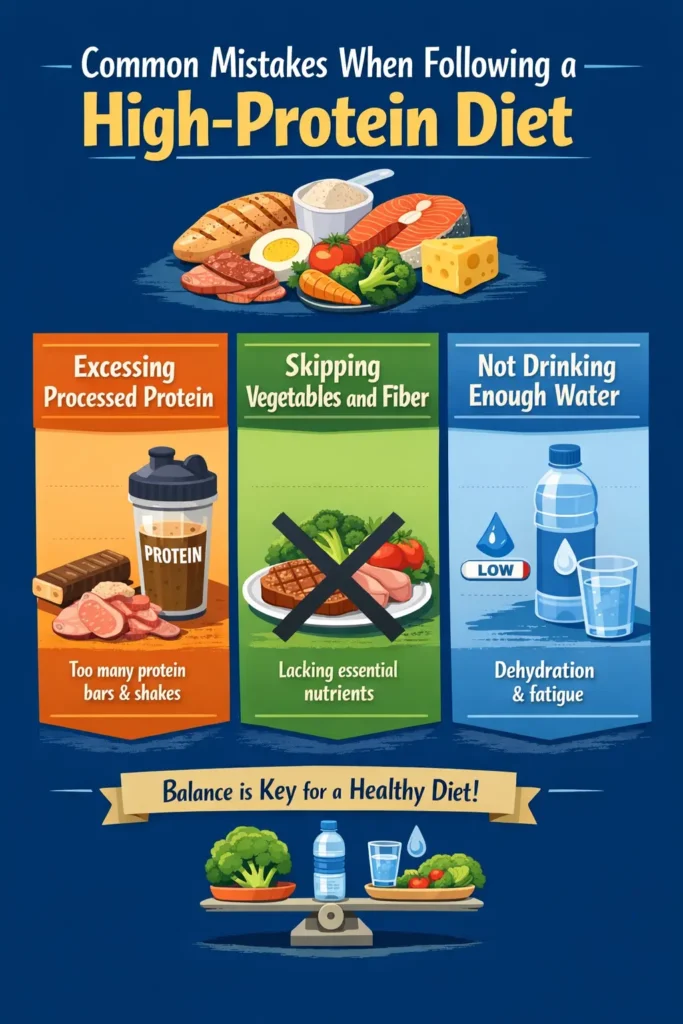
Common Mistakes When Following a High-Protein Diet
Excessing Processed Protein
One of the most common mistakes people make when following a high-protein diet is that they depend on processed sources of protein, such as flavored protein shakes, protein bars, or “high-protein” packed products. While this method can be more convenient, many of them are rich in added sugar, artificial ingredients, or excess sodium, which can reduce the overall nutritional quality of the diet.
Choose more whole food protein options like eggs, fish, poultry, lentils, beans, and yogurt, which provide additional nutrients for better overall health and better weight management.
Skipping Vegetables and Fiber
Another common mistake is that people focus entirely on protein and neglect other important foods like vegetables and other fiber-rich foods. You get essential minerals, vitamins, and dietary fiber from vegetables, fruits, and whole grains that support digestion and your overall metabolic health. Fiber is also an important aspect because it supports satiety and helps to maintain blood sugar levels.
A balanced high-protein diet should have a mixture of different vegetables, fruits, and protein-rich sources. This will help you support long-term weight management.
Not Drinking Enough Water
Not drinking enough water is another common mistake. Hydration is crucial when eating more protein. Drinking enough water helps the kidneys process protein waste better.
Drinking enough water throughout the day helps control your appetite and gives you energy, both of which help you lose weight.
Is a High-Protein Diet Safe for Everyone?
Eating more protein from real foods like eggs, fish, chicken, beans, lentils, and yogurt is safe for most people and may even help. It often keeps you full longer and makes meals more enjoyable.
Before you change how much protein you eat, talk to your doctor if you have kidney disease or another serious health problem. That small step keeps things safe and makes sure your plan is beneficial for your health.
Don’t forget that protein is only one part of the plate. Try to eat different types of foods, including protein, vegetables, whole grains, healthy fats, and water. The best way to stay healthy while you work toward your goals is to eat various simple, whole foods, including a balance of protein, vegetables, whole grains, healthy fats, and adequate hydration.
High-Protein Diet vs Other Weight Loss Diets
If you’ve ever tried to lose weight, you’re probably familiar with various diet plans. Some choose to avoid certain foods completely, while others concentrate on eating fewer carbohydrates. A high-protein diet is slightly different. It does not stop you from eating something completely; it simply focuses on increasing protein in your meals and making them balanced.
Eating more protein keeps you full longer after meals, which helps you control how many calories you eat during the day and stops you from eating too much or too little.
Another reason people like high-protein diets is that they are more flexible than other diet plans. You don’t have to remove carbs or fats from meals. Instead, its goal is to keep your meals balanced by including carbs, protein, and healthy fats.
Because it is easier to follow and doesn’t feel overly restrictive, many people find that a moderate high-protein diet is more practical to maintain in the long run.
Frequently Asked Questions
How much protein should I eat while losing weight?
The amount of protein you need can change based on your weight, activity level, and health in general. For most people, the minimum amount of protein they need is 0.36 grams per kg of body weight. Getting enough protein can help you feel full longer and stop eating when you don’t need to, which can help you lose weight faster.
Can a high-protein diet help burn belly fat?
Eating enough protein can help you lose weight all over your body because it fills you up and keeps your muscles strong. But you can’t just choose one part of your body to lose fat from. That’s not true! Over time, if you keep eating well, working out, and following healthy habits, you will slowly lose body fat.
Are protein shakes necessary?
Most people don’t need protein shakes in a high-protein diet. Whole foods are a common way for people to get their protein. But if you don’t have time to make real meals, protein shakes can be a more convenient way to complete your protein requirement.
Can vegetarians follow a high-protein diet?
Yes, even vegetarians can follow a high-protein diet. If you do not eat meat, you may substitute your preferred foods. Tofu, lentils, chickpeas, nuts, beans, seeds, and dairy products are all excellent plant-based protein sources. By combining these properly, you can still meet your protein requirements.
Is too much protein unhealthy?
Just like too much of anything can be harmful, the same is true with protein. If you consume protein in adequate amounts, it gives you many benefits, like healthy weight loss. However, eating excessive amounts of protein for a long period of time can be bad for your kidneys. Eating a balanced meal is more important than eating more.

Daniel Brooks
Daniel Brooks is a senior health writer and research editor focused on evidence-based wellness, preventive health, and nutrition science. He specializes in translating complex medical and health research into clear, practical guidance for everyday readers. His work covers weight management, metabolic health, digestive wellness, blood sugar balance, and men’s and women’s health topics.
Daniel follows a research-first writing process and references peer-reviewed studies, public health agencies, and clinical guidelines when developing content. At Better Health Focus, he leads topic research, source verification, and article drafting, ensuring that every guide is structured, up-to-date, and reader-focused.
He is committed to responsible health publishing standards, transparent sourcing, and regular content updates.