


Have you ever noticed and wondered about strange changes in your body without any clear reasons, like one day feeling energized and then feeling out of energy, moody, or irritated? The answers to these sudden changes are often related to hormones. These control your mood, sleep, metabolism, and cycle.
When hormones are balanced, you feel wonderful. However, when they are not, you notice strange changes in your body and feelings.
In this blog, you will get to know about these hormonal changes and how you can balance hormones naturally. You can feel perfect and like yourself again.
Table of Contents
Understanding the Female Hormones
Before we know how to balance hormones naturally, we need to understand what they are. Think of your endocrine system as a complicated piece of music. If even one instrument is out of sync, the whole piece of music sounds wrong or unsatisfying. Let’s understand the main hormones in women’s health.
- Estrogen:
This is the primary female sex hormone. It plays a main role in the menstrual cycle, supports bone health, and keeps your cholesterol balanced.
- Progesterone:
People often call it the “calming hormone.” It works with estrogen to help you get ready for pregnancy and keep your menstrual cycle regular. The second half of the menstrual cycle is when this hormone is at its highest.
- Cortisol:
This hormone is known as the “stress hormone.” Your adrenal glands produce it and help you respond to sudden, dangerous situations. However, if this hormone is high for a long time, it can affect your other hormones, too.
- Insulin:
The pancreas produces insulin and helps your cells to absorb glucose (sugar) for energy production. If your body becomes resistant to insulin or if it stops functioning properly, it can cause many effects that impact your reproductive hormones.
- Thyroid Hormones (T3 and T4):
Thyroid hormones (T3 and T4) regulate your body’s metabolism, energy levels, and temperature.
The World Health Organization (WHO) says that a woman’s hormones change naturally over the course of her life, from puberty to her reproductive years, through perimenopause, and finally menopause. But “fluctuating” shouldn’t mean “suffering.” You can give your body the exact tools it needs to keep these hormones steady and healthy by making specific changes to your lifestyle.
Ways to Balance Hormones Naturally for Women
1. Prioritize High-Quality Sleep
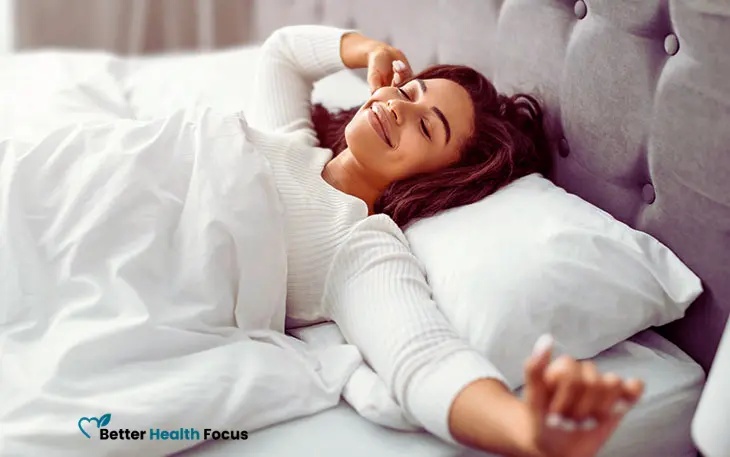
If you want to balance hormones naturally, you have to start with your sleep. It is not just a time for resting. It’s a period when your body repairs itself. When you are not sleeping enough regularly, your hormones become imbalanced.
The CDC says that sleep is deeply connected to the Hypothalamic-Pituitary-Adrenal (HPA) axis, which is like the main control center for your hormones.
Here is how sleep impacts specific hormones:
- Cortisol Regulation:
Usually, cortisol levels drop in the evening to help you sleep better and increase in the morning to wake you up. Not sleeping enough disrupts this process, which leaves you with high cortisol levels all day. This condition can affect your reproductive hormones.
- Growth Hormone (GH):
Growth hormone is essential for tissue repair, muscle growth, and metabolism. According to the NIH, a massive amount of growth hormone is released during the first 90 minutes of sleep. You may miss these growth hormones if you don’t get enough sleep.
- Melatonin:
This is your sleep hormone, but it is also a powerful antioxidant. According to research, disrupted circadian rhythms and artificial light exposure drastically lower the melatonin hormone. This disruption is often linked to irregular menstrual cycles and even earlier menopause.
Actionable Tips for Hormonal Sleep:
- Aim for 7 to 9 Hours:
It is recommended for most adults to sleep for 7–9 hours regularly to help their bodies recover and repair themselves.
- Keep a Consistent Schedule:
Try to sleep and wake up around the same time every day, even on weekends. This keeps your body’s circadian rhythm in place.
- Block Blue Light:
Avoid using screens too much, especially before going to bed. The blue light from screens destroys melatonin production.
- Sleep in the Dark:
Make your room’s environment as dark as possible. This will help you with deep, uninterrupted rest.
2. Manage Stress to Lower Cortisol
In today’s busy world, stress has become a very common issue. Cortisol is good in emergencies, but if it stays high for a long period of time, it’s bad for your health.
The NIH says that long-term stress and not getting enough sleep can hurt your HPA axis. When your body makes too much cortisol all the time, it goes through a process called “the pregnenolone steal.” The body makes more stress hormones than reproductive hormones because it uses pregnenolone to make cortisol and progesterone. This procedure makes the body make less progesterone, which can lead to anxiety, irregular periods, and too much estrogen.
Furthermore, high cortisol levels directly affect your blood sugar levels and insulin, which can lead to weight gain and metabolic issues.
Actionable Tips for Stress Management:
- Deep Breathing:
This practice of deep and slow belly breathing signals to your brain that you are safe, which leads to an instant drop in cortisol levels.
- Mindfulness Activities:
Doing meditation, yoga, or simply sitting quietly in nature for some time a day can significantly calm down your nervous system.
- Set Boundaries:
Try to say “no” to avoid overcommitting yourself. Protecting your spare time is a profound act of hormonal health.
3. Nourish the Gut Microbiome
Your gut health is directly related to your hormone balance. If your gut microbiome is imbalanced, the production of the beta-glucuronidase enzyme increases, which sends estrogen back into your bloodstream. This creates a state of “estrogen dominance,” which leads to heavy periods, PMS, and weight gain.
A healthy gut, on the other hand, encourages the growth of good bacteria that keep your intestinal barrier strong, lower inflammation, and ensure hormones are released correctly.
Actionable Tips for Gut Health:
- Eat Prebiotic Fiber:
Eat more fiber-rich foods to improve your gut health. Fiber is like food for the good bacteria in your gut.
- Add Fermented Foods:
Add more fermented foods to your meals because they are naturally rich in probiotics like yogurt, kefir, sauerkraut, kimchi, and kombucha. They help to increase your beneficial bacteria.
- Limit Ultra-Processed Foods:
Too much sugar and unhealthy fats affect your gut health and increase inflammation. You should avoid or at least limit their consumption.
4. Stabilize Your Blood Sugar
Insulin is an important hormone. When your glucose (sugar) levels increase, your pancreas releases the insulin hormone, which helps let that glucose enter cells for energy production. If you consistently eat a high amount of sugary food, your blood sugar fluctuates, which results in a large amount of insulin release.
If this goes on for a long time, your cells stop responding to insulin like they used to. This is called insulin resistance. The World Health Organization (WHO) says that insulin resistance is a major cause of Polycystic Ovary Syndrome (PCOS), which is a common hormonal problem. High levels of insulin in women cause their ovaries to produce excess androgen, a male hormone similar to testosterone. This condition causes acne, periods that aren’t regular, too much facial hair, and hair loss.
Even if you don’t have PCOS, changes in your blood sugar can cause too much cortisol to be released, which can make you anxious and tired.
Actionable Tips for Blood Sugar Balance:
- Pair Your Carbs:
Don’t eat carbs alone. Always eat them paired with foods high in protein, healthy fat, or fiber to help your body absorb the sugar.
- Prioritize Whole Foods:
Choose more complex carbs like sweet potatoes, quinoa, and brown rice. It helps slow down the absorption of sugar in the bloodstream.
- Move After Meals:
Have a simple walk for 10 minutes after eating. It helps your muscles absorb more glucose, keeping blood sugar balanced.
5. Exercise Regularly
Regular exercising is a powerful way to improve not only hormonal health but overall health too. Physical activity improves insulin sensitivity, helps you maintain a healthy weight, boosts mood-enhancing hormones, and helps you sleep better.
The CDC and WHO recommend that an average adult should at least do 150 minutes of moderate physical exercise, like brisk walking, or 75 minutes of intense physical activity per week, plus 2 or more days of muscle-strengthening exercises.
However, for women’s hormones, more exercise doesn’t always mean better. While recommended intense physical exercise is highly beneficial, without proper recovery, it can act like a physical stressor. Overexercising increases cortisol levels. In serious cases, it can lead to complete loss of your menstrual cycle, known as hypothalamic amenorrhea.
You have to exercise in a way that helps you build strength and resilience without harming yourself.
Actionable Tips for Hormonal Exercise:
- Mix It Up:
Combine both cardio exercise, like walking, running, or cycling, and strength training, like weight lifting or other bodyweight strength exercises.
- Listen to Your Cycle:
You should prefer gentle activities like yoga, meditation, or Pilates in the initial days of your menstrual cycle.
- Prioritize Recovery:
Exercise is important, but so is recovery. It’s time to slow down if you’re always tired or sore or if your periods are irregular.
6. Reduce Exposure to Endocrine-Disrupting Chemicals (EDCs)
Nowadays, we are all surrounded by chemicals, some of which are particularly harmful to our hormone balance. These are known as Endocrine-Disrupting Chemicals (EDCs).
According to the NIH, EDCs are the chemicals found in the food, environment, and consumer products that interfere with how your hormones are produced, released, and metabolized. Because of their similar structure to natural hormones, particularly estrogen, EDCs can control cell receptors or prevent your actual hormones from working.
Research shows that too much exposure to EDCs can increase the risk of reproductive issues, including uterine fibroids, PCOS, early menopause, and endometriosis.
Some EDCs include:
- Phthalates and Parabens:
It is usually found in perfumes, lotions, cosmetics, and scented candles.
- Bisphenol A (BPA):
It is found in the lining of canned foods, thermal store receipts, and certain plastics.
- Pesticides:
These are found on conventionally grown fruits and vegetables.
- Heavy Metals:
Metals like mercury and lead. These are found in contaminated water or certain large fish.
While you can completely avoid exposure to EDCs in the modern world, you can reduce it significantly by taking a few steps.
Actionable Tips to Avoid EDCs:
- Ditch the Plastic:
Avoid drinking water from plastic bottles, and never heat your food in plastic containers because, due to heat, chemicals are attached to them. Use glass, stainless steel, or ceramic instead.
- Choose Natural Personal Care:
Use shampoos, lotions, and cosmetics that are labeled “paraben-free” and “phthalate-free.” Try to avoid products that have “fragrance” as an ingredient because this is a cover-up to hide phthalates.
- Wash Your Produce:
Wash your food and vegetables well to cut down on your exposure to pesticides. Try to buy things that are organic if you can.
- Reconsider Canned Foods:
When you can, try not to buy canned foods; instead, buy things that come in glass jars or tetra packs.
Conclusion
You cannot balance hormones naturally overnight. Hormone balance can be naturally achieved over time with simple and consistent habits such as eating healthy, sleeping, being physically active, and controlling stress.
Listening to your body is as important as these healthy habits. If something feels out of the usual, like constant feelings of tiredness, irregular periods, or other sudden changes, it is important to get help from healthcare professionals.
Over time, these little changes can help you balance hormones naturally and improve your overall health.
Frequently Asked Questions
1. What are the common signs of hormone imbalance in women?
Some common signs of hormonal imbalance in women are irregular periods, mood swings, fatigue, acne, weight change, and not being able to sleep properly. However, these can be different from person to person.
2. Can I balance hormones naturally without medication?
Many women are able to balance hormones naturally with simple and healthy lifestyle habits. However, in many cases, medication is needed. Take proper medical help if you are not feeling good with natural ways.
3. How long does it take to balance hormones naturally?
Results are different for every woman. While some might start to notice results in a few weeks, others may take months of consistency.
4. Does stress really affect hormones?
Yes, stress does affect hormones. Managing your stress can help you balance hormones naturally and improve your overall health, too.
5. When should I see a doctor for hormone issues?
You should see a doctor if you have symptoms such as heavy bleeding, unusual periods, sudden weight loss, or fatigue.

Daniel Brooks
Daniel Brooks is a senior health writer and research editor focused on evidence-based wellness, preventive health, and nutrition science. He specializes in translating complex medical and health research into clear, practical guidance for everyday readers. His work covers weight management, metabolic health, digestive wellness, blood sugar balance, and men’s and women’s health topics.
Daniel follows a research-first writing process and references peer-reviewed studies, public health agencies, and clinical guidelines when developing content. At Better Health Focus, he leads topic research, source verification, and article drafting, ensuring that every guide is structured, up-to-date, and reader-focused.
He is committed to responsible health publishing standards, transparent sourcing, and regular content updates.