

Most women don’t realize how important hormones are for their everyday lives. These small chemicals control your mood, weight, skin, and energy. When they are perfectly balanced, you feel healthy and unstoppable.
But everyday stress, a lack of sleep, thyroid problems, PCOS, pregnancy, and menopause can disrupt this balance. When that happens, your body sends warning signs. Some of the common symptoms of hormonal imbalance are stubborn belly fat, adult acne, severe mood swings, irregular periods, and low sex drive.
Many women mistake these symptoms for normal stress or aging. However, don’t ignore them. If you notice these signs, you should start taking better care of your hormonal health.
Table of Contents
What Is Hormonal Imbalance in Women?
Think of hormones as your body’s chemical messengers. They basically control everything from your weight, your energy, your skin, and your mood to even your period and overall well-being. A hormonal imbalance simply means your system has too much or too little of a specific hormone. Since these chemicals are so powerful, even a minor shift can be the real trigger that makes you feel completely out of sync.
Your hormones all work together as a team. If even one of them is not balanced, it can affect how you are feeling. According to the National Institutes of Health (NIH), the primary hormones affecting women include:
- Estrogen & Progesterone: Drive your menstrual cycle and mood
- Thyroid & Insulin: Control your metabolism, weight, and blood sugar
- Cortisol: Primary stress hormone
- Testosterone: Supports sex drive and bone strength
Sometimes, hormone levels shift naturally during pregnancy, after having a baby, or during menopause. But a lot of the time, everyday habits like chronic stress, terrible sleep, or health conditions like PCOS are the real triggers. Knowing what these hormones actually do is your best defense to spot the warning signs early and get your health back.
10 Common Symptoms of Hormonal Imbalance You Shouldn’t Ignore
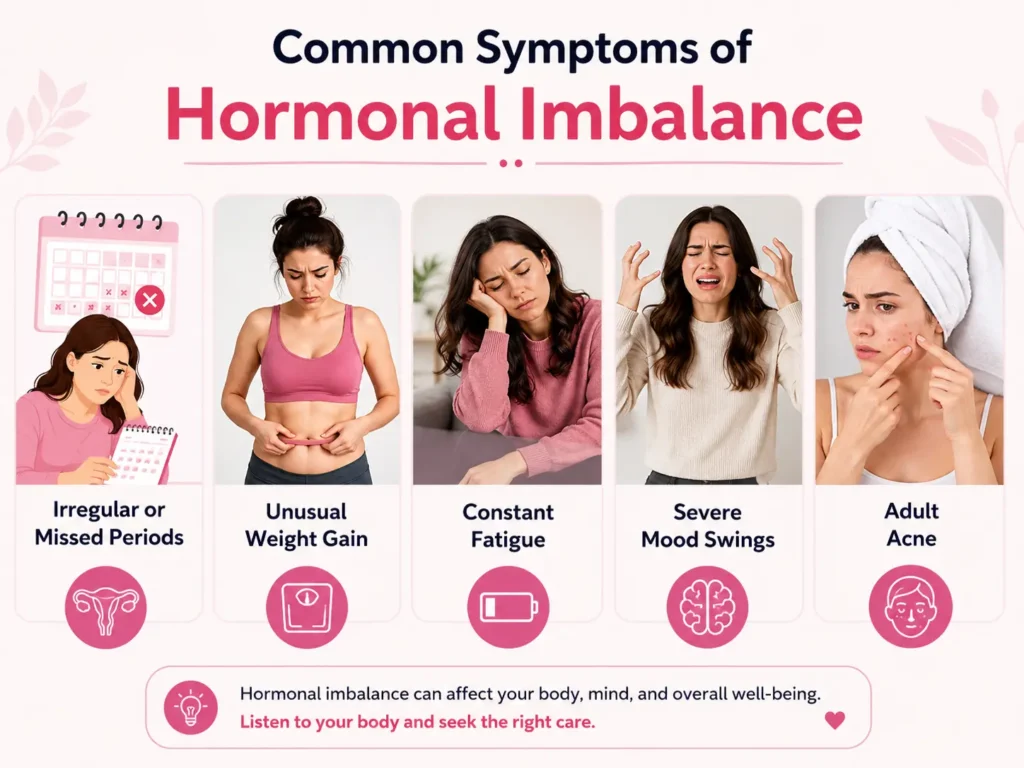
1. Irregular or Missed Periods
Changes to your monthly cycle are usually the very first red flag. You might skip periods entirely, have cycles shorter than 21 days, or deal with bleeding that is unusually heavy or incredibly light. Your cycle is driven by estrogen and progesterone. When they fluctuate too much, your body simply stops ovulating on schedule.
2. Unusual Weight Gain
If you have gained extra pounds, especially around your belly area, and you haven’t changed how you eat or work out, then it’s likely a hormonal imbalance. It is directly connected with insulin resistance, a slow thyroid, or high cortisol levels because of constant stress.
3. Constant Fatigue
We all get tired from time to time. But if you are sleeping properly and still feeling out of energy, that is not normal. Deep, constant fatigue is one of the most common signs of an underactive thyroid or blood sugar crashes.
4. Severe Mood Swings and Anxiety
Your hormones directly talk to your brain. If you are suddenly dealing with intense anxiety, feeling deeply down for no clear reason, or getting incredibly irritable right before your period, your chemicals are shifting. Many women feel these harsh drops in estrogen during severe PMS, postpartum, or perimenopause.
5. Adult Acne and Oily Skin
Acne isn’t just for teenagers. If you are getting deep, painful, cystic breakouts right along your jawline or chin, it is almost always hormonal. This is caused by a spike in androgens (male hormones present in women) and is a classic, early sign of PCOS.
6. Hair Thinning or Unwanted Hair Growth
Finding way too much hair in your brush? Thinning at the scalp is incredibly common when your thyroid is off or your androgens spike. On the flip side, that same imbalance can cause thick, dark hair to grow on your chin, face, or chest suddenly.
7. Sleep Problems
Your body’s internal clock completely relies on hormones. If you are suddenly having trouble falling asleep, waking up constantly in the middle of the night, or sweating through your sheets, a drop in calming progesterone is usually to blame.
8. A Dropping Sex Drive
While it is completely normal for your sex drive to ebb and flow depending on what is going on in your life, a sudden and total loss of interest is a major clue. This drop is usually triggered by plunging estrogen, low testosterone, or simply being incredibly stressed out.
9. Sudden Digestive Issues
Your gut and your hormones are actually best friends. When your estrogen and progesterone act up, your digestion takes a major hit. If you’re suddenly dealing with painful pre-period bloating, stubborn constipation, or random stomach sensitivities to foods you used to love, your hormones are likely completely out of sync.
10. Hot Flashes and Night Sweats
These aren’t just a menopause thing, either. Sudden, intense waves of heat spreading across your chest and neck, followed by chills, happen when your brain misreads your body’s temperature. This is the ultimate sign that your estrogen levels have dropped too low.
What Causes Hormonal Imbalance in Women?
All your hormones are interconnected with each other. Usually, a hormonal imbalance is not caused by just one thing. When a hormone gets out of balance, it affects other hormones as well. While some changes are natural, your daily lifestyle habits play a big role. The common causes of hormonal imbalance in women are:
1. Chronic, Everyday Stress
When you are constantly stressed, your body pumps out high levels of cortisol (your survival hormone). To keep making cortisol, your body will actually steal resources away from producing crucial hormones like estrogen, progesterone, and your thyroid hormones.
2. Lack of Sleep
Your body works at night when you are in deep sleep. If you are not getting enough deep, uninterrupted sleep, your body isn’t able to organize hormones for the next day. It can cause a hormonal imbalance.
3. Extreme Diets or Rapid Weight Changes
Gaining or losing weight too fast or starving yourself forces your body to enter survival mode. This heavily disrupts your insulin levels and signals your reproductive hormones to stop working.
4. Natural Life Transitions
You will naturally experience major, unavoidable hormone shifts during specific stages of life. The biggest natural triggers are puberty, pregnancy, postpartum recovery, perimenopause, and menopause.
5. A Highly Processed, Sugary Diet
You are what you eat, and your hormones rely on good nutrients to function. Eating a diet heavy in sugar and highly processed, packaged foods creates whole-body inflammation and drives up insulin resistance, which is a leading cause of hormonal chaos.
6. Medical Conditions
Sometimes medical conditions such as Polycystic Ovary Syndrome (PCOS) or an underactive thyroid can be the cause of a hormonal imbalance.
Natural Ways to Support Hormone Balance
Now that you know common warning signs of a hormonal imbalance, let’s shift gears. How do you actually get things back to normal? Here are some natural ways to support hormone balance:
1. Eat a balanced diet for hormonal imbalance
What you put on your plate makes a massive difference, but you don’t need to overcomplicate it. Just try building your meals around lean protein, healthy fats, and plenty of fiber. It will help to support hormone balance.
2. Limited Sugar and Processed Food
Cutting back on sweet treats and highly processed foods keeps your daily energy stable. It also naturally lowers whole-body inflammation and fights off the stubborn belly fat that often comes with a hormone shift.
3. Regular Exercise
You don’t need to live at the gym, but lifting weights two to three times a week is a game-changer. Strength training boosts your metabolism, makes your body much more sensitive to insulin, and keeps your bones strong as you age.
4. Manage Stress
We know it is easier said than done, but chronic stress keeps your cortisol levels sky-high, which wrecks your other hormones. Simple habits like taking a daily walk, practicing deep breathing, or just finding ten minutes to unwind can make a world of difference.
5. Proper Sleep
Aim for seven to nine hours of solid rest every single night. Your body absolutely needs this quiet downtime to heal, flush out old hormones, and protect your long-term health.
Remember, every small habit makes a difference for your hormonal health in the long run.
Bonus Tip: The Hidden Gut-Hormone Connection
Want a secret to getting your body back on track? Look at your digestion.
Your gut houses a specific group of bacteria called the “estrobolome,” which is entirely responsible for managing your estrogen. When stress or junk food throws your gut out of balance, estrogen builds up—causing heavy periods and severe mood swings.
The fix? Add more fiber and fermented foods like yogurt or sauerkraut to your meals. Healing your gut is the fastest way to balance your hormones!
When to Visit Your Doctor
Listen to your body. You should book an appointment if you are dealing with:
- Periods that suddenly vanish or get totally unpredictable
- Sudden heavy bleeding
- Mood swings that affect daily life
- Sudden weight changes that make no sense
- Feeling completely tired, even after a great sleep
Catching a hormone issue early makes it so much easier to fix before it becomes a major problem.
Final Thoughts
It is incredibly easy to brush off the early warning signs of a hormonal imbalance as just a stressful week. Because hormones control almost everything, the symptoms often just feel like everyday challenges. But your body is smart, and it always leaves clues.
You shouldn’t ignore things like sudden weight changes, mood swings, unusually dry skin, or unusual periods. Noticing these signs of hormonal imbalance gives you the time to make healthy lifestyle changes. This naturally balances your hormones before things turn into bigger issues.
Have you noticed any of these warning signs in your own life? Which daily habit are you going to focus on first? Let us know in the comments!
Frequently Asked Questions
How to cure hormonal imbalance in females?
A lot of women wonder how to cure a hormonal imbalance. Start with changing simple day-to-day habits like sleeping enough, eating healthy food, and managing stress. But if your symptoms feel overwhelming or start getting in the way of your life, it is definitely time to seek professional medical advice.
When should I see a doctor?
If your symptoms, such as irregular periods, heavy bleeding, or extreme daily fatigue, are making it hard to live your normal life, you should consult your doctor. Getting an early diagnosis is the first step toward the best hormonal imbalance treatment plan.
When is the best time to test for hormone imbalance?
It depends entirely on what your doctor is testing. For baseline female hormones (like estrogen), the test is taken on Day 3 of your period. For progesterone, it is around Days 19–21. For testosterone, thyroid, and cortisol, the test is held early in the morning when your levels naturally peak.
What are the most common symptoms of hormonal imbalance?
The most common symptoms include irregular periods, unusual weight gain, severe mood swings, constant exhaustion, adult acne, low sex drive, and hair thinning.
Does hormonal imbalance cause weight gain?
Yes. When hormones like insulin, cortisol, or thyroid levels get out of balance, your metabolism slows down. This makes your body store fat like crazy, causing sudden weight gain that feels completely impossible to lose.
References & Sources

Olivia Reed
Women's Health & Skincare Writer
Better Health Focus
Expertise
Women's Health • Skincare • Hormonal Health • Beauty & Skin Science • Preventive Wellness • Healthy Aging • Nutrition for Skin Health • Lifestyle Medicine • Evidence-Based Health Education
About Olivia Reed
Olivia Reed is a Women's Health & Skincare Writer at Better Health Focus, where she creates evidence-based educational content focused on helping readers better understand women's wellness, hormonal health, skincare, healthy aging, and preventive self-care.
Her writing combines scientific research with practical lifestyle guidance, making complex health and skincare topics easy to understand without relying on misleading beauty trends or unrealistic health claims. Olivia Reed believes that informed readers make better health decisions, and she strives to present balanced information that reflects current scientific evidence.
Before publishing an article, Olivia Reed reviews guidance and research from respected organizations, including the National Institutes of Health (NIH), PubMed, the World Health Organization (WHO), the American Academy of Dermatology (AAD), the American College of Obstetricians and Gynecologists (ACOG), the Office on Women's Health (OWH), and peer-reviewed medical journals whenever applicable.
Her work regularly explores women's hormonal changes throughout different life stages, skincare science, acne, eczema, pigmentation, menopause, nutrition for healthy skin, reproductive wellness, hair health, and evidence-based approaches to beauty and preventive healthcare.
Olivia Reed is committed to separating scientific evidence from social media trends and marketing claims, helping readers understand what current research supports—and where evidence is still emerging.
Education
Bachelor of Arts (B.A.) in Health Communication
Professional Development
- Continuing education in Women's Health and Skin Science
- Ongoing study of dermatology research and preventive healthcare
- Regular review of peer-reviewed publications related to dermatology, endocrinology, nutrition, women's health, and public health
- Continuous monitoring of clinical guidance from leading medical organizations
Areas of Focus
- Women's Health
- Hormonal Health
- Menstrual & Reproductive Wellness
- Pregnancy & Postpartum Education
- Menopause & Healthy Aging
- Skincare & Dermatology Education
- Acne, Eczema & Sensitive Skin
- Hair & Scalp Health
- Nutrition for Healthy Skin
- Preventive Health & Lifestyle Medicine
Editorial Standards
Every article written by Olivia Reed Ward follows the editorial standards of Better Health Focus and is developed using reputable medical references and current scientific literature whenever available.
Her editorial approach emphasizes:
- Evidence-based health education
- Scientific accuracy
- Balanced discussion of benefits, risks, and research limitations
- Clear, accessible language for everyday readers
- Responsible reporting without exaggerated claims
- Alignment with Google E-E-A-T principles for health content
Rather than promoting miracle treatments or viral beauty trends, Olivia Reed focuses on practical, research-informed guidance that supports informed decision-making and long-term wellness.
Research Sources
Articles may reference information from organizations and databases such as:
- National Institutes of Health (NIH)
- PubMed
- World Health Organization (WHO)
- American Academy of Dermatology (AAD)
- American College of Obstetricians and Gynecologists (ACOG)
- Office on Women's Health (OWH)
- American Academy of Pediatrics (AAP)
- U.S. Food & Drug Administration (FDA)
- Peer-reviewed scientific journals
Editorial Disclaimer
The information published by Olivia Reed Ward on Better Health Focus is intended for educational and informational purposes only. It should not replace professional medical advice, diagnosis, or treatment. Readers should consult a qualified healthcare professional or dermatologist regarding personal medical concerns, medications, skincare treatments, or significant health decisions.